
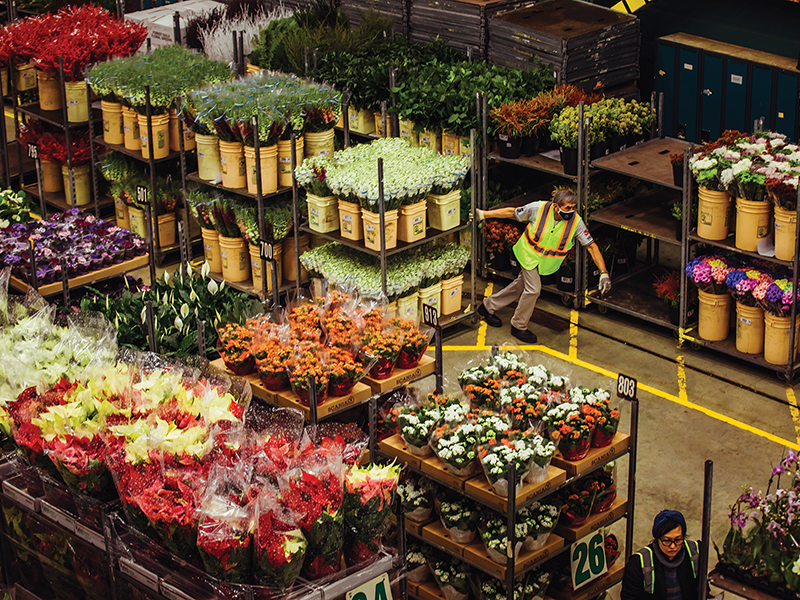
Three months following the August 21 breakdown of trade talks aimed at preventing 50% tariffs on $20 billion worth of Canadian goods shipped to the US, flower growers in BC are feeling the pain.
“We’re settling in for a long haul,” says Michel Benoît, CEO of United Flower Growers Cooperative Association in Burnaby. “There’s definitely some pressure on exporters of cut flowers and orchid growers.”
US buyers have cut purchases at UFG’s flower auction by 30% to 50% because it’s become too expensive to take the flowers across the border.
“That hurts everyone that’s a co-op shipper on the cut flower side,” he says. “The US buyers, because of the tariffs, they just can’t afford to buy Canadian cut flowers like they used to.”
Many have found alternative sources, but Benoît says the quality of flowers from BC destined to markets in Seattle and further south is superior to those shipped in from South America and trucked across the country from their point of entry in Florida.
“If it’s for a special occasion, they’ll buy the Canadian product even though they can get it for a lot cheaper. But it’s challenging,” he says. “It’s not where anyone wants to be.”
The current pressures have growers worried about the spring, typically a season when exports to the U.S. peak. Peonies, for example, are perennials that take three years to produce their first blooms.
“After that it keeps producing flowers; it’s not like you can tell them to stop,” he says. “People are wondering what they’re going to do.”
While some growers have found alternative markets, others have scaled back production.
“Some large wholesalers are stepping up and helping out, but those are at lower prices than what you would have gotten from the American wholesalers in a competitive market,” he says.
The best path forward is for the US to eliminate the tariffs, Benoît says, which tax a product few US growers produce and hurt growers in Canada who have few options for relief.
While he initially expected some growers to take advantage of AgriStability, which had its deadline for enrolment extended until the end of this month, there’s a 20% penalty for late enrolment.
“It almost defeats the purpose of applying,” Benoît says. “We’re all hoping the politicians can figure [the tariffs] out.”
All content on this website is copyrighted, and cannot be republished or reproduced without permission.


 Watershed plan takes a proactive approach
