
• Menu
  • Skip to primary navigation
  • Skip to main content
  • Skip to primary sidebar

Country Life In BC Logo

The agricultural news source in British Columbia since 1915

  • Headlines
  • Calendar
  • Subscribe
  • Advertise
  • About
  • Archives
  • Contact
  • Search
  • Headlines
  • Calendar
  • Subscribe
  • Advertise
  • About
  • Archives
  • Contact
  • Search

Primary Sidebar

Originally published:

AUGUST 2019
Vol. 105 Issue 8

Subscribe Now!

Sign up for free weekly FARM NEWS UPDATES

Loading form…

Your information will not be
shared or sold ever

Stories In This Edition

Province allows family on farms

Teamwork!

Rain hammers cherry crop

Sidebar: A brief history

Chilcotin ranchers’ hope for hay crop washed away

Editorial: Dog days

Back Forty: Keeping the kids safe down on the farm

Viewpoint: Top-down governance no way to help caribou

Egg board set to get cracking on quota distribution

Get ’em while you can

Feds address labour shortages

Bee healthy!

Marketing board names new entrant winners

BC berry research gets big funding boost

BC hosts International Blueberry Organization

Tour showcases innovation, marketing savvy

Governments agree to national park reserve

BC’s oldest farm seeks new management

Apple dieback investigation underway

Bumper crop for raspberries fails to materialize

Balance key to restoring fire-affected range

Global demand set to buoy cattle prices

A good start helps calves finish in top shape

Ranchers collaborate to preserve grasslands

Rotational grazing pays off year-round

Sidebar: Track costs, see profits

Stock show kicks off summer for 4-H members

Finding new potential for a lost native berry

Sidebar: Others see same benefits

Shuswap tour showcases local producers

Research: Do honeybees spread viruses to wild bees?

Volken Academy breaks ground on new farm

Woodshed: Romance is in the air, for all but the Hendersons

Fourth-generation farmers chart ambitious course

Jude’s Kitchen: In-season produce is king

More Headlines

Follow us on Facebook

Comments Box SVG iconsUsed for the like, share, comment, and reaction icons

5 days ago

A BC Forest Practices Board investigation has found overgrazing has damaged grasslands in the Coutlee Range Unit near Merritt — and the range-use plan meant to prevent it was unenforceable. With complaints about overgrazing on the rise and grasslands covering just 1% of BC's land mass, the findings raise fresh questions about how the province manages one of its most vulnerable — and valuable — food-producing ecosyste#BCAg#BCAg ... See MoreSee Less

Link thumbnail

Board finds overgrazing rules unenforceable unmeasurable

www.countrylifeinbc.com

MERRITT – A BC Forest Practices Board investigation has found instances of non-compliance related to overgrazing have damaged open grasslands in the Mine pasture, part of the Coutlee Range Unit near...
View Comments
  • Likes: 6
  • Shares: 6
  • Comments: 6

Comment on Facebook

Several ranchers in recent years have gone into temporary non use on that range , so that means the grass should grow. But drought conditions/lack of rain and snow don’t allow that to happen . Dried up springs , creeks waterholes in various pastures add to over grazing where there is water , as livestock and everything else stay close to the water source . So even though less cattle are on it , over grazing appears. There is a large volume of horses on it 365 days/year which is wrong ! They pull grass right out of the ground when it’s just trying to grow ,, opens the door for weeds to grow in. That don’t help it. Aging infrastructure ( fences) laying on the ground, pipe line building , ( lack of commitment to fence maintenance) amongst all users contributes also to over grazing. Recreational atv users leaving gates open between pastures allows livestock to go back or ahead in pastures also expidites over grazing. Logging ( bcts) has no problem laying out cut locks on both sides of a fence , then it gets smashed down during logging and they don’t take responsibility to stand it back up or clean the cattle gaurds out when they are done , that happened 4 years ago on pasture 5 up there . I bet it is still not fixed . There are lots of contributing factors to the problem.

Tragedy of the commons.

I looked through the report. I saw nothing about the effects of noxious weeds on productive grasslands. This particular area is vulnerable because of the Ministry’a efforts to diversify the use of the Grasslands.

This pasture is under tremendous pressure not only from cattle but from irresponsible local residents who treat it as a landfill dumping all manner of household debris here. And don't even get me started on the mud bogging and camping in sensitive riparian areas. The feral horses are in this pasture 365 days a year just hammering it. Would sure be nice to see some enforcement action on people who are intentionally ripping up the grasslands and riparian areas. Cattle could be a valuable resource for rebuilding soils and native grasses in this area with the help of electric fencing and/or e-collars. The humans will be harder to manage.

The Forest and Range Practices Act was written by lawyers for global forest licencee shareholders. Results-based = unenforceable.

Also, can we talk about the impact of a pipeline being built through the middle of this field for multiple years?

View more comments

1 week ago

East Kootenay rancher Randy Reay is digging a new well after two natural water sources dried up on his Crown tenures. A new Living Lakes Canada assessment found 15% of mapped aquifers in the region are high-priority for monitoring, yet 80% of those go unmonitored. With over 48% of BC's provincial observation wells reporting below-normal groundwater levels, ranchers and researchers are sounding the alarm on water security. The story is in our March edition, and we've posted it to our website thi#BCAgk.

#BCAg
... See MoreSee Less

Link thumbnail

Water woes: groundwater under pressure across BC

www.countrylifeinbc.com

JAFFRAY – As a young boy growing up in the Kootenay-Boundary region, Randy Reay never expected to run out of water. But this year, in mid-February, his fields are bare. There is no snow halfway up t...
View Comments
  • Likes: 8
  • Shares: 7
  • Comments: 1

Comment on Facebook

Jaffrey is in the east Kootenays not kooteney boundary

2 weeks ago

BC farmers are bracing for prolonged higher input costs as war in the Middle East drives up fuel and fertilizer prices. Nitrogen fertilizer costs were already climbing before the Iran conflict began, with prices still roughly 60% above pre-pandemic levels. Farm Credit Canada warns that unlike 2022, strong commodity prices may not offset rising costs this time. Local suppliers expect supply challenges and further price increases ahead.

#BCAg
... See MoreSee Less

Link thumbnail

Fertilizer prices on the rise

www.countrylifeinbc.com

War in the Middle East has delivered a generational shock to energy prices, meaning BC farmers can expect a prolonged period of higher costs not just for fuel but also for fertilizer.
View Comments
  • Likes: 2
  • Shares: 1
  • Comments: 0

Comment on Facebook

2 weeks ago

... See MoreSee Less

View Comments
  • Likes: 1
  • Shares: 0
  • Comments: 0

Comment on Facebook

2 weeks ago

Cameron Stockdale is the new executive director of provincial farm safety organization AgSafeBC. Find out more in this week's Farm News Update from Country Life in B#BCAg#BCAg ... See MoreSee Less

Link thumbnail

New leadership at AgSafe BC

www.countrylifeinbc.com

Cameron Stockdale is the new executive director of provincial farm safety organization AgSafeBC, succeeding Wendy Bennett. Bennett left AgSafeBC in September 2025, following 12 years with the…
View Comments
  • Likes: 5
  • Shares: 1
  • Comments: 0

Comment on Facebook

Subscribe | Advertise

The agricultural news source in British Columbia since 1915
  • Email
  • Facebook

Ranchers collaborate to preserve grasslands

Biodiversity key to restoring sensitive eco-systems in OK

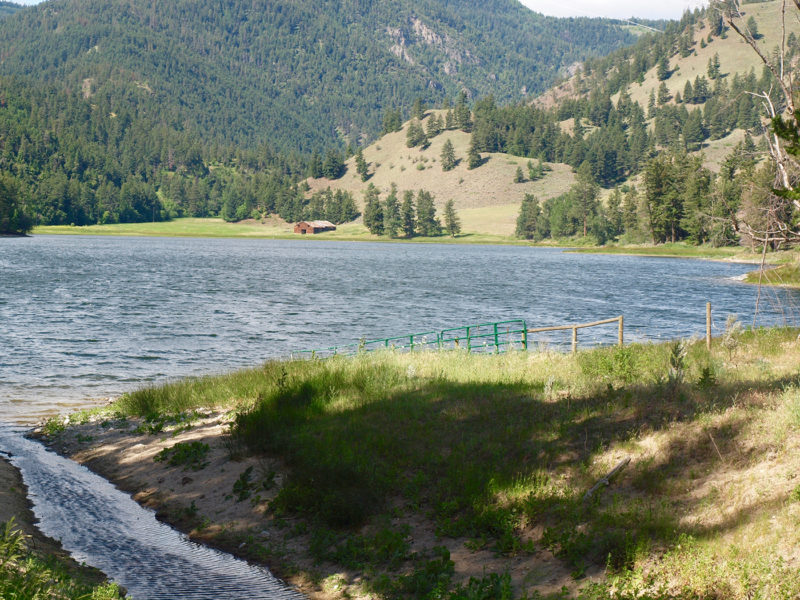
Little Twin lake is now fenced off from cattle, as is Horn Creek, which links it to Twin Lakes. JUDIE STEEVES PHOTO

August 1, 2019 byJudie Steeves

OLIVER—Like a sliver of sky, a Western Bluebird drops from above and lands among the dried grasses at the edge of a meadow.

Down the hill, sun glints off a small, round lake surrounded by forest down to the water’s edge, and a creek flows out through a low spot, fenced off from the grassy rolling hills on either side.

Healthy green grass has been munched in a few places but the cattle grazing there don’t often trek down the hills to the creek for a drink because the rancher provides convenient troughs throughout the range, fed from springs high in the

hills.

Instead, explains Wade Clifton, whose family owns the Clifton Ranch in Keremeos, his cows tend to drift across the hills so there’s less erosion than would occur if they wandered regularly up and down the hills between grazing and drinking water.

The streamside is also less eroded and the riparian zone is being restored to a more natural state now that the cows are watered elsewhere through the 17,000 feet of water line and troughs.

It’s all part of the Nature Trust of BC’s White Lake Basin Biodiversity Ranch, at Twin Lakes, west of Kaleden and Penticton.

Clifton owns a neighbouring parcel and is now running about 500 cows on both his own and the Nature Trust’s conservation property, allowing more space for the cattle so the pressure on the land is sustainable on all parcels.

“We try to keep the cattle dispersed,” he notes.

Co-management

In all, the partners own, lease and hold grazing licences on a total of 8,056 hectares of grassland in the area of the White Lake Basin and Twin Lakes, managing it jointly as both ranch land for grazing cattle and as conservation lands for nationally endangered and threatened species at risk and their habitat.

Although the concept of combining a working, viable cattle ranch with land conservation for species at risk may seem odd, it is working, says Jasper Lament, CEO of the Nature Trust.

A management plan for the properties was completed in 2014 and includes creation of grazing pasture units so science dictates efficient use of the land without negatively impacting native species.

“By using good practices we help both ourselves and the natural world,” notes Clifton. “We need good grass to produce pounds of beef, so it benefits us to not over-graze the land as well as conserving native species.”

He says Twin Lakes was once used 24/7 for grazing, but now he only puts cows out every two years in each grazing unit instead.

“That gives the grasses a chance to recoup,” he explains. The grasses also benefit from being cropped by cows, which also dig up the soil with their hooves and prevent it from becoming compacted.

Riparian exclusion fencing has been installed by the Nature Trust, which has also provided the knowledge of its biologists to help the Cliftons determine their management practices.

However, Wade is the third generation on the land and his father Wilson was already conscious of the importance of maintaining a diverse ecosystem and he passed that concern on to his sons.

“Dad was always open-minded about change and we adopted that way of thinking, too,” he says.

“Sometimes you learn more from a fresh viewpoint. This has been a real learning experience for all of us. We are monitoring progress all the time, and so does the Nature Trust,” he explains.

For instance, the cows are moved into mountain pastures for the summer, then into fall grazing pastures after those grasses have grown up and gone to seed.

He says cattle are an important part of the ecosystem when properly managed.

Included in this biodiversity ranch are critical grassland, sagebrush shrub-steppe, dry forest and riparian habitats. It’s one of the largest intact private grassland properties in the South Okanagan.

Its size also provides connectivity with adjacent conservation lands, with links to the Vaseux-Bighorn National Wildlife Area of the Canadian Wildlife Service and more Nature Trust holdings on the west side of Vaseux Lake.

There are 27 red and blue-listed plant communities that have been identified within the boundaries of the biodiversity ranch, along with 57 species at risk.

Today, most of the property surrounding the upper Twin Lake is owned by the Nature Trust, which purchased it just as a developer was working to convert the wooded margins from natural forest into residential ‘ranchettes.’

Different landscape, similar issues

Across the valley is a very different landscape, but one which also features a variety of at-risk species, including the Lewis’s Woodpecker.

The Okanagan Falls Biodiversity Ranch is 715 hectares of private land plus a 44,126 hectare grazing licence which provides critical wildlife corridors east and west, as well as conserving a wide variety of habitat types, from bunchgrass and antelope-brush to riparian areas and wetlands and coniferous forest.

The entire property is critical for bighorn sheep. It is a foraging and lambing area for them as well as a migration corridor.

Ranching partner Brian Thomas of Thomas Ranches runs 200 to 300 cows on it, and he’s the third generation on this land. His ancestors purchased it in 1905 and a barn which was built around 1860 still stands on the ranch—a legacy of the previous owners.

With the help of the Nature Trust, all of the creeks have now been fenced off as well as a spring and the 10 or 15 acres around it.

There are three creeks on the property and dugouts are used to water cows.

“It’s a bit of a pain keeping the fencing up, but the fencing does keep the cattle out,” admits Thomas.

Targeted grazing helps to control wildfire and gravity-fed irrigation is provided from McLean Lake for the hayfields on the ranch.

“We have to conserve water and this year water is going to be an issue,” notes Thomas.

He says his family has always managed the ranch using the principles of biodiversity.

For most of Thomas’s life, the Lewis’s Woodpeckers—with their distinctive dark red face framed in black, pale collar separating the head from the bright pink breast—have frequented the ranch property, he recalls, although they were not considered endangered.

But today, they are declining in population because of habitat loss and competition from European starlings for nesting sites—yet they still swoop up and glide about the corrals, snatching insects on the wing and perching on gates and fence posts.

The colourful birds are on the provincial blue list of at-risk species and are considered a species of special concern in Canada by the committee on the status of endangered wildlife in Canada.

As well, there are still conflicts with wildlife on the ranch, but Thomas says a federal compensation program helps them recoup the costs of lost feed. The herd of bighorn sheep in the area used to be 30 or 40 in the 1950s, but today, he estimates the number to be closer to 120 animals.

Nicholas Burdock is Okanagan Conservation Land Manager for the Nature Trust and notes you can hear the bighorn sheep knocking heads in the fall up in the hills around the ranch, as the rams vie for dominance over other males during breeding season.

“Biodiversity ranches like those at White Lake and Okanagan Falls help to protect endangered species and habitats,” says Burdock, “and provide opportunities for other ranchers to see how an innovative approach to managing the land and cattle can make a huge impact.”

Related Posts

You may be interested in these posts from the same category.

Previous Post: « No peace, no order
Next Post: Women farmers receive double »

Copyright © 2026 Country Life in BC · All Rights Reserved