• Menu
  • Skip to primary navigation
  • Skip to main content
  • Skip to primary sidebar

Country Life In BC Logo

The agricultural news source in British Columbia since 1915

  • Headlines
  • Calendar
  • Subscribe
  • Advertise
  • About
  • Archives
  • Contact
  • Search
  • Headlines
  • Calendar
  • Subscribe
  • Advertise
  • About
  • Archives
  • Contact
  • Search

Primary Sidebar

Current Issue:

JUNE 2026
Vol. 112 Issue 6

Subscribe Now!

Sign up for free weekly FARM NEWS UPDATES

Loading form…

Your information will not be
shared or sold ever

Follow us on Facebook

Comments Box SVG iconsUsed for the like, share, comment, and reaction icons

3 days ago

BC blueberry growers approved a $3.31 million budget at their AGM on June 17 in Aldergrove. Harjot Toor, the BC Blueberry Council's finance chair, says the spend in 2025 was $2.55 million, which was set low because of the poor yields in 2024. "We were very scared to spend in 2025. It was a bad year in 2024. Now things are more normal.”

#BCAg
... See MoreSee Less

BC blueberry growers approved a $3.31 million budget at their AGM on June 17 in Aldergrove. Harjot Toor, the BC Blueberry Councils finance chair, says the spend in 2025 was $2.55 million, which was set low because of the poor yields in 2024. We were very scared to spend in 2025. It was a bad year in 2024. Now things are more normal.”

#BCAg
View Comments
  • Likes: 9
  • Shares: 0
  • Comments: 0

Comment on Facebook

1 week ago

... See MoreSee Less

View Comments
  • Likes: 0
  • Shares: 0
  • Comments: 0

Comment on Facebook

1 week ago

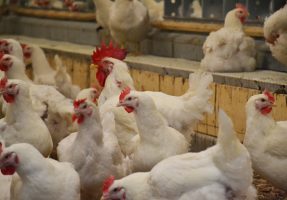
A $2.5-million provincial program is helping Fraser Valley egg and poultry producers defend their flocks against avian influenza. The Novel Tools and Technologies Program supported 29 farms last year with air filtration and UV light systems — and more than 80% would recommend the technology to others. Applications for the current round, supporting approximately 50 farms, are open June 1–30. Fraser Valley, Langley and Surrey farms are eligible.

#BCAg
... See MoreSee Less

A $2.5-million provincial program is helping Fraser Valley egg and poultry producers defend their flocks against avian influenza. The Novel Tools and Technologies Program supported 29 farms last year with air filtration and UV light systems — and more than 80% would recommend the technology to others. Applications for the current round, supporting approximately 50 farms, are open June 1–30. Fraser Valley, Langley and Surrey farms are eligible.

#BCAg
View Comments
  • Likes: 10
  • Shares: 0
  • Comments: 0

Comment on Facebook

1 week ago

The sod for the seven FIFA World Cup matches beginning this Saturday at BC Place was grown by Bos Sod Farms in Abbotsford. During a tour of the Bos family's turf farm hosted by the Abbotsford Chamber of Commerce last week, Bert Bos said getting the hybrid of 95% real grass and 5% artificial turf just right was a learning experience. "That hybrid component makes it very robust," he says. "There's a whole battery of testing they do."

#BCAg
... See MoreSee Less

The sod for the seven FIFA World Cup matches beginning this Saturday at BC Place was grown by Bos Sod Farms in Abbotsford. During a tour of the Bos familys turf farm hosted by the Abbotsford Chamber of Commerce last week, Bert Bos said getting the hybrid of 95% real grass and 5% artificial turf just right was a learning experience. That hybrid component makes it very robust, he says. Theres a whole battery of testing they do. 

#BCAg
View Comments
  • Likes: 80
  • Shares: 2
  • Comments: 4

Comment on Facebook

Congratulations So proud of you

Way to grow!

Why not just bring FIFA to sumas prairie.

100%

2 weeks ago

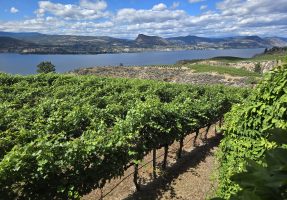
BC fruit growers and ranchers are bracing for a crisis after the Regional District of North Okanagan demanded a 70% cut in agricultural water use amid critically low reservoir levels. The BC Fruit Growers Association warns losses in the Vernon area could reach $250 million in crop and tree losses. Growers hope today's meeting with RDNO will chart a path forwar#BCAg#BCAg ... See MoreSee Less

Link thumbnail

Vernon growers address drought

www.countrylifeinbc.com

Growers blindsided by last week’s demand from the Regional District of North Okanagan for a 70% cut in agricultural water use hope a June 10 meeting with RDNO will chart a positive path forward.
View Comments
  • Likes: 13
  • Shares: 26
  • Comments: 6

Comment on Facebook

So let’s cut the water for the ones growing the food that feed the people. Makes total sense 🙄

Hey let's put up an AI Center in the OKANAGAN, we don't need water for FOOD! #ThatAnnouncementWillBeNext

Time for the city folks to stand up for the farmers and realize how devistating these changes will be. Definitely golf courses and city green space need to be shut off before food supply does.

All the golf courses had better have turned all their irrigation off before any primary producers are forced to.

no people or no food, tough choices

crazy shit, shut down nthe golf courses, nom water for them

View more comments

Subscribe | Advertise

The agricultural news source in British Columbia since 1915
  • Email
  • Facebook

Fertilizer prices on the rise

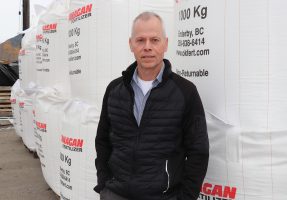
Okanagan Fertilizer CEO Ken Clancy says the war in the Middle East has complicated the outlook on the availability and cost of fertilizers. File photo

March 11, 2026 byPeter Mitham

War in the Middle East has delivered a generational shock to energy prices, meaning BC farmers can expect a prolonged period of higher costs not just for fuel but also for fertilizer.

While much of western North America’s nitrogen fertilizers are produced locally rather than imported, Okanagan Fertilizer Ltd. president and CEO Ken Clancy says various factors have complicated the outlook.

‘They were already predicting shortages in Western Canada and the Pacific Northwest before this all happened,” he says. “Since December-January, the price of nitrogen fertilizer in particular has been going up a lot, and this whole situation with the war breaking out in Iran has exacerbated that.”

Clancy says farmers, and in turn local suppliers, scaled back fertilizer purchases last summer due to the outlook for commodity prices.

“Companies like us weren’t buying like they normally did. There was a lot of fertilizer that simply wasn’t placed for the upcoming season like it normally would be,” he says.

This resulted in lower nitrogen imports into Western Canada, where stocks reached a record high of more than 300,000 metric tonnes. But as the price outlook improved, buyers rushed in, and prices began rising.

Some producers now believe the market could be short hundreds of thousands of tonnes.

Clancy is optimistic on supplies but dour on pricing.

“I’m confident that we’re going to get the tonnes we need to get through the season, but there will be some logistics challenges and price challenges,” he says. “In Western Canada, the only way [we’re] going to see adequate supply is prices going up so imports will be attracted into the market.”

Statistics Canada reports that nitrogen-based fertilizer prices more than doubled in BC following Russia’s invasion of Ukraine in 2022. Prices eased in 2023 but never dropped back to previous levels, and last year they began rising again. By September, they were about 60% above pre-pandemic levels.

The cost of fuel has been relatively more stable since 2022, but that could be ending. The first week of US attacks on Iran saw crude prices surge past US$100 a barrel before falling back on hopes of a shorter conflict. But the price at the pumps has not eased, as oil shipments through the Strait of Hormuz remain stalled.

Higher input costs will squeeze producer margins unless they’re able to pass along the increases. This is what happened in 2022, when an overall surge in inflation permitted some price-taking.

However, an analysis by Farm Credit Canada on March 9 indicates that at this early stage in the conflict, the outlook is anything but certain.

“Unlike 2022, when rising input costs were offset by strong commodity prices, 2026 is shaping up very differently,” FCC says. “Unless the war is resolved quickly, expect global fertilizer supplies to tighten further and put additional pressure on global food production and prices.”

All content on this website is copyrighted, and cannot be republished or reproduced without permission.
Related Posts

You may be interested in these posts from the same category.

Fertilizer, fuel costs soar amid Iran conflict

Vancouver Island attracts small-lot buyers

Avian influenza returns

BC farmland values flat

CUSMA consultations begin

BC growers look beyond tariff turbulence

Okanagan drives increase in land values

Beef herd drops

BC farmland values see strong growth

Farmland lease rates

BC farmland values fall

Producers struggle to talk about mental health

Previous Post: « Water woes: groundwater under pressure across BC
Next Post: New leadership at AgSafe BC »

© 2026 COUNTRY LIFE IN BC - ALL RIGHTS RESERVED