• Menu
  • Skip to primary navigation
  • Skip to main content
  • Skip to primary sidebar

Country Life In BC Logo

The agricultural news source in British Columbia since 1915

  • Headlines
  • Calendar
  • Subscribe
  • Advertise
  • About
  • Archives
  • Contact
  • Search
  • Headlines
  • Calendar
  • Subscribe
  • Advertise
  • About
  • Archives
  • Contact
  • Search

Primary Sidebar

Originally published:

DECEMBER 2019
Vol. 105 Issue 12

Subscribe Now!

Sign up for free weekly FARM NEWS UPDATES

Loading form…

Your information will not be
shared or sold ever

Stories In This Edition

Parties unite on trespass legislation

Protesters rally at Ag Day

Got milk?

Peace faces worst grain harvest in 30+years

Editorial: Light in darkness

Back Forty: The West is packing its bags. Does Ottawa care?

Farmers’ passion for the land is strong

Ranchers voice ALR concerns at public meetings

Chefs, farmers foster new relationships

Sidebar: VFM Direct shuts down

Summerland grower steps up as co-op president

Recommendations from report nearly fully implemented

Food and beverage innovation centre launched

Japanese beetle control an industry priority

Langley farmers launch local farmers’ institute

BC agritech attracting major partners

New dam safety information flows

Bee-utiful

No-till takes centre stage at field day

Students showcase on-farm research projects

Emergency plans top agenda for bison ranchers

Rad

Regulatory issues top concerns for cattlemen

Processing adds value to Cowichan farm

Mentorship network helps new farmers

Research: Gene-editing eliminates horns in dariy bulls

Preserving owl, bat habitat is good for farming

Sidebar: Better bait

Seed app helps producers grow research data

Cannabis class wins high marks at BC fairs

Cannabis growers square off against diseases, pests

Pear-fect

Sidebar: Breaking the mold

Fine-tune feeding for healthier lambs

Farm Story: Performance anxiety knows no boundaries

Island AgSafe consultant changes gears

Woodshed: Intrigue deepens as barn repairs take shape

Century Farm award honours historic milestone

Jude’s Kitchen: So much to celebrate

More Headlines

Follow us on Facebook

Comments Box SVG iconsUsed for the like, share, comment, and reaction icons

6 days ago

A BC Forest Practices Board investigation has found overgrazing has damaged grasslands in the Coutlee Range Unit near Merritt — and the range-use plan meant to prevent it was unenforceable. With complaints about overgrazing on the rise and grasslands covering just 1% of BC's land mass, the findings raise fresh questions about how the province manages one of its most vulnerable — and valuable — food-producing ecosyste#BCAg#BCAg ... See MoreSee Less

Link thumbnail

Board finds overgrazing rules unenforceable unmeasurable

www.countrylifeinbc.com

MERRITT – A BC Forest Practices Board investigation has found instances of non-compliance related to overgrazing have damaged open grasslands in the Mine pasture, part of the Coutlee Range Unit near...
View Comments
  • Likes: 6
  • Shares: 6
  • Comments: 6

Comment on Facebook

Several ranchers in recent years have gone into temporary non use on that range , so that means the grass should grow. But drought conditions/lack of rain and snow don’t allow that to happen . Dried up springs , creeks waterholes in various pastures add to over grazing where there is water , as livestock and everything else stay close to the water source . So even though less cattle are on it , over grazing appears. There is a large volume of horses on it 365 days/year which is wrong ! They pull grass right out of the ground when it’s just trying to grow ,, opens the door for weeds to grow in. That don’t help it. Aging infrastructure ( fences) laying on the ground, pipe line building , ( lack of commitment to fence maintenance) amongst all users contributes also to over grazing. Recreational atv users leaving gates open between pastures allows livestock to go back or ahead in pastures also expidites over grazing. Logging ( bcts) has no problem laying out cut locks on both sides of a fence , then it gets smashed down during logging and they don’t take responsibility to stand it back up or clean the cattle gaurds out when they are done , that happened 4 years ago on pasture 5 up there . I bet it is still not fixed . There are lots of contributing factors to the problem.

Tragedy of the commons.

I looked through the report. I saw nothing about the effects of noxious weeds on productive grasslands. This particular area is vulnerable because of the Ministry’a efforts to diversify the use of the Grasslands.

This pasture is under tremendous pressure not only from cattle but from irresponsible local residents who treat it as a landfill dumping all manner of household debris here. And don't even get me started on the mud bogging and camping in sensitive riparian areas. The feral horses are in this pasture 365 days a year just hammering it. Would sure be nice to see some enforcement action on people who are intentionally ripping up the grasslands and riparian areas. Cattle could be a valuable resource for rebuilding soils and native grasses in this area with the help of electric fencing and/or e-collars. The humans will be harder to manage.

The Forest and Range Practices Act was written by lawyers for global forest licencee shareholders. Results-based = unenforceable.

Also, can we talk about the impact of a pipeline being built through the middle of this field for multiple years?

View more comments

1 week ago

East Kootenay rancher Randy Reay is digging a new well after two natural water sources dried up on his Crown tenures. A new Living Lakes Canada assessment found 15% of mapped aquifers in the region are high-priority for monitoring, yet 80% of those go unmonitored. With over 48% of BC's provincial observation wells reporting below-normal groundwater levels, ranchers and researchers are sounding the alarm on water security. The story is in our March edition, and we've posted it to our website thi#BCAgk.

#BCAg
... See MoreSee Less

Link thumbnail

Water woes: groundwater under pressure across BC

www.countrylifeinbc.com

JAFFRAY – As a young boy growing up in the Kootenay-Boundary region, Randy Reay never expected to run out of water. But this year, in mid-February, his fields are bare. There is no snow halfway up t...
View Comments
  • Likes: 8
  • Shares: 7
  • Comments: 1

Comment on Facebook

Jaffrey is in the east Kootenays not kooteney boundary

2 weeks ago

BC farmers are bracing for prolonged higher input costs as war in the Middle East drives up fuel and fertilizer prices. Nitrogen fertilizer costs were already climbing before the Iran conflict began, with prices still roughly 60% above pre-pandemic levels. Farm Credit Canada warns that unlike 2022, strong commodity prices may not offset rising costs this time. Local suppliers expect supply challenges and further price increases ahead.

#BCAg
... See MoreSee Less

Link thumbnail

Fertilizer prices on the rise

www.countrylifeinbc.com

War in the Middle East has delivered a generational shock to energy prices, meaning BC farmers can expect a prolonged period of higher costs not just for fuel but also for fertilizer.
View Comments
  • Likes: 2
  • Shares: 1
  • Comments: 0

Comment on Facebook

2 weeks ago

... See MoreSee Less

View Comments
  • Likes: 1
  • Shares: 0
  • Comments: 0

Comment on Facebook

2 weeks ago

Cameron Stockdale is the new executive director of provincial farm safety organization AgSafeBC. Find out more in this week's Farm News Update from Country Life in B#BCAg#BCAg ... See MoreSee Less

Link thumbnail

New leadership at AgSafe BC

www.countrylifeinbc.com

Cameron Stockdale is the new executive director of provincial farm safety organization AgSafeBC, succeeding Wendy Bennett. Bennett left AgSafeBC in September 2025, following 12 years with the…
View Comments
  • Likes: 5
  • Shares: 1
  • Comments: 0

Comment on Facebook

Subscribe | Advertise

The agricultural news source in British Columbia since 1915
  • Email
  • Facebook

BC agritech attracting major partners

Lower Mainland companies share expertise in securing capital

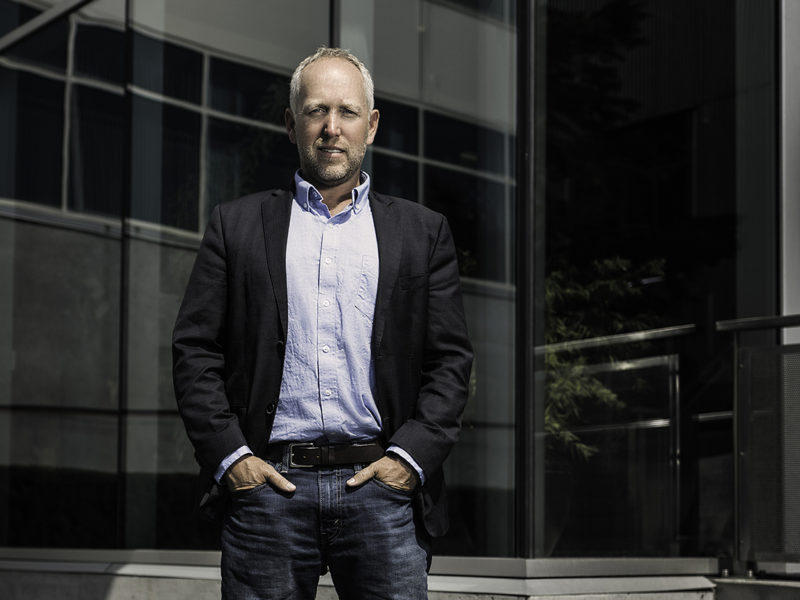
Semios CEO Michael Gilbert focused on profitability to attract investors to his company, which licenses crop monitoring systems to manage more than 120,000 acres. SUBMITTED PHOTO

December 1, 2019 byPeter Mitham

VANCOUVER – Technological innovation is on the rise as a way to address the labour shortages facing agriculture and improve production practices, but getting the money to fund research and development activities is tough.

To give companies a chance to share their successes with emerging companies on the hunt for cash, the Vantec Angel Network Inc. hosted an information and networking session for local agritech companies on November 6.

A centrepiece of the afternoon event was a panel discussion with Tom Urban, founder of Agribusiness Advisors, a Vancouver company that has provided early stage financing to several agritech companies.

The panel included three of those companies: CubicFarm Systems Inc., a four-year-old vertical farming company spun out of the Benne family’s greenhouse business in Langley; Novobind Livestock Therapeutics Inc. of Vancouver, which focuses on technologies that reduce antimicrobial use in animals; and SemiosBio Technologies Inc., also of Vancouver, which has patented an automated monitoring system to reduce the use of chemical pest controls in orchards.

Semios has been the most successful of the three companies to date, securing $100 million in financing in September that will support expansion into new markets with its automated monitoring system, which can also track climatic conditions. It currently serves growers managing 120,000 acres, an area that’s set to grow in 2020.

“I founded the company in 2011 and the first three to four years were pretty much research years,” says Semios CEO Michael Gilbert. “Then we focused a lot on profitability. We were trying to see how fast could we grow and still become profitable. So trying to max out those two; often people pick one or the other.”

The company raised $28 million from investors and $20 million from grants and other sources prior to licensing its technology to growers for an annual fee of $100 to $300 per acre.

“One thing we did early on is we went right to the biggest, best customers in the world … in California and Washington,” explains Gilbert. “There’s lots of folks here in BC we could have gone after, but the big customers tell you everything you need to know about your business and that helped us learn a lot about the product really quickly.”

Profitability was key, so growers weren’t given free trials or discounts.

“People care more when they pay … and that allowed us to get to profitability much faster,” he says.

Urban says by showing customers the economic impact of their product, Semios fueled its own success.

“They were able to demonstrate a very specific value/economic proposition to the customer,” he notes.

Established record

The value of the enclosed vertical farming systems CubicFarms offers was clear to many of its early investors because the Benne family was respected across the continent for its greenhouse propagation systems and had an established record on the public markets through Bevo Agro Inc. (which last year evolved into cannabis producer Zenabis Global Inc.).

“Everyone else in the indoor ag space seems to be more coming at it from a business plan, let’s raise a bunch of capital and solve great problems with the sheer brute force of money,” explains CEO Dave Dinesen, who joined the company last year. “Our founders came at it from ‘We’re really good growers; we’re going to come at it from the grower’s standpoint.’”

Created in 2014, CubicFarms steadily grew with the assistance of four rounds of financing, each larger than the last until it secured a $100 million investment last year backed by an institutional investor and was spun out of Bevo.

“It was a combination of we know how to grow stuff, and we’ve got a competent management team that knows how to scale up, raise capital, execute, build a team,” says Dinesen, who adds that sales didn’t hurt.

While it has not released any financials since being spun out of Bevo last year, it has made major sales to growers in Canada and the US; the latter was worth nearly $4 million. It also sells produce under the Thriiv brand name through IGA, Kin’s Farm Market and other grocers.

“Once you get some sales, that really gives potential investors a lot of room,” he said, noting that having institutional backing has given it the standing needed to both grow its business and attract new investors. “Getting that strategic partner, to us, has really put gasoline on our fire.”

The next step for CubicFarms will be a listing on the TSX this winter, a step up from its current listing on the TSX-Venture exchange.

Different route

But if sales were critical to the growth of Semios and CubicFarms, Novobind took a different route. It didn’t want to sell anything, says founder and CEO Hamlet Abnousi. Rather, it focused on developing technology and reaping licensing fees from its discoveries, which target pathogens responsible for more than $29 billion in losses to chicken, shrimp and companion animals each year.

“We don’t want to actually get out there and sell stuff; we want to create technology and hand it over to people who can do that,” he says.

This focused the company on looking for talent that could match what it offered in research expertise.

“Strategically, we picked good areas to be in, then we looked back and said for us to be able to get there in one, two, three rounds of investment, who do we have to bring along?” says Abnousi. “We can’t afford a giant management team, so how do we bring an investor in who has reach, technical strategy, [subject] matter expertise that can enable what we want to do?”

Novobind has turned away five times the investment it received, says Abnousi, but he believes people are just as valuable. This past summer, Novobind received investment from Lallemand, a world leader in animal nutrition with which it will be partnering on research and development.

“Validation can come in the form of external partners it can come in terms of internal competence,” says Urban, who anticipates further expansion for the company.

The investments in the three companies dwarf the cash available to start-ups in BC, however. Kevin Harvey, portfolio manager with the investment capital branch of the BC Ministry of Jobs, Trade and Technology, painted a modest picture of the capital flowing to fledgling agriculture technology companies in BC.

Programs such as the province’s Small Business Venture Capital program have $38.5 million available, and Harvey says that’s managed to leverage $120 million into the BC venture capital ecosystem. A mere $3 million is available for agritech initiatives, however.

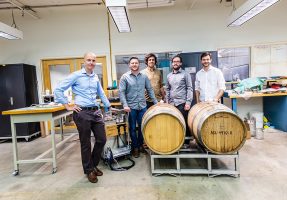
Companies funded through the program in the past include plant-based food processor Daiya Foods Inc., but there are plenty more looking for financing inside and outside the province. Several attended the Vantec networking session, including BarrelWise Technologies, which won the province’s Agritech Innovation Challenge this summer with a technology to improve management of barrel-aged wines; Plant Veda, which describes itself as “a plant-based mylk company on a mission to reduce climate change by shifting humans to plant-based diet;” and Susgrainable Health Foods, which upcycles spent mash from brewing operations into baked goods, flour and other ingredients.


Related Posts

You may be interested in these posts from the same category.

IAF elects new executive

Black walnuts are an option for water-logged land

Bee

Agri-Innovation projects announced

Agritech faces mixed attitudes

Peace funds start flowing

Cash for innovation

Drone

Innovation challenge relaunched

Previous Post: « No-till takes centre stage at field day
Next Post: Parties unite on trespass legislation »

Copyright © 2026 Country Life in BC · All Rights Reserved