
• Menu
  • Skip to primary navigation
  • Skip to main content
  • Skip to primary sidebar

Country Life In BC Logo

The agricultural news source in British Columbia since 1915

  • Headlines
  • Calendar
  • Subscribe
  • Advertise
  • About
  • Archives
  • Contact
  • Search
  • Headlines
  • Calendar
  • Subscribe
  • Advertise
  • About
  • Archives
  • Contact
  • Search

Primary Sidebar

Current Issue:

DECEMBER 2025
Vol. 111 Issue 11

Subscribe Now!

Sign up for free weekly FARM NEWS UPDATES

Select list(s) to subscribe to


By submitting this form, you are consenting to receive marketing emails from: Country Life in BC. You can revoke your consent to receive emails at any time by using the SafeUnsubscribe® link, found at the bottom of every email. Emails are serviced by Constant Contact
Your information will not be
shared or sold ever

Follow us on Facebook

Comments Box SVG iconsUsed for the like, share, comment, and reaction icons

6 days ago

... See MoreSee Less

View Comments
  • Likes: 4
  • Shares: 0
  • Comments: 0

Comment on Facebook

6 days ago

On the last day of the BC Organic Conference, Thursday, Molly Thurston of Pearl Agricultural Consulting helped growers learn how to manage bugs such as codling moth, wireworm, and rootworm in organic growing systems. Her talk alongside Renee Prasad included hands-on activities in which participants checked out various traps and examined pests under microscopes. Be sure to look for more upcoming ag events on our online calendar at www.countrylifeinbc.com/calendar/

#BCAg
... See MoreSee Less

On the last day of the BC Organic Conference, Thursday, Molly Thurston of Pearl Agricultural Consulting helped growers learn how to manage bugs such as codling moth, wireworm, and rootworm in organic growing systems. Her talk alongside Renee Prasad included hands-on activities in which participants checked out various traps and examined pests under microscopes. Be sure to look for more upcoming ag events on our online calendar at www.countrylifeinbc.com/calendar/

#BCAg
View Comments
  • Likes: 15
  • Shares: 0
  • Comments: 0

Comment on Facebook

1 week ago

Well-known organic farmer and podcaster Jordan Marr gets interviewed by Country Life in BC’s own columnist and potato mavin Anna Helmer during the opening session of the BC Organic Conference at Harrison Hot Springs yesterday. Sessions run today (Wednesday) and Thursday and include organic and regenerative growing practices and expanding and advocating for the organic sector, all under the background of the newly launched Organic BC banner.

#BCAg
... See MoreSee Less

Well-known organic farmer and podcaster Jordan Marr gets interviewed by Country Life in BC’s own columnist and potato mavin Anna Helmer during the opening session of the BC Organic Conference at Harrison Hot Springs yesterday. Sessions run today (Wednesday) and Thursday and include organic and regenerative growing practices and expanding and advocating for the organic sector, all under the background of the newly launched Organic BC banner.

#BCAg
View Comments
  • Likes: 37
  • Shares: 2
  • Comments: 1

Comment on Facebook

Interested in finding out more about this

3 weeks ago

Today, we remember those who sacrificed their lives or their well-being for our freedom. Lest we forget. ... See MoreSee Less

Today, we remember those who sacrificed their lives or their well-being for our freedom. Lest we forget.
View Comments
  • Likes: 8
  • Shares: 0
  • Comments: 0

Comment on Facebook

1 month ago

FarmFolk CItyFolk is hosting its biennial BC Seed Gathering in Harrison Hot Springs November 27 and 28. Farmers, gardeners and seed advocates are invited to learn more about seed through topics like growing perennial vegetables for seed, advances in seed breeding for crop resilience, seed production as a whole and much more. David Catzel, BC Seed Security program manager with FF/CF will talk about how the Citizen Seed Trail program is helping advance seed development in BC. Expect newcomers, experts and seed-curious individuals to talk about how seed saving is a necessity for food security. ... See MoreSee Less

Link thumbnail

BC Seed Gathering - FarmFolk CityFolk

farmfolkcityfolk.ca

Save the date for our upcoming 2023 BC Seed Gathering happening this November 3rd and 4th at the Richmond Kwantlen Polytechnic University campus.
View Comments
  • Likes: 1
  • Shares: 0
  • Comments: 0

Comment on Facebook

Subscribe | Advertise

The agricultural news source in British Columbia since 1915
  • Email
  • Facebook

BC vine damage discussed

January 24, 2023 byPeter Mitham

The blast of cold air Okanagan vineyards experienced December 21 was a hot topic at this week’s Unified Wine and Grape Symposium in Sacramento, California.

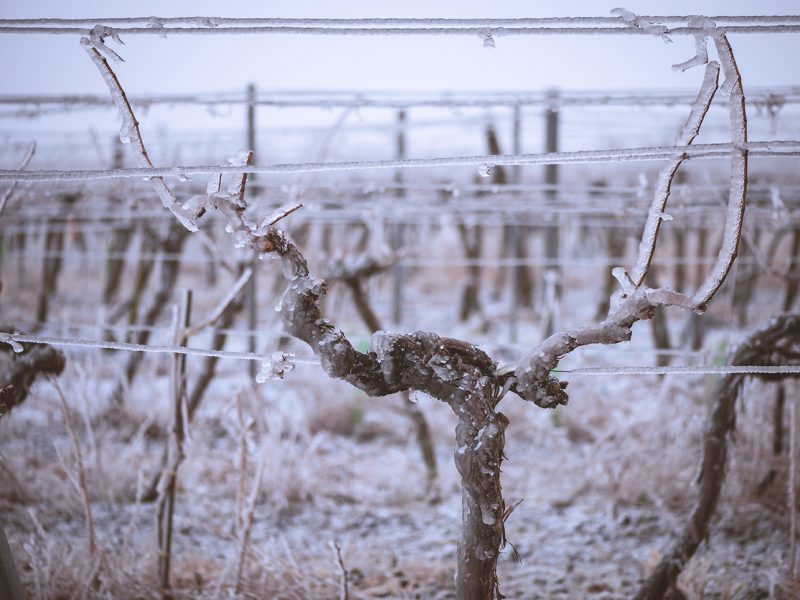
The largest show devoted to viticulture and enology in North America, the conference included panels on vine resilience and winter damage – timely discussions following the severe frost event that affected vineyards in BC and Washington last month. Some growers in BC describe it as the worst frost event they’ve seen in their careers.

Dramatic photos of snow-covered vineyards in the Okanagan this past December by Summerland Research and Development Centre research scientist José Ramón Úrbez-Torres punctuated a morning session on vine resilience, and the theme was taken up by Washington State University researcher Markus Keller, who kicked off the cold hardiness discussion in the afternoon.

Keller gave valuable information on the determinants of vine hardiness, and underscored the challenges vines face over the winter.

Vine dormancy begins as the hours of daylight fall below 13 hours a day, Keller explains, and is the prerequisite for vines to become hardier. The process sees leaves fall off, cellulose seal the phloem and buds drain of water, their moisture content falling from 80% to less than 45%.

Once they’ve drained, hardiness sets in and is regulated by a dynamic relationship between sugars, which maintain hardiness, and starches, which mitigate it.

It’s the relationship between the two that partly explains why not all buds are equally affected by a cold snap, as well as the duration and intensity of the cold.

A wide diurnal change in temperature also interferes with vine acclimation. Pointing to the photos of snowy vineyards in BC, he noted that snow can reflect solar radiation that warms up the trunks of the grapevines and lead to a shift of at least nine degrees over the course of the day. This can make it harder for vines to stay acclimated to the air temperature.

“But sometimes it’s not the cold weather that kills the buds,” he points out. “Be careful what you call cold damage; it’s not always the same.”

He’s seen Syrah buds, particularly after a hot summer, with 40% of the buds dead, something most growers only discover when spring comes.

Of course, the net result is the same – few new buds at the start of the season, and the risk of a short crop.

To mitigate the issue, Keller encourages a cautious approach when it comes to pruning. Growers in BC often prune early, he said, whereas those in Washington prune in February, and then usually a prepruning that gives them time to assess the health of their vines.

He recommends delaying pruning, noting that even though it contributes to delayed budbreak, vines easily make up a three-week delay in budbreak over the course of the growing season. Delaying pruning is a small price to pay if it improves the final crop.

“Don’t be afraid to do something that looks a bit ugly in the vineyard; at least you’ll have a crop,” he says.
 

Related Posts

You may be interested in these posts from the same category.

Extreme weather, extreme impacts

Previous Post: « Pilot helps UBCO’s Feed BC initiative grow
Next Post: PAS kicks off »

Copyright © 2025 Country Life in BC · All Rights Reserved