
• Menu
  • Skip to primary navigation
  • Skip to main content
  • Skip to primary sidebar

Country Life In BC Logo

The agricultural news source in British Columbia since 1915

  • Headlines
  • Calendar
  • Subscribe
  • Advertise
  • About
  • Archives
  • Contact
  • Search
  • Headlines
  • Calendar
  • Subscribe
  • Advertise
  • About
  • Archives
  • Contact
  • Search

Primary Sidebar

Originally published:

AUGUST 2019
Vol. 105 Issue 8

Subscribe Now!

Sign up for free weekly FARM NEWS UPDATES

Loading form…

Your information will not be
shared or sold ever

Stories In This Edition

Province allows family on farms

Teamwork!

Rain hammers cherry crop

Sidebar: A brief history

Chilcotin ranchers’ hope for hay crop washed away

Editorial: Dog days

Back Forty: Keeping the kids safe down on the farm

Viewpoint: Top-down governance no way to help caribou

Egg board set to get cracking on quota distribution

Get ’em while you can

Feds address labour shortages

Bee healthy!

Marketing board names new entrant winners

BC berry research gets big funding boost

BC hosts International Blueberry Organization

Tour showcases innovation, marketing savvy

Governments agree to national park reserve

BC’s oldest farm seeks new management

Apple dieback investigation underway

Bumper crop for raspberries fails to materialize

Balance key to restoring fire-affected range

Global demand set to buoy cattle prices

A good start helps calves finish in top shape

Ranchers collaborate to preserve grasslands

Rotational grazing pays off year-round

Sidebar: Track costs, see profits

Stock show kicks off summer for 4-H members

Finding new potential for a lost native berry

Sidebar: Others see same benefits

Shuswap tour showcases local producers

Research: Do honeybees spread viruses to wild bees?

Volken Academy breaks ground on new farm

Woodshed: Romance is in the air, for all but the Hendersons

Fourth-generation farmers chart ambitious course

Jude’s Kitchen: In-season produce is king

More Headlines

Follow us on Facebook

Comments Box SVG iconsUsed for the like, share, comment, and reaction icons

34 minutes ago

The Agricultural Land Commission is laying off staff after years of flat funding under the BC NDP. ALC chair Jennifer Dyson warns that application volumes, enforcement activity and legal obligations have all risen while its operating budget has stayed effectively flat — meaning longer wait times ahead for some services.

#BCAg
... See MoreSee Less

Link thumbnail

Land Commission lays off staff

www.countrylifeinbc.com

With no budget increase this year, the Agricultural Land Commission (ALC) is laying off six staff to make ends meet. “Ongoing financial constraints and the requirement to operate within the approved...
View Comments
  • Likes: 0
  • Shares: 1
  • Comments: 0

Comment on Facebook

6 days ago

A BC Forest Practices Board investigation has found overgrazing has damaged grasslands in the Coutlee Range Unit near Merritt — and the range-use plan meant to prevent it was unenforceable. With complaints about overgrazing on the rise and grasslands covering just 1% of BC's land mass, the findings raise fresh questions about how the province manages one of its most vulnerable — and valuable — food-producing ecosyste#BCAg#BCAg ... See MoreSee Less

Link thumbnail

Board finds overgrazing rules unenforceable unmeasurable

www.countrylifeinbc.com

MERRITT – A BC Forest Practices Board investigation has found instances of non-compliance related to overgrazing have damaged open grasslands in the Mine pasture, part of the Coutlee Range Unit near...
View Comments
  • Likes: 6
  • Shares: 6
  • Comments: 6

Comment on Facebook

Several ranchers in recent years have gone into temporary non use on that range , so that means the grass should grow. But drought conditions/lack of rain and snow don’t allow that to happen . Dried up springs , creeks waterholes in various pastures add to over grazing where there is water , as livestock and everything else stay close to the water source . So even though less cattle are on it , over grazing appears. There is a large volume of horses on it 365 days/year which is wrong ! They pull grass right out of the ground when it’s just trying to grow ,, opens the door for weeds to grow in. That don’t help it. Aging infrastructure ( fences) laying on the ground, pipe line building , ( lack of commitment to fence maintenance) amongst all users contributes also to over grazing. Recreational atv users leaving gates open between pastures allows livestock to go back or ahead in pastures also expidites over grazing. Logging ( bcts) has no problem laying out cut locks on both sides of a fence , then it gets smashed down during logging and they don’t take responsibility to stand it back up or clean the cattle gaurds out when they are done , that happened 4 years ago on pasture 5 up there . I bet it is still not fixed . There are lots of contributing factors to the problem.

Tragedy of the commons.

I looked through the report. I saw nothing about the effects of noxious weeds on productive grasslands. This particular area is vulnerable because of the Ministry’a efforts to diversify the use of the Grasslands.

This pasture is under tremendous pressure not only from cattle but from irresponsible local residents who treat it as a landfill dumping all manner of household debris here. And don't even get me started on the mud bogging and camping in sensitive riparian areas. The feral horses are in this pasture 365 days a year just hammering it. Would sure be nice to see some enforcement action on people who are intentionally ripping up the grasslands and riparian areas. Cattle could be a valuable resource for rebuilding soils and native grasses in this area with the help of electric fencing and/or e-collars. The humans will be harder to manage.

The Forest and Range Practices Act was written by lawyers for global forest licencee shareholders. Results-based = unenforceable.

Also, can we talk about the impact of a pipeline being built through the middle of this field for multiple years?

View more comments

1 week ago

East Kootenay rancher Randy Reay is digging a new well after two natural water sources dried up on his Crown tenures. A new Living Lakes Canada assessment found 15% of mapped aquifers in the region are high-priority for monitoring, yet 80% of those go unmonitored. With over 48% of BC's provincial observation wells reporting below-normal groundwater levels, ranchers and researchers are sounding the alarm on water security. The story is in our March edition, and we've posted it to our website thi#BCAgk.

#BCAg
... See MoreSee Less

Link thumbnail

Water woes: groundwater under pressure across BC

www.countrylifeinbc.com

JAFFRAY – As a young boy growing up in the Kootenay-Boundary region, Randy Reay never expected to run out of water. But this year, in mid-February, his fields are bare. There is no snow halfway up t...
View Comments
  • Likes: 8
  • Shares: 7
  • Comments: 1

Comment on Facebook

Jaffrey is in the east Kootenays not kooteney boundary

2 weeks ago

BC farmers are bracing for prolonged higher input costs as war in the Middle East drives up fuel and fertilizer prices. Nitrogen fertilizer costs were already climbing before the Iran conflict began, with prices still roughly 60% above pre-pandemic levels. Farm Credit Canada warns that unlike 2022, strong commodity prices may not offset rising costs this time. Local suppliers expect supply challenges and further price increases ahead.

#BCAg
... See MoreSee Less

Link thumbnail

Fertilizer prices on the rise

www.countrylifeinbc.com

War in the Middle East has delivered a generational shock to energy prices, meaning BC farmers can expect a prolonged period of higher costs not just for fuel but also for fertilizer.
View Comments
  • Likes: 2
  • Shares: 1
  • Comments: 0

Comment on Facebook

2 weeks ago

... See MoreSee Less

View Comments
  • Likes: 1
  • Shares: 0
  • Comments: 0

Comment on Facebook

Subscribe | Advertise

The agricultural news source in British Columbia since 1915
  • Email
  • Facebook

BC’s oldest farm seeks new management

BC Parks wants Salt Spring’s Ruckle Farm to be self-sustaining

Marjorie Lane photo

August 1, 2019 byBarbara Johnstone Grimmer

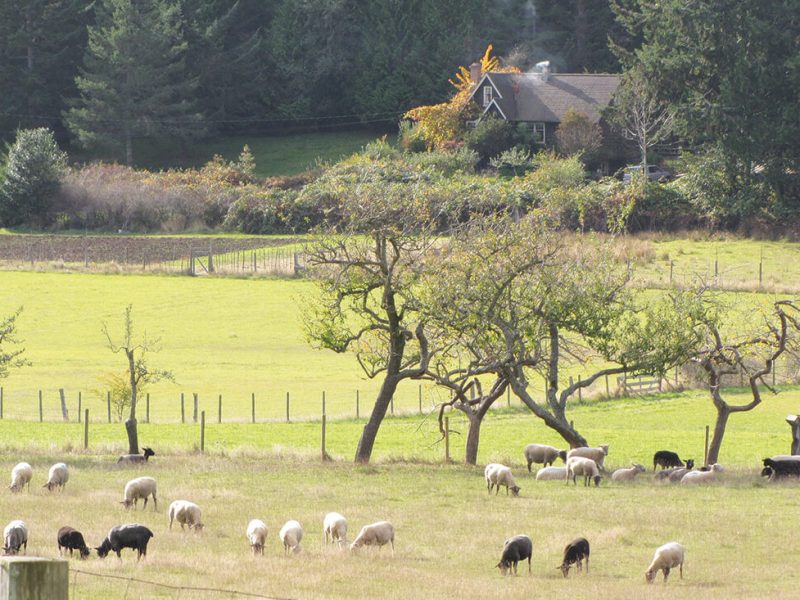
SALT SPRING ISLAND—BC Parks is looking for a farm manager for Ruckle Farm on Salt Spring Island through a competitive bid process, after assuming full responsibility for the 200-acre working farm within Ruckle Provincial Park.

The farm was managed privately in a life legacy agreement between BC Parks and the Ruckle family, which sold the 1,200-acre property on Beaver Point to the province in 1972 but retained tenure of the farm until the passing of the last Ruckle family member last year.

For almost 30 years, the farm was managed by Mike Lane for the Ruckle family. Lane maintained the gardens for the houses on the farm, tended the orchards, raised livestock, harvested hay and hosted Ruckle Farm Days, an annual community open house on the property.

Lane continues to operate the farm and live there under a park use permit issued after the life legacy arrangement with the province ended. He’s permitted to stay until the end of 2020. The new farm manager is expected to begin January 1, 2021.

Lane is one of three interested parties considering the farm operator contract.

According to BC Parks, the request for proposal (RFP) process aims to be a fair, open and transparent bidding opportunity per government procurement policies.

The contract term is for 20 years. BC Parks says the length is longer than is typical, but is considered necessary due to the unique nature of the park and the requirements to care for and run it. The 20-year term accommodates necessary investment while allowing for a financially sustainable farm operation that will enhance protection of the park’s heritage value. The only other BC Parks operating contract with a term 20 years in length or greater is Mt. Assiniboine Park.

The Ruckles were well known for their stewardship of the land. Gordon Ruckle has been quoted as saying, “You can’t own the land; you can only preserve it for future generations.” A “gentlemen’s agreement” between the Ruckle family and the province prevented any development that would conflict with farming operations, although the province has long anticipated changes once it acquired full control of the property.

However, BC Parks has indicated an added interest in the economic viability of the operation and is looking for ideas that will not financially depend on the government. These include proposals that “consider new products, experiences, business models and enterprises that allow long-term viability of a profitable operation.”

Ruckle Farm is credited as the oldest working farm in BC operated by the original family. It was begun in the 1870s. According to BC Parks, it is the only farm operating within a BC provincial park. Its appeal has been its beauty and authenticity, following the traditions of farming in the Gulf Islands.

The Salt Spring Island Agricultural Alliance acknowledges the community’s strong relationship with the farm, and its alignment with the Salt Spring area farm plan and the Ruckle Park management plan.

“Mike Lane supported the Ruckle family, which allowed them to live on the farm, including Helen Ruckle in her later years, which allowed her to use her house on the farm and maintain a garden there and to continue to live as they had,” says alliance president Tony Beck.

Lane and his wife Marjorie collaborate with Salt Spring Island Farmers’ Institute on Heritage Day and the fall fair on behalf of Ruckle Farm. Lane has taught sheep raising and condition scoring workshops at the farm for the Salt Spring Island Abattoir Society, and has held farm-to-table lamb dinners as fundraisers for the agricultural alliance.

Lane is also a board member of the abattoir society and mentors young farmers from the Gulf Islands and around the world.

Dan Jason of Salt Spring Seeds has collaborated with Lane to plant heritage beans at Ruckle Farm for the Seed Sanctuary project. Varieties include the Ruckle bean. The beans are also used at bean suppers in the community and the food bank run by Salt Spring Island Community Services.

“Mike Lane has been awesome for all the years he has been there, creating a beautiful, productive farm,” says Jason. “I am not sure what BC Parks wants. It would be a shame if they brought in someone else.”

The closing date for proposals is September 2, and the province hopes to sign an agreement with the new farm manager by October 18.

Related Posts

You may be interested in these posts from the same category.

Previous Post: « Finding new potential for a lost native berry
Next Post: Finding new potential for a lost native berry »

Copyright © 2026 Country Life in BC · All Rights Reserved