
• Menu
  • Skip to primary navigation
  • Skip to main content
  • Skip to primary sidebar

Country Life In BC Logo

The agricultural news source in British Columbia since 1915

  • Headlines
  • Calendar
  • Subscribe
  • Advertise
  • About
  • Archives
  • Contact
  • Search
  • Headlines
  • Calendar
  • Subscribe
  • Advertise
  • About
  • Archives
  • Contact
  • Search

Primary Sidebar

Originally published:

MAY 2024
Vol. 110 Issue 5

Subscribe Now!

Sign up for free weekly FARM NEWS UPDATES

Loading form…

Your information will not be
shared or sold ever

Stories In This Edition

Livestock oversight to change

Horsepower

Boost in wool prices welcomed

Ag council expands membership

Editorial: Shining a light

Back 40: Perseverance, resilience carry us forward

Viewpoint: Pastured poultry producers face barriers

Federal funding delay stalls berry research

Market time

Strawberry trials face funding challenges

Dairy demand prompts quota increase

Ag Briefs: Provincial funding for UFV lab

Ag Briefs: BC Tree sells packinghouse site

Letters: Speaker, story hits a nerve

BC Veg finds its footing to a bright future

Eastern Filbert Blight threatens to resurface

Delta farmers welcome irrigation study

Tree talk

AgSafe BC celebrates accomplishments

Foreign worker numbers rise

Volunteers remain the backbone of successful fairs

Celebrated leader a force in BC wine sector

Cheap wine poses a threat to VQA label

Beekeepers face a tough year with weather, pests

Sidebar: Tech transfer program steady

Cranberry congress focuses on production

Sidebar: Cranberry organizations staying strong looking to the future

Mobile slaughter trailers rolled out

Chetwynd rancher leaves a lasting legacy

Virtual fencing could be a reality for ranchers

Bullish

Farm Story: Could garlic be less complicated?

Hopper management starts early this year

Sidebar: Peace braces for grasshoppers

Woodshed: The slugfest may be over but …

Plowing ahead

Jude’s Kitchen: Retro food for a ‘vintage’ Mom on her day

More Headlines

Follow us on Facebook

Comments Box SVG iconsUsed for the like, share, comment, and reaction icons

6 days ago

A BC Forest Practices Board investigation has found overgrazing has damaged grasslands in the Coutlee Range Unit near Merritt — and the range-use plan meant to prevent it was unenforceable. With complaints about overgrazing on the rise and grasslands covering just 1% of BC's land mass, the findings raise fresh questions about how the province manages one of its most vulnerable — and valuable — food-producing ecosyste#BCAg#BCAg ... See MoreSee Less

Link thumbnail

Board finds overgrazing rules unenforceable unmeasurable

www.countrylifeinbc.com

MERRITT – A BC Forest Practices Board investigation has found instances of non-compliance related to overgrazing have damaged open grasslands in the Mine pasture, part of the Coutlee Range Unit near...
View Comments
  • Likes: 6
  • Shares: 6
  • Comments: 6

Comment on Facebook

Several ranchers in recent years have gone into temporary non use on that range , so that means the grass should grow. But drought conditions/lack of rain and snow don’t allow that to happen . Dried up springs , creeks waterholes in various pastures add to over grazing where there is water , as livestock and everything else stay close to the water source . So even though less cattle are on it , over grazing appears. There is a large volume of horses on it 365 days/year which is wrong ! They pull grass right out of the ground when it’s just trying to grow ,, opens the door for weeds to grow in. That don’t help it. Aging infrastructure ( fences) laying on the ground, pipe line building , ( lack of commitment to fence maintenance) amongst all users contributes also to over grazing. Recreational atv users leaving gates open between pastures allows livestock to go back or ahead in pastures also expidites over grazing. Logging ( bcts) has no problem laying out cut locks on both sides of a fence , then it gets smashed down during logging and they don’t take responsibility to stand it back up or clean the cattle gaurds out when they are done , that happened 4 years ago on pasture 5 up there . I bet it is still not fixed . There are lots of contributing factors to the problem.

Tragedy of the commons.

I looked through the report. I saw nothing about the effects of noxious weeds on productive grasslands. This particular area is vulnerable because of the Ministry’a efforts to diversify the use of the Grasslands.

This pasture is under tremendous pressure not only from cattle but from irresponsible local residents who treat it as a landfill dumping all manner of household debris here. And don't even get me started on the mud bogging and camping in sensitive riparian areas. The feral horses are in this pasture 365 days a year just hammering it. Would sure be nice to see some enforcement action on people who are intentionally ripping up the grasslands and riparian areas. Cattle could be a valuable resource for rebuilding soils and native grasses in this area with the help of electric fencing and/or e-collars. The humans will be harder to manage.

The Forest and Range Practices Act was written by lawyers for global forest licencee shareholders. Results-based = unenforceable.

Also, can we talk about the impact of a pipeline being built through the middle of this field for multiple years?

View more comments

1 week ago

East Kootenay rancher Randy Reay is digging a new well after two natural water sources dried up on his Crown tenures. A new Living Lakes Canada assessment found 15% of mapped aquifers in the region are high-priority for monitoring, yet 80% of those go unmonitored. With over 48% of BC's provincial observation wells reporting below-normal groundwater levels, ranchers and researchers are sounding the alarm on water security. The story is in our March edition, and we've posted it to our website thi#BCAgk.

#BCAg
... See MoreSee Less

Link thumbnail

Water woes: groundwater under pressure across BC

www.countrylifeinbc.com

JAFFRAY – As a young boy growing up in the Kootenay-Boundary region, Randy Reay never expected to run out of water. But this year, in mid-February, his fields are bare. There is no snow halfway up t...
View Comments
  • Likes: 8
  • Shares: 7
  • Comments: 1

Comment on Facebook

Jaffrey is in the east Kootenays not kooteney boundary

2 weeks ago

BC farmers are bracing for prolonged higher input costs as war in the Middle East drives up fuel and fertilizer prices. Nitrogen fertilizer costs were already climbing before the Iran conflict began, with prices still roughly 60% above pre-pandemic levels. Farm Credit Canada warns that unlike 2022, strong commodity prices may not offset rising costs this time. Local suppliers expect supply challenges and further price increases ahead.

#BCAg
... See MoreSee Less

Link thumbnail

Fertilizer prices on the rise

www.countrylifeinbc.com

War in the Middle East has delivered a generational shock to energy prices, meaning BC farmers can expect a prolonged period of higher costs not just for fuel but also for fertilizer.
View Comments
  • Likes: 2
  • Shares: 1
  • Comments: 0

Comment on Facebook

2 weeks ago

... See MoreSee Less

View Comments
  • Likes: 1
  • Shares: 0
  • Comments: 0

Comment on Facebook

2 weeks ago

Cameron Stockdale is the new executive director of provincial farm safety organization AgSafeBC. Find out more in this week's Farm News Update from Country Life in B#BCAg#BCAg ... See MoreSee Less

Link thumbnail

New leadership at AgSafe BC

www.countrylifeinbc.com

Cameron Stockdale is the new executive director of provincial farm safety organization AgSafeBC, succeeding Wendy Bennett. Bennett left AgSafeBC in September 2025, following 12 years with the…
View Comments
  • Likes: 5
  • Shares: 1
  • Comments: 0

Comment on Facebook

Subscribe | Advertise

The agricultural news source in British Columbia since 1915
  • Email
  • Facebook

Chetwynd rancher leaves a lasting legacy in the organic sector

Charlie Lasser remembered after a 70-year career in agriculture

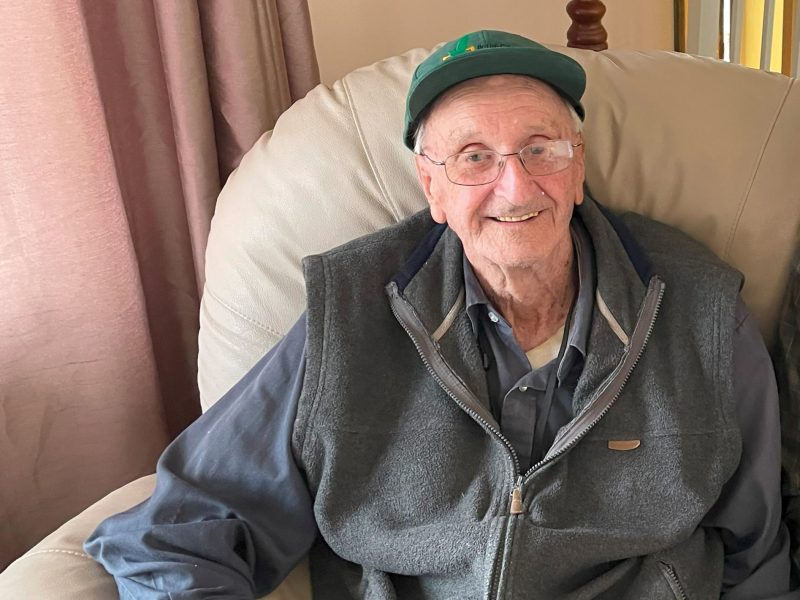
Charlie Lasser spent 50 years ranching in Chetwynd after getting his start in Pitt Meadows. EVA-LENA LANG

May 1, 2024 byRonda Payne

CHETWYND – Mention the name Charlie Lasser within organic farming circles and stories about ingenuity and having a vision for the future will abound.

The 92-year-old Chetwynd farmer and rancher passed away on December 9, 2023, but left an indelible mark in his wake on younger farmers and others in the industry.

“As a young farmer, the challenges that we’re facing and getting started up and everything, he really inspired me with his dedication,” says Tristan Banwell of Spray Creek Ranch near Lillooet. “To be in his 90s and be dreaming and planning, we can only hope that’s where we’ll be at that age.”

Banwell was fortunate to get to 5,200-acre Lasser Ranch to interview Lasser in spring 2023 for a virtual tour as part of the Organic BC field day series (the video is available at [https://bit.ly/3w3aAiM]).

The tour was meant to focus on Lasser’s seaweed feed program for his beef cattle, but Lasser drove Banwell around the property for hours, talking about numerous aspects of the operation. It’s something Banwell relishes to this day and will for years to come.

“I’m so fortunate to have met him and seen his farm,” Banwell says. “Being there and driving around with him, it was a very special thing to experience.”

While meeting Lasser was an experience, Lasser himself had a wealth of it. But that’s to be expected when someone has farmed their land for more than 50 years and is curious enough to keep improving.

Lasser and his late wife Edith moved to Chetwynd in the mid-1970s after farming in Pitt Meadows for about 20 years, where Lasser had been a municipal councillor. Up north, he served as mayor of Chetwynd, was a board member for numerous organizations, a Lion’s Club member and at his death had more than 600 head of cattle and more than 1,650 acres, mostly in forage crops.

Genuine is the word Pacific Agriculture Certification Society executive director Verna Wagner chooses to describe Lasser. He was treasurer of the society for a decade.

“I was in communication with him quite a bit. That’s how we built our relationship,” she says. “I remember Charlie telling me that he was farming organic from basically the day he was born. He said he was organic before organic was a word.”

That history gave Lasser a “bone of contention” with the word conventional, according to Wagner.

“In his mind, organic should have actually been called conventional,” she says. “Organic was the means of farming since the beginning of time.”

Lasser came from a long line of Swiss dairy farmers and was proud of both his lineage and the experiences he gained in his youth.

Wagner also describes him as very wise, “not just because of his age,” and social.

“He loved to laugh. He was a real storyteller,” she says. “He always had a kindness about him to be able to help people that needed help.”

Helping others was Lasser’s way, and even into his late 80s he was making his way 1,000 kilometres or more south to attend Organic BC conferences, which is how Banwell met him and grew to appreciate his input and wisdom.

Lasser would attend educational sessions and wait for the Q and A portion to share his own insights and questions on the various topics presented.

Lasser’s constant desire to learn and try new things was apparent to Marcel Schulze, who got his start as Lasser’s ranch hand about 10 years ago. Schulze came to the farm not knowing much about beef ranching, but absorbed knowledge from Lasser and other sources.

“We were very close. Out of work even, too,” Schulze says. “I was with him every day. I was over there making dinner for him. Just hanging out … talking about cows. Talking about what he wanted to do. It was a good, fun time.”

Schulze says Lasser always had big ideas and wanted to try new things he’d come up with himself. Over the years, the two would discuss plans more often, determining the best way to approach things and assessing if an idea was worth trying out or not.

Schulze credits Lasser for giving him confidence.

“I’m glad that Charlie was bringing me into it. I wouldn’t trade it for anything else,” he says.

Lasser had a 20-year plan ahead of him when he died. He’d told many people, Banwell included, that when he was younger, he thought he’d work to 100, then retire and travel.

Perhaps his purpose on the farm is what allowed him to live to be a nonagenarian. Perhaps it was that he continued trying to solve problems he came upon.

“Okay, you go ahead, you got a problem. So, you look at it, you come up with an idea and it doesn’t work. That doesn’t mean it’s a loss,” Lasser said in his interview with Banwell. “That’s part of a success, ‘cause now you got one less thing to worry about. You know that won’t work, so you try the next one and by the time you try your third one, you’ve got an answer. Don’t get discouraged because it doesn’t work immediately.”

Altruistic

Wagner says Lasser’s contributions through organizations like PACS have been altruistic.

“He’s done so much for the organic industry and PACS throughout the years,” she says. “He’s done it just to be a contributor without any expectations. Just totally heartfelt. He was a very selfless person. Just a pleasure to be around.”

She noted how his innovations in seaweed were driven by an interest in reducing carbon emissions. He also tried to find ways to encourage cows to eat Canada thistle so they would include it in their grazing rather than ignore it.

“He was old school. Everything was paper and fax machine,” she says. “But as far as cattle and ranching, he was very open-minded and creative.”

PACS gave Lasser a plaque last year to recognize his contributions to the organization and its members.

Lasser’s son Bob has taken over as ranch manager, and Schulze will continue on as ranch hand. They have already acquired some Gelbvieh bulls to begin increasing the size of their future animals. It’s a progression of the land that meant so much to Lasser. His son and Schulze are working together to create a new vision for the ranch.

Lasser summarized what mattered most to him in his video interview with Banwell.

“The important thing is, in life, that you help other people,” he said. “People don’t realize, some of these [committees and organizations] I’ve been on, the reason I’m on there was to help. If you can do that, then you’ve done your job.”
Related Posts

You may be interested in these posts from the same category.

Spray Creek wins BC OYF

New executive director for Small-Scale Meat Producers

Previous Post: « Dairy demand prompts quota increase
Next Post: BC farm income plummets »

Copyright © 2026 Country Life in BC · All Rights Reserved