
• Menu
  • Skip to primary navigation
  • Skip to main content
  • Skip to primary sidebar

Country Life In BC Logo

The agricultural news source in British Columbia since 1915

  • Headlines
  • Calendar
  • Subscribe
  • Advertise
  • About
  • Archives
  • Contact
  • Search
  • Headlines
  • Calendar
  • Subscribe
  • Advertise
  • About
  • Archives
  • Contact
  • Search

Primary Sidebar

Originally published:

MAY 2024
Vol. 110 Issue 5

Subscribe Now!

Sign up for free weekly FARM NEWS UPDATES

Loading form…

Your information will not be
shared or sold ever

Stories In This Edition

Livestock oversight to change

Horsepower

Boost in wool prices welcomed

Ag council expands membership

Editorial: Shining a light

Back 40: Perseverance, resilience carry us forward

Viewpoint: Pastured poultry producers face barriers

Federal funding delay stalls berry research

Market time

Strawberry trials face funding challenges

Dairy demand prompts quota increase

Ag Briefs: Provincial funding for UFV lab

Ag Briefs: BC Tree sells packinghouse site

Letters: Speaker, story hits a nerve

BC Veg finds its footing to a bright future

Eastern Filbert Blight threatens to resurface

Delta farmers welcome irrigation study

Tree talk

AgSafe BC celebrates accomplishments

Foreign worker numbers rise

Volunteers remain the backbone of successful fairs

Celebrated leader a force in BC wine sector

Cheap wine poses a threat to VQA label

Beekeepers face a tough year with weather, pests

Sidebar: Tech transfer program steady

Cranberry congress focuses on production

Sidebar: Cranberry organizations staying strong looking to the future

Mobile slaughter trailers rolled out

Chetwynd rancher leaves a lasting legacy

Virtual fencing could be a reality for ranchers

Bullish

Farm Story: Could garlic be less complicated?

Hopper management starts early this year

Sidebar: Peace braces for grasshoppers

Woodshed: The slugfest may be over but …

Plowing ahead

Jude’s Kitchen: Retro food for a ‘vintage’ Mom on her day

All content on this website is copyrighted, and cannot be republished or reproduced without permission.
More Headlines

Follow us on Facebook

Comments Box SVG iconsUsed for the like, share, comment, and reaction icons

38 minutes ago

UBC's Wine Research Centre brought together a dozen graduate students at Tantalus Winery in Kelowna on April 30 to share their latest research on viticulture and winemaking. Topics ranged from heat and drought stress on vines to natural yeast classification and cover crop pairings. The day opened with a vineyard tour highlighting sustainable practices already underway at the wine#BCAg#BCAg ... See MoreSee Less

UBCs Wine Research Centre brought together a dozen graduate students at Tantalus Winery in Kelowna on April 30 to share their latest research on viticulture and winemaking. Topics ranged from heat and drought stress on vines to natural yeast classification and cover crop pairings. The day opened with a vineyard tour highlighting sustainable practices already underway at the winery.

#BCAg
View Comments
  • Likes: 0
  • Shares: 0
  • Comments: 0

Comment on Facebook

5 days ago

Saskatchewan's Monette Farms, with nearly $1.1 billion in liabilities, has been granted creditor protection under the CCAA while it restructures. Rapid expansion into produce and cattle dragged earnings well below projections. The farm's BC cattle operation — and a planned West Kelowna winery — hang in the b#BCAge.

#BCAg
... See MoreSee Less

Link thumbnail

Monette Farms wins creditor protection

www.countrylifeinbc.com

Monette Farms’ rapidly expanding produce business was a key factor in its decision to seek protection from creditors last week, according to court documents. Saskatchewan-based Monette Farms was…
View Comments
  • Likes: 1
  • Shares: 0
  • Comments: 0

Comment on Facebook

1 week ago

A new national beef code of practice is open for public comment until June 12. Developed by NFACC and the Canadian Cattle Association, the draft addresses pain management, weaning, nutrition, lameness and end-of-life care.

#BCAg
... See MoreSee Less

Link thumbnail

New beef practices open for comment

www.countrylifeinbc.com

A new national code of practice for beef producers is open for public comment. “The public comment period is an important opportunity for producers across Canada to review the draft code and provide...
View Comments
  • Likes: 1
  • Shares: 0
  • Comments: 0

Comment on Facebook

2 weeks ago

The BC Ministry of Health has approved $4.25 million for the BC Farmers Market Nutrition Coupon Program, administered by the BC Association of Farmers Markets, for 2026. The funding is even with last year, and follows on $12 million provided in 2022-24. The funding is a cornerstone of BCAFM, providing eligible low-income, pregnant and senior individuals with $27 a week for purchases of locally grown produce at more than 100 participating farmers markets in 92 communities across BC. Funding has increased seven-fold since the program launched in 2012.

#BCAg
... See MoreSee Less

The BC Ministry of Health has approved $4.25 million for the BC Farmers Market Nutrition Coupon Program, administered by the BC Association of Farmers Markets, for 2026. The funding is even with last year, and follows on $12 million provided in 2022-24. The funding is a cornerstone of BCAFM, providing eligible low-income, pregnant and senior individuals with $27 a week for purchases of locally grown produce at more than 100 participating farmers markets in 92 communities across BC. Funding has increased seven-fold since the program launched in 2012.

#BCAg
View Comments
  • Likes: 1052
  • Shares: 390
  • Comments: 133

Comment on Facebook

It provides for more than produce. It includes, eggs, meat and honey!

Good program. Additionally, I toured the Kelowna Food bank yesterday. They are serving about 12,000 people a month. Lots are working people.

I have seen people at the Saanichton markets asking if vendors take the coupons and being embarrassed when the vendor says no. Are there signs that are placed on the tables so people know who is part of the program and who is not?

You would have a slim choice of meat if you only get $27.00 .

“While it’s unfortunate that programs like this are necessary, I’m grateful they exist to support families and local farmers.”

Food stamps?

This should be made a little more accessible, especially for seniors

What exactly is this and how does it work? I've never heard of it before. How does this get applied to us who it's intended to help?

Christy Sakai its a week and if you to the markets you can get a small bag of carrots 5bucks, a few potatoes, usually a bag of apples are 5 bucks, and in summer you have fruit choices. Yes doesn't seem like alot but it could be stretched at the markets and remember its a week so really ypu going to use the whole bag of carrots in a week, probably not so you have something for the next week. Heads of lettuce 5 bucks. Every little bit does help when it comes to supporting local farmer and family.

This program has helped me afford local produce, as a senior. I am grateful for the assistance and eat a healthier diet.

I have been a working poor and 🙏👍for recognizing the people who deserve a bit of help as they are doing the best they can 😘👍

This sounds a little more complicated to enroll in than it needs to be. A lot of people probably never heard of it, I only did because I read this post.

It is illegal for me to grow a garden . We can all afford to eat if we can grow.

How does a senior apply?

On my smalltown the food bank puts your name in a lottery for this Seniors included in lottery

Here are the general qualifications: Income Threshold: Generally for lower-income households. Some specific, local programs have identified a threshold of $27,000 or less for a single person or under $50,000 per year for a household. Targeted Groups: Participants must be seniors/elders, pregnant individuals, or families with children under 19. Participant Requirements: In addition to income, participants must: Participate in a food literacy program (e.g., cooking, gardening, or food budgeting). Be able to travel to a participating market to shop for themselves. Allocation: Because demand is high, coupons are often prioritized for new participants each year. Important Information: Coupons are not handed out by the BC Farmers' Markets directly. You must connect with a local community partner (such as a food bank, community centre, or neighbourhood house) to apply.

Glad to see this continue. With the increase in cost of living, this program should be increasing, not staying even with last year. Our local food bank is inundated with need.

It’s a great program. Too bad they won’t extend it to Farmstands as well. Some producers can’t make it to market because of work schedules. And there is more than just vegetables out there.

Where do people apply? Thinking of those I know who need this program.

Have you got an email yet?

I wish a person on disability could get the help too :(

What cities have this

I didn’t know that the program existed

Please if you have these coupons do not be embarrassed to use them they are a good as anyone's money to a grower! I would agree it is a slippery slope to have people pay with government coupons but Remember large scale agriculture is subsidized in this country in way that dwarfs this little program. We are all in a sense are paying with coupons at the big supermarket. As a small scale grower grower I can tell you when you see the higher prices at the farmers market, no one is getting rich off you. That is the true cost of food. Yes that should scare you

Excellent work, BC Ministry of Health! 👍👍👍 An amazing program

View more comments

2 weeks ago

KPU researcher Naomi Robert is partnering with Oregon State University's Dry Farming Collaborative to test drought-resilient growing practices across Vancouver Island and the Gulf Islands. Working with three market gardeners, the study found tomatoes and zucchini thrived without irrigation. With droughts intensifying across the Pacific Northwest, dry farming offers BC growers practical tools to adapt to a changing climate. The full story appears in our April edition. tinyurl.com/d2fzs#BCAg#BCAg ... See MoreSee Less

KPU researcher Naomi Robert is partnering with Oregon State Universitys Dry Farming Collaborative to test drought-resilient growing practices across Vancouver Island and the Gulf Islands. Working with three market gardeners, the study found tomatoes and zucchini thrived without irrigation. With droughts intensifying across the Pacific Northwest, dry farming offers BC growers practical tools to adapt to a changing climate. The full story appears in our April edition. https://tinyurl.com/d2fzs9x6

#BCAg
View Comments
  • Likes: 22
  • Shares: 5
  • Comments: 0

Comment on Facebook

Subscribe | Advertise

The agricultural news source in British Columbia since 1915
  • Email
  • Facebook

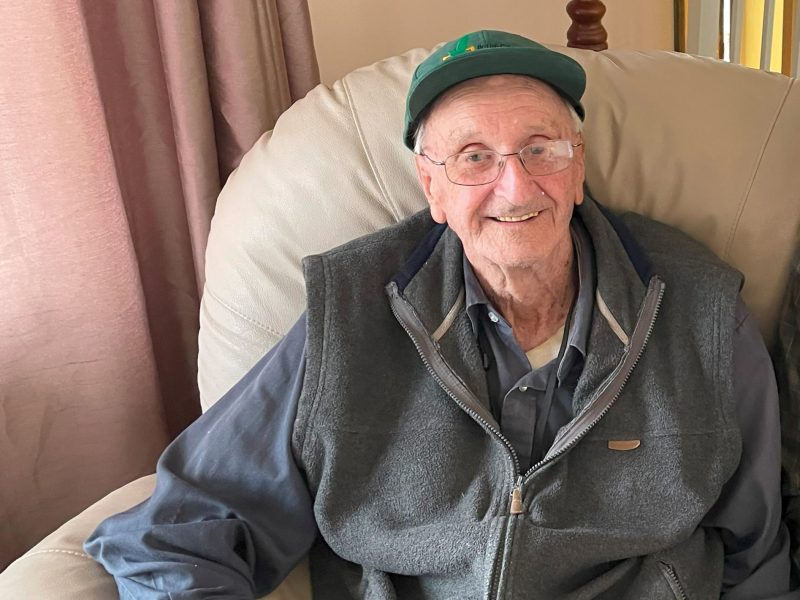
Chetwynd rancher leaves a lasting legacy in the organic sector

Charlie Lasser remembered after a 70-year career in agriculture

Charlie Lasser spent 50 years ranching in Chetwynd after getting his start in Pitt Meadows. EVA-LENA LANG

May 1, 2024 byRonda Payne

CHETWYND – Mention the name Charlie Lasser within organic farming circles and stories about ingenuity and having a vision for the future will abound.

The 92-year-old Chetwynd farmer and rancher passed away on December 9, 2023, but left an indelible mark in his wake on younger farmers and others in the industry.

“As a young farmer, the challenges that we’re facing and getting started up and everything, he really inspired me with his dedication,” says Tristan Banwell of Spray Creek Ranch near Lillooet. “To be in his 90s and be dreaming and planning, we can only hope that’s where we’ll be at that age.”

Banwell was fortunate to get to 5,200-acre Lasser Ranch to interview Lasser in spring 2023 for a virtual tour as part of the Organic BC field day series (the video is available at [https://bit.ly/3w3aAiM]).

The tour was meant to focus on Lasser’s seaweed feed program for his beef cattle, but Lasser drove Banwell around the property for hours, talking about numerous aspects of the operation. It’s something Banwell relishes to this day and will for years to come.

“I’m so fortunate to have met him and seen his farm,” Banwell says. “Being there and driving around with him, it was a very special thing to experience.”

While meeting Lasser was an experience, Lasser himself had a wealth of it. But that’s to be expected when someone has farmed their land for more than 50 years and is curious enough to keep improving.

Lasser and his late wife Edith moved to Chetwynd in the mid-1970s after farming in Pitt Meadows for about 20 years, where Lasser had been a municipal councillor. Up north, he served as mayor of Chetwynd, was a board member for numerous organizations, a Lion’s Club member and at his death had more than 600 head of cattle and more than 1,650 acres, mostly in forage crops.

Genuine is the word Pacific Agriculture Certification Society executive director Verna Wagner chooses to describe Lasser. He was treasurer of the society for a decade.

“I was in communication with him quite a bit. That’s how we built our relationship,” she says. “I remember Charlie telling me that he was farming organic from basically the day he was born. He said he was organic before organic was a word.”

That history gave Lasser a “bone of contention” with the word conventional, according to Wagner.

“In his mind, organic should have actually been called conventional,” she says. “Organic was the means of farming since the beginning of time.”

Lasser came from a long line of Swiss dairy farmers and was proud of both his lineage and the experiences he gained in his youth.

Wagner also describes him as very wise, “not just because of his age,” and social.

“He loved to laugh. He was a real storyteller,” she says. “He always had a kindness about him to be able to help people that needed help.”

Helping others was Lasser’s way, and even into his late 80s he was making his way 1,000 kilometres or more south to attend Organic BC conferences, which is how Banwell met him and grew to appreciate his input and wisdom.

Lasser would attend educational sessions and wait for the Q and A portion to share his own insights and questions on the various topics presented.

Lasser’s constant desire to learn and try new things was apparent to Marcel Schulze, who got his start as Lasser’s ranch hand about 10 years ago. Schulze came to the farm not knowing much about beef ranching, but absorbed knowledge from Lasser and other sources.

“We were very close. Out of work even, too,” Schulze says. “I was with him every day. I was over there making dinner for him. Just hanging out … talking about cows. Talking about what he wanted to do. It was a good, fun time.”

Schulze says Lasser always had big ideas and wanted to try new things he’d come up with himself. Over the years, the two would discuss plans more often, determining the best way to approach things and assessing if an idea was worth trying out or not.

Schulze credits Lasser for giving him confidence.

“I’m glad that Charlie was bringing me into it. I wouldn’t trade it for anything else,” he says.

Lasser had a 20-year plan ahead of him when he died. He’d told many people, Banwell included, that when he was younger, he thought he’d work to 100, then retire and travel.

Perhaps his purpose on the farm is what allowed him to live to be a nonagenarian. Perhaps it was that he continued trying to solve problems he came upon.

“Okay, you go ahead, you got a problem. So, you look at it, you come up with an idea and it doesn’t work. That doesn’t mean it’s a loss,” Lasser said in his interview with Banwell. “That’s part of a success, ‘cause now you got one less thing to worry about. You know that won’t work, so you try the next one and by the time you try your third one, you’ve got an answer. Don’t get discouraged because it doesn’t work immediately.”

Altruistic

Wagner says Lasser’s contributions through organizations like PACS have been altruistic.

“He’s done so much for the organic industry and PACS throughout the years,” she says. “He’s done it just to be a contributor without any expectations. Just totally heartfelt. He was a very selfless person. Just a pleasure to be around.”

She noted how his innovations in seaweed were driven by an interest in reducing carbon emissions. He also tried to find ways to encourage cows to eat Canada thistle so they would include it in their grazing rather than ignore it.

“He was old school. Everything was paper and fax machine,” she says. “But as far as cattle and ranching, he was very open-minded and creative.”

PACS gave Lasser a plaque last year to recognize his contributions to the organization and its members.

Lasser’s son Bob has taken over as ranch manager, and Schulze will continue on as ranch hand. They have already acquired some Gelbvieh bulls to begin increasing the size of their future animals. It’s a progression of the land that meant so much to Lasser. His son and Schulze are working together to create a new vision for the ranch.

Lasser summarized what mattered most to him in his video interview with Banwell.

“The important thing is, in life, that you help other people,” he said. “People don’t realize, some of these [committees and organizations] I’ve been on, the reason I’m on there was to help. If you can do that, then you’ve done your job.”

All content on this website is copyrighted, and cannot be republished or reproduced without permission.

Related Posts

You may be interested in these posts from the same category.

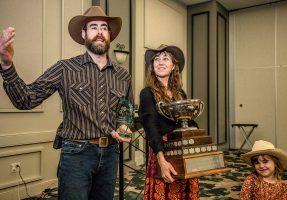
Spray Creek wins BC OYF

New executive director for Small-Scale Meat Producers

Previous Post: « Dairy demand prompts quota increase
Next Post: BC farm income plummets »

© 2026 COUNTRY LIFE IN BC - ALL RIGHTS RESERVED