• Menu
  • Skip to primary navigation
  • Skip to main content
  • Skip to primary sidebar

Country Life In BC Logo

The agricultural news source in British Columbia since 1915

  • Headlines
  • Calendar
  • Subscribe
  • Advertise
  • About
  • Archives
  • Contact
  • Search
  • Headlines
  • Calendar
  • Subscribe
  • Advertise
  • About
  • Archives
  • Contact
  • Search

Primary Sidebar

Originally published:

April 2018
Vol. 104 Issue 4

Subscribe Now!

Sign up for free weekly FARM NEWS UPDATES

Loading form…

Your information will not be
shared or sold ever

Stories In This Edition

Labour trouble

OYF winners from Kootenays

Loan program will focus on female farm entrepreneurs

Editorial: Telling the story

Back Forty: Political succession has its perks and pitfalls

Op Ed: Research is a focus of BC’s grape and wine sector

Lack of processor capacity limits quota increases

Raw milk advocates take case to Victoria

Pig Trace identifies over 900 BC hog producers

Organic growers provide feedback on ALR

COABC changes governance structure

Organic growers prep for new labelling regs

Above-normal snowpacks cause for concern

Senate hearing highlights climate change concerns

BC egg producers ramp up production

Sidebar: Call for collaboration

Ag spending up, but don’t say “fire”

Trump wrong on NAFTA

Chicken growers demand pricing parity

Allocations clawed back as demand dwindles

Sidebar: Supply management debate

Ag Brief: Fruit industry mourns leader Greg Norton

Ag Brief: ALR draws feedback

Ag Brief: BC rancher to head Canadian Cattlemen’s

Ag Brief: Provincial lab vindicated

Farmers’ markets aiming for greater share

Cannabis smoke screen

Cherry growers eye Korea

Market champions

Making the right call in a horrible situation

Optimistic outlook for beef sector

Bull buyers on a mission

Soil, cover crop management highlights workshop

Fibresheds give local movement new meaning

Compensation available for sheep losses

Research: Study considers optimism & pessimism in calves

Weeds a big challenge for forage producers

Cranberry growers wrestle with low yields

Sidebar: Election postponed

Sanding and cranberry plant health

US consumers buy up non-browning apples

Foodgrains tour to Nepal makes a difference

Sidebar: Career options

Sale benefits those in need

4-H BC: The grand prize

Wannabe Farmer: Patience is a virtue embraced by farmers

Woodshed Chronicles: The Massey takes Henderson for a spin

Jude’s Kitchen: Spring greens

More Headlines

Follow us on Facebook

Comments Box SVG iconsUsed for the like, share, comment, and reaction icons

35 minutes ago

The Agricultural Land Commission is laying off staff after years of flat funding under the BC NDP. ALC chair Jennifer Dyson warns that application volumes, enforcement activity and legal obligations have all risen while its operating budget has stayed effectively flat — meaning longer wait times ahead for some services.

#BCAg
... See MoreSee Less

Link thumbnail

Land Commission lays off staff

www.countrylifeinbc.com

With no budget increase this year, the Agricultural Land Commission (ALC) is laying off six staff to make ends meet. “Ongoing financial constraints and the requirement to operate within the approved...
View Comments
  • Likes: 0
  • Shares: 1
  • Comments: 0

Comment on Facebook

6 days ago

A BC Forest Practices Board investigation has found overgrazing has damaged grasslands in the Coutlee Range Unit near Merritt — and the range-use plan meant to prevent it was unenforceable. With complaints about overgrazing on the rise and grasslands covering just 1% of BC's land mass, the findings raise fresh questions about how the province manages one of its most vulnerable — and valuable — food-producing ecosyste#BCAg#BCAg ... See MoreSee Less

Link thumbnail

Board finds overgrazing rules unenforceable unmeasurable

www.countrylifeinbc.com

MERRITT – A BC Forest Practices Board investigation has found instances of non-compliance related to overgrazing have damaged open grasslands in the Mine pasture, part of the Coutlee Range Unit near...
View Comments
  • Likes: 6
  • Shares: 6
  • Comments: 6

Comment on Facebook

Several ranchers in recent years have gone into temporary non use on that range , so that means the grass should grow. But drought conditions/lack of rain and snow don’t allow that to happen . Dried up springs , creeks waterholes in various pastures add to over grazing where there is water , as livestock and everything else stay close to the water source . So even though less cattle are on it , over grazing appears. There is a large volume of horses on it 365 days/year which is wrong ! They pull grass right out of the ground when it’s just trying to grow ,, opens the door for weeds to grow in. That don’t help it. Aging infrastructure ( fences) laying on the ground, pipe line building , ( lack of commitment to fence maintenance) amongst all users contributes also to over grazing. Recreational atv users leaving gates open between pastures allows livestock to go back or ahead in pastures also expidites over grazing. Logging ( bcts) has no problem laying out cut locks on both sides of a fence , then it gets smashed down during logging and they don’t take responsibility to stand it back up or clean the cattle gaurds out when they are done , that happened 4 years ago on pasture 5 up there . I bet it is still not fixed . There are lots of contributing factors to the problem.

Tragedy of the commons.

I looked through the report. I saw nothing about the effects of noxious weeds on productive grasslands. This particular area is vulnerable because of the Ministry’a efforts to diversify the use of the Grasslands.

This pasture is under tremendous pressure not only from cattle but from irresponsible local residents who treat it as a landfill dumping all manner of household debris here. And don't even get me started on the mud bogging and camping in sensitive riparian areas. The feral horses are in this pasture 365 days a year just hammering it. Would sure be nice to see some enforcement action on people who are intentionally ripping up the grasslands and riparian areas. Cattle could be a valuable resource for rebuilding soils and native grasses in this area with the help of electric fencing and/or e-collars. The humans will be harder to manage.

The Forest and Range Practices Act was written by lawyers for global forest licencee shareholders. Results-based = unenforceable.

Also, can we talk about the impact of a pipeline being built through the middle of this field for multiple years?

View more comments

1 week ago

East Kootenay rancher Randy Reay is digging a new well after two natural water sources dried up on his Crown tenures. A new Living Lakes Canada assessment found 15% of mapped aquifers in the region are high-priority for monitoring, yet 80% of those go unmonitored. With over 48% of BC's provincial observation wells reporting below-normal groundwater levels, ranchers and researchers are sounding the alarm on water security. The story is in our March edition, and we've posted it to our website thi#BCAgk.

#BCAg
... See MoreSee Less

Link thumbnail

Water woes: groundwater under pressure across BC

www.countrylifeinbc.com

JAFFRAY – As a young boy growing up in the Kootenay-Boundary region, Randy Reay never expected to run out of water. But this year, in mid-February, his fields are bare. There is no snow halfway up t...
View Comments
  • Likes: 8
  • Shares: 7
  • Comments: 1

Comment on Facebook

Jaffrey is in the east Kootenays not kooteney boundary

2 weeks ago

BC farmers are bracing for prolonged higher input costs as war in the Middle East drives up fuel and fertilizer prices. Nitrogen fertilizer costs were already climbing before the Iran conflict began, with prices still roughly 60% above pre-pandemic levels. Farm Credit Canada warns that unlike 2022, strong commodity prices may not offset rising costs this time. Local suppliers expect supply challenges and further price increases ahead.

#BCAg
... See MoreSee Less

Link thumbnail

Fertilizer prices on the rise

www.countrylifeinbc.com

War in the Middle East has delivered a generational shock to energy prices, meaning BC farmers can expect a prolonged period of higher costs not just for fuel but also for fertilizer.
View Comments
  • Likes: 2
  • Shares: 1
  • Comments: 0

Comment on Facebook

2 weeks ago

... See MoreSee Less

View Comments
  • Likes: 1
  • Shares: 0
  • Comments: 0

Comment on Facebook

Subscribe | Advertise

The agricultural news source in British Columbia since 1915
  • Email
  • Facebook

Chicken growers demand pricing parity

March 27, 2018 byDavid Schmidt

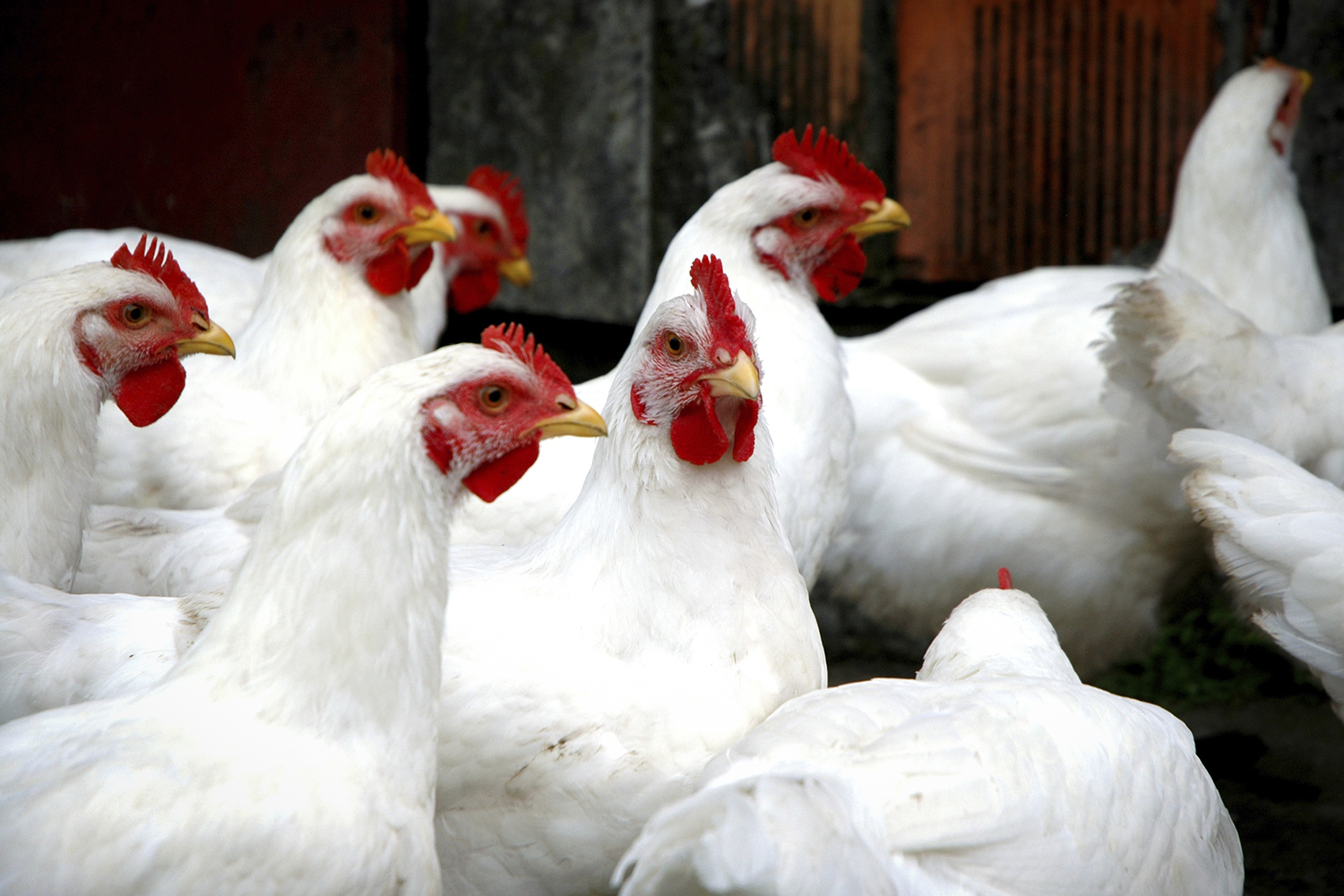
VANCOUVER – The new chicken pricing formula, which took effect last June, is an improvement over the previous formula but still does not put farmers in the black, says BC Chicken Growers Association president Dale Krahn.

“Growers are still farming their depreciation,” he told producers at the well-attended BC Chicken Growers Association annual meeting held during the BC Poultry Conference in Vancouver, March 1.

While still linked to the Ontario live price, the new formula recognizes BC’s higher chick and feed costs and includes catching costs for the first time. While not rich enough for growers, it is too rich for processors, who have appealed it to the BC Farm Industry Review Board.

BC Chicken Marketing Board chair Robin Smith told growers the board will review the first year of the formula with a view to revising it for period A-151, beginning July 8.

In the meantime, growers can content themselves with an extra cheque in April. After posting another surplus in 2017, the BCCMB has decided to refund $948,000 to growers in good standing as of April 15.

Another way growers can increase their revenue is to produce more chicken. Smith pointed out BC only produced 98% of its 2017 quota allocation.

To encourage more production, the board has liberalized its overproduction sleeve and is allowing greater quota leasing.

“We are now producing 102% of our allocation and we expect that to continue,” Smith said.

That was not good enough for Chad Martin of Armstrong. His fellow North Okanagan growers sent him to the meeting to deliver a strong message.

“I don’t think anyone is confident of pricing off Ontario,” Martin said, pointing out Manitoba has “the guts” to set their live price at 7 cents/kg over Ontario.

“We have to have courage like them,” Martin told the board, saying “our live price and COP recovery is ridiculous. We are first (in Canada) in biosecurity and last in pricing.”

Smith said the board recognizes BC’s margin is lower than in the rest of the country but insisted pricing is a “balancing act.

“If we get too far out of line, it’s hard on processors,” he stated.

However, Martin did not buy that. He notes the board is supposed to represent the entire industry but cannot do that if it only knows grower margins and not processors’ margins.

Avian influenza update

While pricing dominated the discussion, the meeting also addressed a number of other issues. Most positive was the report on avian influenza. In the past year, growers conducted mock trials in the Fraser Valley, Interior and on Vancouver Island and are now better prepared to quickly quell any outbreaks. Fortunately, the training was not needed this year as no AI outbreaks occurred in the province this winter. That is not the case elsewhere. Krahn noted 120 million birds have been killed in 68 countries due to AI.

Growers are also gearing up for coming reductions in anti-microbial use. It is not something they are looking forward to, Krahn said.

“It will cause more hardship on poultry farms,” he stated. “Major tools have been removed from our toolbox and we don’t have access to the alternatives we need.”

On a more positive note, Chicken Farmers of Canada chair Benoît Lafontaine reported that the Canadian chicken industry has been reunited.

“As of October, all 10 provinces are back in the system bringing eight years of negotiation to a close,” he said, telling growers the new federal-provincial agreement commits the industry to a “dynamic and evolving” system.

Dynamic is certainly the word for chicken these days. Production has grown by 12% over the past four years, including 5% in 2017 alone.

“We are the No. 1 meat in Canada,” Lafontaine said proudly.

To maintain that position, the industry needs to step up efforts to counteract activists’ anti-chicken messaging.

“We have to get louder and will not stand by while (the activists) make misleading claims and undermine our animal welfare standards,” Lafontaine said. “We are always willing to adapt but not willing to do it when it is driven by vegan activists.”

CFC’s “Raised by a Canadian Farmer” branding program is crucial to that effort, says BC’s national director Derek Janzen, who was re-elected to the BCCMB.

“Eighty-seven percent of Canadians want to buy Canadian and our program provides them with assurances on animal welfare and

on-farm food safety,” he said.

Both he and Smith credited Canada’s supply management system for making the program possible, Smith noting supply management “allows for sustainable family farms.

“It’s our job to explain supply management with pride and conviction.”

Related Posts

You may be interested in these posts from the same category.

BC FIRB gets a good egg

Chicken growers on watch for avian influenza

BC Chicken picks Siemens

Previous Post: « Labour trouble
Next Post: Organic growers prep for new labelling regs »

Copyright © 2026 Country Life in BC · All Rights Reserved