• Menu
  • Skip to primary navigation
  • Skip to main content
  • Skip to primary sidebar

Country Life In BC Logo

The agricultural news source in British Columbia since 1915

  • Headlines
  • Calendar
  • Subscribe
  • Advertise
  • About
  • Archives
  • Contact
  • Search
  • Headlines
  • Calendar
  • Subscribe
  • Advertise
  • About
  • Archives
  • Contact
  • Search

Primary Sidebar

Originally published:

April 2018
Vol. 104 Issue 4

Subscribe Now!

Sign up for free weekly FARM NEWS UPDATES

Loading form…

Your information will not be
shared or sold ever

Stories In This Edition

Labour trouble

OYF winners from Kootenays

Loan program will focus on female farm entrepreneurs

Editorial: Telling the story

Back Forty: Political succession has its perks and pitfalls

Op Ed: Research is a focus of BC’s grape and wine sector

Lack of processor capacity limits quota increases

Raw milk advocates take case to Victoria

Pig Trace identifies over 900 BC hog producers

Organic growers provide feedback on ALR

COABC changes governance structure

Organic growers prep for new labelling regs

Above-normal snowpacks cause for concern

Senate hearing highlights climate change concerns

BC egg producers ramp up production

Sidebar: Call for collaboration

Ag spending up, but don’t say “fire”

Trump wrong on NAFTA

Chicken growers demand pricing parity

Allocations clawed back as demand dwindles

Sidebar: Supply management debate

Ag Brief: Fruit industry mourns leader Greg Norton

Ag Brief: ALR draws feedback

Ag Brief: BC rancher to head Canadian Cattlemen’s

Ag Brief: Provincial lab vindicated

Farmers’ markets aiming for greater share

Cannabis smoke screen

Cherry growers eye Korea

Market champions

Making the right call in a horrible situation

Optimistic outlook for beef sector

Bull buyers on a mission

Soil, cover crop management highlights workshop

Fibresheds give local movement new meaning

Compensation available for sheep losses

Research: Study considers optimism & pessimism in calves

Weeds a big challenge for forage producers

Cranberry growers wrestle with low yields

Sidebar: Election postponed

Sanding and cranberry plant health

US consumers buy up non-browning apples

Foodgrains tour to Nepal makes a difference

Sidebar: Career options

Sale benefits those in need

4-H BC: The grand prize

Wannabe Farmer: Patience is a virtue embraced by farmers

Woodshed Chronicles: The Massey takes Henderson for a spin

Jude’s Kitchen: Spring greens

All content on this website is copyrighted, and cannot be republished or reproduced without permission.
More Headlines

Follow us on Facebook

Comments Box SVG iconsUsed for the like, share, comment, and reaction icons

6 hours ago

A draft update to the Code of Practice for the Care and Handling of Beef Cattle is now open for public comment until June 12. The code, one of 14 animal care codes developed and maintained by the National Farm Animal Care Council, is undergoing a routine 10-year review. "Your feedback will help shape the industry's guide to cattle welfare for the next decade," says Canadian Cattle Association policy manager Jessica Radau, urging producers to weigh in. For more information, visit tinyurl.com/58a3u9fz.

#BCAg
... See MoreSee Less

A draft update to the Code of Practice for the Care and Handling of Beef Cattle is now open for public comment until June 12. The code, one of 14 animal care codes developed and maintained by the National Farm Animal Care Council, is undergoing a routine 10-year review.  Your feedback will help shape the industrys guide to cattle welfare for the next decade, says Canadian Cattle Association policy manager Jessica Radau, urging producers to weigh in. For more information, visit https://tinyurl.com/58a3u9fz.

#BCAg
View Comments
  • Likes: 2
  • Shares: 0
  • Comments: 1

Comment on Facebook

I sat in the webinar yesterday by the Canadian Cattle Association. My initial concern was that this would be another "play" into the government's hands. It has been worked on by people that are actually in the Beef industry from Cow calf to feedlot. The thrust is an update of the 2013 Code of Practice which was reviewed in 2018. The changes are more a move from "left to the producers discretion" to clearer directions regarding pain management, proper transport of animals which are impaired and keeping cattle in in good condition. Much of what is recommended is what producers who care about animal husbandry already do. The important part is to GIVE THEM FEEDBACK good, bad or otherwise. The document is about 60 pages long, and I ran it through CHAT to see what had been changed. It is important to understand that the PUBLIC is invited to comment on the draft not just producers. Think about it... do you really want the public influencing how you manage your cattle. If you think that this is just one of those things, I have been following Bill 22 in Alberta which will grant the SPCA a proactive roll in entering farms and checking on animals. When I asked CHAT how the new bill relates to the Cattle Code, it came back that the Code although not a regulation will be able to be used as a guide by producers for backup in dealing with the SPCA regarding cattle conditions, sick animal handling etc. Take the time.... Go onto the Canadian Cattle Association website and speak to those parts that you wish to input.

1 day ago

According to the BC River Forecast Centre, the Okanagan snowpack stood at just 58% of normal on April 1 — the lowest reading since measurements began in 1980 — raising concerns about drought conditions in the region this summer. The rest of the province sits at 92% of normal.

#BCAg
... See MoreSee Less

According to the BC River Forecast Centre, the Okanagan snowpack stood at just 58% of normal on April 1 — the lowest reading since measurements began in 1980 — raising concerns about drought conditions in the region this summer. The rest of the province sits at 92% of normal.

#BCAg
View Comments
  • Likes: 3
  • Shares: 0
  • Comments: 0

Comment on Facebook

2 days ago

At her first AGM as executive director of BC Meats, held Saturday in Abbotsford, Jennifer Busmann spoke about her strong ties to agriculture and her optimism for the organization's future. Busmann has cattle of her own and came to the role with existing relationships with members and the board of directors that helped her feel integrated from the start. She stepped into the position in Februa#BCAg#BCAg ... See MoreSee Less

At her first AGM as executive director of BC Meats, held Saturday in Abbotsford, Jennifer Busmann spoke about her strong ties to agriculture and her optimism for the organizations future. Busmann has cattle of her own and came to the role with existing relationships with members and the board of directors that helped her feel integrated from the start. She stepped into the position in February.

#BCAg
View Comments
  • Likes: 6
  • Shares: 0
  • Comments: 0

Comment on Facebook

4 days ago

Shannon Wiggins of Headwind Farm in North Saanich is this year's Mary Forstbauer Grant recipient from the BC Association of Farmers Markets. The $500 grant will help Wiggins expand her plot at Sandown Centre for Regenerative Agriculture, growing more storage crops to extend her harvest season. Wiggins credits farmers markets with inspiring her own farming journey and commitment to building community through food. Congratulations!

tinyurl.com/45bdd#BCAg#BCAg
... See MoreSee Less

Shannon Wiggins of Headwind Farm in North Saanich is this years Mary Forstbauer Grant recipient from the BC Association of Farmers Markets. The $500 grant will help Wiggins expand her plot at Sandown Centre for Regenerative Agriculture, growing more storage crops to extend her harvest season. Wiggins credits farmers markets with inspiring her own farming journey and commitment to building community through food. Congratulations!

https://tinyurl.com/45bddtw8

#BCAg
View Comments
  • Likes: 46
  • Shares: 2
  • Comments: 3

Comment on Facebook

Wahoo! Congrats Shannon! I love your produce. Can’t wait for the radishes 🫜

Congratulations!

Well done!! 🩷🩷🩷

6 days ago

New farmers can avoid costly mistakes by learning from those who've been there. At a Young Agrarians mixer in Penticton, five BC farmers shared hard-won lessons on pricing, pivoting, relationships and burnout. From coyote losses to business burnout, their message was clear: set prices that reflect true costs, make decisions quickly and don't let farming define your worth. Myrna Stark Leader's story appears in our April e-edition, now available to view online at: tinyurl#BCAg2uw53vvm

#BCAg
... See MoreSee Less

New farmers can avoid costly mistakes by learning from those whove been there. At a Young Agrarians mixer in Penticton, five BC farmers shared hard-won lessons on pricing, pivoting, relationships and burnout. From coyote losses to business burnout, their message was clear: set prices that reflect true costs, make decisions quickly and dont let farming define your worth. Myrna Stark Leaders story appears in our April e-edition, now available to view online at: https://tinyurl.com/2uw53vvm

#BCAg
View Comments
  • Likes: 15
  • Shares: 0
  • Comments: 0

Comment on Facebook

Subscribe | Advertise

The agricultural news source in British Columbia since 1915
  • Email
  • Facebook

Farmers’ markets aiming for greater share

Demographic research points to opportunities among young families

March 27, 2018 byPeter Mitham

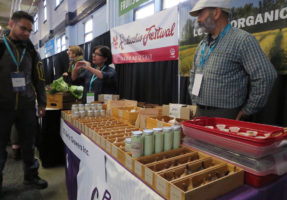
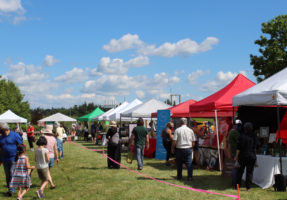
VICTORIA – Renewed efforts to promote BC farmers’ markets are in the works following a study that identified a need for common branding and a greater awareness among consumers of the value farmers’ markets offer.

“This year, we’ve secured dollars to launch this BC Farmers’ Market Trail,” Heather O’Hara, executive director of the BC Association of Farmers’ Markets, told the association’s annual conference in Victoria at the beginning of March.

The trail will start in the Kootenays, where the BCAFM has secured a funding partner (O’Hara would not disclose the partner pending an official announcement). The project will be similar to the BC Ale Trail that the BC Craft Brewers Guild and local tourism associations established.

“It’s going to be heavy on digital engagement. We’re going to have the ability to have videos and tell the story of your market and the farmers within it very strongly and beautifully,” O’Hara said.

The launch of the program will accompany efforts to secure funding to expand the initiative to regions across the province by 2020. It will contribute to a common brand identity for farmers’ markets across BC.

BCAFM is also putting up cash generated from the investment of funds the province granted for the farmers’ market nutrition coupon program. The coupon program also gave association staff the opportunity to travel the province, building the relationships that make the new marketing initiative possible. The new campaign builds on research Nanaimo-based Left Field Marketing and its Farm| Food|Drink business advisory team conducted last year.

Presenting the results of the research during the conference’s opening plenary, research lead Vanessa Daether said the project aimed to understand how markets promote themselves and what motivates consumers to shop where they shop.

“We really wanted to understand how farmers markets in the province of BC are marketing their markets and engaging with their customers,” she said.

Daether conducted an overview of online marketing tools – Facebook was key – and strategies markets use to promote themselves to both vendors and consumers. Sixty markets attended focus groups and provided feedback, and this was combined with feedback from a survey of 1,000 consumers.

The study also examined what grocers are doing to adapt to a changing retail environment and how farmers’ markets can keep pace. (Notably, there’s no firm research on what share of the market BC farmers’ markets have.)

“Where can we shift consumers from grocery store dollars to spending more at a farmers market?” researchers asked. “Who are those individuals we can capture?”

The project identified three types of shoppers:

  • Frequent shoppers are typically women, 35 years and older with above-average incomes who are engaged with their communities and socially conscious. They spend $76 to $200 a week at grocery stores, but visit farmers’ markets about twice a month and spend $20 to $40 per visit.
  • Infrequent shoppers are similar to frequent shoppers but often have young families that limit visits to a few times a season. When they do visit, they spend $40 or less.

“Prices and time were the big barriers that were limiting them from engaging with a farmers market,” Daether said. “It wasn’t a lack of desire or interest or necessarily knowledge about a farmers market. They’re just busy. They’re swamped individuals.”

  • Non-shoppers are typically people in their 20s with below-average incomes. Most grocery shopping is at supermarkets rather than organic grocers or health food stores.

“For this demographic, price sensitivity is heightened,” Daether said.

While convenience and price are key barriers to drawing in younger shoppers, Greg McLaren, managing director of Left Field, said it’s not because they’re not interested.

“They’re part of the choir already and we need to bring them along and grow that market. And believe me, the grocery sector is worried about that,” he said.

Connecting with them requires being more convenient, or giving them a reason to see it as a valuable shopping choice.

“[It]’s not suggesting to folks that it’s cheap or that we can compete on price – price is different than value – [it’s] talking to people about how you do community,” McLaren said. “You tie into their values.”

But translating those values into a sustainable future for markets and vendors is another question.

“The local food movement has changed drastically,” he said. “We’re seeing small farmers – young, smart, engaged, hard-working people with wonderful values – have been making a good push on things for two, three, five years, and are now exiting, because poverty gets old fast. It’s tough.”

McLaren said farmers’ markets, to be viable, need to both attract shoppers and support vendors.

“There should be a lot of focus among the farmers’ markets on viability,” he said. “You need to have that support for the farmers, and offering them the support through the BC Association of Farmers Markets and your markets themselves to recognize that you are not just a shopping centre, not just a place of community, but a place where you’re driving the economy of agriculture in the province.”

Put the cannabis story below on the same page as the story above

Cannabis smoke screen

Farmers’ markets don’t know where they stand

by PETER MITHAM

VICTORIA – A new season is around the corner for the nearly 150 farmers’ markets in the province, but the potential legalization of recreational cannabis this summer has many wondering how to handle the controversial new crop.

Recreational cannabis could have standing as a legitimate crop as early as July 1, though expectations of delays are rising as governments scramble to prepare. Still, market managers attending the annual conference of the BC Association of Farmers’ Markets in Victoria at the beginning of March pleaded for guidance on how to deal with potential vendors of a product not everyone considers acceptable.

Unfortunately, there wasn’t much to give.

“The federal and provincial governments hadn’t established any information to give to us,” BCAFM president Wylie Bystedt told market managers at the association’s annual general meeting.

While producers require federal licences, the provinces are setting the ground rules for retail sales. BC has handed jurisdiction over cannabis to the ministry of the attorney general, which oversees liquor sales. While retail sales will be through the BC Liquor Distribution Branch, licensing of cannabis-related activities will fall to the BC Liquor Control and Licensing Branch, which is launching an online licensing portal to manage applications.

Where those licences are exercised will be up to local government, which is responsible for zoning and business licensing.

This is where farmers’ markets will need to look for guidance, Bystedt said, as markets must respect local bylaws.

While a number of licensed and illegal dispensaries operate in Vancouver, some just steps from current farmers’ market locations, not all municipalities are so liberal.

Delta and Richmond, both of which are home to production facilities eyeing the recreational market, are among the municipalities that have passed bylaws forbidding cannabis dispensaries.

Residents of Central Saanich recently delivered a 1,400-signature petition to BC agriculture minister Lana Popham objecting to cannabis production on a local dairy farm. Protected agricultural land should be for food production, a view many at the farmers’ market conference also voiced.

However, James Mack, an assistant deputy minister with the agriculture ministry, told farm organizations in February that cannabis is a crop and therefore can’t be banned from farmland.

Or, as John Bell, a veteran member and past president of the BCAFM remarked: “It’s really not the Ministry of Agriculture that’s going to be dealing with it; it’s the [attorney general].”

While local health authorities will have requirements for cannabis products, staff from the BC Centre for Disease Control told BCAFM members that they have developed nothing to date because cannabis isn’t yet legal. Cannabis edibles, which BCAFM expects to be the key product for market vendors, won’t be legal until 2019.

However, because they stand to be the most accessible products and most appealing to unwitting children, concerns exist about how best to balance marketing for adults with youth safety.

To help markets navigate the challenges and speak with a unified voice on the issue, BCAFM staff pledged to develop guidelines and a template for working with potential cannabis vendors by early August.

All content on this website is copyrighted, and cannot be republished or reproduced without permission.
Related Posts

You may be interested in these posts from the same category.

Farmers market returns

Farmers Market

Market restrictions lifted

BC farmers markets go online

Farmers partner with chefs

Farm market banks on relationship-building

Farmers’ markets focus on cultivating trust

Previous Post: « Labour trouble
Next Post: Organic growers prep for new labelling regs »
© 2026 COUNTRY LIFE IN BC - ALL RIGHTS RESERVED