
• Menu
  • Skip to primary navigation
  • Skip to main content
  • Skip to primary sidebar

Country Life In BC Logo

The agricultural news source in British Columbia since 1915

  • Headlines
  • Calendar
  • Subscribe
  • Advertise
  • About
  • Archives
  • Contact
  • Search
  • Headlines
  • Calendar
  • Subscribe
  • Advertise
  • About
  • Archives
  • Contact
  • Search

Primary Sidebar

Originally published:

AUGUST 2023
Vol. 109 Issue 8

Subscribe Now!

Sign up for free weekly FARM NEWS UPDATES

Loading form…

Your information will not be
shared or sold ever

Stories In This Edition

Lettuce Grow!

Turning off the taps

Drought threatens feed supply

Fire, drought and now grasshoppers

Editorial: Public service

Back 40: Food democracy will decide relavance of ALR

Viewpoint: Reconciliation is more than just a land deal

Peace Region land-sharing proposal nixed

Sinkholes blamed on Fraser Valley pipeline work

Ag Briefs: BC Ferries steps up protocols for hay shipments

Ag Briefs: Bird processing goes mobile

Ag Briefs: Penticton agriculture committee fails

Huge cherry crop sparks dumping allegations

Soil, leaf testing key to gauging nutrient needs

Drought prompts cattle sell0ff

Urban farm almost shut down by noise complaint

Watchdog call for overhaul of fire management

CYL semi-finalists share positive outlook

Grain producers share experience during field day

Range management showcased on tour

Prescribed burns improve range health

Sheep breeders flock to BC for national show

Farmers look to fill wool processing gap

Smart tools point a way to more efficient weeding

Farm Story: Doing the “right” thing comes at a price

Island couple future-proof new farm operation

Instrumental insemination boosts bee vigour

Growing opportunities for fellow farms

Partnerships underpin success of Langley stewardship program

Woodshed Chronicles: Gladdie reminisces about long-ago truth or dare

Christmas tree growers look to scale up local

Jude’s Kitchen: Patio fare for the lazy days of summer

More Headlines

Follow us on Facebook

Comments Box SVG iconsUsed for the like, share, comment, and reaction icons

6 days ago

A BC Forest Practices Board investigation has found overgrazing has damaged grasslands in the Coutlee Range Unit near Merritt — and the range-use plan meant to prevent it was unenforceable. With complaints about overgrazing on the rise and grasslands covering just 1% of BC's land mass, the findings raise fresh questions about how the province manages one of its most vulnerable — and valuable — food-producing ecosyste#BCAg#BCAg ... See MoreSee Less

Link thumbnail

Board finds overgrazing rules unenforceable unmeasurable

www.countrylifeinbc.com

MERRITT – A BC Forest Practices Board investigation has found instances of non-compliance related to overgrazing have damaged open grasslands in the Mine pasture, part of the Coutlee Range Unit near...
View Comments
  • Likes: 6
  • Shares: 6
  • Comments: 6

Comment on Facebook

Several ranchers in recent years have gone into temporary non use on that range , so that means the grass should grow. But drought conditions/lack of rain and snow don’t allow that to happen . Dried up springs , creeks waterholes in various pastures add to over grazing where there is water , as livestock and everything else stay close to the water source . So even though less cattle are on it , over grazing appears. There is a large volume of horses on it 365 days/year which is wrong ! They pull grass right out of the ground when it’s just trying to grow ,, opens the door for weeds to grow in. That don’t help it. Aging infrastructure ( fences) laying on the ground, pipe line building , ( lack of commitment to fence maintenance) amongst all users contributes also to over grazing. Recreational atv users leaving gates open between pastures allows livestock to go back or ahead in pastures also expidites over grazing. Logging ( bcts) has no problem laying out cut locks on both sides of a fence , then it gets smashed down during logging and they don’t take responsibility to stand it back up or clean the cattle gaurds out when they are done , that happened 4 years ago on pasture 5 up there . I bet it is still not fixed . There are lots of contributing factors to the problem.

Tragedy of the commons.

I looked through the report. I saw nothing about the effects of noxious weeds on productive grasslands. This particular area is vulnerable because of the Ministry’a efforts to diversify the use of the Grasslands.

This pasture is under tremendous pressure not only from cattle but from irresponsible local residents who treat it as a landfill dumping all manner of household debris here. And don't even get me started on the mud bogging and camping in sensitive riparian areas. The feral horses are in this pasture 365 days a year just hammering it. Would sure be nice to see some enforcement action on people who are intentionally ripping up the grasslands and riparian areas. Cattle could be a valuable resource for rebuilding soils and native grasses in this area with the help of electric fencing and/or e-collars. The humans will be harder to manage.

The Forest and Range Practices Act was written by lawyers for global forest licencee shareholders. Results-based = unenforceable.

Also, can we talk about the impact of a pipeline being built through the middle of this field for multiple years?

View more comments

1 week ago

East Kootenay rancher Randy Reay is digging a new well after two natural water sources dried up on his Crown tenures. A new Living Lakes Canada assessment found 15% of mapped aquifers in the region are high-priority for monitoring, yet 80% of those go unmonitored. With over 48% of BC's provincial observation wells reporting below-normal groundwater levels, ranchers and researchers are sounding the alarm on water security. The story is in our March edition, and we've posted it to our website thi#BCAgk.

#BCAg
... See MoreSee Less

Link thumbnail

Water woes: groundwater under pressure across BC

www.countrylifeinbc.com

JAFFRAY – As a young boy growing up in the Kootenay-Boundary region, Randy Reay never expected to run out of water. But this year, in mid-February, his fields are bare. There is no snow halfway up t...
View Comments
  • Likes: 8
  • Shares: 7
  • Comments: 1

Comment on Facebook

Jaffrey is in the east Kootenays not kooteney boundary

2 weeks ago

BC farmers are bracing for prolonged higher input costs as war in the Middle East drives up fuel and fertilizer prices. Nitrogen fertilizer costs were already climbing before the Iran conflict began, with prices still roughly 60% above pre-pandemic levels. Farm Credit Canada warns that unlike 2022, strong commodity prices may not offset rising costs this time. Local suppliers expect supply challenges and further price increases ahead.

#BCAg
... See MoreSee Less

Link thumbnail

Fertilizer prices on the rise

www.countrylifeinbc.com

War in the Middle East has delivered a generational shock to energy prices, meaning BC farmers can expect a prolonged period of higher costs not just for fuel but also for fertilizer.
View Comments
  • Likes: 2
  • Shares: 1
  • Comments: 0

Comment on Facebook

2 weeks ago

... See MoreSee Less

View Comments
  • Likes: 1
  • Shares: 0
  • Comments: 0

Comment on Facebook

2 weeks ago

Cameron Stockdale is the new executive director of provincial farm safety organization AgSafeBC. Find out more in this week's Farm News Update from Country Life in B#BCAg#BCAg ... See MoreSee Less

Link thumbnail

New leadership at AgSafe BC

www.countrylifeinbc.com

Cameron Stockdale is the new executive director of provincial farm safety organization AgSafeBC, succeeding Wendy Bennett. Bennett left AgSafeBC in September 2025, following 12 years with the…
View Comments
  • Likes: 5
  • Shares: 1
  • Comments: 0

Comment on Facebook

Subscribe | Advertise

The agricultural news source in British Columbia since 1915
  • Email
  • Facebook

CYL semi-finalists share positive outlook

BC’s ranching sector in good hands with optimistic young ranchers

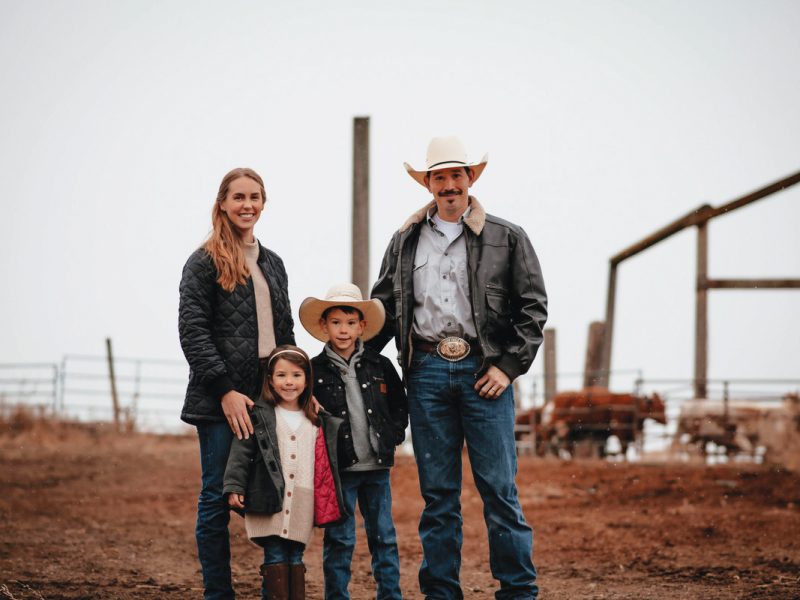
Cassie Marchand, pictured with daughter Jessie, son Wylie and husband Wade, is one of three semi-finalists from BC competing for this year’s Canadian Cattle Young Leaders program. SUBMITTED

August 2, 2023 byKate Ayers

VERNON – Three BC ranchers were selected as semi-finalists for this year’s Canadian Cattle Young Leaders program.

Cassie Marchand of Vernon, Kayla Shallard of Hixon and Brett Squair of Lumby, along with 21 other semi-finalists from across the country, are invited to attend the annual CYL selections competition taking place during the Canadian Beef Industry Conference August 15 in Calgary.

Each of the BC representatives hopes to take away something different to advance their careers and passions in the industry if selected to be paired with an experienced mentor.

Cassie Marchand helps with marketing and social media at her family’s Clifton Ranch in Keremeos and raises cattle in Vernon with her husband and his family.

As the fourth generation on the Clifton Ranch, Marchand is thrilled to be bringing up the fifth generation in the same sort of family-oriented environment.

“It was how I was raised, and we did everything together. We didn’t really even know we were working but we were just spending time together and learning things as we go,” Marchand says. “So that’s probably the thing I like the most, is that it’s how I grew up, being with my family with my grandparents, and then raising my kids in that same way.”

Marchand learned about the CYL program through her friends Erika Strande-Stewart, Laura Code and Andrea van Iterson as well as her sister Megan Clifton – all previous program participants.

“They all had really good things to say about it. And it’s just a good way to build network and … have a chance to meet new people across the country that are kind of the same mentality,” Marchand says.

Because of her work on the education and public affairs committee with the BC Cattlemen’s Association, as an agricultural lender with the Bank of Montreal and her experience as a cattle rancher, Marchand would like to focus on beef advocacy and public trust if selected as a finalist.

“I have all these clients that I advocate for now and for our families and just wanting to like dive a little bit deeper into that and see how we can bridge the gap between consumers and producers, and just connecting people,” she says. “As we go forward, we’re getting further and further removed from people having access to farms and understanding where their food comes from.”

Most recently, Marchand participated in BCCA’s Meet a Rancher event at her local Save-On-Foods store.

“It was great. … We had a lot of people come through and [had] some good discussion with them,” she says. “And then we did a fundraiser for the BC Children’s Hospital and we sold our hamburgers, so it was just a really good afternoon.”

Starting from scratch

Also a beef producer and agricultural advocate, Kayla Shallard of Hixon’s KMS Land and Cattle Co., looks towards continuous improvement on her ranch.

“Before this, I had managed some other agricultural entities – beef, dairy, you name it. And then started having kids, and it is hard to do that kind of stuff with kids,” Shallard says. “I took a plunge on 60 leased cows three years ago and was able to make it work. I jumped in with both feet and haven’t looked back.”

Today, Shallard manages the ranch full-time raising 200 head of cattle, pigs, lambs, chickens and turkeys.

“It’s pretty hard to make it on just cow-calf these days, so we’re pretty creative,” Shallard says. “We do a lot of direct-to-consumer [sales] and farmers markets to sell our products. Grass-fed and grass-finished pasture-raised meat is kind of our thing.”

Shallard was introduced to agriculture through the Prince George 4-H club in which she was a member for nine years and a leader the last five.

Indeed, creativity is one way Shallard has been able to grow her operation. As a young first-generation rancher, land and capital are hard to come by. So, she has leased land from Prince George to Quesnel, leased cattle, participated in hay shares and worked with Young Agrarians.

“That kind of generated a little bit of enough cash flow to actually present something to Farm Credit [Canada],” Shallard says. “Lots and lots of hustling for lack of better terminology. We’re full, full, full-tilt every day.”

As a previous Cattle Young Leaders program semi-finalist, Shallard is eager to build on the skill set she’s acquired in the five years since last applying. Between then and now, she’s been involved with the Prince George Cattlemen’s Association and BC Young Farmers, raised three boys and established her ranch.

“I’m pretty excited to get back at it because my career has definitely blossomed in those five years. And I even remember, last time I was in that position, you know, people always ask you like, where do you see yourself in five years?” Shallard says. “This is definitely not it.”

Shallard imagined herself managing someone else’s farm or some sort of office job in agriculture.

“But not running my own farm, not owning my own farm and farming every day. It’s definitely been an uphill battle but it’s been good,” Shallard says.

She looks forward to the beef conference this month because she says industry meetings “restart the fire.”

Without an engaged younger generation, she says there won’t be anyone to fill the gaps left behind by those aging out of the industry.

If selected, Shallard would like to be paired with a mentor who has also started a ranch from the ground up and can offer some of their insights.

“I find I go through everything kind of on my own and you fail and at times it sucks,” Shallard says, hoping to be paired with someone whose faced similar challenges as she is.

Part of the solution

Brett Squair of Lumby has also identified some challenges that the beef sector faces and wants to be a part of the solution.

The third-generation farmer, along with his dad and a hired hand, runs about 500 head of cattle. As a partner at Davidson Lawyers in Vernon, he and his siblings are “weekend warriors,” helping on the ranch whenever they can while also pursuing off-farm careers.

“Calving season is my favourite time of year. I’m a night owl and an early bird,” Squair says. “So I actually love being up at all times and working with the cattle.”

As a practicing lawyer for the last seven years, Squair has noticed that the beef sector and agriculture industry in general lack sufficient succession planning. It’s something he’d like to address if named as a finalist.

“I find that lot of the industry is sort of with an older group of people. And they’re not really putting much thought into succession planning or thinking about how to effectively transfer their properties, my own family included to a certain extent,” Squair says. “And so, my goal for the program … [is] being appointed with a mentor who focuses sort of on working with agricultural groups with their succession planning.”

Related Posts

You may be interested in these posts from the same category.

Previous Post: « Lower Salmon River shutdown
Next Post: BC Tree CEO on leave »

Copyright © 2026 Country Life in BC · All Rights Reserved