
• Menu
  • Skip to primary navigation
  • Skip to main content
  • Skip to primary sidebar

Country Life In BC Logo

The agricultural news source in British Columbia since 1915

  • Headlines
  • Calendar
  • Subscribe
  • Advertise
  • About
  • Archives
  • Contact
  • Search
  • Headlines
  • Calendar
  • Subscribe
  • Advertise
  • About
  • Archives
  • Contact
  • Search

Primary Sidebar

Originally published:

May 2017
Vol. 103 Issue 5

Subscribe Now!

Sign up for free weekly FARM NEWS UPDATES

Select list(s) to subscribe to


By submitting this form, you are consenting to receive marketing emails from: Country Life in BC. You can revoke your consent to receive emails at any time by using the SafeUnsubscribe® link, found at the bottom of every email. Emails are serviced by Constant Contact
Your information will not be
shared or sold ever

Stories In This Edition

Wet spring sets back crops across province

Farmland values rise on expansion

Ag council welcomes fish farmers to table

Editorial: United we stand

The Back Forty: Time to haul manure, and get ready to vote

OP ED: When producers and special interest groups collide

Parties offer competing visions of ag future

Milk board embarks on FIRB-ordered quota review

Grow & Gather Farm Expo gives small ag a big venue

Delta farmers in growing battle against waterfowl

Yarn spins a sustainable future for greenhouses

BC tech solutions address farm challenges

Fully subscribed: ARDCorp

Worker housing concerns growing in Okanagan

Union busting broken

Coral Beach pairs foreign, domestic worker housing

Foundation invests millions in agriculture projects

Agriplex gathers momentum in Comox

Holsteins, Jerseys showcased at Okanagan show

Big Show, big money

Record price set at BC Holstein sale

WestGen posts multi-million dollar surplus

Grape growers hone in on water issues

Sustainability matters

BC prepares to deliver clean vines

Hot dam

Range use planning critical for OK ranchers

Predator program having positive impact

A good season for BC bull sales

Ag Briefs:

New pricing formula for chickens on hold

Etsell leaves blueberries

Workers plead guilty

Vancouver boots chickens off city farmers

Livestock tag reader funding

Big crop, bigger levy, boost raspberry council’s fortunes

Importer support needed for berry agency

Research matters

Using math to improve sheep productivity

Farmers market splits over question of “local”

Local leeway for markets

Beyond the Market program extended

Entrepreneur launches food recovery platform

Thrips in a changing climate

The pros and cons of organic agriculture

No summers off for these education assistants

Woodshed Chronicles:

Henderson is found at the end of his rope

Plow match unforrows brows about farming

4-H BC: Change at head office

FV 4-H Ambassador receives top award

Mentoring a new crop of northern farmers

Jude’s Kitchen:

Berry-full season

More Headlines

Follow us on Facebook

Comments Box SVG iconsUsed for the like, share, comment, and reaction icons

7 days ago

... See MoreSee Less

View Comments
  • Likes: 4
  • Shares: 0
  • Comments: 0

Comment on Facebook

7 days ago

On the last day of the BC Organic Conference, Thursday, Molly Thurston of Pearl Agricultural Consulting helped growers learn how to manage bugs such as codling moth, wireworm, and rootworm in organic growing systems. Her talk alongside Renee Prasad included hands-on activities in which participants checked out various traps and examined pests under microscopes. Be sure to look for more upcoming ag events on our online calendar at www.countrylifeinbc.com/calendar/

#BCAg
... See MoreSee Less

On the last day of the BC Organic Conference, Thursday, Molly Thurston of Pearl Agricultural Consulting helped growers learn how to manage bugs such as codling moth, wireworm, and rootworm in organic growing systems. Her talk alongside Renee Prasad included hands-on activities in which participants checked out various traps and examined pests under microscopes. Be sure to look for more upcoming ag events on our online calendar at www.countrylifeinbc.com/calendar/

#BCAg
View Comments
  • Likes: 15
  • Shares: 0
  • Comments: 0

Comment on Facebook

1 week ago

Well-known organic farmer and podcaster Jordan Marr gets interviewed by Country Life in BC’s own columnist and potato mavin Anna Helmer during the opening session of the BC Organic Conference at Harrison Hot Springs yesterday. Sessions run today (Wednesday) and Thursday and include organic and regenerative growing practices and expanding and advocating for the organic sector, all under the background of the newly launched Organic BC banner.

#BCAg
... See MoreSee Less

Well-known organic farmer and podcaster Jordan Marr gets interviewed by Country Life in BC’s own columnist and potato mavin Anna Helmer during the opening session of the BC Organic Conference at Harrison Hot Springs yesterday. Sessions run today (Wednesday) and Thursday and include organic and regenerative growing practices and expanding and advocating for the organic sector, all under the background of the newly launched Organic BC banner.

#BCAg
View Comments
  • Likes: 37
  • Shares: 2
  • Comments: 1

Comment on Facebook

Interested in finding out more about this

3 weeks ago

Today, we remember those who sacrificed their lives or their well-being for our freedom. Lest we forget. ... See MoreSee Less

Today, we remember those who sacrificed their lives or their well-being for our freedom. Lest we forget.
View Comments
  • Likes: 8
  • Shares: 0
  • Comments: 0

Comment on Facebook

1 month ago

FarmFolk CItyFolk is hosting its biennial BC Seed Gathering in Harrison Hot Springs November 27 and 28. Farmers, gardeners and seed advocates are invited to learn more about seed through topics like growing perennial vegetables for seed, advances in seed breeding for crop resilience, seed production as a whole and much more. David Catzel, BC Seed Security program manager with FF/CF will talk about how the Citizen Seed Trail program is helping advance seed development in BC. Expect newcomers, experts and seed-curious individuals to talk about how seed saving is a necessity for food security. ... See MoreSee Less

Link thumbnail

BC Seed Gathering - FarmFolk CityFolk

farmfolkcityfolk.ca

Save the date for our upcoming 2023 BC Seed Gathering happening this November 3rd and 4th at the Richmond Kwantlen Polytechnic University campus.
View Comments
  • Likes: 1
  • Shares: 0
  • Comments: 0

Comment on Facebook

Subscribe | Advertise

The agricultural news source in British Columbia since 1915
  • Email
  • Facebook

Delta farmers in growing battle against waterfowl

May 1, 2017 byPeter Mitham

The past five years have seen close to half of Metro Vancouver’s new industrial construction occur in Delta and Surrey, thanks to the South Fraser Perimeter Road opening and the availability of acreages suitable for warehouses. According to Metro Vancouver, Delta and Tsawwassen First Nation are home to14% of the region’s industrial land, up from about 11% a decade ago.

That translates to an additional 700 acres of industrial development, which has gobbled up green space and left less land for both agriculture and the birds travelling the Pacific flyway each year.

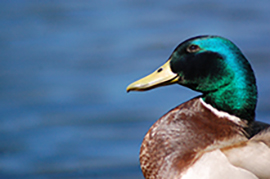
While many people feared that further development on the Fraser River delta would rob the birds of a key stopover point, they continue to stop – but they’re doing so in farmers’ fields on a scale unseen in previous years.

“This has just been an ongoing battle,” says Clarence DeBoer of Eagle View Farms Ltd., a 280-head dairy operation and cranberry producer steps from Boundary Bay. “We’ve been doing this for 25 years but in the past three or four years, it’s really taken off.”

Approximately 4.5 million square feet of industrial space has been built in Delta since the South Fraser Perimeter Road opened at the end of 2013. Meanwhile, over-wintering and migratory waterfowl populations increased between 2008 and 2012, the latest period for which comprehensive estimates exist.

DeBoer raises forage on 190 acres adjacent to Boundary Bay Industrial Park, a multiphase project with a total of 870,000 square feet of state-of-the-art warehouse space. While his cranberry bogs are dry, the laser-leveled fields seeded to forage are sodden with spring rains. The water pools on the surface, unable to sink into the earth because the webbed feet of several thousand foraging wigeon have sealed the surface like so many bricklayer’s trowels. Meanwhile, the birds have devoured the grass the water would usually nourish.

“There isn’t a field that isn’t hammered this way for us,” DeBoer says, pointing to tufts of tall fescue on a close-cropped plain.

Salad days

It’s not just DeBoer and other dairy farmers that are seeing losses.

Lydia Ryall of Cropthorne Farm woke up one morning to find that waterfowl have consumed $4,000 worth of radicchio like the proverbial thief in the night, robbing her of greens for farmers markets, retailers and local restaurants. They also devoured $8,000 worth of kale – in fact, pretty much all her greens except leeks.

Some of the waterfowl have become even more aggressive, invading the barns of producers such as Stan Van Keulen of Donia Farms Ltd. in Surrey. The birds help themselves to his dairy herd’s rations, and defecate in the rest.

“We’re talking maybe 150 ducks. Is it a significant problem? Yes,” he says. “There’s not much we can do.”

The feed bunkers are open and maintaining adequate netting around the open sides and doors of his barns – essential for passive ventilation – simply isn’t practical.

“The netting is an added expense,” he says, adding: “These ducks and geese and eagles are very adaptive to the new environments that they have.”

This is exactly why they’ve concentrated on the area’s remaining farm properties, which are tightly managed to ensure peak performance in the Lower Mainland’s competitive business environment.

“We’re not able to keep up with the impact,” DeBoer says.d with farmers to develop set-asides that provide birds with alternative forage. However, as natural foraging options diminish, demand for alternatives increases – both the set-asides as well as the forage farmers plant for their cattle. The set-asides are funded by the trust in partnership with farmers, but demands on the program mean support from other landholders is needed.

“We’re trying to put more birds on less acres and we’re at the breaking point,” DeBoer says. “There’s no value that comes back to the farmer.”The set-aside scheme is one, but there are also direct costs.
Related Posts

You may be interested in these posts from the same category.

Previous Post: « Ag council welcomes BC fish farmers to table
Next Post: Garlic co-op pitched as supply, appetite expands »

Copyright © 2025 Country Life in BC · All Rights Reserved