• Menu
  • Skip to primary navigation
  • Skip to main content
  • Skip to primary sidebar

Country Life In BC Logo

The agricultural news source in British Columbia since 1915

  • Headlines
  • Calendar
  • Subscribe
  • Advertise
  • About
  • Archives
  • Contact
  • Search
  • Headlines
  • Calendar
  • Subscribe
  • Advertise
  • About
  • Archives
  • Contact
  • Search

Primary Sidebar

Current Issue:

DECEMBER 2025
Vol. 111 Issue 11

Subscribe Now!

Sign up for free weekly FARM NEWS UPDATES

Select list(s) to subscribe to


By submitting this form, you are consenting to receive marketing emails from: Country Life in BC. You can revoke your consent to receive emails at any time by using the SafeUnsubscribe® link, found at the bottom of every email. Emails are serviced by Constant Contact
Your information will not be
shared or sold ever

Follow us on Facebook

Comments Box SVG iconsUsed for the like, share, comment, and reaction icons

6 days ago

... See MoreSee Less

View Comments
  • Likes: 4
  • Shares: 0
  • Comments: 0

Comment on Facebook

7 days ago

On the last day of the BC Organic Conference, Thursday, Molly Thurston of Pearl Agricultural Consulting helped growers learn how to manage bugs such as codling moth, wireworm, and rootworm in organic growing systems. Her talk alongside Renee Prasad included hands-on activities in which participants checked out various traps and examined pests under microscopes. Be sure to look for more upcoming ag events on our online calendar at www.countrylifeinbc.com/calendar/

#BCAg
... See MoreSee Less

On the last day of the BC Organic Conference, Thursday, Molly Thurston of Pearl Agricultural Consulting helped growers learn how to manage bugs such as codling moth, wireworm, and rootworm in organic growing systems. Her talk alongside Renee Prasad included hands-on activities in which participants checked out various traps and examined pests under microscopes. Be sure to look for more upcoming ag events on our online calendar at www.countrylifeinbc.com/calendar/

#BCAg
View Comments
  • Likes: 15
  • Shares: 0
  • Comments: 0

Comment on Facebook

1 week ago

Well-known organic farmer and podcaster Jordan Marr gets interviewed by Country Life in BC’s own columnist and potato mavin Anna Helmer during the opening session of the BC Organic Conference at Harrison Hot Springs yesterday. Sessions run today (Wednesday) and Thursday and include organic and regenerative growing practices and expanding and advocating for the organic sector, all under the background of the newly launched Organic BC banner.

#BCAg
... See MoreSee Less

Well-known organic farmer and podcaster Jordan Marr gets interviewed by Country Life in BC’s own columnist and potato mavin Anna Helmer during the opening session of the BC Organic Conference at Harrison Hot Springs yesterday. Sessions run today (Wednesday) and Thursday and include organic and regenerative growing practices and expanding and advocating for the organic sector, all under the background of the newly launched Organic BC banner.

#BCAg
View Comments
  • Likes: 37
  • Shares: 2
  • Comments: 1

Comment on Facebook

Interested in finding out more about this

3 weeks ago

Today, we remember those who sacrificed their lives or their well-being for our freedom. Lest we forget. ... See MoreSee Less

Today, we remember those who sacrificed their lives or their well-being for our freedom. Lest we forget.
View Comments
  • Likes: 8
  • Shares: 0
  • Comments: 0

Comment on Facebook

1 month ago

FarmFolk CItyFolk is hosting its biennial BC Seed Gathering in Harrison Hot Springs November 27 and 28. Farmers, gardeners and seed advocates are invited to learn more about seed through topics like growing perennial vegetables for seed, advances in seed breeding for crop resilience, seed production as a whole and much more. David Catzel, BC Seed Security program manager with FF/CF will talk about how the Citizen Seed Trail program is helping advance seed development in BC. Expect newcomers, experts and seed-curious individuals to talk about how seed saving is a necessity for food security. ... See MoreSee Less

Link thumbnail

BC Seed Gathering - FarmFolk CityFolk

farmfolkcityfolk.ca

Save the date for our upcoming 2023 BC Seed Gathering happening this November 3rd and 4th at the Richmond Kwantlen Polytechnic University campus.
View Comments
  • Likes: 1
  • Shares: 0
  • Comments: 0

Comment on Facebook

Subscribe | Advertise

The agricultural news source in British Columbia since 1915
  • Email
  • Facebook

Drought puts focus on livestock nutrition

August 11, 2021 byKate Ayers

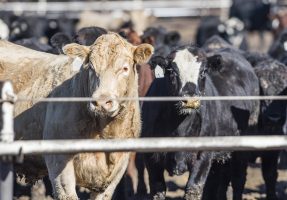
Cattle producers asked their drought-related nutrition questions to a panel of experts during a Beef Cattle Research Council webinar on July 29.

The panel stressed the importance of feed testing during drought conditions. Tests shows if a crop is safe to feed on its own or whether it needs to be mixed with other feedstuffs. While the number of samples is dependent on the size of the field, 20 to 25 samples usually provides a good representation of a field’s nutritional or risk levels.

Feed samples can help producers monitor nitrate levels in forages and other crops. Nitrates present an issue in annual forages such as oats and barley.

Drought stress can cause nitrate accumulation in plants, especially if high rates of nitrogen are applied pre-plant or in-season. Without moisture, plant metabolism slows, and nitrates may linger in the stem.

A nitrate level above 0.5% should be monitored and managed. Diluting high-nitrate feeds can reduce the risk of nitrate poisoning. To avoid the shock to their system, a seven to 10-day transition period helps cattle safely transition to feed with higher nitrate levels.

Poor canola stands in Manitoba, Saskatchewan and parts of Alberta have producers looking to this crop as a potential green feed. However, farmers should exercise caution because canola can cause white muscle disease in calves because of vitamin deficiencies. Canola is high in sulfates, which can tie up selenium, vitamin E and copper. Producers can mix these vitamins into the ration or use ruminal boluses or injections. Specialists recommend that canola hay or silage should make up no more than 50% of a ration. BCRC released a salvage crop calculator so producers can determine the value of alternative feeds for their livestock.

Farmers should also be aware of the amount of straw they feed to cattle. Straw is high in fibre but poorly digestible. It is also low in minerals, vitamins, energy and protein. As a rule of thumb, producers can feed between 1.25% and 1.5% of a cow’s body weight in straw. For example, a 1,400 lb cow can consume between 18 and 22 lbs of straw in its ration. Producers should use caution when resorting to feeding straw as the cows will also require feeds that provide greater energy and nutritional value. However, grain may cause acidosis if the cattle aren’t used to a feedlot-like ration.

Panelists included Dr. Cheryl Waldner, the NSERC/Beef Cattle Research Council senior research chair in beef cattle health in large animal clinical sciences at the Western College of Veterinary Medicine; Dr. Bart Lardner, a professor in the department of animal and poultry science at the University of Saskatchewan; Dr. Andrew Acton, a cattle rancher and veterinarian at Deep South Animal Clinic in Ogema, Saskatchewan; and Dr. John McKinnon, professor emeritus in the animal and poultry science department at the University of Saskatchewan and owner of a nutrition consulting company.

More information and resources are available at [beefresearch.ca/droughtmanagement].
Related Posts

You may be interested in these posts from the same category.

Cattle

Regions selected for livestock tax deferral

A dry season continues

Snowpack sends mixed signals

Senate flood report released

Dry fall, wet winter ahead

Drought fears washed away

Ranchers face rangeland losses

Female ranchers excited for mentorship opportunities

Wildfire state of emergency ends

Province announces wildfire recovery funds

Beef export markets grow

Farmers take issue with water restrictions

Previous Post: « COVID influences food demand
Next Post: Province pledges emergency funding »

Copyright © 2025 Country Life in BC · All Rights Reserved