
• Menu
  • Skip to primary navigation
  • Skip to main content
  • Skip to primary sidebar

Country Life In BC Logo

The agricultural news source in British Columbia since 1915

  • Headlines
  • Calendar
  • Subscribe
  • Advertise
  • About
  • Archives
  • Contact
  • Search
  • Headlines
  • Calendar
  • Subscribe
  • Advertise
  • About
  • Archives
  • Contact
  • Search

Primary Sidebar

Originally published:

JANUARY 2021
Vol. 107 Issue 1

Subscribe Now!

Sign up for free weekly FARM NEWS UPDATES

Loading form…

Your information will not be
shared or sold ever

Stories In This Edition

Full moon rising

New year, new era

Insurance premiums soar

Popham looks forward to a new term

Editorial: New openings

Back 40: New farmers are a crop worth growing

Viewpoint: Let’s get real about mental wellness on the farm

Trade issues, pandemic dog dairy producers

Dairy associations pull through challenging year

Second wave of pandemic hits close to home

Grain producers mark one of their worst harvests

Grower takes issue with groundwater limits

Grape phylloxera found on Vancouver Island

Pioneering entomologist remembered

Leasing farmland a vital strategy for farmers

Raspberry growers tackle new pest challenge

Province comes through with replant money

Pacific Ag Show embraces the digital realm

Berries, berries and more berries

Sidebar: Short course continues to educate growers

Green shoots on the vegetable front

Gala closes out opening day

Ag innovation day

The show must go on

CannaTech West returns

Optimism follows on the heels of 2020’s challenges

Rotational grazing improves soil health

Taking the guesswork out of herd management

Research: Highly sensitive pigs help solve soybean allergies

Bill Awmack honoured with leadership award

Farmers put electric tractors to the test

Kootenay farm advisors resume field days

Kelowna school embraces new container farm

Farm Story: Winter is a good time to problem-solve

Farm women encouraged to take a stand

Woodshed: Breaking the good (and not so good) news

Uncertainty prevails for BC fairs in new year

Jude’s Kitchen: Leftovers re-imagined make tasty meals

More Headlines

Follow us on Facebook

Comments Box SVG iconsUsed for the like, share, comment, and reaction icons

6 days ago

A BC Forest Practices Board investigation has found overgrazing has damaged grasslands in the Coutlee Range Unit near Merritt — and the range-use plan meant to prevent it was unenforceable. With complaints about overgrazing on the rise and grasslands covering just 1% of BC's land mass, the findings raise fresh questions about how the province manages one of its most vulnerable — and valuable — food-producing ecosyste#BCAg#BCAg ... See MoreSee Less

Link thumbnail

Board finds overgrazing rules unenforceable unmeasurable

www.countrylifeinbc.com

MERRITT – A BC Forest Practices Board investigation has found instances of non-compliance related to overgrazing have damaged open grasslands in the Mine pasture, part of the Coutlee Range Unit near...
View Comments
  • Likes: 6
  • Shares: 6
  • Comments: 6

Comment on Facebook

Several ranchers in recent years have gone into temporary non use on that range , so that means the grass should grow. But drought conditions/lack of rain and snow don’t allow that to happen . Dried up springs , creeks waterholes in various pastures add to over grazing where there is water , as livestock and everything else stay close to the water source . So even though less cattle are on it , over grazing appears. There is a large volume of horses on it 365 days/year which is wrong ! They pull grass right out of the ground when it’s just trying to grow ,, opens the door for weeds to grow in. That don’t help it. Aging infrastructure ( fences) laying on the ground, pipe line building , ( lack of commitment to fence maintenance) amongst all users contributes also to over grazing. Recreational atv users leaving gates open between pastures allows livestock to go back or ahead in pastures also expidites over grazing. Logging ( bcts) has no problem laying out cut locks on both sides of a fence , then it gets smashed down during logging and they don’t take responsibility to stand it back up or clean the cattle gaurds out when they are done , that happened 4 years ago on pasture 5 up there . I bet it is still not fixed . There are lots of contributing factors to the problem.

Tragedy of the commons.

I looked through the report. I saw nothing about the effects of noxious weeds on productive grasslands. This particular area is vulnerable because of the Ministry’a efforts to diversify the use of the Grasslands.

This pasture is under tremendous pressure not only from cattle but from irresponsible local residents who treat it as a landfill dumping all manner of household debris here. And don't even get me started on the mud bogging and camping in sensitive riparian areas. The feral horses are in this pasture 365 days a year just hammering it. Would sure be nice to see some enforcement action on people who are intentionally ripping up the grasslands and riparian areas. Cattle could be a valuable resource for rebuilding soils and native grasses in this area with the help of electric fencing and/or e-collars. The humans will be harder to manage.

The Forest and Range Practices Act was written by lawyers for global forest licencee shareholders. Results-based = unenforceable.

Also, can we talk about the impact of a pipeline being built through the middle of this field for multiple years?

View more comments

1 week ago

East Kootenay rancher Randy Reay is digging a new well after two natural water sources dried up on his Crown tenures. A new Living Lakes Canada assessment found 15% of mapped aquifers in the region are high-priority for monitoring, yet 80% of those go unmonitored. With over 48% of BC's provincial observation wells reporting below-normal groundwater levels, ranchers and researchers are sounding the alarm on water security. The story is in our March edition, and we've posted it to our website thi#BCAgk.

#BCAg
... See MoreSee Less

Link thumbnail

Water woes: groundwater under pressure across BC

www.countrylifeinbc.com

JAFFRAY – As a young boy growing up in the Kootenay-Boundary region, Randy Reay never expected to run out of water. But this year, in mid-February, his fields are bare. There is no snow halfway up t...
View Comments
  • Likes: 8
  • Shares: 7
  • Comments: 1

Comment on Facebook

Jaffrey is in the east Kootenays not kooteney boundary

2 weeks ago

BC farmers are bracing for prolonged higher input costs as war in the Middle East drives up fuel and fertilizer prices. Nitrogen fertilizer costs were already climbing before the Iran conflict began, with prices still roughly 60% above pre-pandemic levels. Farm Credit Canada warns that unlike 2022, strong commodity prices may not offset rising costs this time. Local suppliers expect supply challenges and further price increases ahead.

#BCAg
... See MoreSee Less

Link thumbnail

Fertilizer prices on the rise

www.countrylifeinbc.com

War in the Middle East has delivered a generational shock to energy prices, meaning BC farmers can expect a prolonged period of higher costs not just for fuel but also for fertilizer.
View Comments
  • Likes: 2
  • Shares: 1
  • Comments: 0

Comment on Facebook

2 weeks ago

... See MoreSee Less

View Comments
  • Likes: 1
  • Shares: 0
  • Comments: 0

Comment on Facebook

2 weeks ago

Cameron Stockdale is the new executive director of provincial farm safety organization AgSafeBC. Find out more in this week's Farm News Update from Country Life in B#BCAg#BCAg ... See MoreSee Less

Link thumbnail

New leadership at AgSafe BC

www.countrylifeinbc.com

Cameron Stockdale is the new executive director of provincial farm safety organization AgSafeBC, succeeding Wendy Bennett. Bennett left AgSafeBC in September 2025, following 12 years with the…
View Comments
  • Likes: 5
  • Shares: 1
  • Comments: 0

Comment on Facebook

Subscribe | Advertise

The agricultural news source in British Columbia since 1915
  • Email
  • Facebook

Farm women encouraged to make their stand

Self-confidence, good boundaries key to success

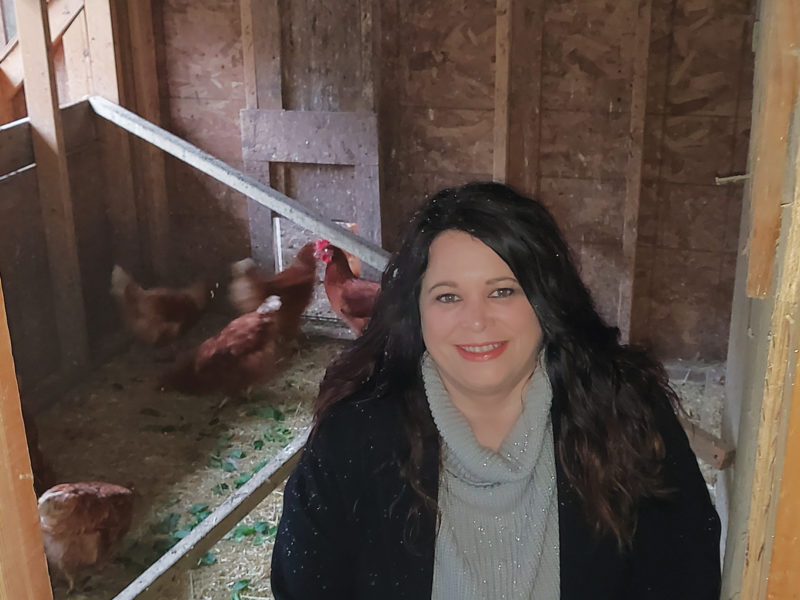
Financial advisor Sherry Watty says women need to continue to educate themselves and not let anyone tell them they can’t do something. They need to follow their passion, she says. PHOTO / SUBMITTED

January 5, 2021 byMyrna Stark Leader

CALGARY – More than 75,000 farm operators in Canada are women – about a third of all farm operators in the country – but they’re seldom speakers at farm leadership conferences and relatively few attend such events.

“It became apparent there was a strong need for women in every sector to hear and learn from the experience of successful women,” says Iris Meck, owner of Iris Meck Communications in Calgary.

Six years ago, after bringing a group of farm women together, Meck launched the Advancing Women in Agriculture conferences to help grow leadership skills among farm women. Eleven conferences later, she’s still targeting women engaged in activities from farming to finance and food processing.

This year’s event, held online November 24 and 25 in partnership with Glacier Farm Media, attracted more than 700 registrants. Speakers ranged from young women relatively new to agriculture to successful entrepreneurs from across Canada, Australia and the UK.

While there’s no shortage of issues facing women in the industry, from lack of rural childcare to challenges accessing financing, a persistent issue is the barriers they face even as they take on leadership positions in family businesses.

Sherry Watty, a financial advisor and owner of Watty Insurance Services Ltd. in Abbotsford, discovered that first-hand when she relocated her office from northern Alberta in 2017. A male colleague told her, “You know Sherry, Abbotsford is a community where women don’t sell farm insurance.” Although she didn’t believe the comment was ill-intended, it was off-putting. She became determined to prove him wrong.

“The first day on the job I had seven new team members and felt like a fish out of water. I sat in my office and told myself, ‘Sherry you’ve got this,’” says Watty.

She studied dairy terminology so she would know how to work with local farmers in her new community, and paid farmers visits. She asked questions and soaked up the answers. She leveraged the knowledge to offer to re-examine farmers’ current policies from a risk management perspective. The approach helped her stand out. Soon, in the community she was hearing, “Hey, I’ve heard about you,” spoken in a positive light.

Watty encourages women to continue to educate themselves and not let anyone tell them they can’t do something and to follow their passion.

Taking a stand

Cherie Copithorne-Barnes, CEO of CL Ranches Ltd. near Cochrane, Alberta, encouraged women to stand up for what they believe and address misperceptions of agriculture and agricultural practices. When trees encroached on her pasture, she met some public disapproval of her plans to fell some of the them to maintain the boundary.

Some claimed the stand of trees was historic and needed protection. But as she took the ranch through the official approval process and explained that the stand had only been on the ranch for a hundred years, she was able to proceed. Today, some of the opponents now enjoy walking the newly cleared land.

“The agriculture community needs to reach out to politicians and others locally to keep them informed and educated about agricultural practices and why they are important,” says Copithorne-Barnes. “Don’t be afraid to stand up and say what needs to be said.”

Sheryl Wallace, corporate vice-president, risk management with Cargill Inc., dared women to reach their fullest potential and talk more about their accomplishments.

“As women, we assume that our work speaks for itself. We struggle with balancing being humble and also sharing our achievements. Find creative ways to share your success,” said Wallace who’s has had career ups and downs but learned to be more confident. “Don’t rely on someone to tap you on the shoulder to say you’re CEO material; just believe it and step up.”

Vicki Brisson was raised on a dairy farm in Ontario and currently serves on the Canadian Agricultural Youth Council, convened by federal agriculture minister Marie-Claude Bibeau last year.

Brisson stresses the importance of developing and reaching out to a personal support network. Women need to help other women advance in the industry and promote diversity within the sector. They also need to be collaborators in building a new paradigm of leadership rather than competing with men or each other.

This can give them a sense of the unique value they bring to the table.

“Women, in general, don’t value themselves as highly as men, which leads us to take on more and more responsibility without asking for adequate compensation, which can lead to burnout,” says Shelby Corey of 4-H Saskatchewan.

Corey explained how she factored in her labour costs when pricing her beef. Instead of being positive, the move garnered criticism from producers who didn’t like her pricing strategy. She did it anyway, explaining that her consumers understand.

“We need to know our value and negotiate that. We bring a different value to the table and it’s needed … Know when to use your voice to ask for help or to say no. Speak up when you need to step down from some roles,” advises Corey.

Brisson warned that women need to stop wearing busy like a badge of honour.

“I thought that if I enjoyed my job, I could abandon all my other passions … and I lost myself,” she says. “It’s when I set strict boundaries on how I spend my time that I get the most done.”

Related Posts

You may be interested in these posts from the same category.

Previous Post: « US holds blueberry hearing
Next Post: New year, new openness »

Copyright © 2026 Country Life in BC · All Rights Reserved