• Menu
  • Skip to primary navigation
  • Skip to main content
  • Skip to primary sidebar

Country Life In BC Logo

The agricultural news source in British Columbia since 1915

  • Headlines
  • Calendar
  • Subscribe
  • Advertise
  • About
  • Archives
  • Contact
  • Search
  • Headlines
  • Calendar
  • Subscribe
  • Advertise
  • About
  • Archives
  • Contact
  • Search

Primary Sidebar

Originally published:

NOVEMBER 2024
Vol. 110 Issue 11

Subscribe Now!

Sign up for free weekly FARM NEWS UPDATES

Loading form…

Your information will not be
shared or sold ever

Stories In This Edition

Beef herd drops

Dairy faces trade threats

Passing the test

Sidebar: Ranch sales remain steady

Chicken board considers quota exchange

Editorial: Minority opinion

Back 40: Remember what makes it all worthwhile

Viewpoint: Gold dust in your fibre optic cable

Apple harvest faces headwinds from co-op’s closure

Sidebar: Growers Supply locations sold

National award to honour David Schmidt’s legacy

Ag Briefs: UBC agriculture deal heads to Alberta

Ag Briefs: Wine Growers head to retire

Ag Briefs: BC seeks crop reporters

Investment Ag reports banner year

Island winery closes amid “perfect storm”

Cranberry crop trending below five-year average

New standards close loop on greenhuse pesticide leaks

BCLNA budget deficits continue

Famers hamstrung by lack of compost

Sidebar: Study shows Island producers face steep fertilizer costs

Native knowledge, good practices lead range tour

Field days give farmers the dirt on soil management

Farm Story: Politics and weather make for a mucky fall

Fall weather, fall threats

On-farm innovation fuels turnaround

Rye grass gets boost from Living Lab project

Woodshed: Kenneth is all dressed up and ready to ride

Vet student grateful for bursary support

Jude’s Kitchen: Warm up with new, exotic flavours

All content on this website is copyrighted, and cannot be republished or reproduced without permission.
More Headlines

Follow us on Facebook

Comments Box SVG iconsUsed for the like, share, comment, and reaction icons

4 hours ago

A draft update to the Code of Practice for the Care and Handling of Beef Cattle is now open for public comment until June 12. The code, one of 14 animal care codes developed and maintained by the National Farm Animal Care Council, is undergoing a routine 10-year review. "Your feedback will help shape the industry's guide to cattle welfare for the next decade," says Canadian Cattle Association policy manager Jessica Radau, urging producers to weigh in. For more information, visit tinyurl.com/58a3u9fz.

#BCAg
... See MoreSee Less

A draft update to the Code of Practice for the Care and Handling of Beef Cattle is now open for public comment until June 12. The code, one of 14 animal care codes developed and maintained by the National Farm Animal Care Council, is undergoing a routine 10-year review.  Your feedback will help shape the industrys guide to cattle welfare for the next decade, says Canadian Cattle Association policy manager Jessica Radau, urging producers to weigh in. For more information, visit https://tinyurl.com/58a3u9fz.

#BCAg
View Comments
  • Likes: 2
  • Shares: 0
  • Comments: 1

Comment on Facebook

I sat in the webinar yesterday by the Canadian Cattle Association. My initial concern was that this would be another "play" into the government's hands. It has been worked on by people that are actually in the Beef industry from Cow calf to feedlot. The thrust is an update of the 2013 Code of Practice which was reviewed in 2018. The changes are more a move from "left to the producers discretion" to clearer directions regarding pain management, proper transport of animals which are impaired and keeping cattle in in good condition. Much of what is recommended is what producers who care about animal husbandry already do. The important part is to GIVE THEM FEEDBACK good, bad or otherwise. The document is about 60 pages long, and I ran it through CHAT to see what had been changed. It is important to understand that the PUBLIC is invited to comment on the draft not just producers. Think about it... do you really want the public influencing how you manage your cattle. If you think that this is just one of those things, I have been following Bill 22 in Alberta which will grant the SPCA a proactive roll in entering farms and checking on animals. When I asked CHAT how the new bill relates to the Cattle Code, it came back that the Code although not a regulation will be able to be used as a guide by producers for backup in dealing with the SPCA regarding cattle conditions, sick animal handling etc. Take the time.... Go onto the Canadian Cattle Association website and speak to those parts that you wish to input.

1 day ago

According to the BC River Forecast Centre, the Okanagan snowpack stood at just 58% of normal on April 1 — the lowest reading since measurements began in 1980 — raising concerns about drought conditions in the region this summer. The rest of the province sits at 92% of normal.

#BCAg
... See MoreSee Less

According to the BC River Forecast Centre, the Okanagan snowpack stood at just 58% of normal on April 1 — the lowest reading since measurements began in 1980 — raising concerns about drought conditions in the region this summer. The rest of the province sits at 92% of normal.

#BCAg
View Comments
  • Likes: 3
  • Shares: 0
  • Comments: 0

Comment on Facebook

2 days ago

At her first AGM as executive director of BC Meats, held Saturday in Abbotsford, Jennifer Busmann spoke about her strong ties to agriculture and her optimism for the organization's future. Busmann has cattle of her own and came to the role with existing relationships with members and the board of directors that helped her feel integrated from the start. She stepped into the position in Februa#BCAg#BCAg ... See MoreSee Less

At her first AGM as executive director of BC Meats, held Saturday in Abbotsford, Jennifer Busmann spoke about her strong ties to agriculture and her optimism for the organizations future. Busmann has cattle of her own and came to the role with existing relationships with members and the board of directors that helped her feel integrated from the start. She stepped into the position in February.

#BCAg
View Comments
  • Likes: 6
  • Shares: 0
  • Comments: 0

Comment on Facebook

4 days ago

Shannon Wiggins of Headwind Farm in North Saanich is this year's Mary Forstbauer Grant recipient from the BC Association of Farmers Markets. The $500 grant will help Wiggins expand her plot at Sandown Centre for Regenerative Agriculture, growing more storage crops to extend her harvest season. Wiggins credits farmers markets with inspiring her own farming journey and commitment to building community through food. Congratulations!

tinyurl.com/45bdd#BCAg#BCAg
... See MoreSee Less

Shannon Wiggins of Headwind Farm in North Saanich is this years Mary Forstbauer Grant recipient from the BC Association of Farmers Markets. The $500 grant will help Wiggins expand her plot at Sandown Centre for Regenerative Agriculture, growing more storage crops to extend her harvest season. Wiggins credits farmers markets with inspiring her own farming journey and commitment to building community through food. Congratulations!

https://tinyurl.com/45bddtw8

#BCAg
View Comments
  • Likes: 46
  • Shares: 2
  • Comments: 3

Comment on Facebook

Wahoo! Congrats Shannon! I love your produce. Can’t wait for the radishes 🫜

Congratulations!

Well done!! 🩷🩷🩷

6 days ago

New farmers can avoid costly mistakes by learning from those who've been there. At a Young Agrarians mixer in Penticton, five BC farmers shared hard-won lessons on pricing, pivoting, relationships and burnout. From coyote losses to business burnout, their message was clear: set prices that reflect true costs, make decisions quickly and don't let farming define your worth. Myrna Stark Leader's story appears in our April e-edition, now available to view online at: tinyurl#BCAg2uw53vvm

#BCAg
... See MoreSee Less

New farmers can avoid costly mistakes by learning from those whove been there. At a Young Agrarians mixer in Penticton, five BC farmers shared hard-won lessons on pricing, pivoting, relationships and burnout. From coyote losses to business burnout, their message was clear: set prices that reflect true costs, make decisions quickly and dont let farming define your worth. Myrna Stark Leaders story appears in our April e-edition, now available to view online at: https://tinyurl.com/2uw53vvm

#BCAg
View Comments
  • Likes: 15
  • Shares: 0
  • Comments: 0

Comment on Facebook

Subscribe | Advertise

The agricultural news source in British Columbia since 1915
  • Email
  • Facebook

Field days give farmers the dirt on soil management

Regular, consistent sampling can reveal long-term trends

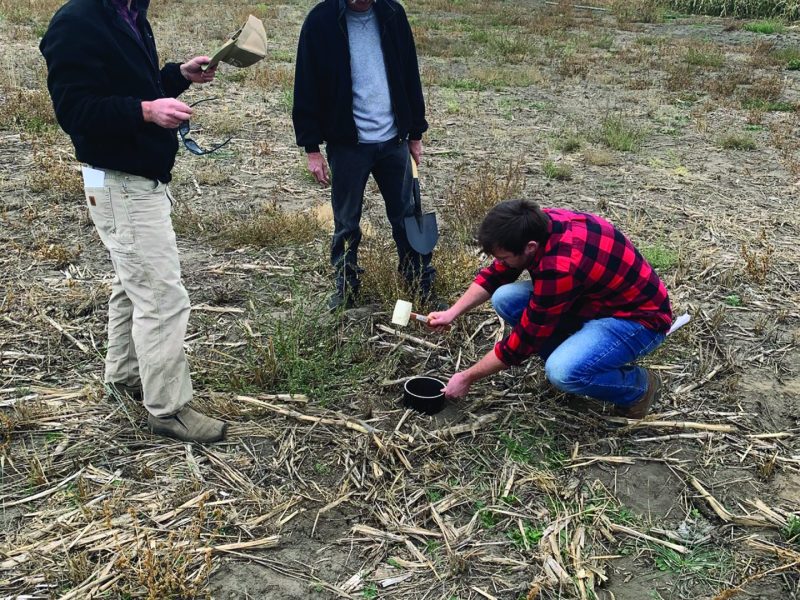
Kootenay & Boundary Farm Advisor Andrew Bennett, left, Kettle River Farm owner Owen Broad and provincial nutrient management specialist Josh Andrews prepare a collar to test soil water infiltration rates. TOM WALKER

November 1, 2024 byTom Walker

GRAND FORKS – The BC Ministry of Agriculture and Food sponsored a series of soil field days in conjunction with Kootenay Boundary Farm Advisors group in early October.

“Our purpose is to help you understand the basic techniques of soil sampling and why you would do it,” says soil carbon agrologist Ahmed Lasisi, who led off the October 8 session at Kettle River Farm in Grand Forks.

Only when you know what’s in your soil will you know what you need to add, Lasisi explains.

“If you are adding any kind of inputs into your soil, it makes sense to know what is in there first,” he says. “Soil testing gives you the information you need to plan nutrient applications in order to maximize your crop production, your economics and the environment. Imagine what happens when someone’s crop only needs 50 pounds of nitrogen, but they apply 100 pounds.”

Lasisi led participants through the process of collecting a soil sample, something he says doesn’t have to involve special equipment.

“You want to gather an aggregate sample of your field based on one management zone, such as fields that look alike, or what crop the farmer grows there,” he says. “For a field up to 10 acres, you would need 10 to 15 samples.”

Consistent sampling around the same time every one to three years will reveal trends.

“Fall will give you an indication of the post-harvest uptake of your crop and give you time to complete the lab work and plan for spring,” Lasisi says. “In areas where high winter rains or snowfall could cause nutrient leaching, a spring sample will be a more accurate picture of what is available at the start of the growing season, but the lab results may not be back in time for your planting as they could take three to four weeks.”

Regardless of the time of year, growers must wait two months after a nutrient application before sampling their fields, Lasisi cautions.

A soil probe is a handy tool, but a shovel or trowel are equally effective.

“It is important to take a representative sample from different typical areas of your field, but avoid weird areas such as a low-lying spot, where soil has been eroded or where you load your spray tank,” Lasisi notes. “Clear away any surface residue so plant matter is not included and collect a sample of the first 15 centimetres of soil.”

Growers should mix the samples thoroughly in a bucket, dry them away from direct sunlight, then bag approximately two ounces and send them to a lab.

Testing is only the first step. Knowing how to interpret the results and action them is critical.

Fortunately, all workshop attendees will have the costs of a soil sample covered by the ministry and staff are available to help with interpretation and recommendations.

“We hope to do more of these workshops and start to build a repertoire of what’s happening with soils across the province,” says regional agrologist Lindsay Hainstock.

Overall soil health isn’t strictly about chemistry, notes Josh Andrews, a nutrient management specialist with the province.

“Soil has to be healthy in order to perform the functions that you want it to,” he explains.

There are many online guides available to soil health, including the app LandPKS.

“There are lots of indicators to look for and ways to measure them,” Andrews says.

He led the group through a variety of field measures.

“You want to be looking over time to see what is happening in the context of your management practices,” he says.

“These will all help you evaluate the soil’s ability to grow crops, hold nutrients, infiltrate water or support recreation,” Andrews says.

All content on this website is copyrighted, and cannot be republished or reproduced without permission.
Related Posts

You may be interested in these posts from the same category.

Fossens recognized for innovative practices

Nelson farm builds soil and local community

Greenhouse sets example for others to follow

No-till takes centre stage at field day

Previous Post: « Island farmers fish for water solutions
Next Post: Creston beekeeper wins award »

© 2026 COUNTRY LIFE IN BC - ALL RIGHTS RESERVED