• Menu
  • Skip to primary navigation
  • Skip to main content
  • Skip to primary sidebar

Country Life In BC Logo

The agricultural news source in British Columbia since 1915

  • Headlines
  • Calendar
  • Subscribe
  • Advertise
  • About
  • Archives
  • Contact
  • Search
  • Headlines
  • Calendar
  • Subscribe
  • Advertise
  • About
  • Archives
  • Contact
  • Search

Primary Sidebar

Originally published:

DECEMBER 2024
Vol. 110 Issue 12

Subscribe Now!

Sign up for free weekly FARM NEWS UPDATES

Loading form…

Your information will not be
shared or sold ever

Stories In This Edition

Heading home

Avian flu response keeping pace

Popham back as ag minister

Farm equipment sales down, but not out

Winter harvest

Editorial: Goodwill wanted

Back 40: The election’s over. Now what?

Viewpoint: BC orchard sector needs more than sales

Court decision a bowl of cherries for Canada

Ag Briefs: Sturko leads apple marketing commission consultations

Ag Briefs: New BC field vegetable specialist

Ag Briefs: Slash smoke challenge planned

Ag Briefs: Mushroom farm fined

Island farmers fish for water solutions

Economic summit makes case to buy local

Cow-op urges community to buy local

Demand for milk, lower input costs good for dairy

Replant program begins accepting applications

Researchers explore ways to detect Cherry X

Trade imblance baffles honey producers

Pilot addresses gap in distribution infrastructure

Rotational grzing field day tracks progress

Cool spring challenges high-heat corn

Sidebar: It’s not all about the yield

Panel celebrates waste reduction strategies

Global sales blossom from native berry

Farm Story: Why hibernate in such a friendly valley?

Timely rains support Christmas tree supply

Sidebar: BCCTA AGM opportunity for knowledge transfer

On-farm research doesn’t have to be complicated

Woodshed: Some manners would go a long way with Delta

Young rancher honoured for leadership

Jude’s Kitchen: Much to celebrate in December

All content on this website is copyrighted, and cannot be republished or reproduced without permission.
More Headlines

Follow us on Facebook

Comments Box SVG iconsUsed for the like, share, comment, and reaction icons

11 hours ago

A draft update to the Code of Practice for the Care and Handling of Beef Cattle is now open for public comment until June 12. The code, one of 14 animal care codes developed and maintained by the National Farm Animal Care Council, is undergoing a routine 10-year review. "Your feedback will help shape the industry's guide to cattle welfare for the next decade," says Canadian Cattle Association policy manager Jessica Radau, urging producers to weigh in. For more information, visit tinyurl.com/58a3u9fz.

#BCAg
... See MoreSee Less

A draft update to the Code of Practice for the Care and Handling of Beef Cattle is now open for public comment until June 12. The code, one of 14 animal care codes developed and maintained by the National Farm Animal Care Council, is undergoing a routine 10-year review.  Your feedback will help shape the industrys guide to cattle welfare for the next decade, says Canadian Cattle Association policy manager Jessica Radau, urging producers to weigh in. For more information, visit https://tinyurl.com/58a3u9fz.

#BCAg
View Comments
  • Likes: 2
  • Shares: 0
  • Comments: 1

Comment on Facebook

I sat in the webinar yesterday by the Canadian Cattle Association. My initial concern was that this would be another "play" into the government's hands. It has been worked on by people that are actually in the Beef industry from Cow calf to feedlot. The thrust is an update of the 2013 Code of Practice which was reviewed in 2018. The changes are more a move from "left to the producers discretion" to clearer directions regarding pain management, proper transport of animals which are impaired and keeping cattle in in good condition. Much of what is recommended is what producers who care about animal husbandry already do. The important part is to GIVE THEM FEEDBACK good, bad or otherwise. The document is about 60 pages long, and I ran it through CHAT to see what had been changed. It is important to understand that the PUBLIC is invited to comment on the draft not just producers. Think about it... do you really want the public influencing how you manage your cattle. If you think that this is just one of those things, I have been following Bill 22 in Alberta which will grant the SPCA a proactive roll in entering farms and checking on animals. When I asked CHAT how the new bill relates to the Cattle Code, it came back that the Code although not a regulation will be able to be used as a guide by producers for backup in dealing with the SPCA regarding cattle conditions, sick animal handling etc. Take the time.... Go onto the Canadian Cattle Association website and speak to those parts that you wish to input.

1 day ago

According to the BC River Forecast Centre, the Okanagan snowpack stood at just 58% of normal on April 1 — the lowest reading since measurements began in 1980 — raising concerns about drought conditions in the region this summer. The rest of the province sits at 92% of normal.

#BCAg
... See MoreSee Less

According to the BC River Forecast Centre, the Okanagan snowpack stood at just 58% of normal on April 1 — the lowest reading since measurements began in 1980 — raising concerns about drought conditions in the region this summer. The rest of the province sits at 92% of normal.

#BCAg
View Comments
  • Likes: 3
  • Shares: 0
  • Comments: 0

Comment on Facebook

2 days ago

At her first AGM as executive director of BC Meats, held Saturday in Abbotsford, Jennifer Busmann spoke about her strong ties to agriculture and her optimism for the organization's future. Busmann has cattle of her own and came to the role with existing relationships with members and the board of directors that helped her feel integrated from the start. She stepped into the position in Februa#BCAg#BCAg ... See MoreSee Less

At her first AGM as executive director of BC Meats, held Saturday in Abbotsford, Jennifer Busmann spoke about her strong ties to agriculture and her optimism for the organizations future. Busmann has cattle of her own and came to the role with existing relationships with members and the board of directors that helped her feel integrated from the start. She stepped into the position in February.

#BCAg
View Comments
  • Likes: 6
  • Shares: 0
  • Comments: 0

Comment on Facebook

4 days ago

Shannon Wiggins of Headwind Farm in North Saanich is this year's Mary Forstbauer Grant recipient from the BC Association of Farmers Markets. The $500 grant will help Wiggins expand her plot at Sandown Centre for Regenerative Agriculture, growing more storage crops to extend her harvest season. Wiggins credits farmers markets with inspiring her own farming journey and commitment to building community through food. Congratulations!

tinyurl.com/45bdd#BCAg#BCAg
... See MoreSee Less

Shannon Wiggins of Headwind Farm in North Saanich is this years Mary Forstbauer Grant recipient from the BC Association of Farmers Markets. The $500 grant will help Wiggins expand her plot at Sandown Centre for Regenerative Agriculture, growing more storage crops to extend her harvest season. Wiggins credits farmers markets with inspiring her own farming journey and commitment to building community through food. Congratulations!

https://tinyurl.com/45bddtw8

#BCAg
View Comments
  • Likes: 46
  • Shares: 2
  • Comments: 3

Comment on Facebook

Wahoo! Congrats Shannon! I love your produce. Can’t wait for the radishes 🫜

Congratulations!

Well done!! 🩷🩷🩷

6 days ago

New farmers can avoid costly mistakes by learning from those who've been there. At a Young Agrarians mixer in Penticton, five BC farmers shared hard-won lessons on pricing, pivoting, relationships and burnout. From coyote losses to business burnout, their message was clear: set prices that reflect true costs, make decisions quickly and don't let farming define your worth. Myrna Stark Leader's story appears in our April e-edition, now available to view online at: tinyurl#BCAg2uw53vvm

#BCAg
... See MoreSee Less

New farmers can avoid costly mistakes by learning from those whove been there. At a Young Agrarians mixer in Penticton, five BC farmers shared hard-won lessons on pricing, pivoting, relationships and burnout. From coyote losses to business burnout, their message was clear: set prices that reflect true costs, make decisions quickly and dont let farming define your worth. Myrna Stark Leaders story appears in our April e-edition, now available to view online at: https://tinyurl.com/2uw53vvm

#BCAg
View Comments
  • Likes: 15
  • Shares: 0
  • Comments: 0

Comment on Facebook

Subscribe | Advertise

The agricultural news source in British Columbia since 1915
  • Email
  • Facebook

Island farmers fish for water solutions

Ongoing licensing challenges fuel frustration, innovation

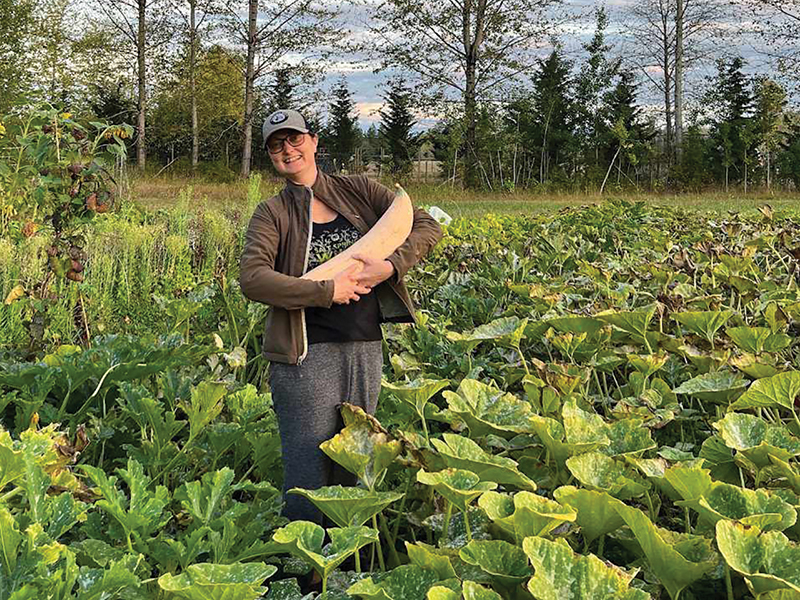
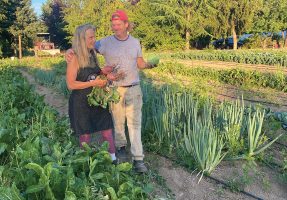
New farmer Jaclyn Kirby has been told she will not qualify for a water licence because she’s on an at-risk aquifer, so she’s pivoted to dryland farming. | SUBMITTED

December 2, 2024 byKate Ayers

BLACK CREEK – Water challenges are still top of mind for Vancouver Island growers despite a wet fall, and they say the province needs to make it easier to capture and store the liquid wealth for future growing seasons.

While the province has committed $100 million to the Agricultural Water Infrastructure Program for on-farm water storage and related projects, conflicting regulations have created confusion for producers.

Meanwhile, thousands of groundwater applications remain backlogged at the BC Ministry of Water, Land and Resource Stewardship (WLRS), which has stepped up compliance and enforcement efforts this year.

Nursery operators and blueberry growers in the Fraser Valley as well as farms on Vancouver Island received visits this summer from natural resource officers investigating water use.

Under the Water Sustainability Act, existing groundwater users had to apply for groundwater licences by March 1, 2022. The province expected to license extractions from an estimated 20,000 wells, but just over 8,000 applications have been received to date.

Of these, fewer than 2,500 licences were issued by mid-November, with 575 applications abandoned for a variety of reasons.

Many producers say the application process has been confusing, stressful and sometimes expensive, and many have yet to receive licences despite being subject to annual fees for groundwater use.

The confusion and frustration came to a head in 2023 in Westwold, when Sec. 88 fish protection orders under the Water Sustainability Act shut down forage irrigation. BC Ministry of Agriculture and Food staff responded with drought and water management workshops, but some producers say they’re still receiving conflicting information.

“I’ve got a pamphlet from the Ministry of Agriculture from a seminar I went to and they’re telling you, ‘Go ahead, dig a pond, you can do this, you don’t need a licence,’” a Comox Valley producer says, requesting anonymity because of heightened concerns over provincial enforcement efforts. “The same day I was at a meeting with WLRS where they shut a farmer down and were offering them a fine.”

In August, Fiona McQuillan of Merville’s Fireweed Farmstead hosted a ministry-run field day showcasing her irrigation pond for use in field vegetable and greenhouse production.

She considers her family fortunate in having access to water because they’ve come close to needing to turn off the taps in the summer even with designated storage capacity.

“It was one of the reasons why we purchased the farm, because it had a very large irrigation pond,” McQuillan says, who bought the farm eight years ago with her husband Jens.

They have layers, pastured pigs and three commercial hoop houses for fruit and vegetable production on six acres.

“From the drought, we’ve been worried, we’ve been scared, but we’ve been okay,” McQuillan says.

She is concerned about the province issuing curtailment orders at the peak of summer when her plants have flowered, and fruit is on the vine. The farm is located in the Tsolum watershed, which was one of four areas where forage irrigation was shut down last year, but irrigation of fruit and vegetable crops continued to be allowed.

“If you stop irrigating then, you’re going to have some serious crop loss. We’re just in uncharted territory and every summer is going to come with the serious potential for a really seriously negative outcome.”

While the government is working to improve communication with producers on agricultural water management through workshops, specific information is needed for individual farms.

“Did anybody walk away from that with a ton of great information? No,” McQuillan says of the field day on her farm. “I’ve been through a lot of these government seminars and honestly, I don’t really feel l… I’ve really learned something that’s going to make a huge difference.”

Farmers want to implement efficiency upgrades, improve production and continue to be viable. But many tools and techniques cost money.

“You can do drip irrigation and timed irrigation and be super-careful, but if we keep going into droughts, we’ll get to a point where we just can’t grow it unless we invest in infrastructure that honestly we cannot afford,” McQuillan says. “You can talk blue in the face, but if we simply can’t afford the system, then it does nothing for us.”

She would like to see seminars backed with capital investments into farms to kick-start projects along with faster water licence approvals for farmers.

WLRS says it’s taken 1,055 days to issue decisions to date from the time applications were first submitted. Most of that time was spent waiting for staff to take a look at it. Once in the hands of a water officer, processing has taken an average of 289 days.

McQuillan submitted her licence application in 2021 but has yet to receive a decision.

WLRS staff say processing times have improved following the formation of a task force this past spring to clear the thousands of backlogged applications, but progress remains slow.

The current processing rate is 70 decisions a month, versus 32 prior to last February.

Word of mouth

Jaclyn Kirby in Black Creek learned about groundwater licensing through conversations with other local producers. She began leasing a quarter acre on an old farm property in 2021 and launched Yellow Boot Farm.

But because she was new to the land and it was a new business, she needed to apply as a new user. She gathered the required information, paid the $250 application fee and was prepared to submit the paperwork.

WLRS told Kirby she could apply if she wanted but would not be approved because she is on an aquifer of concern.

“How can a new farm start up if you’re not going to supply anyone with any water licences?” she asks.

A dugout is not an option for Kirby because the hole would take up valuable production space.

Consequently, Kirby has turned to dryland farming and has been running pilots through Kwantlen Polytechnic University and the Oregon-based Dry Farming Institute and identified crops that can survive with minimal inputs even during the driest of Augusts.

For the little water she needs, Kirby credits the landowners for installing a rainwater capture system.

“If I had to set that up on my own, I would have just quit. I don’t have an extra $10,000 to get all the infrastructure, learn how it works, maintain it all,” she says.

To help others, Kirby and KPU have hosted two on-farm workshops and plan to host more next year.

With files from Peter Mitham

All content on this website is copyrighted, and cannot be republished or reproduced without permission.
Related Posts

You may be interested in these posts from the same category.

Southern Interior irrigators shut down

Groundwater enforcement picks up

Water licence fight highlights need for change

Westwold producers challenge curtailment

No licence, no problem

Province funds weather preparedness

Watershed security report

Groundwater users could lose rights next year

Feeling the heat on water

Water licence angst

Grower takes issue with groundwater limits

Province updates watering intentions

Previous Post: « Popham back as ag minister
Next Post: Field days give farmers the dirt on soil management »

© 2026 COUNTRY LIFE IN BC - ALL RIGHTS RESERVED