
• Menu
  • Skip to primary navigation
  • Skip to main content
  • Skip to primary sidebar

Country Life In BC Logo

The agricultural news source in British Columbia since 1915

  • Headlines
  • Calendar
  • Subscribe
  • Advertise
  • About
  • Archives
  • Contact
  • Search
  • Headlines
  • Calendar
  • Subscribe
  • Advertise
  • About
  • Archives
  • Contact
  • Search

Primary Sidebar

Originally published:

MAY 2019
Vol. 105 Issue 5

Subscribe Now!

Sign up for free weekly FARM NEWS UPDATES

Select list(s) to subscribe to


By submitting this form, you are consenting to receive marketing emails from: Country Life in BC. You can revoke your consent to receive emails at any time by using the SafeUnsubscribe® link, found at the bottom of every email. Emails are serviced by Constant Contact
Your information will not be
shared or sold ever

Stories In This Edition

Caribou recovery plan has ranchers worried

What on earth?

Opposition slams ALC bill

Sidebar: Protection & pushback

Global rhubarb glut hits home for BC growers

Editorial: Truth in labelling

Back Forty: So you don’t believe in climate change

Viewpoint: Don’t blame the cows for global warming

Ag council’s lobbying efforts produce results

Learning a new skill

Foundation’s nest egg for funding projects increases

Greenhouse growers see rebound in acreage

Province will hold the line on piece rates

New CEO aims to kindle team spirit at co-op

Shrinking hog industry faces disease threats

FIRB decision prompts rethink of pricing scheme

Beekeepers see potential in technology transfer

AgSafe markes quarter century

Raspberries hit hard by harsh February

Good deal

Blueberry growers anxious for new varieties

Biological controls for pests in demand

Sidebar: Pesticides in play

Growers urged to focus on fresh

Westgen celebrates 75 years of excellence

Top seller was no-show at Holstein sale

Spring show attracts exhibitors from Quebec

Cheesemakers unite to grow niche market

Range use permits under greater scrutiny

Sidebar: Range use plans go digital

Market Musings: Top bulls sell for top dollar at spring sales

Grapegrowers share sustainability objectives

Grape specialist honoured for dedication

Hazelnut production expands across BC

Sidebar: Pest pressures

Supporters take to AITC’s Sips & Sprouts

Research: Cultured meat fails to impress researchers

UAVs undergo testing for pesticide delivery

Sustainability goes beyond saving farmland

Father and daughter roll with the last of the steel wheels

Woodshed: Susan Henderson is warming to country life

Farm initiative puts heart back in agriculture

Wannabe: Farming is more than just a job

Surplus, cull fruit finds new purpose as tasty snacks

Jude’s Kitchen: Special food for special moms

More Headlines

Follow us on Facebook

Comments Box SVG iconsUsed for the like, share, comment, and reaction icons

7 days ago

... See MoreSee Less

View Comments
  • Likes: 4
  • Shares: 0
  • Comments: 0

Comment on Facebook

7 days ago

On the last day of the BC Organic Conference, Thursday, Molly Thurston of Pearl Agricultural Consulting helped growers learn how to manage bugs such as codling moth, wireworm, and rootworm in organic growing systems. Her talk alongside Renee Prasad included hands-on activities in which participants checked out various traps and examined pests under microscopes. Be sure to look for more upcoming ag events on our online calendar at www.countrylifeinbc.com/calendar/

#BCAg
... See MoreSee Less

On the last day of the BC Organic Conference, Thursday, Molly Thurston of Pearl Agricultural Consulting helped growers learn how to manage bugs such as codling moth, wireworm, and rootworm in organic growing systems. Her talk alongside Renee Prasad included hands-on activities in which participants checked out various traps and examined pests under microscopes. Be sure to look for more upcoming ag events on our online calendar at www.countrylifeinbc.com/calendar/

#BCAg
View Comments
  • Likes: 15
  • Shares: 0
  • Comments: 0

Comment on Facebook

1 week ago

Well-known organic farmer and podcaster Jordan Marr gets interviewed by Country Life in BC’s own columnist and potato mavin Anna Helmer during the opening session of the BC Organic Conference at Harrison Hot Springs yesterday. Sessions run today (Wednesday) and Thursday and include organic and regenerative growing practices and expanding and advocating for the organic sector, all under the background of the newly launched Organic BC banner.

#BCAg
... See MoreSee Less

Well-known organic farmer and podcaster Jordan Marr gets interviewed by Country Life in BC’s own columnist and potato mavin Anna Helmer during the opening session of the BC Organic Conference at Harrison Hot Springs yesterday. Sessions run today (Wednesday) and Thursday and include organic and regenerative growing practices and expanding and advocating for the organic sector, all under the background of the newly launched Organic BC banner.

#BCAg
View Comments
  • Likes: 37
  • Shares: 2
  • Comments: 1

Comment on Facebook

Interested in finding out more about this

3 weeks ago

Today, we remember those who sacrificed their lives or their well-being for our freedom. Lest we forget. ... See MoreSee Less

Today, we remember those who sacrificed their lives or their well-being for our freedom. Lest we forget.
View Comments
  • Likes: 8
  • Shares: 0
  • Comments: 0

Comment on Facebook

1 month ago

FarmFolk CItyFolk is hosting its biennial BC Seed Gathering in Harrison Hot Springs November 27 and 28. Farmers, gardeners and seed advocates are invited to learn more about seed through topics like growing perennial vegetables for seed, advances in seed breeding for crop resilience, seed production as a whole and much more. David Catzel, BC Seed Security program manager with FF/CF will talk about how the Citizen Seed Trail program is helping advance seed development in BC. Expect newcomers, experts and seed-curious individuals to talk about how seed saving is a necessity for food security. ... See MoreSee Less

Link thumbnail

BC Seed Gathering - FarmFolk CityFolk

farmfolkcityfolk.ca

Save the date for our upcoming 2023 BC Seed Gathering happening this November 3rd and 4th at the Richmond Kwantlen Polytechnic University campus.
View Comments
  • Likes: 1
  • Shares: 0
  • Comments: 0

Comment on Facebook

Subscribe | Advertise

The agricultural news source in British Columbia since 1915
  • Email
  • Facebook

Global rhubarb glut hits home for BC growers

No processor means no early season cash

April 30, 2019 byPeter Mitham

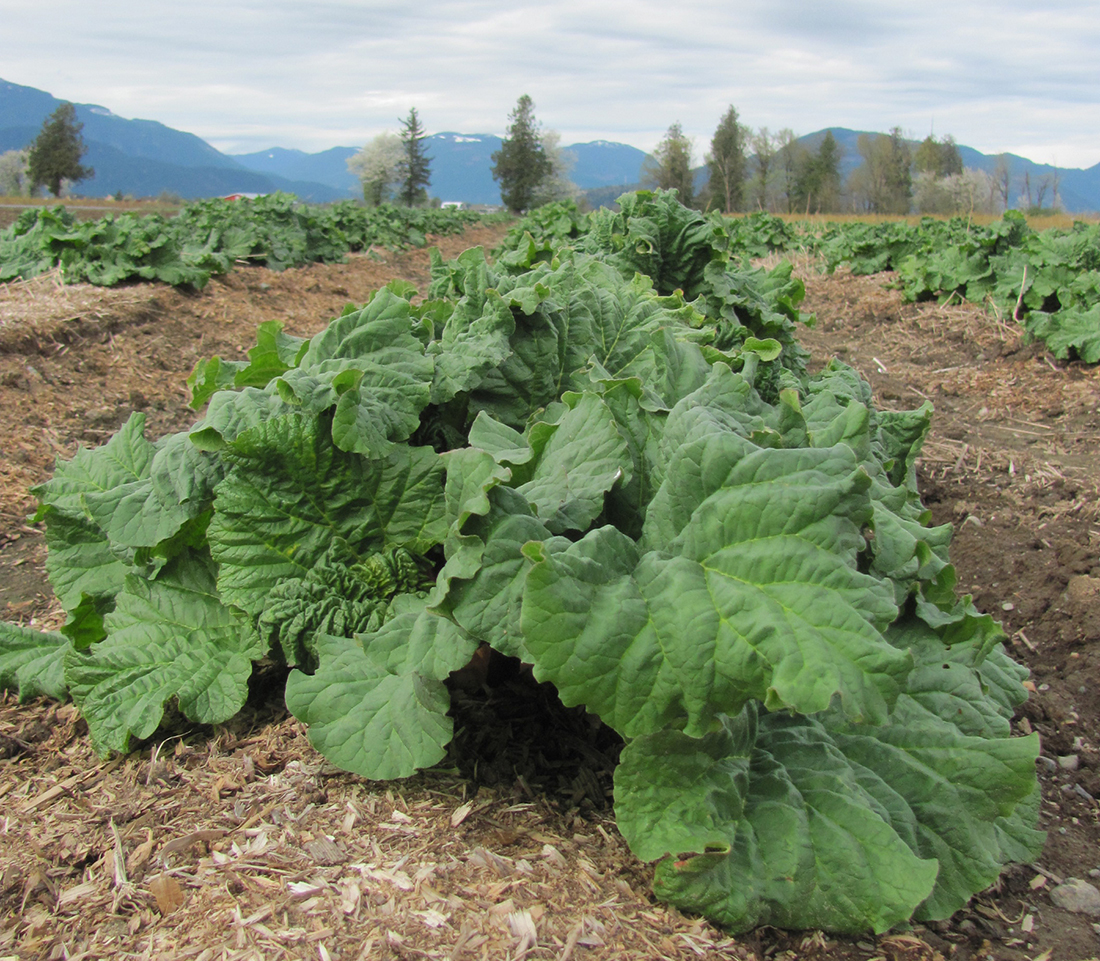
CHILLIWACK – The first crop Shoker Farms harvests each spring is rhubarb, a staple of backyard gardeners across the country.

Commercial bakers buy the tangy stalks diced and frozen for pie, muffins and other products. But this winter, Quebec-based Nature’s Touch Frozen Foods Inc. in Abbotsford found itself with a million pounds of frozen rhubarb after buyers opted for cheaper rhubarb from Poland which produced a bumper crop.

“It’s the first time that we’re stuck with such an inventory,” says René Morissette, who oversees frozen food purchasing for Nature’s Touch, which primarily serves the retail market. “We purchased over a million pounds of rhubarb last season, and we have yet to sell this 2018 rhubarb crop.”

Growers like Shoker Farms received word in January that Nature’s Touch wouldn’t be buying any rhubarb this season. There was no contract, so growers had no recourse.

Shoker grows about 50 acres of rhubarb, sales of which provide an important source of cash early in the season. The money covers start-up costs before sales of strawberries, blueberries and vegetables begin. This helps to reduce dependence on bank financing, making the business more sustainable.

“It’s an early cash cow,” says Bill Shoker, who with his brother Bob operate the family farm.

The family began growing rhubarb 20 years ago, and increased production significantly 10 years ago as demand from processors increased. The farm harvested about 600,000 pounds last year, or about a third of the total BC harvest of 1.9 million pounds.

While it may be easy for  homeowners to grow, rhubarb is a big investment for commercial growers. One crown costs $8, meaning each acre costs about $45,000 to plant. Growing conditions in Chilliwack are favourable, but the plant takes up to three years to reach full production.

The crop has filled a niche for the farm, and Shoker says not having an outlet this year underscores how important it is to his farm and others. With labour costs “through the roof,” and packing materials not to mention crop inputs becoming more expensive, the cash is important as margins continue to be squeezed and farmers face more and more paperwork just to get product to market.

Morrissette empathizes; in many ways, Nature’s Touch is in a similar position.

“A plant like us, we get it going with rhubarb,” he says. “It’s a cost-covering exercise to get the plant ready for the bigger season which, in our case, is blueberries.”

Rhubarb from Poland has flooded the market on previous occasions but demand has been good in recent years. But the latest wave has left Nature’s Touch scrambling for buyers.

“I would take any offer at this point,” says Morrissette, who notes that there’s not enough demand at retail to absorb all the frozen product.

“There are some years when there’s absolutely no Polish rhubarb making its way to North America, and these are years when domestic rhubarb takes its place and has more marketability,” he says. “We’ve been trying to increase [retail] demand, but the big taker is still the baking industry.”

Shoker is also trying to find outlets. The farm began supplying rhubarb to the fresh market two years ago, and is working with BC Fresh Vegetables Inc. to find a home for this year’s crop, which began being harvested last month. It could simply mow down the stalks, but that wouldn’t make up for lost cash flow.

Selling into the fresh market isn’t an easy task, however. While a market exists, it’s limited compared to demand for frozen product.

“This isn’t a mainstream item,” says BC Fresh CEO Murray Driediger. “There’s not enough fresh market to absorb all the rhubarb grown in the Fraser Valley.”

Processing capacity is a particular challenge for rhubarb growers, as for growers of many other crops. Just one vegetable processor remains in the Lower Mainland and while some berry growers have set up lines to process and freeze fruit, they can’t necessarily handle rhubarb. This leaves rhubarb growers at risk when markets change.

“The industry here was developed mainly for processing,” says Driediger. “The processing option doesn’t look promising for 2019. … It’s really put the industry in a bad state.”

Morrissette, for his part, hopes markets normalize enough for Nature’s Touch to be back in the rhubarb game next year.
Related Posts

You may be interested in these posts from the same category.

Previous Post: « Greenhouse growers see rebound in acreage

Next Post: Caribou recovery plan has ranchers worried »

Copyright © 2025 Country Life in BC · All Rights Reserved