
• Menu
  • Skip to primary navigation
  • Skip to main content
  • Skip to primary sidebar

Country Life In BC Logo

The agricultural news source in British Columbia since 1915

  • Headlines
  • Calendar
  • Subscribe
  • Advertise
  • About
  • Archives
  • Contact
  • Search
  • Headlines
  • Calendar
  • Subscribe
  • Advertise
  • About
  • Archives
  • Contact
  • Search

Primary Sidebar

Originally published:

February 2019
Vol. 105 Issue 2

Subscribe Now!

Sign up for free weekly FARM NEWS UPDATES

Select list(s) to subscribe to


By submitting this form, you are consenting to receive marketing emails from: Country Life in BC. You can revoke your consent to receive emails at any time by using the SafeUnsubscribe® link, found at the bottom of every email. Emails are serviced by Constant Contact
Your information will not be
shared or sold ever

Stories In This Edition

Joy Ride!

Critics urge licence delay

ALR committee files report

Cannabis drives drop in Delta farm assessments

Editorial: Party and province

Back Forty: You can’t get apps on that

Viewpoint: Annual assessments a chance to take stock

Staff reorganization targets leaner fruit co-op

Preliminary hearing in high-profile poultry abuse

Growers pin hopes on Columbia River update

Survey keeps national park reserve in spotlight

Political engagement headlines dairy meeting

World milk prices take blame for shifting returns

Patience is a virtue

Ag Briefs: Sasaki appointed new head of chicken board

Ag Briefs: Ottawa invests in dairy sector

AB: Piece rates, taxes increase

AB: AITC focuses on growth

Capital Region considers compensation cuts

Letters: Protect farmland from cannabis production

Letters: Dog owners need to accept responsibility

Letters: The beef about climate change

Cadillac’ of aviaries will reduce labour costs

Berry growers face new import requirements

Open house reveals secrets of diagnostics lab

Cannabis propagation industry sprouting in BC

Sidebar: Deep roots

FCC targets women with new business program

Agreement sets stage for fish farm phase-out

Grazing, forage and water top list at town hall

Ranchers reassured regarding bovine TB cases

Digging into soil nutrition at education day

Microgreen grower attracts far-flung following

Science of cannabis takes centre stage

Blueberry growers hone use of box liners

Ostrich industry takes flight with big plans

Tunnels boost fruit quality, add to berry season

Big bucks being spent to protect bee health

Sidebar: Province boosts funding

Mystery bee disease studied

Direct-marketing opportunities have potential

Research: Preventing soft scald in apples

Regional food system is the new focus of group’s efforts

Wannabe: Growers deserve our love

Woodshed: A performance Kenneth can’t afford to miss

Jude’s Kitchen: Happy new year, my sweet Valentine

More Headlines

Follow us on Facebook

Comments Box SVG iconsUsed for the like, share, comment, and reaction icons

7 days ago

... See MoreSee Less

View Comments
  • Likes: 4
  • Shares: 0
  • Comments: 0

Comment on Facebook

7 days ago

On the last day of the BC Organic Conference, Thursday, Molly Thurston of Pearl Agricultural Consulting helped growers learn how to manage bugs such as codling moth, wireworm, and rootworm in organic growing systems. Her talk alongside Renee Prasad included hands-on activities in which participants checked out various traps and examined pests under microscopes. Be sure to look for more upcoming ag events on our online calendar at www.countrylifeinbc.com/calendar/

#BCAg
... See MoreSee Less

On the last day of the BC Organic Conference, Thursday, Molly Thurston of Pearl Agricultural Consulting helped growers learn how to manage bugs such as codling moth, wireworm, and rootworm in organic growing systems. Her talk alongside Renee Prasad included hands-on activities in which participants checked out various traps and examined pests under microscopes. Be sure to look for more upcoming ag events on our online calendar at www.countrylifeinbc.com/calendar/

#BCAg
View Comments
  • Likes: 15
  • Shares: 0
  • Comments: 0

Comment on Facebook

1 week ago

Well-known organic farmer and podcaster Jordan Marr gets interviewed by Country Life in BC’s own columnist and potato mavin Anna Helmer during the opening session of the BC Organic Conference at Harrison Hot Springs yesterday. Sessions run today (Wednesday) and Thursday and include organic and regenerative growing practices and expanding and advocating for the organic sector, all under the background of the newly launched Organic BC banner.

#BCAg
... See MoreSee Less

Well-known organic farmer and podcaster Jordan Marr gets interviewed by Country Life in BC’s own columnist and potato mavin Anna Helmer during the opening session of the BC Organic Conference at Harrison Hot Springs yesterday. Sessions run today (Wednesday) and Thursday and include organic and regenerative growing practices and expanding and advocating for the organic sector, all under the background of the newly launched Organic BC banner.

#BCAg
View Comments
  • Likes: 37
  • Shares: 2
  • Comments: 1

Comment on Facebook

Interested in finding out more about this

3 weeks ago

Today, we remember those who sacrificed their lives or their well-being for our freedom. Lest we forget. ... See MoreSee Less

Today, we remember those who sacrificed their lives or their well-being for our freedom. Lest we forget.
View Comments
  • Likes: 8
  • Shares: 0
  • Comments: 0

Comment on Facebook

1 month ago

FarmFolk CItyFolk is hosting its biennial BC Seed Gathering in Harrison Hot Springs November 27 and 28. Farmers, gardeners and seed advocates are invited to learn more about seed through topics like growing perennial vegetables for seed, advances in seed breeding for crop resilience, seed production as a whole and much more. David Catzel, BC Seed Security program manager with FF/CF will talk about how the Citizen Seed Trail program is helping advance seed development in BC. Expect newcomers, experts and seed-curious individuals to talk about how seed saving is a necessity for food security. ... See MoreSee Less

Link thumbnail

BC Seed Gathering - FarmFolk CityFolk

farmfolkcityfolk.ca

Save the date for our upcoming 2023 BC Seed Gathering happening this November 3rd and 4th at the Richmond Kwantlen Polytechnic University campus.
View Comments
  • Likes: 1
  • Shares: 0
  • Comments: 0

Comment on Facebook

Subscribe | Advertise

The agricultural news source in British Columbia since 1915
  • Email
  • Facebook

Growers pin hopes on Columbia River update

Compensation for greater US competition a key issue for fruit and vegetable growers

January 29, 2019 byTom Walker

KELOWNA – Negotiations to update the 55-year-old Columbia River Treaty between Canada and the US are ramping up.

Ratified in 1964, the treaty’s main purpose was to optimize power generation and flood control for both Canada and the US. Three dams were constructed in Canada: Duncan in 1967, Arrow/Hugh Keenleyside in 1968 and Mica in 1973. Canadian land was set aside for a reservoir when the US built Libby dam in Montana in 1972. Canada manages 15.5-million-acre feet of water a year to help both Canadian and US utilities gain optimum power generation and lessen the potential for floods.

“Power and flood control were the only items of importance in the day,” Kathy Eichenberger, executive director of the BC Columbia River Treaty Review, told a recent meeting of the Okanagan Basin Water Board.

The treaty benefits the US by managing river flows, which helps control flooding, manage power generation potential, maintain navigation conditions, enhance fisheries and provides late season irrigation and recreation opportunities.

BC receives an entitlement to sell power on the open market, worth $180 million last year, as well as increased power generation capacity. The Revelstoke dam, for instance, could not have been built if the Mica dam hadn’t been built first.

But BC lost a lot – more than 600 square kilometres of fertile bottom land was flooded, 2,300 people were relocated, entire communities were displaced, and First Nations cultural sites were lost. Fluctuating water levels have a significant impact on communities alongside the reservoirs the dams created. Nakusp residents, for example, have to deal with a 20-metre change in lake levels that make it tough to establish docking facilities.

Moreover, BC citizens were not consulted in the initial treaty process.

Review

That changed in 2014, when the BC government made the decision to continue the treaty and seek improvements within the existing framework. A review over the last three years included community meetings in Nelson, Castlegar, Trail, Cranbrook, Jaffray, Invermere, Golden, Revelstoke Nakusp and Fauquier. There is on-going consultation with the three First Nations in the region and Eichenberger says they’ll return to the other 10 communities that hosted meetings.

She says the top two negotiation issues for BC are “clear gains over the status quo regarding economic, social, environmental and Indigenous interests and economic return of [an] equitable share of all US benefits.”

“The true value of the treaty to the US is much more than power and flood control,” she says. “That needs to be recognized by the US.”

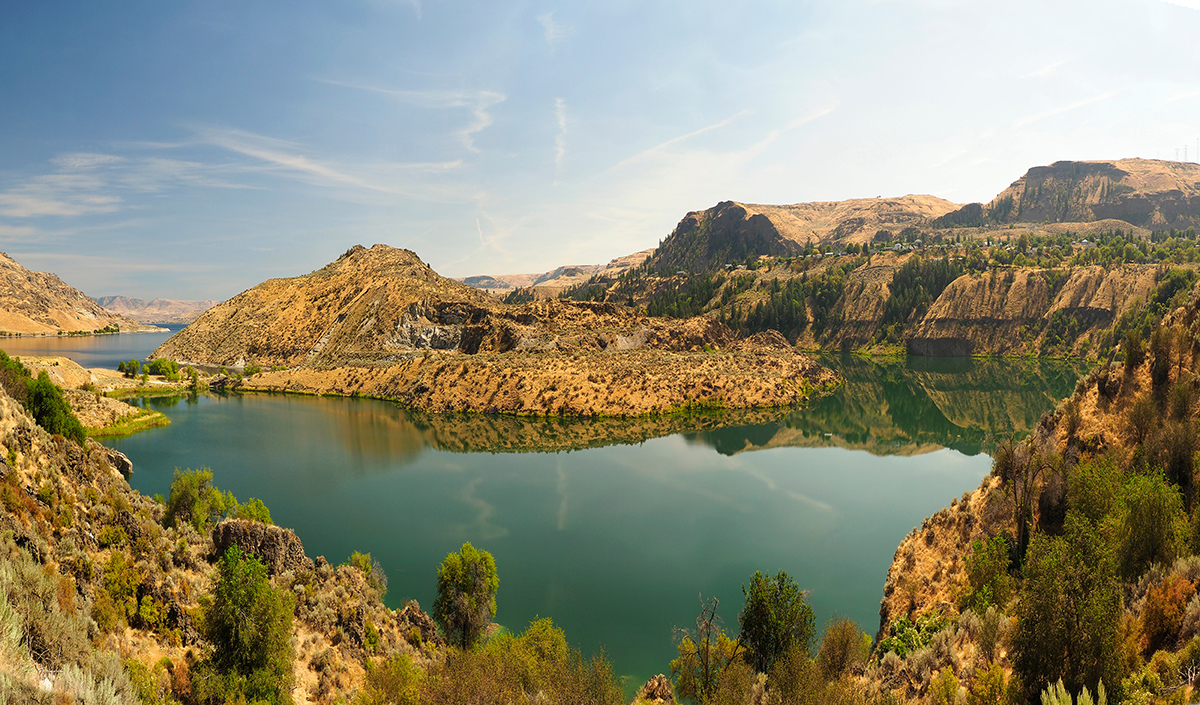
BC fruit, potato and onion growers face stiff competition from US producers who are able to pump water out of Lake Roosevelt and irrigate land that only receives five to eight inches of rain a year.

“That irrigation water allowed growers to switch from dry land farming of oats, barley and sugar beets to fruit trees, asparagus and onions,” noted Adrian Arts, a young orchardist from Summerland. “I’ve been on a 1,000-acre orchard down there. You can see these huge swathes of green in between the dry sagebrush.”

The key to this orchard success is flow timing.

While the Grand Coulee dam was constructed before the Columbia River treaty, Canadian water management ensures late summer and early fall flows provide enough water to finish the irrigation season and prepare the thousands of acres of fruit trees in the area for the winter.

As well, flow management provides water for spawning fish.

The true value of this water is hard to measure, however. Calculating that benefit, and the potential for increased economic benefit going forward, will be challenging.

Methodology

BC Fruit Growers Association general manager Glen Lucas has been gathering background on the economic benefits of shaping the water flow.

“That has not been a hard sell because the US has done an irrigation study and they know,” says Lucas. “But we need to come up with a methodology to determine how that shaping of the water flow benefits agriculture.”

“We know that conversation is coming,” says Eichenberger. “We are far apart, but collaboration seems to be the tone.”

There have been four negotiation sessions to date. A fifth is scheduled for late February.

There is some urgency on the US side. The agreement to manage flows for flood control expires in 2024. After that, Canada no longer has to provide assured storage and the US must use their own storage capacity first before Canada can be “called upon” (as the treaty describes it). That means the current flow patterns for power, fish, recreation and agriculture could be completely disrupted.

“The US Army Corps of Engineers is very concerned about this,” says Eichenberger, noting that the window doesn’t leave enough time to build more flood control capacity. “If we don’t agree on something, they are going to be in a very difficult situation.”

Washington famers might add to that urgency. Some very productive farmland sits outside the Columbia Basin. Up until now, they have relied on deep wells, and those wells are running dry. They are licking their lips as they look towards Lake Roosevelt.

Related Posts

You may be interested in these posts from the same category.

Previous Post: « Capital Region considers compensation cuts
Next Post: Staff reorganization targets leaner fruit co-op »

Copyright © 2025 Country Life in BC · All Rights Reserved