• Menu
  • Skip to primary navigation
  • Skip to main content
  • Skip to primary sidebar

Country Life In BC Logo

The agricultural news source in British Columbia since 1915

  • Headlines
  • Calendar
  • Subscribe
  • Advertise
  • About
  • Archives
  • Contact
  • Search
  • Headlines
  • Calendar
  • Subscribe
  • Advertise
  • About
  • Archives
  • Contact
  • Search

Primary Sidebar

Originally published:

February 2019
Vol. 105 Issue 2

Subscribe Now!

Sign up for free weekly FARM NEWS UPDATES

Loading form…

Your information will not be
shared or sold ever

Stories In This Edition

Joy Ride!

Critics urge licence delay

ALR committee files report

Cannabis drives drop in Delta farm assessments

Editorial: Party and province

Back Forty: You can’t get apps on that

Viewpoint: Annual assessments a chance to take stock

Staff reorganization targets leaner fruit co-op

Preliminary hearing in high-profile poultry abuse

Growers pin hopes on Columbia River update

Survey keeps national park reserve in spotlight

Political engagement headlines dairy meeting

World milk prices take blame for shifting returns

Patience is a virtue

Ag Briefs: Sasaki appointed new head of chicken board

Ag Briefs: Ottawa invests in dairy sector

AB: Piece rates, taxes increase

AB: AITC focuses on growth

Capital Region considers compensation cuts

Letters: Protect farmland from cannabis production

Letters: Dog owners need to accept responsibility

Letters: The beef about climate change

Cadillac’ of aviaries will reduce labour costs

Berry growers face new import requirements

Open house reveals secrets of diagnostics lab

Cannabis propagation industry sprouting in BC

Sidebar: Deep roots

FCC targets women with new business program

Agreement sets stage for fish farm phase-out

Grazing, forage and water top list at town hall

Ranchers reassured regarding bovine TB cases

Digging into soil nutrition at education day

Microgreen grower attracts far-flung following

Science of cannabis takes centre stage

Blueberry growers hone use of box liners

Ostrich industry takes flight with big plans

Tunnels boost fruit quality, add to berry season

Big bucks being spent to protect bee health

Sidebar: Province boosts funding

Mystery bee disease studied

Direct-marketing opportunities have potential

Research: Preventing soft scald in apples

Regional food system is the new focus of group’s efforts

Wannabe: Growers deserve our love

Woodshed: A performance Kenneth can’t afford to miss

Jude’s Kitchen: Happy new year, my sweet Valentine

More Headlines

Follow us on Facebook

Comments Box SVG iconsUsed for the like, share, comment, and reaction icons

6 days ago

A BC Forest Practices Board investigation has found overgrazing has damaged grasslands in the Coutlee Range Unit near Merritt — and the range-use plan meant to prevent it was unenforceable. With complaints about overgrazing on the rise and grasslands covering just 1% of BC's land mass, the findings raise fresh questions about how the province manages one of its most vulnerable — and valuable — food-producing ecosyste#BCAg#BCAg ... See MoreSee Less

Link thumbnail

Board finds overgrazing rules unenforceable unmeasurable

www.countrylifeinbc.com

MERRITT – A BC Forest Practices Board investigation has found instances of non-compliance related to overgrazing have damaged open grasslands in the Mine pasture, part of the Coutlee Range Unit near...
View Comments
  • Likes: 6
  • Shares: 6
  • Comments: 6

Comment on Facebook

Several ranchers in recent years have gone into temporary non use on that range , so that means the grass should grow. But drought conditions/lack of rain and snow don’t allow that to happen . Dried up springs , creeks waterholes in various pastures add to over grazing where there is water , as livestock and everything else stay close to the water source . So even though less cattle are on it , over grazing appears. There is a large volume of horses on it 365 days/year which is wrong ! They pull grass right out of the ground when it’s just trying to grow ,, opens the door for weeds to grow in. That don’t help it. Aging infrastructure ( fences) laying on the ground, pipe line building , ( lack of commitment to fence maintenance) amongst all users contributes also to over grazing. Recreational atv users leaving gates open between pastures allows livestock to go back or ahead in pastures also expidites over grazing. Logging ( bcts) has no problem laying out cut locks on both sides of a fence , then it gets smashed down during logging and they don’t take responsibility to stand it back up or clean the cattle gaurds out when they are done , that happened 4 years ago on pasture 5 up there . I bet it is still not fixed . There are lots of contributing factors to the problem.

Tragedy of the commons.

I looked through the report. I saw nothing about the effects of noxious weeds on productive grasslands. This particular area is vulnerable because of the Ministry’a efforts to diversify the use of the Grasslands.

This pasture is under tremendous pressure not only from cattle but from irresponsible local residents who treat it as a landfill dumping all manner of household debris here. And don't even get me started on the mud bogging and camping in sensitive riparian areas. The feral horses are in this pasture 365 days a year just hammering it. Would sure be nice to see some enforcement action on people who are intentionally ripping up the grasslands and riparian areas. Cattle could be a valuable resource for rebuilding soils and native grasses in this area with the help of electric fencing and/or e-collars. The humans will be harder to manage.

The Forest and Range Practices Act was written by lawyers for global forest licencee shareholders. Results-based = unenforceable.

Also, can we talk about the impact of a pipeline being built through the middle of this field for multiple years?

View more comments

1 week ago

East Kootenay rancher Randy Reay is digging a new well after two natural water sources dried up on his Crown tenures. A new Living Lakes Canada assessment found 15% of mapped aquifers in the region are high-priority for monitoring, yet 80% of those go unmonitored. With over 48% of BC's provincial observation wells reporting below-normal groundwater levels, ranchers and researchers are sounding the alarm on water security. The story is in our March edition, and we've posted it to our website thi#BCAgk.

#BCAg
... See MoreSee Less

Link thumbnail

Water woes: groundwater under pressure across BC

www.countrylifeinbc.com

JAFFRAY – As a young boy growing up in the Kootenay-Boundary region, Randy Reay never expected to run out of water. But this year, in mid-February, his fields are bare. There is no snow halfway up t...
View Comments
  • Likes: 8
  • Shares: 7
  • Comments: 1

Comment on Facebook

Jaffrey is in the east Kootenays not kooteney boundary

2 weeks ago

BC farmers are bracing for prolonged higher input costs as war in the Middle East drives up fuel and fertilizer prices. Nitrogen fertilizer costs were already climbing before the Iran conflict began, with prices still roughly 60% above pre-pandemic levels. Farm Credit Canada warns that unlike 2022, strong commodity prices may not offset rising costs this time. Local suppliers expect supply challenges and further price increases ahead.

#BCAg
... See MoreSee Less

Link thumbnail

Fertilizer prices on the rise

www.countrylifeinbc.com

War in the Middle East has delivered a generational shock to energy prices, meaning BC farmers can expect a prolonged period of higher costs not just for fuel but also for fertilizer.
View Comments
  • Likes: 2
  • Shares: 1
  • Comments: 0

Comment on Facebook

2 weeks ago

... See MoreSee Less

View Comments
  • Likes: 1
  • Shares: 0
  • Comments: 0

Comment on Facebook

2 weeks ago

Cameron Stockdale is the new executive director of provincial farm safety organization AgSafeBC. Find out more in this week's Farm News Update from Country Life in B#BCAg#BCAg ... See MoreSee Less

Link thumbnail

New leadership at AgSafe BC

www.countrylifeinbc.com

Cameron Stockdale is the new executive director of provincial farm safety organization AgSafeBC, succeeding Wendy Bennett. Bennett left AgSafeBC in September 2025, following 12 years with the…
View Comments
  • Likes: 5
  • Shares: 1
  • Comments: 0

Comment on Facebook

Subscribe | Advertise

The agricultural news source in British Columbia since 1915
  • Email
  • Facebook

Staff reorganization targets leaner fruit co-op

Drive to cut costs could see co-op relocate

January 29, 2019 byTom Walker

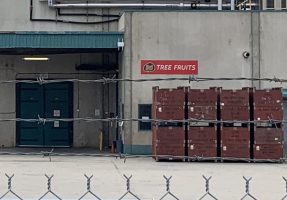
KELOWNA – The province’s biggest fruit co-op is facing a dramatic shakeup, as turnover pares both the executive team and key staff

In November, BC Tree Fruits Cooperative’s board decided not to renew the management contract of CEO Stan Swales, who stepped into the role in November 2016. CFO Warren Everton also left to work for the city of West Kelowna after six years.

Within the past month, key grower support staff were dismissed and a member of the marketing department resigned. The individuals will not be replaced.

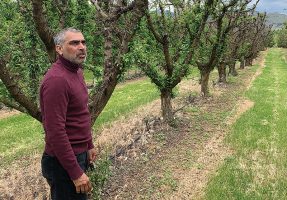
Co-op president Jeet Dukhia told Country Life in BC Everton “was looking for other opportunities.”

“We have advertised for the CFO position and we have had 41 good applicants. We are shortlisting and hope within a week to have a new CFO,” he said in early January.

Swales remains an employee of the co-op, assisting with operations. The board had the option to reassign him from management in the third year of his contract, which it has done.

“He likes the co-op so much that he wants to try something different where he can be more helpful,” says Dukhia. “He is assisting the operations manager and focusing on long-term plans.”

The co-op’s human resources manager, Bob Fisher-Fleming, is serving as interim CEO while Swales’ successor is chosen. The new hire will be the company’s third leader since 2012, when Alan Tyabji was hired. Tyabji was fired in 2016.

Fisher-Fleming’s mandate is “to keep things moving forward” during the critical winter marketing period, says co-op marketing manager Chris Pollock.

Dukhia did not comment on the quest for a new CEO.

Cost-cutting

Dukhia described the dismissal of five of the co-op’s grower support staff as “cost cutting.”

Its well-respected senior field services manager Hank Markgraf and long-time Okanagan field serviceman Tony DiMaria have both been let go. Creston Valley field serviceman Duane Holder was also terminated. Plant pathologist Danielle Hirkala and lab technician Lisa Hilbrecht were dismissed, too.

“The board has asked the acting CEO to restructure from the bottom end, to cut costs and bring the overhead into alignment,” says Dukhia. “These are both board and management-led decisions.”

Speaking on behalf of Fisher-Fleming, Pollock described the firings as “a board decision” and “without cause” and said the co-op offered each employee a severance package.

The cuts come at a time when the industry as a whole is expanding.

Dukhia says that growers have purchased 1,500 acres of new land for fruit production in the last three years. Moreover, land that has been fallow or seeded to hay has been brought back into orchard production. Across the province, older, less profitable apple varieties are being replanted with new cultivars that will promise growers better returns.

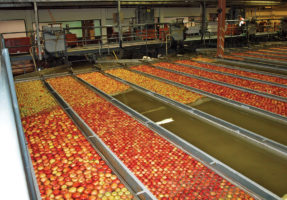
Pollock says the Ambrosia crop sits at 400,000 cartons, but he expects that to triple to more than 1.2 million cartons in the next seven to nine years.

But new varieties call for up-to-date grower knowledge.

Honeycrisp, the most profitable variety for growers in the current market, can suffer up to 30% losses in the orchard. Grower skill varies greatly, with apple production ranging from an average of 30 bins an acre to more than 80. The difference shows the need for field support to assist growers, service for which the BC Fruit Growers Association honoured Markgraf when it presented him with its award of merit in 2017.

“The board wanted to focus more on the core business of what we do,” says Pollock. “We provide services that other grower-shippers across the valley do not do – field services being one of them – and it was decided to cut staff.”

Pollock’s statement is not completely accurate, however.  Jealous Fruits, the largest cherry grower-shipper in the province, employs two field service horticulturalists for its one crop.

BCTF members grow apples, cherries, peaches, plums and nectarines.

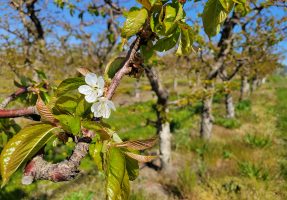
Many of the new plantings in the Okanagan and Creston valleys are cherries, a profitable export crop, yet Doug Needham, the co-op’s former export cherry coordinator who resigned this summer, will not be replaced.

Dukhia doesn’t think that the firings, resignations and lack of replacements will reflect badly on the co-op, however.

“All the people I talk to are supportive,” he says. “We are the leaders in the industry and they want us to be in good shape and economically as lean as we can be to bring good prices.”

“That’s the bottom line,” emphasizes Dukhia. “The main aim is to get good returns to the growers.”

Dukhia adds that as a former president of the BCFGA, he has a good knowledge of the industry and connections with parties on both sides of the legislature.

“We are trying to get some money for our long-term plan to have an automated plant in the north,” he says.

Dukhia says the current restructuring could also involve relocating the co-op to a cheaper location on Kelowna’s outskirts. A decision is expected within six months as part of a master plan for its holdings.

“We have lots of properties downtown, which is very expensive. We should be on the outskirts of the city where land is cheap,” he says. “We are looking to the next 50 years.”


Related Posts

You may be interested in these posts from the same category.

BC Tree Fruits relaunch

Showdown looms over co-op’s surplus

Algoma comes to BC

Growers Supply property sold

BC Tree Fruits facility sells

BC orchard sector needs more than sales

Co-op assets on the block

BC Tree Fruits shuts down

Stabilization initiative yet to bear fruit

Cherry growers face smaller crop

BC Tree Fruits sells packinghouse site

Orchardists seek frost assistance

Previous Post: « Growers pin hopes on Columbia River update
Next Post: Critics urge licence delay »

Copyright © 2026 Country Life in BC · All Rights Reserved