• Menu
  • Skip to primary navigation
  • Skip to main content
  • Skip to primary sidebar

Country Life In BC Logo

The agricultural news source in British Columbia since 1915

  • Headlines
  • Calendar
  • Subscribe
  • Advertise
  • About
  • Archives
  • Contact
  • Search
  • Headlines
  • Calendar
  • Subscribe
  • Advertise
  • About
  • Archives
  • Contact
  • Search

Primary Sidebar

Originally published:

JANUARY 2022
Vol. 108 Issue 1

Subscribe Now!

Sign up for free weekly FARM NEWS UPDATES

Loading form…

Your information will not be
shared or sold ever

Stories In This Edition

Flood recovery begins

Outstanding

Insurance under scrutiny

Donations pouring in for flood relief

Editorial: Regenerating agriculture

Back 40: What is normal, anyways?

Op Ed: Looking ahead with a  common purpose

Interior ranches feel forgotten

Hefty fines levied in chicken abuse case

Ag Briefs: Blueberry council chair tenders resignation

Ag Briefs: BC Chicken picks Siemens

Ag Briefs: Outstanding service acknowledged

Ag Briefs: Water quality grants available

BC couple win national OYF competition

High grain prices welcome, but harvest falls flat

Dairy sector looks to the future in virtual meetings

Berry growers face years of lower yields

Ambrosia council takes growers to court over levies

Rising food prices unlikely to benefit farmers

Supply chain disruptions put focus on local food

Preview: Agriculture show returns to Tradex

Water management in focus at short course

Kootenay growers target winter deliveries

Sidebar: Welcome development

New growers bitten by the farming bug

Farmers face new challenges as water recedes

Denman Island initiatives review of farm regulations

Helping load the wagon

Bees shouldn’t become collateral damage

Beekeepers urged to grow their own

Research: BC scientists ready to assess flood-affected soils

BC tech companies give ag waste a new life

Sidebar: Manure recycled into bedding

Milk marketing board chooses new entrants

Drought management requires new strategies

Farm Story: Instagrammable garlic? We’d rather less fuss

New initiative supports local food, business

Woodshed: Ashley’s ready and the party’s about to begin

Self-care can help women focus on their goals

Jude’s Kitchen:

More Headlines

Follow us on Facebook

Comments Box SVG iconsUsed for the like, share, comment, and reaction icons

10 hours ago

Do you have what it takes to build the new province’s new Plant and Animal Health Centre in Abbotsford? The province is inviting candidates to submit qualifications via BC Bid by April 13, with a short list of builders set for release in June. An integrated design-build process will construct the lab, which is expected to cost no more than $400 million. The BC Ministry of Infrastructure is leading the project, which is set to break ground in 2027 and take four years to build. The province purchased the site of the new lab on January 29 for $27.8 million.

#BCAg
... See MoreSee Less

Do you have what it takes to build the new province’s new Plant and Animal Health Centre in Abbotsford? The province is inviting candidates to submit qualifications via BC Bid by April 13, with a short list of builders set for release in June. An integrated design-build process will construct the lab, which is expected to cost no more than $400 million. The BC Ministry of Infrastructure is leading the project, which is set to break ground in 2027 and take four years to build. The province purchased the site of the new lab on January 29 for $27.8 million.

#BCAg
View Comments
  • Likes: 5
  • Shares: 0
  • Comments: 2

Comment on Facebook

27 million could have started alot of small scale and infrastructure for local food producers.

now those who complained about the lack of increase in the agricultural portion of the latest provincial budget should understand just where some of their taxpauers $$$ are going.

2 days ago

Cultivating good employees requires the same attention as other farm tasks, business coach Trevor Throness told Mainland Milk Producers at their annual general meeting last month. He outlined four worker categories based on attitude and productivity, with "brilliant jerks" – highly productive but disruptive employees – posing unique challenges. Good workers are attracted to the best workplace cultures, he told producers, not recruited. It’s a cool take on the labour challenges facing BC’s agricultural sector and it appears in the print edition of Country Life in BC this month.

#BCAgriculture
... See MoreSee Less

Cultivating good employees requires the same attention as other farm tasks, business coach Trevor Throness told Mainland Milk Producers at their annual general meeting last month. He outlined four worker categories based on attitude and productivity, with brilliant jerks – highly productive but disruptive employees – posing unique challenges. Good workers are attracted to the best workplace cultures, he told producers, not recruited. It’s a cool take on the labour challenges facing BC’s agricultural sector and it appears in the print edition of Country Life in BC this month.

#BCAgriculture
View Comments
  • Likes: 13
  • Shares: 0
  • Comments: 0

Comment on Facebook

3 days ago

Double Barrel Vineyards has received Agricultural Land Commission approval for an agrivoltaic project in Oliver that will see solar panels installed among its grapevines. The two-phase system allows power generation and agriculture to co-exist while providing weather protection for the crop through shading and fans. “We are leading the sector and commercial scale for agrivoltaics in North America,” says CEO Jesse Gill. The first phase covers 6.6 acres and, if successful, a 24.3-acre expansion will follow. For more, see Myrna Stark Leader's story in the December edition of Country Life in BC.

#BCAg
... See MoreSee Less

Link thumbnail

Townhall looks to the future of agrivoltaics

www.countrylifeinbc.com

OLIVER – Convincing farmers and others of the potential of harvesting solar power alongside agricultural crops was front and centre at an in-person/online learning townhall in Oliver, November 14.
View Comments
  • Likes: 8
  • Shares: 0
  • Comments: 1

Comment on Facebook

Heather Feenstra

4 days ago

Canadian mushroom growers are contesting a US International Trade Commission preliminary finding claiming they're dumping product. Mushrooms Canada CEO Ryan Koeslag says the industry will demonstrate allegations are unfounded. Canada shipped nearly 77,000 tons of button mushrooms to the US in 2024, with BC producing 41% of Canada's total mushroom #BCAgst.

#BCAg
... See MoreSee Less

Canadian mushroom growers are contesting a US International Trade Commission preliminary finding claiming theyre dumping product. Mushrooms Canada CEO Ryan Koeslag says the industry will demonstrate allegations are unfounded. Canada shipped nearly 77,000 tons of button mushrooms to the US in 2024, with BC producing 41% of Canadas total mushroom harvest.

#BCAg
View Comments
  • Likes: 7
  • Shares: 1
  • Comments: 0

Comment on Facebook

4 days ago

BC finance minister Brenda Bailey was silent on farming in today's budget, leaving agriculture minister Lana Popham's operating budget virtually unchanged at $108 million while the total appropriation will fall to $134.7 million from $151.2 million, thanks largely to a cut in the allocation to Production Insurance. Funding for the Agricultural Land Commission is unchanged at $5.5 million, while capital expenditures are pegged at $922,000 -- suggesting that the new Animal and Plant Health Centre announced last fall and costed at $496 million will not be funded through the ministry. The ministry's service plan is also silent on what share of the 15,000 job cuts planned over the next three years will occur at #BCAginistry.

#BCAg
... See MoreSee Less

BC finance minister Brenda Bailey was silent on farming in todays budget, leaving agriculture minister Lana Pophams operating budget virtually unchanged at $108 million while the total appropriation will fall to $134.7 million from $151.2 million, thanks largely to a cut in the allocation to Production Insurance. Funding for the Agricultural Land Commission is unchanged at $5.5 million, while capital expenditures are pegged at $922,000 -- suggesting that the new Animal and Plant Health Centre announced last fall and costed at $496 million will not be funded through the ministry. The ministrys service plan is also silent on what share of the 15,000 job cuts planned over the next three years will occur at the ministry.

#BCAg
View Comments
  • Likes: 15
  • Shares: 6
  • Comments: 4

Comment on Facebook

Lana lets work together for a better future and hope to strengthen our agriculture independence. Thankyou

I love the sign probably should say standing weak for BC we are ndp…

NDP is a joke..

Secwepemculecw is not British Columbia Secwepemculecw is being extorted by resources extracting from Non Treaty Nations British Columbia has No rights in Secwepemculecw SNTC is Not the Secwepemc authority to land title and rights Extortion of revenue generated from Secwepemc land is ILLEGAL Nexulecw Cel7wet te Secwepemculecw law and legal rights consultant

Subscribe | Advertise

The agricultural news source in British Columbia since 1915
  • Email
  • Facebook

Insurance under scrutiny

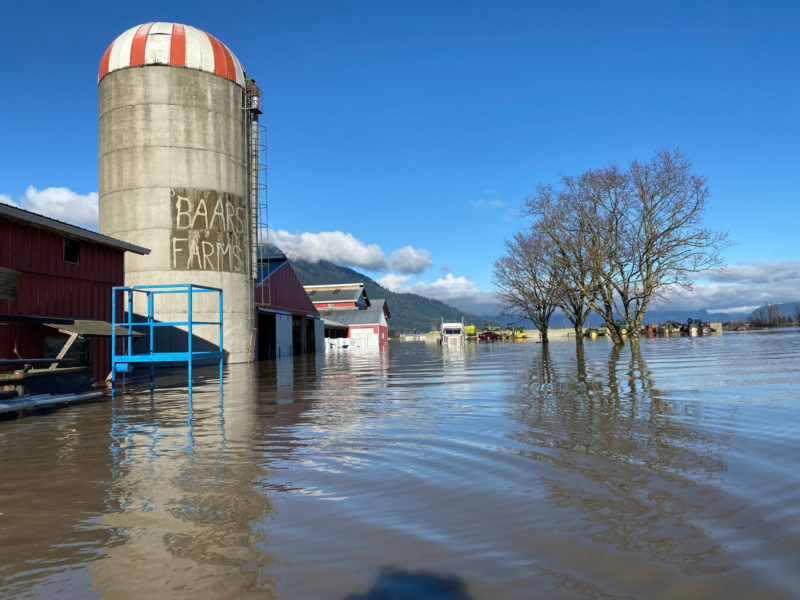
Photo | Gary Baars

January 1, 2022 byPeter Mitham

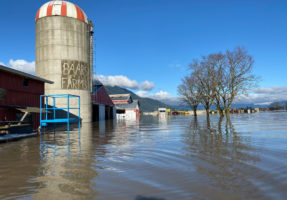
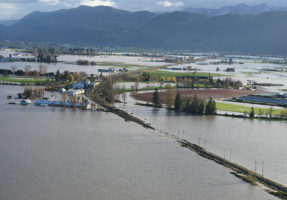
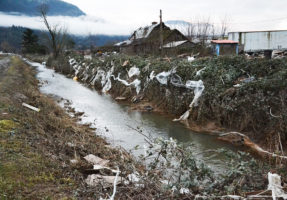
ABBOTSFORD – BC residents suffered significant losses this year as wind, wildfire and floods walloped their farms and properties.

But insurance payouts will cover just a fraction of these losses. According to the Insurance Bureau of Canada, total insurable losses as of mid-December totalled less than $650 million.

“A brand new farm building should have coverage,” says Rosy Mounce, a commercial risk advisor with insurance broker Capri CMW in Salmon Arm. “But an older one isn’t going to, so it’s a matter of going through and saying, okay, what kinds of coverages are available to you, what do those cost?”

The narrowing of options for farm insurance in recent years, largely as a result of the massive wildfire seasons of 2017 and 2018, have left farmers exposed.

“With farm insurance in general, there’s not nearly as many options for insurance as there is for a house in a subdivision, for example,” she says. “As we see this increase in extreme weather, we have to start looking further ahead and plan how to be smarter about this. How do we prevent claims as much as possible?”

She says this may involve taking steps to mitigate risks to property as well as understanding the value that insurance provides. Self-insuring – setting aside cash to cover potential losses – may make sense in certain circumstances.

“The conversation is, ‘What does my coverage look like, and what can I do to protect my property?’” she says. “We can help people have a better understanding if there’s gaps in their insurance or if there’s certain things that they just need to be prepared to protect on their own because there’s not going to be an insurance policy to help them.”

She advises people to buy insurance understanding both the cost and the support they’ll receive in the event of a loss.

“[This past year] is going to bring to light a lot more demand on farmers and business owners … to really know what they’re covered for and have a good relationship with their broker – that’s what we want,” she says. “Insurance coverage is a portion of risk management. It’s not the whole thing.”

The fine print

BC Grain Producers Association director Ernest Wiebe told producers following the wild windstorm that destroyed grain bins in Prespatou at the end of June that they need to be aware of what their insurance policies cover. Many were surprised that grain bins were not covered by policies for structures, for example.

“When you see out-buildings on your policy, … that’s only something that would be connected to a residence,” he says. “It has to be on the farm policy.”

Some policies will exclude specific perils, and not all will cover the full replacement value in the event of a loss. Deductibles may differ between policies, too, and incur different premiums.

In his case, the $2,000 coverage limit for his greenhouse meant he was on the hook for most of the rebuild cost after it was destroyed. Meanwhile, his shop buildings are only covered for fire and lightning, leaving him on the hook for damage as a result of other perils.

“Go over your policy and have a complete awareness of what you’re paying for and what is covered,” he says.

Assessment values

There is also the question of the impacts recent disasters will have on property values.

BC Assessment Authority notices arrive the first week of January. The statements reflected the value of properties on July 1, 2021, meaning many property owners will see assessed values that don’t reflect current realities.

“BC Assessment is committed to providing fair, accurate and reliable property assessments,” BC Assessment told Country Life in BC, noting that owners can request amendments within the usual  window for appealing assessments. The deadline this year is January 31, 2022.

The authority’s page related to weather-related concerns notes that “property owner self-reporting is critical to ensuring 2022 property assessments are fair and accurate.”

Properties damaged or destroyed between November 1 and December 31, and which were not repaired by December 31, may be eligible to receive an amended assessment. BC Assessment encourages owners to submit details on the damage or loss, including repair costs (if known) and pictures.


Related Posts

You may be interested in these posts from the same category.

Sumas flooding spurs call for action

Farm values stable despite market shifts

Strong growth for farmland values

Abbotsford approves flood mitigation option

Recovery fund deadline extended

Abbotsford flood mitigation options

Farmers step up in emergency operations

Sumas Prairie farmers sue government

CanadaGAP participation drops

Interior ranchers feel forgotten

Flood recovery will take time

Fraser Valley flooding continues

Previous Post: « High grain prices welcome, but harvest falls flat
Next Post: New year, old troubles »

Copyright © 2026 Country Life in BC · All Rights Reserved