• Menu
  • Skip to primary navigation
  • Skip to main content
  • Skip to primary sidebar

Country Life In BC Logo

The agricultural news source in British Columbia since 1915

  • Headlines
  • Calendar
  • Subscribe
  • Advertise
  • About
  • Archives
  • Contact
  • Search
  • Headlines
  • Calendar
  • Subscribe
  • Advertise
  • About
  • Archives
  • Contact
  • Search

Primary Sidebar

Current Issue:

JANUARY 2026
Vol. 112 Issue 1

Subscribe Now!

Sign up for free weekly FARM NEWS UPDATES

Select list(s) to subscribe to


By submitting this form, you are consenting to receive marketing emails from: Country Life in BC. You can revoke your consent to receive emails at any time by using the SafeUnsubscribe® link, found at the bottom of every email. Emails are serviced by Constant Contact
Your information will not be
shared or sold ever

Follow us on Facebook

Comments Box SVG iconsUsed for the like, share, comment, and reaction icons

2 hours ago

BC's minimum piece rates for 15 hand-harvested crops increased 2.6% on December 31. Crops include peaches, apricots, brussels sprouts, daffodils, mushrooms, apples, beans, blueberries, cherries, grapes, pears, peas, prune plums, raspberries and strawberries. Farm-worker piece rates in BC were increased by 11.5% in January 2019 and 6.9% in December 2024. BC’s current minimum wage sits at $17.85 per hour.

#BCAg
... See MoreSee Less

BCs minimum piece rates for 15 hand-harvested crops increased 2.6% on December 31. Crops include peaches, apricots, brussels sprouts, daffodils, mushrooms, apples, beans, blueberries, cherries, grapes, pears, peas, prune plums, raspberries and strawberries. Farm-worker piece rates in BC were increased by 11.5% in January 2019 and 6.9% in December 2024. BC’s current minimum wage sits at $17.85 per hour. 

#BCAg
View Comments
  • Likes: 5
  • Shares: 0
  • Comments: 0

Comment on Facebook

2 days ago

... See MoreSee Less

View Comments
  • Likes: 9
  • Shares: 0
  • Comments: 0

Comment on Facebook

1 week ago

... See MoreSee Less

View Comments
  • Likes: 7
  • Shares: 0
  • Comments: 0

Comment on Facebook

3 weeks ago

Water volumes from the Nooksack River are at levels similar to 1990 and 2021, but the province says flows should peak at 10pm tonight. The shorter duration, as well as conditions in other watercourses within the watershed and performance of flood protection infrastructure should avoid a catastrophe on the scale of 2021. However, several landslides mean road closures have once again effectively isolated the Lower Mainland from the rest of the province.

#BCag
... See MoreSee Less

Water volumes from the Nooksack River are at levels similar to 1990 and 2021, but the province says flows should peak at 10pm tonight. The shorter duration, as well as conditions in other watercourses within the watershed and performance of flood protection infrastructure should avoid a catastrophe on the scale of 2021. However, several landslides mean road closures have once again effectively isolated the Lower Mainland from the rest of the province.

#BCAg
View Comments
  • Likes: 9
  • Shares: 3
  • Comments: 1

Comment on Facebook

Family living in Sumas WA say it's very much like '21. They have the same amount of water in their house as last time.

1 month ago

... See MoreSee Less

View Comments
  • Likes: 4
  • Shares: 0
  • Comments: 0

Comment on Facebook

Subscribe | Advertise

The agricultural news source in British Columbia since 1915
  • Email
  • Facebook

Next policy framework worth $3.5 billion

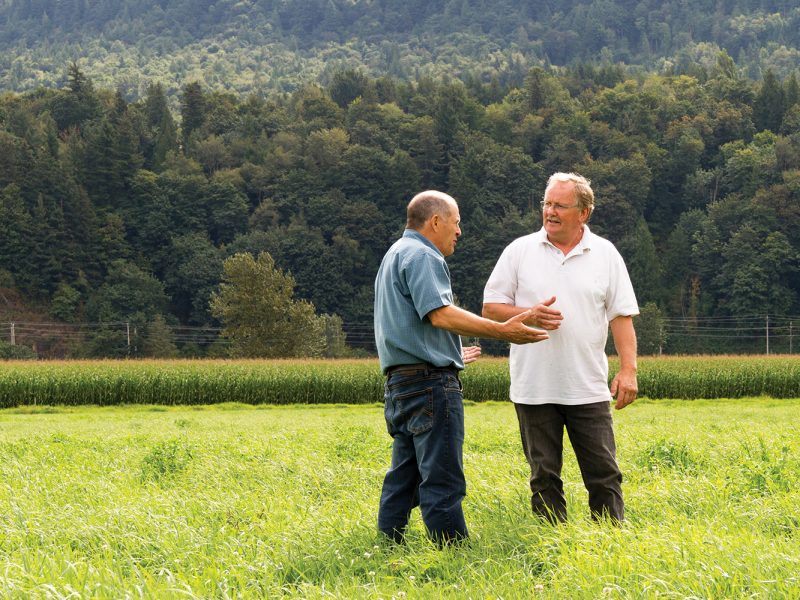
Portions of the new Sustainable Canadian Agriculture Partnership funding will be contingent on having an environmental farm plan, and pilots will be conducted in BC and other provinces to see how farmers could be nudged to embrace practices that make them more resilient in the face of a changing climate. Barbara J Cameron photo

July 27, 2022 byPeter Mitham

The next five-year policy framework that sets the priorities for federal and provincial agriculture programming will deliver $3.5 billion in support, thanks to an extra $500 million for strategic initiatives focused primarily on initiatives addressing sustainable practices and farm resilience in the face of environmental threats.

Appropriately, the new framework has been christened the Sustainable Canadian Agriculture Partnership.

“It will position our sector for continued success as a world leader in environmentally, economically and socially sustainable agriculture,” a press release announcing the agreement stated. “It will enable an innovative and productive internationally competitive sector that can continue to feed Canada and a growing global population at a time when rising costs and global food security are significant concerns.”

Details have yet to be worked out with each province, however. To ensure a smooth transition from the existing Canadian Agricultural Partnership, agreements must be reached by March 31, 2023 – and ideally beforehand.

BC was among the last of the provinces to sign an agreement with Ottawa five years ago. While the agreements are usually signed on or before the date of implementation, the agreement with BC wasn’t announced until mid-April 2018. Ontario, by contrast, had signed its agreement two months earlier in February 2018.

The delay potentially jeopardized the flow of funding to researchers and the organizations which administer the funds.

Details to be worked out in the next agreement include a variety of pilot programs, including one related to interprovincial trade and another that will identify potential programs that could be used as incentives to encourage producers to adopt environmental practices that also reduce production risks.

Negotiations on the bilateral agreements begin in September.
Related Posts

You may be interested in these posts from the same category.

Bilateral agreement signed

New funding on track

Previous Post: « Peace leads real estate
Next Post: Larger rootstocks could alleviate heat stress »

Copyright © 2026 Country Life in BC · All Rights Reserved