• Menu
  • Skip to primary navigation
  • Skip to main content
  • Skip to primary sidebar

Country Life In BC Logo

The agricultural news source in British Columbia since 1915

  • Headlines
  • Calendar
  • Subscribe
  • Advertise
  • About
  • Archives
  • Contact
  • Search
  • Headlines
  • Calendar
  • Subscribe
  • Advertise
  • About
  • Archives
  • Contact
  • Search

Primary Sidebar

Current Issue:

DECEMBER 2025
Vol. 111 Issue 11

Subscribe Now!

Sign up for free weekly FARM NEWS UPDATES

Select list(s) to subscribe to


By submitting this form, you are consenting to receive marketing emails from: Country Life in BC. You can revoke your consent to receive emails at any time by using the SafeUnsubscribe® link, found at the bottom of every email. Emails are serviced by Constant Contact
Your information will not be
shared or sold ever

Follow us on Facebook

Comments Box SVG iconsUsed for the like, share, comment, and reaction icons

6 days ago

... See MoreSee Less

View Comments
  • Likes: 4
  • Shares: 0
  • Comments: 0

Comment on Facebook

7 days ago

On the last day of the BC Organic Conference, Thursday, Molly Thurston of Pearl Agricultural Consulting helped growers learn how to manage bugs such as codling moth, wireworm, and rootworm in organic growing systems. Her talk alongside Renee Prasad included hands-on activities in which participants checked out various traps and examined pests under microscopes. Be sure to look for more upcoming ag events on our online calendar at www.countrylifeinbc.com/calendar/

#BCAg
... See MoreSee Less

On the last day of the BC Organic Conference, Thursday, Molly Thurston of Pearl Agricultural Consulting helped growers learn how to manage bugs such as codling moth, wireworm, and rootworm in organic growing systems. Her talk alongside Renee Prasad included hands-on activities in which participants checked out various traps and examined pests under microscopes. Be sure to look for more upcoming ag events on our online calendar at www.countrylifeinbc.com/calendar/

#BCAg
View Comments
  • Likes: 15
  • Shares: 0
  • Comments: 0

Comment on Facebook

1 week ago

Well-known organic farmer and podcaster Jordan Marr gets interviewed by Country Life in BC’s own columnist and potato mavin Anna Helmer during the opening session of the BC Organic Conference at Harrison Hot Springs yesterday. Sessions run today (Wednesday) and Thursday and include organic and regenerative growing practices and expanding and advocating for the organic sector, all under the background of the newly launched Organic BC banner.

#BCAg
... See MoreSee Less

Well-known organic farmer and podcaster Jordan Marr gets interviewed by Country Life in BC’s own columnist and potato mavin Anna Helmer during the opening session of the BC Organic Conference at Harrison Hot Springs yesterday. Sessions run today (Wednesday) and Thursday and include organic and regenerative growing practices and expanding and advocating for the organic sector, all under the background of the newly launched Organic BC banner.

#BCAg
View Comments
  • Likes: 37
  • Shares: 2
  • Comments: 1

Comment on Facebook

Interested in finding out more about this

3 weeks ago

Today, we remember those who sacrificed their lives or their well-being for our freedom. Lest we forget. ... See MoreSee Less

Today, we remember those who sacrificed their lives or their well-being for our freedom. Lest we forget.
View Comments
  • Likes: 8
  • Shares: 0
  • Comments: 0

Comment on Facebook

1 month ago

FarmFolk CItyFolk is hosting its biennial BC Seed Gathering in Harrison Hot Springs November 27 and 28. Farmers, gardeners and seed advocates are invited to learn more about seed through topics like growing perennial vegetables for seed, advances in seed breeding for crop resilience, seed production as a whole and much more. David Catzel, BC Seed Security program manager with FF/CF will talk about how the Citizen Seed Trail program is helping advance seed development in BC. Expect newcomers, experts and seed-curious individuals to talk about how seed saving is a necessity for food security. ... See MoreSee Less

Link thumbnail

BC Seed Gathering - FarmFolk CityFolk

farmfolkcityfolk.ca

Save the date for our upcoming 2023 BC Seed Gathering happening this November 3rd and 4th at the Richmond Kwantlen Polytechnic University campus.
View Comments
  • Likes: 1
  • Shares: 0
  • Comments: 0

Comment on Facebook

Subscribe | Advertise

The agricultural news source in British Columbia since 1915
  • Email
  • Facebook

Phylloxera found on Vancouver Island

December 9, 2020 byRonda Payne

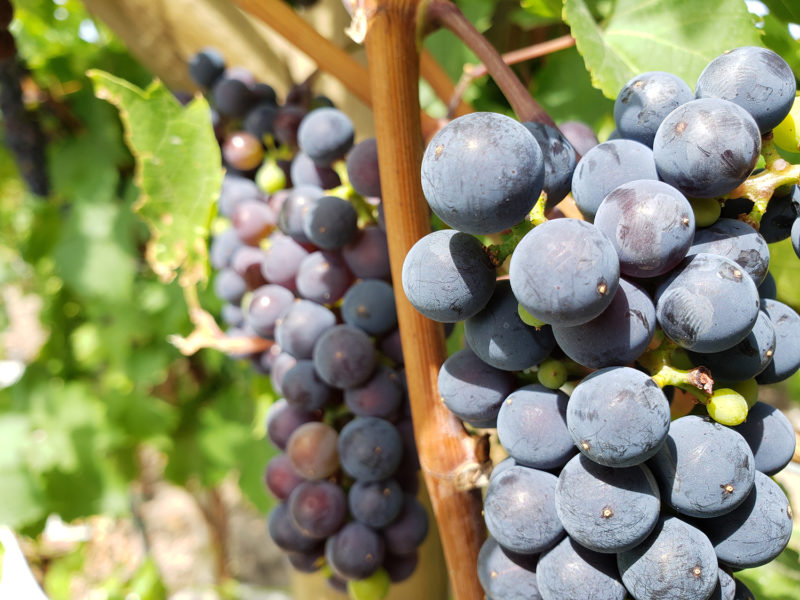
Grape phylloxera has been detected in Vancouver Island vineyards.

Phyollxera, also known as root louse, was detected by the Canadian Food Inspection Agency thanks to a grower submission.

CFIA announced the discovery at the end of September. While there have been occasional detections in the Okanagan, Vancouver Island was previously free from the aphid-like insect.

“It’s native to eastern North America and it has travelled around the world into major grape growing regions,” says Tracy Hueppelsheuser, provincial entomologist with the BC Ministry of Agriculture.

While the pest spends time both above and below ground, it is best known for the damage it does to vine roots.

“It’s actually the root damage that causes problems to the vines,” notes Hueppelsheuser. “It causes gall. At this point, we do not know how widespread it is on Vancouver Island or the Gulf Islands.”

How the pest was introduced to Vancouver Island is unknown, though it likely arrived – as in other areas – with infested rootstock. Surveys are underway to determine how many sites are infested.

CFIA is assisting with detection. Growers who suspect the presence of phylloxora should contact Hueppelsheuser and notify the CFIA. A notice prohibiting movement of infested materials is placed on the affected sites. “Detections do not prevent the harvest or movement of grape fruit at the affected locations,” notes CFIA.

Hueppelsheuser notes that weak or declining areas of a vineyard may indicate the presence of phylloxera. The pest takes several years to kill vines, providing an opportunity for identification and action.

Vancouver Island growers will be unable to rely on winter weather to control the pest, something that has helped limit populations in the Okanagan.

Once the pest is established in a region, growers typically shift from planting own-rooted vines to grafting vines onto phylloxera-resistant rootstock.

“The way they’ve solved the problem in Europe is that they have the French varieties and the German varieties and all the desirable varieties are grafted onto North American roots and all those can resist phylloxora,” explains Hueppelsheuser.
Related Posts

You may be interested in these posts from the same category.

BC distanced from TB concerns

Vineyards enter new year with recovery in sight

CFIA nabs Enderby abattoir

BC control zones revoked

Avian influenza grows

Federal funding for AI response

Livestock health in spotlight

Avian influenza returns

AI outbreak rivals 2004

Avian influenza spreads

Plant health centre breaks ground

Avian influenza returns

Previous Post: « Raspberries get replant funding
Next Post: COVID-19 hits Fraser Valley farms »

Copyright © 2025 Country Life in BC · All Rights Reserved