• Menu
  • Skip to primary navigation
  • Skip to main content
  • Skip to primary sidebar

Country Life In BC Logo

The agricultural news source in British Columbia since 1915

  • Headlines
  • Calendar
  • Subscribe
  • Advertise
  • About
  • Archives
  • Contact
  • Search
  • Headlines
  • Calendar
  • Subscribe
  • Advertise
  • About
  • Archives
  • Contact
  • Search

Primary Sidebar

Originally published:

May 2018
Vol. 104 Issue 5

Subscribe Now!

Sign up for free weekly FARM NEWS UPDATES

Loading form…

Your information will not be
shared or sold ever

Stories In This Edition

Fraser Valley bee shortage overstated

Still waiting: ag waste regs

Cannabis shift delivers hit to vegetable sector

Peter’s legacy

Editorial: The straight dope

Back Forty: Our best friend deserves greater recognitiontory

Overheard: Farmers should embrace First Nations model

Change is coming, fast and furious

Foundation effective in fueling ag projects

New meat producer association launched

Sidebar: On board

Traceability regs to include animal movement

Report recommends FN approval on tenures

Province urged to regulate farmhouse size

Dairy group highlights industry needs on tour

Ottawa plays hardball with Agassiz leases

IAF showcases innovative ag projects

Neonics in water not from farm operations

Potato growers need to exploit opportunities

Spuds in tubs

Vegetable commission optimistic

Sidebar: Variety update

MacAulay grilled over farm labour issues

Apiarists want pollination income to count

Sidebar: BCHPA launches pollinator health study

Raspberry growers increase board size

Popham meets with berry growers

Hazelnut growers flush with optimism

Ranchers schooled in disaster preparation

Westgen eyes beef semen sales for growth

Big prize money draws big entries

Holstein auction sets new sale benchmark

North 40 bull tops Vanderhoof sale

Reclaiming market share in a global economy

Day-neutrals show promise for strawberry fields

Weather skews results in Peace variety trials

Salal berries have market potential

Vole control in blueberries

Wannabe: When tragedy brings us together

Watchful eye

Woodshed Chronicles: Henderson masterminds an apology

Jude’s Kitchen: Celebrate May with beef on the ‘barbie’

All content on this website is copyrighted, and cannot be republished or reproduced without permission.
More Headlines

Follow us on Facebook

Comments Box SVG iconsUsed for the like, share, comment, and reaction icons

11 hours ago

A Maple Ridge dairy producer has been fined $7,512, had his licence suspended for three months, and faces quota restrictions for two years after an undercover investigation confirmed raw milk was sold directly from the farm on three separate occasions.

#BCAg
... See MoreSee Less

Link thumbnail

Maple Ridge farm fined for raw milk sales

www.countrylifeinbc.com

Raw milk remains off the table for dairy producers, with the BC Milk Marketing Board (BCMMB) taking action against a Maple Ridge producer for illicit sales. An undercover investigation of Maple Ridge...
View Comments
  • Likes: 12
  • Shares: 12
  • Comments: 20

Comment on Facebook

Unpasteurized milk is sold in Europe. It's the only milk certain cheeses can be made from.

A person can shoot up government drugs in a playground but milk is the issue. 🙄

leave him the hell alone! if someone wants to buy raw milk at their own risk, let them. At least they can see where the milk came from

Some comments seem to be missing the point of the article. NO ONE was sick from the milk. It’s all about money. “By selling milk outside the regulated system, where revenues are pooled, the board claimed Stuyt had cost producers as a whole $195,185 and ordered him to repay this amount. It also ordered Stuyt to pay $33,266 to cover the cost of BCMMB’s investigation and hearings into the matter. The BC Dairy Association, which stood as an intervenor in the appeal before FIRB, said illicit raw milk sales are a direct threat to supply management.”

Rediculous

Yes we are NOT a capitalist economy in Canada

Raised my three daughters on raw milk. Made butter, yogurt, cheese. Farmer told me if they went over their quota, they were fined. They either fed it to new calf’s or had to dump it.

🐀

Government control at its finest .

to much government control!

Why can’t we let the consumer decide the risk? Alcohol, and safe injection sites are legal. But not raw milk, they don’t want us to have it because it’s a super food.

When will people wake up to the fact that that Health Canada doesn’t care about our health? They only care about profiteering off our bad health..

Corrupt government

Good grief. Don’t inspectors have better things to do?

Wow 😒😒

Ridiculous

Have you been inside a dairy barn Go lick the floor then drink the raw milk Cuz that’s what’s your doing Y’all need to give ur head a shake

What a travesty. We are Adults told by corrupt bribed morons, what we should eat or drink. But it is ok for taxpayers to pay for "safe" injection sites and killing unborn children, and child mutilation!!

How pathetic

What a waste of time and money.

View more comments

3 days ago

A draft update to the Code of Practice for the Care and Handling of Beef Cattle is now open for public comment until June 12. The code, one of 14 animal care codes developed and maintained by the National Farm Animal Care Council, is undergoing a routine 10-year review. "Your feedback will help shape the industry's guide to cattle welfare for the next decade," says Canadian Cattle Association policy manager Jessica Radau, urging producers to weigh in. For more information, visit tinyurl.com/58a3u9fz.

#BCAg
... See MoreSee Less

A draft update to the Code of Practice for the Care and Handling of Beef Cattle is now open for public comment until June 12. The code, one of 14 animal care codes developed and maintained by the National Farm Animal Care Council, is undergoing a routine 10-year review.  Your feedback will help shape the industrys guide to cattle welfare for the next decade, says Canadian Cattle Association policy manager Jessica Radau, urging producers to weigh in. For more information, visit https://tinyurl.com/58a3u9fz.

#BCAg
View Comments
  • Likes: 4
  • Shares: 2
  • Comments: 1

Comment on Facebook

I sat in the webinar yesterday by the Canadian Cattle Association. My initial concern was that this would be another "play" into the government's hands. It has been worked on by people that are actually in the Beef industry from Cow calf to feedlot. The thrust is an update of the 2013 Code of Practice which was reviewed in 2018. The changes are more a move from "left to the producers discretion" to clearer directions regarding pain management, proper transport of animals which are impaired and keeping cattle in in good condition. Much of what is recommended is what producers who care about animal husbandry already do. The important part is to GIVE THEM FEEDBACK good, bad or otherwise. The document is about 60 pages long, and I ran it through CHAT to see what had been changed. It is important to understand that the PUBLIC is invited to comment on the draft not just producers. Think about it... do you really want the public influencing how you manage your cattle. If you think that this is just one of those things, I have been following Bill 22 in Alberta which will grant the SPCA a proactive roll in entering farms and checking on animals. When I asked CHAT how the new bill relates to the Cattle Code, it came back that the Code although not a regulation will be able to be used as a guide by producers for backup in dealing with the SPCA regarding cattle conditions, sick animal handling etc. Take the time.... Go onto the Canadian Cattle Association website and speak to those parts that you wish to input.

4 days ago

According to the BC River Forecast Centre, the Okanagan snowpack stood at just 58% of normal on April 1 — the lowest reading since measurements began in 1980 — raising concerns about drought conditions in the region this summer. The rest of the province sits at 92% of normal.

#BCAg
... See MoreSee Less

According to the BC River Forecast Centre, the Okanagan snowpack stood at just 58% of normal on April 1 — the lowest reading since measurements began in 1980 — raising concerns about drought conditions in the region this summer. The rest of the province sits at 92% of normal.

#BCAg
View Comments
  • Likes: 3
  • Shares: 0
  • Comments: 0

Comment on Facebook

5 days ago

At her first AGM as executive director of BC Meats, held Saturday in Abbotsford, Jennifer Busmann spoke about her strong ties to agriculture and her optimism for the organization's future. Busmann has cattle of her own and came to the role with existing relationships with members and the board of directors that helped her feel integrated from the start. She stepped into the position in Februa#BCAg#BCAg ... See MoreSee Less

At her first AGM as executive director of BC Meats, held Saturday in Abbotsford, Jennifer Busmann spoke about her strong ties to agriculture and her optimism for the organizations future. Busmann has cattle of her own and came to the role with existing relationships with members and the board of directors that helped her feel integrated from the start. She stepped into the position in February.

#BCAg
View Comments
  • Likes: 6
  • Shares: 0
  • Comments: 0

Comment on Facebook

7 days ago

Shannon Wiggins of Headwind Farm in North Saanich is this year's Mary Forstbauer Grant recipient from the BC Association of Farmers Markets. The $500 grant will help Wiggins expand her plot at Sandown Centre for Regenerative Agriculture, growing more storage crops to extend her harvest season. Wiggins credits farmers markets with inspiring her own farming journey and commitment to building community through food. Congratulations!

tinyurl.com/45bdd#BCAg#BCAg
... See MoreSee Less

Shannon Wiggins of Headwind Farm in North Saanich is this years Mary Forstbauer Grant recipient from the BC Association of Farmers Markets. The $500 grant will help Wiggins expand her plot at Sandown Centre for Regenerative Agriculture, growing more storage crops to extend her harvest season. Wiggins credits farmers markets with inspiring her own farming journey and commitment to building community through food. Congratulations!

https://tinyurl.com/45bddtw8

#BCAg
View Comments
  • Likes: 50
  • Shares: 2
  • Comments: 3

Comment on Facebook

Wahoo! Congrats Shannon! I love your produce. Can’t wait for the radishes 🫜

Congratulations!

Well done!! 🩷🩷🩷

Subscribe | Advertise

The agricultural news source in British Columbia since 1915
  • Email
  • Facebook

Province urged to regulate farmhouse size

Recommendation from Metro Vancouver one of five for revitalizing the ALR

April 30, 2018 byPeter Mitham

VANCOUVER – Metro Vancouver’s submission to the nine-member advisory committee appointed to recommend ways to revitalize the Agricultural Land Commission and the lands it oversees has put the issue of farmhouse size at the top of its wish list.

The submission, presented to Metro Vancouver’s regional planning committee by Theresa Duynstee, was set to go to Metro Vancouver’s board for final approval April 27, three days before the review committee wrapped up its public consultation.

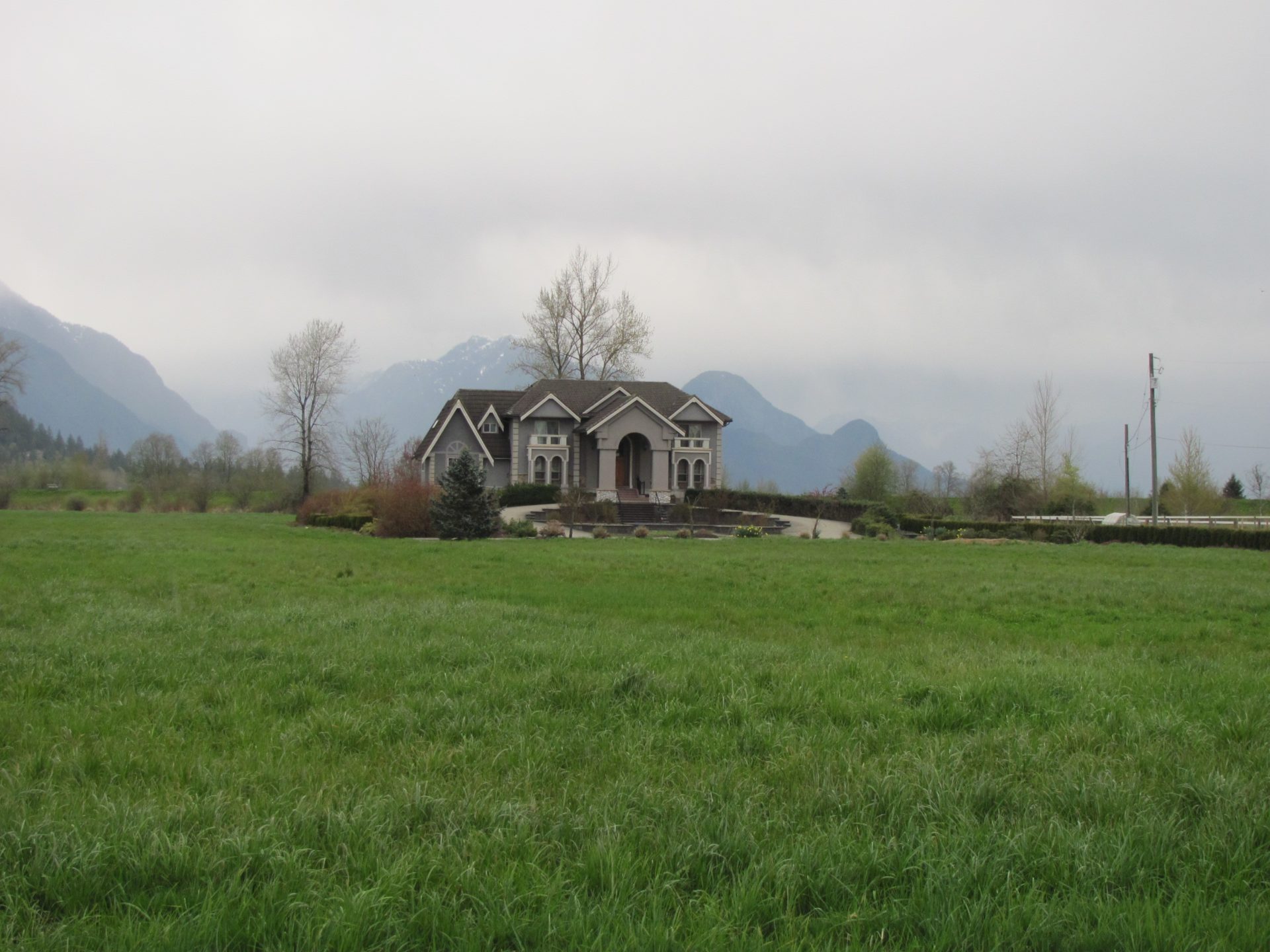
The submission urges the province to legislate “restrictions on the home plate including house size, residential footprint location and size in the ALR to discourage the use of agricultural land for residential and commercial purposes.”

It adds that new provincial legislation could allow farm worker housing within the designated home plate.

This is the third time Metro Vancouver has made the request, noting that municipalities within the district face challenges in “restricting house size and residential footprint in the ALR.”

The request effectively pleads helplessness on a matter that Premier John Horgan has said falls squarely within the jurisdiction of municipal zoning bylaws.

The difficulties municipalities face have played out most dramatically in recent years in Richmond, which moved to restrict farmhouse sizes within the ALR last year.

Council established an initial limit of 10,764 square feet last May, more than farmland advocates wanted but respecting the concerns in the farm community. Critics took advantage of a six-month review of the bylaw to press their case for a size in line with provincial guidelines, which recommend a house size of 5,382 square feet.

The review attracted 200 people to three open houses and garnered 525 written submissions. The process reflected a sharp split between farmers and non-farmers, with 93% of farmers opposing a reduction in house size and more than 60% of non-farmers supporting a reduction in line with the provincial recommendation.

Speaking to council on March 26, Ben Dhiman of the Richmond Farmland Owners Association expressed concern at further limits on farmhouse size. The problem isn’t with home size but how the land is used, and he presented several examples of large homes surrounded by productive farms to underscore his point.

Laura Gillanders, a farmland advocate, told council that by not placing further limits on farmhouse size, it would continue to facilitate speculation. She pointed out that 16 applications for homes averaging 9,910 square feet had been received in the first three months of 2018.

However, contractor Eddie Tang, speaking on behalf of Chinese landowners, said many of the property owners he works with “have an emotional investment in the farming practices of the land.” The owner of 9431 No. 6 Road, for example, spent more than $200,000 replanting blueberries on the property.

Richmond council ultimately directed staff to draft a new bylaw reflecting the smaller house size for first reading in April; the bylaw had not been presented at press time.

The issue of monster homes isn’t restricted to Richmond.

Pitt Meadows has also faced challenges restricting the size of houses on protected farmland within its boundaries, and Chilliwack staff took several months to draft appropriate legislation before a bylaw passed last year.

Meanwhile, regional governments in the Peace have seen an increase in quarter-section estates that are home to mansions in the middle of farmland that sits fallow.

More recommendations

Restrictions on farmhouses isn’t the only recommendation Metro Vancouver is making to the province.

It is also asking the province to reform the tax treatment of farm-class properties to penalize negative uses rather than just recognize land that’s actively farmed.

“Tax reform that penalizes unwanted behaviours is a vastly underutilized tool for discouraging inappropriate land use in the ALR,” the submission states, recommending that non-farm activities within the ALR trigger similar tax rates to the same activities located in urban areas.

The submission also recommends treating farms with less than $10,000 gross sales differently from larger ones, similar to what Quebec does. Metro Vancouver claims the change would accommodate both commercial and hobby farmers while taxing them in a manner that reflects their contribution to agricultural production.

The final two recommendations involve measures to enable “appropriate business development in the ALR that champions agriculture production over the long term,” and covenants that recognize the important ecological services farmland provides.

All content on this website is copyrighted, and cannot be republished or reproduced without permission.
Related Posts

You may be interested in these posts from the same category.

Reclassification sparks farm definition debate

ALC rejects Cowichan dike removal

Regulatory hurdles threaten farm income solutions

Landowners push back against rail trail plans

ALC members appointed

Islands Trust turns 50

Illegal dumping surges on Fraser Valley farmland

Premier boosts fill enforcement

ALR policy review shows room for improvement

Surrey ALR inclusion cheered

ALC rejects Teacup appeal

Whistleblowers at FIRB, ALC protected

Previous Post: «Sheep Traceability regs to include animal movement
Next Post: Fraser Valley bee shortage overstated »

© 2026 COUNTRY LIFE IN BC - ALL RIGHTS RESERVED