• Menu
  • Skip to primary navigation
  • Skip to main content
  • Skip to primary sidebar

Country Life In BC Logo

The agricultural news source in British Columbia since 1915

  • Headlines
  • Calendar
  • Subscribe
  • Advertise
  • About
  • Archives
  • Contact
  • Search
  • Headlines
  • Calendar
  • Subscribe
  • Advertise
  • About
  • Archives
  • Contact
  • Search

Primary Sidebar

Current Issue:

JANUARY 2026
Vol. 112 Issue 1

Subscribe Now!

Sign up for free weekly FARM NEWS UPDATES

Select list(s) to subscribe to


By submitting this form, you are consenting to receive marketing emails from: Country Life in BC. You can revoke your consent to receive emails at any time by using the SafeUnsubscribe® link, found at the bottom of every email. Emails are serviced by Constant Contact
Your information will not be
shared or sold ever

Follow us on Facebook

Comments Box SVG iconsUsed for the like, share, comment, and reaction icons

13 hours ago

BC's minimum piece rates for 15 hand-harvested crops increased 2.6% on December 31. Crops include peaches, apricots, brussels sprouts, daffodils, mushrooms, apples, beans, blueberries, cherries, grapes, pears, peas, prune plums, raspberries and strawberries. Farm-worker piece rates in BC were increased by 11.5% in January 2019 and 6.9% in December 2024. BC’s current minimum wage sits at $17.85 per hour.

#BCAg
... See MoreSee Less

BCs minimum piece rates for 15 hand-harvested crops increased 2.6% on December 31. Crops include peaches, apricots, brussels sprouts, daffodils, mushrooms, apples, beans, blueberries, cherries, grapes, pears, peas, prune plums, raspberries and strawberries. Farm-worker piece rates in BC were increased by 11.5% in January 2019 and 6.9% in December 2024. BC’s current minimum wage sits at $17.85 per hour. 

#BCAg
View Comments
  • Likes: 6
  • Shares: 0
  • Comments: 2

Comment on Facebook

I'm not sure what they're telling us. Did peace rates have to increase so that Farm workers could make minimum wage?

They deserve it, but the general public will be whining about increased prices in the stores. Will need to make more information average to the g.p.

2 days ago

... See MoreSee Less

View Comments
  • Likes: 10
  • Shares: 0
  • Comments: 0

Comment on Facebook

1 week ago

... See MoreSee Less

View Comments
  • Likes: 7
  • Shares: 0
  • Comments: 0

Comment on Facebook

3 weeks ago

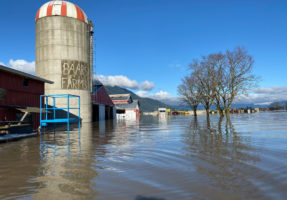
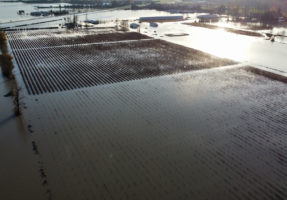
Water volumes from the Nooksack River are at levels similar to 1990 and 2021, but the province says flows should peak at 10pm tonight. The shorter duration, as well as conditions in other watercourses within the watershed and performance of flood protection infrastructure should avoid a catastrophe on the scale of 2021. However, several landslides mean road closures have once again effectively isolated the Lower Mainland from the rest of the province.

#BCag
... See MoreSee Less

Water volumes from the Nooksack River are at levels similar to 1990 and 2021, but the province says flows should peak at 10pm tonight. The shorter duration, as well as conditions in other watercourses within the watershed and performance of flood protection infrastructure should avoid a catastrophe on the scale of 2021. However, several landslides mean road closures have once again effectively isolated the Lower Mainland from the rest of the province.

#BCAg
View Comments
  • Likes: 9
  • Shares: 3
  • Comments: 1

Comment on Facebook

Family living in Sumas WA say it's very much like '21. They have the same amount of water in their house as last time.

1 month ago

... See MoreSee Less

View Comments
  • Likes: 4
  • Shares: 0
  • Comments: 0

Comment on Facebook

Subscribe | Advertise

The agricultural news source in British Columbia since 1915
  • Email
  • Facebook

Province won’t relocate farms

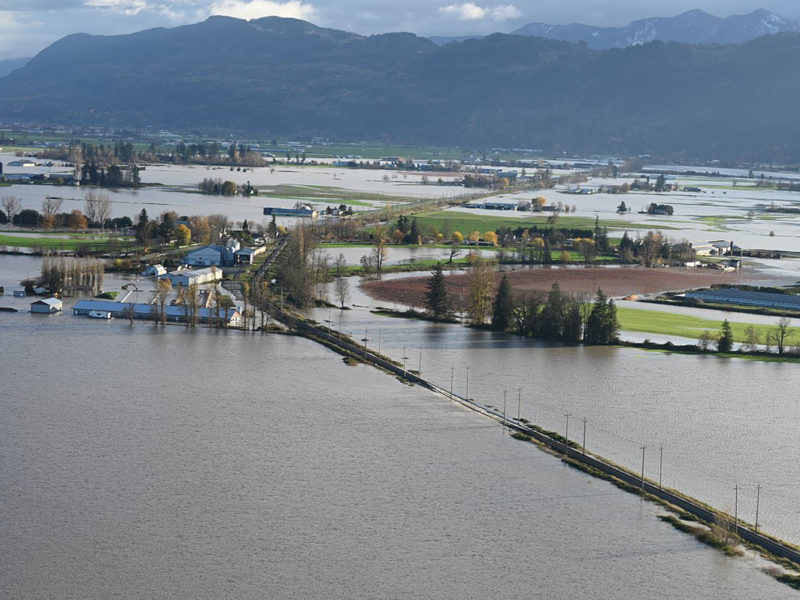
[City of Abbotsford photo]

November 24, 2021 byPeter Mitham

Preventing development in disaster-prone areas is on the table as the province seeks to mitigate risk from future floods and wildfires, but BC’s minister of public safety says farms shouldn’t worry.

Pointing to the lessons learned from the floods that tore through farmland and residential neighbourhoods after a dike broke in Grand Forks in 2018, Mike Farnworth told Country Life in BC that some property owners may need to relocate.

“Don’t just build back in the place that got flooded, but look – is there is an opportunity to relocate?” he says. “All of these kinds of things are going to have to play into how we manage disasters and how we respond to disasters and how we prepare for disasters in the future.”

But he says homes, rather than farms, are the most likely to be relocated. For farm properties, rebuilding critical infrastructure is the top priority, especially in key areas like the Fraser Valley.

“The immediate thing right now is to get the recovery underway and build back better. So whether it’s our dikes, our road networks, our transportation systems – all of those things – at the same time recognizing that there may be areas where you say, ‘Y’know what? The flooding risk here is so great, particularly in terms of residential, is there an opportunity to perhaps relocate?’” he says.

The changes will build on the Abbott-Chapman review of the provincial response to flood and wildfire in 2017. BC Cattlemen’s Association was among the first contributors to the review and its submission guided recommendations for improvements in the province’s work with farmers and ranchers.

The Abbott-Chapman report included 108 recommendations. All those related to agriculture are either in progress or complete.

A review of decision-making related to the establishment of evacuation alerts and orders to ensure consideration of farms and ranches completed in 2019. Ongoing work includes a survey of diking infrastructure, including a “consequence classification” similar to what exists for dams.

The province has also pledged to seek infrastructure funding to support dike renewal, which is why Farnworth welcomes Ottawa’s promise this week to develop a National Adaptation Strategy.

The province also intends to overhaul the 25-year-old Emergency Program Act in 2022 in response to ongoing devastation from wildfires and floods. The new act is one of the last Abbott-Chapman recommendations to be implemented.

“I think of Merritt, for example – evacuations under fire, evacuations under flood,” says Farnworth. “I view that legislation coming next year as critically important.”
Related Posts

You may be interested in these posts from the same category.

Sumas flooding spurs call for action

Abbotsford approves flood mitigation option

Recovery fund deadline extended

Sumas Prairie farmers sue government

CanadaGAP participation drops

Interior ranchers feel forgotten

Insurance under scrutiny

Flood recovery will take time

Fraser Valley flooding continues

Mortalities less than expected

Grand Forks ducks flood

Flood buyout bypasses farmers

Previous Post: « BC Veg seeks commissioners
Next Post: Mortalities less than expected »

Copyright © 2026 Country Life in BC · All Rights Reserved