• Menu
  • Skip to primary navigation
  • Skip to main content
  • Skip to primary sidebar

Country Life In BC Logo

The agricultural news source in British Columbia since 1915

  • Headlines
  • Calendar
  • Subscribe
  • Advertise
  • About
  • Archives
  • Contact
  • Search
  • Headlines
  • Calendar
  • Subscribe
  • Advertise
  • About
  • Archives
  • Contact
  • Search

Primary Sidebar

Originally published:

OCTOBER 2025
Vol. 111 Issue 9

Subscribe Now!

Sign up for free weekly FARM NEWS UPDATES

Loading form…

Your information will not be
shared or sold ever

Stories In This Edition

Shut down again

Corkscrew harvest

Groundwater consultation launched

Wineries cheer extension of support program

Editorial: Heads in the sand

Back 40: A generation lost for words

Viewpoint: Farm status should value more than profits

Abattoirs demand essential status for inspectors

Battle looms over fruit co-op’s assets

Ag Briefs: Country Life in BC reporting honoured

Ag Briefs: Mushrooms target of trade complaint

Foundation funds record number of ag projects

Community support helps flood survivors heal

Pat Tonn looks back on career building up youth

BC Fairs looks beyond cash crunch

Cowichan title decision creates uncertainty

Fair-thee-well

Ranchers on hook for water storage solutions

Virtual fencing revolutionizes rotational grazing

Islands Trust sidelines ag in policy statement

Reports back significant hazelnut potential

Sand boosts Delta cranberry yield

Farm Story: What I did on my summer vacation

Inspiring a new generation of farmers

Sidebar: Summerland Food Hub moves forward

New farmers breathe life into rural community

Sparks fly as Day at the Farm draws crowds

Woodshed: A newcomer takes Newt down memory lane

Evening for Ag raises thousands for youth groups

Jude’s Kitchen: Autumn uppers inspired by the season

All content on this website is copyrighted, and cannot be republished or reproduced without permission.
More Headlines

Follow us on Facebook

Comments Box SVG iconsUsed for the like, share, comment, and reaction icons

11 hours ago

A new national beef code of practice is open for public comment until June 12. Developed by NFACC and the Canadian Cattle Association, the draft addresses pain management, weaning, nutrition, lameness and end-of-life care.

#BCAg
... See MoreSee Less

Link thumbnail

New beef practices open for comment

www.countrylifeinbc.com

A new national code of practice for beef producers is open for public comment. “The public comment period is an important opportunity for producers across Canada to review the draft code and provide...
View Comments
  • Likes: 1
  • Shares: 0
  • Comments: 0

Comment on Facebook

4 days ago

The BC Ministry of Health has approved $4.25 million for the BC Farmers Market Nutrition Coupon Program, administered by the BC Association of Farmers Markets, for 2026. The funding is even with last year, and follows on $12 million provided in 2022-24. The funding is a cornerstone of BCAFM, providing eligible low-income, pregnant and senior individuals with $27 a week for purchases of locally grown produce at more than 100 participating farmers markets in 92 communities across BC. Funding has increased seven-fold since the program launched in 2012.

#BCAg
... See MoreSee Less

The BC Ministry of Health has approved $4.25 million for the BC Farmers Market Nutrition Coupon Program, administered by the BC Association of Farmers Markets, for 2026. The funding is even with last year, and follows on $12 million provided in 2022-24. The funding is a cornerstone of BCAFM, providing eligible low-income, pregnant and senior individuals with $27 a week for purchases of locally grown produce at more than 100 participating farmers markets in 92 communities across BC. Funding has increased seven-fold since the program launched in 2012.

#BCAg
View Comments
  • Likes: 957
  • Shares: 355
  • Comments: 115

Comment on Facebook

It provides for more than produce. It includes, eggs, meat and honey!

Good program. Additionally, I toured the Kelowna Food bank yesterday. They are serving about 12,000 people a month. Lots are working people.

I have seen people at the Saanichton markets asking if vendors take the coupons and being embarrassed when the vendor says no. Are there signs that are placed on the tables so people know who is part of the program and who is not?

“While it’s unfortunate that programs like this are necessary, I’m grateful they exist to support families and local farmers.”

What exactly is this and how does it work? I've never heard of it before. How does this get applied to us who it's intended to help?

Food stamps?

This should be made a little more accessible, especially for seniors

Christy Sakai its a week and if you to the markets you can get a small bag of carrots 5bucks, a few potatoes, usually a bag of apples are 5 bucks, and in summer you have fruit choices. Yes doesn't seem like alot but it could be stretched at the markets and remember its a week so really ypu going to use the whole bag of carrots in a week, probably not so you have something for the next week. Heads of lettuce 5 bucks. Every little bit does help when it comes to supporting local farmer and family.

This program has helped me afford local produce, as a senior. I am grateful for the assistance and eat a healthier diet.

I have been a working poor and 🙏👍for recognizing the people who deserve a bit of help as they are doing the best they can 😘👍

It is illegal for me to grow a garden . We can all afford to eat if we can grow.

This sounds a little more complicated to enroll in than it needs to be. A lot of people probably never heard of it, I only did because I read this post.

How does a senior apply?

On my smalltown the food bank puts your name in a lottery for this Seniors included in lottery

Glad to see this continue. With the increase in cost of living, this program should be increasing, not staying even with last year. Our local food bank is inundated with need.

Here are the general qualifications: Income Threshold: Generally for lower-income households. Some specific, local programs have identified a threshold of $27,000 or less for a single person or under $50,000 per year for a household. Targeted Groups: Participants must be seniors/elders, pregnant individuals, or families with children under 19. Participant Requirements: In addition to income, participants must: Participate in a food literacy program (e.g., cooking, gardening, or food budgeting). Be able to travel to a participating market to shop for themselves. Allocation: Because demand is high, coupons are often prioritized for new participants each year. Important Information: Coupons are not handed out by the BC Farmers' Markets directly. You must connect with a local community partner (such as a food bank, community centre, or neighbourhood house) to apply.

I did not know until now! I only find out that in Squamish woman centre, they give out vouchers, but there is long waiting list. I never got it. It would be good,if every low income family with children get them. Seniors as well.

So how does one receive this?

Have you got an email yet?

Please if you have these coupons do not be embarrassed to use them they are a good as anyone's money to a grower! I would agree it is a slippery slope to have people pay with government coupons but Remember large scale agriculture is subsidized in this country in way that dwarfs this little program. We are all in a sense are paying with coupons at the big supermarket. As a small scale grower grower I can tell you when you see the higher prices at the farmers market, no one is getting rich off you. That is the true cost of food. Yes that should scare you

This is great if you're a senior over 65 or pregnant. Doesn't help PWD low income. Why not hand out food stamps or something along with your small PWD income? I don't qualify because I don't meet the senior age requirement and I ain't gonna be pregnant any time soon... so 🤷 I'm glad this does exist and hope it help out for others. That would be great!

How about lower taxes

I didn’t know that the program existed

All programs help, but Loaves and Fishes is free to all and provide food across Vancouver Island. Check it out.

It is such an important program! A win win!

View more comments

1 week ago

KPU researcher Naomi Robert is partnering with Oregon State University's Dry Farming Collaborative to test drought-resilient growing practices across Vancouver Island and the Gulf Islands. Working with three market gardeners, the study found tomatoes and zucchini thrived without irrigation. With droughts intensifying across the Pacific Northwest, dry farming offers BC growers practical tools to adapt to a changing climate. The full story appears in our April edition. tinyurl.com/d2fzs#BCAg#BCAg ... See MoreSee Less

KPU researcher Naomi Robert is partnering with Oregon State Universitys Dry Farming Collaborative to test drought-resilient growing practices across Vancouver Island and the Gulf Islands. Working with three market gardeners, the study found tomatoes and zucchini thrived without irrigation. With droughts intensifying across the Pacific Northwest, dry farming offers BC growers practical tools to adapt to a changing climate. The full story appears in our April edition. https://tinyurl.com/d2fzs9x6

#BCAg
View Comments
  • Likes: 22
  • Shares: 5
  • Comments: 0

Comment on Facebook

2 weeks ago

A Maple Ridge dairy producer has been fined $7,512, had his licence suspended for three months, and faces quota restrictions for two years after an undercover investigation confirmed raw milk was sold directly from the farm on three separate occasions.

#BCAg
... See MoreSee Less

Link thumbnail

Maple Ridge farm fined for raw milk sales

www.countrylifeinbc.com

Raw milk remains off the table for dairy producers, with the BC Milk Marketing Board (BCMMB) taking action against a Maple Ridge producer for illicit sales. An undercover investigation of Maple Ridge...
View Comments
  • Likes: 57
  • Shares: 93
  • Comments: 229

Comment on Facebook

Unpasteurized milk is sold in Europe. It's the only milk certain cheeses can be made from.

Europeans used raw milk to make cheese for millenia, the farmer should sue them back on cultural grounds and a charter violation.

A person can shoot up government drugs in a playground but milk is the issue. 🙄

Is there a go fund me?

Raised on raw milk and I wouldn’t have had it any other way. My immune system is top notch compared to all others raised on corn syrup baby formula. Make it make sense!

When i was on the farm we would drink milk right from the cow in a bottle then drink and never got sick.

Ohh the milk moffia at it again I see

So whose the rat? lol one of the ppl who bought the raw milk? 🤦🏻‍♀️

I grew up in the 60’s with raw milk, cream and butter the farm shipped cream. One day the cream was rejected do too much bacteria. It wasn’t kept cool enough. That was the first of government control I experienced. Ok so the cream went back to the farm and made the best sourdough bread, ice cream and the cats came from heavens green acres for a treat of stale bread soaked in that very cream.

If the farmer sold shares in his farm so all these people owned part of the farm. Then it’s their milk . And don’t have to buy anything

Yet the government can supply cigarettes, alcohol, weed and hard drugs. Makes sense. 🙄

leave him the hell alone! if someone wants to buy raw milk at their own risk, let them. At least they can see where the milk came from

I would love my own cow so I could get raw milk

I love the back in the day story’s . Please remember those stories were of grandpa drinking his own cow’s milk. You still have the right to buy cows and drink their milk raw. Go ahead and do it….

As the government sells alcohol and cigarettes 🤡

Free drugs good raw milk bad 🤣

Just identify as first nations and say it's a cultural thing . Then it becomes legal

Guy up the road sells milk raw here too

Raised on our own milk, so were my kids. Got told my kids would not be as Intelegent because of it 😂 they are adults and doing very well. The problem lays in the consumer handling of product after pick up. when milking at home its in a stainless steel pail, sifted, into glass containers, then in fridge to cool down. People picking up, put jn car drive off for an hour or more, then in fridge. This is the problem, bactia grows in the heat. Then they drink that evening when still warm, get sick, blame farm milk. Go to grocery store buy a jug, it last 2weeks after due date ...yummy. ( tested this therory) Id rather have fresh milk and properly handle it. Everything is so regulated,

I have mixed opinions here. I think that people should be able to get unpasteurized milk( I was raised on it and raised my own family with our own milk cow..) However in this day and age people are so inclined to sue for most anything it seems like the dairy farmers need some kind of protection against that? They could lose their businesses over legal procedures. Maybe that is a positive thing about the milk boards…

Some comments seem to be missing the point of the article. NO ONE was sick from the milk. It’s all about money. “By selling milk outside the regulated system, where revenues are pooled, the board claimed Stuyt had cost producers as a whole $195,185 and ordered him to repay this amount. It also ordered Stuyt to pay $33,266 to cover the cost of BCMMB’s investigation and hearings into the matter. The BC Dairy Association, which stood as an intervenor in the appeal before FIRB, said illicit raw milk sales are a direct threat to supply management.”

Communist Canada. If people want raw milk they should be able to buy raw milk. It’s all about control ….

You mean sold real milk, unadulterated, whole milk

That's just sad, but drugs are fine

To each their own. If people want to buy resh milk im sure they know the consequences involved. Maybe the people take it home, seperate the cream and pasturize it them selves. We drank milk at my aunts house off the cow but it was heated to 72’ (Pasturized )

View more comments

2 weeks ago

A draft update to the Code of Practice for the Care and Handling of Beef Cattle is now open for public comment until June 12. The code, one of 14 animal care codes developed and maintained by the National Farm Animal Care Council, is undergoing a routine 10-year review. "Your feedback will help shape the industry's guide to cattle welfare for the next decade," says Canadian Cattle Association policy manager Jessica Radau, urging producers to weigh in. For more information, visit tinyurl.com/58a3u9fz.

#BCAg
... See MoreSee Less

A draft update to the Code of Practice for the Care and Handling of Beef Cattle is now open for public comment until June 12. The code, one of 14 animal care codes developed and maintained by the National Farm Animal Care Council, is undergoing a routine 10-year review.  Your feedback will help shape the industrys guide to cattle welfare for the next decade, says Canadian Cattle Association policy manager Jessica Radau, urging producers to weigh in. For more information, visit https://tinyurl.com/58a3u9fz.

#BCAg
View Comments
  • Likes: 5
  • Shares: 4
  • Comments: 1

Comment on Facebook

I sat in the webinar yesterday by the Canadian Cattle Association. My initial concern was that this would be another "play" into the government's hands. It has been worked on by people that are actually in the Beef industry from Cow calf to feedlot. The thrust is an update of the 2013 Code of Practice which was reviewed in 2018. The changes are more a move from "left to the producers discretion" to clearer directions regarding pain management, proper transport of animals which are impaired and keeping cattle in in good condition. Much of what is recommended is what producers who care about animal husbandry already do. The important part is to GIVE THEM FEEDBACK good, bad or otherwise. The document is about 60 pages long, and I ran it through CHAT to see what had been changed. It is important to understand that the PUBLIC is invited to comment on the draft not just producers. Think about it... do you really want the public influencing how you manage your cattle. If you think that this is just one of those things, I have been following Bill 22 in Alberta which will grant the SPCA a proactive roll in entering farms and checking on animals. When I asked CHAT how the new bill relates to the Cattle Code, it came back that the Code although not a regulation will be able to be used as a guide by producers for backup in dealing with the SPCA regarding cattle conditions, sick animal handling etc. Take the time.... Go onto the Canadian Cattle Association website and speak to those parts that you wish to input.

Subscribe | Advertise

The agricultural news source in British Columbia since 1915
  • Email
  • Facebook

Reports back significant hazelnut potential

Chilliwack field day focuses on industry expansion

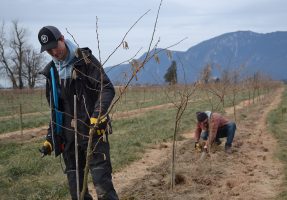
Attendees at the BC Hazelnut Growers Association field day, like Henry van Someren, were smitten with Don Hooge’s sucker cutting blade. Photo | Ronda Payne

October 1, 2025 byRonda Payne

CHILLIWACK – Growing local and global demand is fuelling a renewed focus on BC hazelnuts and their potential.

Past replant programs failed to achieve full uptake from hazelnut growers, but a new report from Chris Bodnar, assistant professor of agriculture at the University of the Fraser Valley, may drive more interest from government, investors and growers looking for new options.

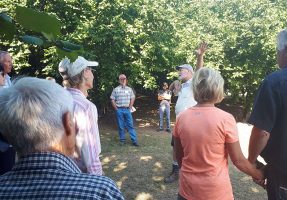
“There is significant potential for growth based on climatic reasons and soil types,” says Bodnar, who addressed about 35 growers during the BC Hazelnut Growers Association (BCHGA) field day at Fraser Valley Hazelnuts in Chilliwack, September 13.

The potential was noted in a November 2024 opportunities assessment report prepared for the BC Ministry of Agriculture and Food to provide growers with alternative crop options in anticipation of future environmental changes. Hazelnuts were one of four promising crops for further research.

The report provided a starting point for Bodnar’s own opportunities assessment report for the sector, which he expects to formally release in October.

“We have [an agriculture] minister in BC who loves hazelnuts,” Bodnar says. “I think that’s something to leverage.”

Popham has overseen multiple rounds of renewal funding for the sector since 2018, but Bodnar says that support could change as government priorities shift. His report aims to leverage her current enthusiasm to drive industry growth.

Bodnar’s overview of the hazelnut industry considers current production, processing capacity, demand, market conditions, crop values, infrastructure, value chain gaps, government support and policy landscape, and strategic opportunities and recommendations. He presented the eight draft recommendations to growers at the field day.

The first is to expand processing capacity and infrastructure, summarized in the report as building “the backbone of cracking, cleaning and packing either through a cooperative processing venture or public-private funding model, to ensure no grower is left without a viable path to market their nuts.”

Other recommendations include: develop harvest and post-harvest solutions; strengthen marketing, branding and consumer education, including creating a BC Hazelnut brand; promote value-added product development; implement a levy to generate funds for industry; pursue strategic partnerships for marketing, research, agrology and other supports; and strategically expand acreage in diverse geographic regions.

Bodnar notes that the Okanagan has been identified as an important potential region for growers shifting away from apples.

“Canadian apples are no longer seen as competitive,” he says. “That would be one of the more obvious places to position the sector for more growth.”

The final recommendation urges enhanced grower support and knowledge transfer to reduce risk and improve the likelihood of grower success. This includes tracking the growth and spread of Eastern Filbert Blight in resistant varieties to ensure risks to industry are mitigated wherever possible.

“Farmer events continue to be a really important part of how the sector might develop,” he says.

New growers Henry and Jan van Someren of Fort Langley are hopeful for increased support for the industry, especially in education. They participate in field days and similar events as often as possible to learn about proper hazelnut care.

“We’re into our third summer,” Henry says of their one-acre orchard. “We try to attend as much as we can ever since we planted.”

Like many growers, the van Somerens find value in hearing they are on the right track with their farming practices. They also value learning new techniques and being part of the tight-knit hazelnut grower community.

“We want to stay connected and learn more about what people are doing,” Henry says. “Because we’re so new, the learning is important to us. To see that we are somewhat on track is encouraging.”

Community is something Mike Sunder, owner of Horti International, spoke about in a fireside chat-style Q&A with BCHGA executive director Sue Grubac.

Sunder’s portion of the field day focused on nutrition and amendments but he went slightly off-script to discuss the importance of coming together in agriculture.

“It’s not a competition,” Sunder says. “Ultimately, we want to work as a community.”

He says when growers come together, they ask each other questions and share knowledge. However, when farmers see other farmers as competitors, they lose out on that sense of community and synergy. This ultimately costs them more than they could ever gain by being an island.

“That community is what makes us better and makes us learn,” he says. “It’s the best way to drive this industry forward.”

Another part of the field day included a hay ride, during which participants were taken to a five-year-old, double-density orchard for a demonstration of tree removal. Every second tree in the orchard will be removed this year to improve the production of the maturing trees left standing.

Adam Russenholt of Inland Enterprises brought his tree mulcher to the farm to demonstrate how quickly and accurately he can remove trees and “mulch them down to whatever size the grower wants.”

The machine he showcased is nimble, able to get to alternate trees quickly without damaging their neighbours. It can handle trunks of six to eight inches in diameter (he has larger equipment to remove larger trees). From the point of touching the trunk with the mulching blade to leaving debris behind on the orchard floor took about 10 seconds.

“I was going slower, too, because there were people around,” Russenholt says.

While suckers may return after the tree is removed, these are easily managed with regular management practices used on the suckers of existing trees.

Don Hooge of Fraser Valley Hazelnuts also conducted a demonstration, showing how a special round blade with teeth removes suckers from around trees without damaging roots or trunks.

All content on this website is copyrighted, and cannot be republished or reproduced without permission.
Related Posts

You may be interested in these posts from the same category.

Task force presents blueprint for growth

Council calls for review of farm classification rules

Hazelnuts enjoy strong pricing as global production falls short

Water management crisis calls for collaboration

Eastern Filbert Blight threatens to resurface

Hazelnut funding renewed

Oregon hazelnut optimism inspires BC growers

Previous Post: « Sheep commission considered
Next Post: Pruning should focus on needs of the bush »

© 2026 COUNTRY LIFE IN BC - ALL RIGHTS RESERVED