
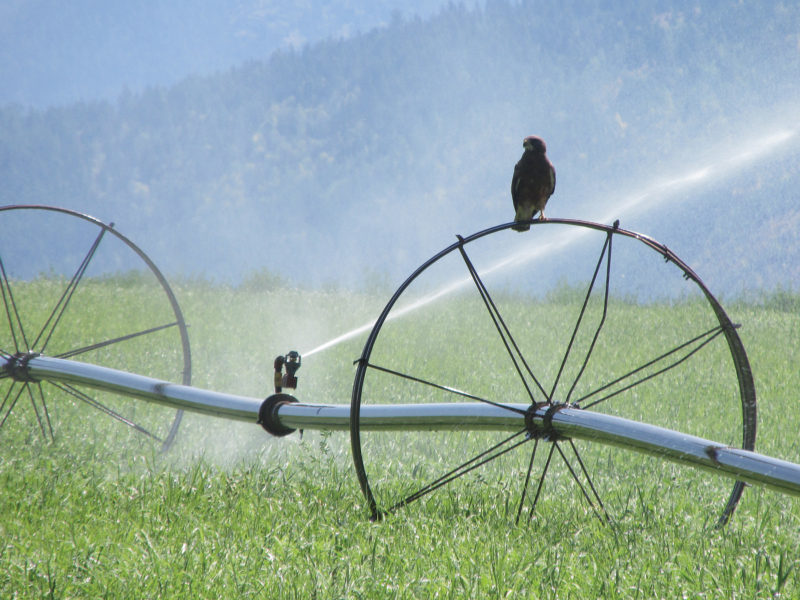
Growers blindsided by last week’s demand from the Regional District of North Okanagan for a 70% cut in agricultural water use hope a June 10 meeting with RDNO will chart a positive path forward.
“When I first started with the ranch back in 2015, we were having conversations like this, but it was in August and we were meeting once a week to see how we would finish out the season,” said Brad McKim, general manager at Coldstream Ranch, one of the largest agricultural water users in the region, “We’ve never had this kind of conversation at the end of May, beginning of June.”
RDNO implemented Stage 3 water restrictions on June 4 with the aim of halving water use across the Greater Vernon Water system due to low water levels in Aberdeen Plateau reservoirs after a winter of low precipitation and a warm spring that saw above-average water use.
“GVW must act now to preserve enough water for essential needs throughout the summer and into the fall,” RDNO says. “Without drastic reductions, agricultural customers could potentially be shut off later this summer if the water supply runs out.”
RDNO says Greater Vernon Water will work directly with agricultural users to chart a path forward, a promising sign for McKim.
“I’ve always had a good relationship with the regional district,” he says. “I know they’re in a tough spot, and we’re going to try to do our best to meet those requirements.”
But the severity of the reduction means sacrifices will have to be made, and he knows high-value crops such as tree fruits are going to suffer.
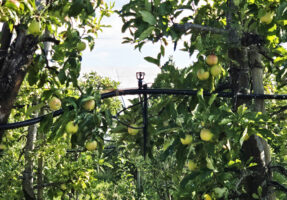
“You can’t take an apple halfway and then shut the water off,” he says.
The BC Fruit Growers Association says it was not consulted on the reductions, whereas it had discussions with Lake Country and Summerland earlier this spring that found a productive middle ground.
BCFGA pegs the potential losses to growers in the Vernon area at up to $250 million, which includes not just crop losses but also potential replanting costs. Trees cost $20 each, and combined with labour to replant and lost productivity, the impact quickly adds up.
“The trees are in usual shape going into the summer,” says BCFGA vice-president Avi Gill. “But if it’s a typical summer, with a 70% reduction in water, we will have massive losses in the tree fruit sector.”
He hopes the June 10 meeting will be productive.
“It’s important that we identify where we can prevent some of the losses that tree fruit growers or other farmers might face,” he says. “We have to find a way to get through this as a community and it begins with communication.”
All content on this website is copyrighted, and cannot be republished or reproduced without permission.



 Federal research cuts alarm industry experts