
• Menu
  • Skip to primary navigation
  • Skip to main content
  • Skip to primary sidebar

Country Life In BC Logo

The agricultural news source in British Columbia since 1915

  • Headlines
  • Calendar
  • Subscribe
  • Advertise
  • About
  • Archives
  • Contact
  • Search
  • Headlines
  • Calendar
  • Subscribe
  • Advertise
  • About
  • Archives
  • Contact
  • Search

Primary Sidebar

Originally published:

May 2017
Vol. 103 Issue 5

Subscribe Now!

Sign up for free weekly FARM NEWS UPDATES

Loading form…

Your information will not be
shared or sold ever

Stories In This Edition

Wet spring sets back crops across province

Farmland values rise on expansion

Ag council welcomes fish farmers to table

Editorial: United we stand

The Back Forty: Time to haul manure, and get ready to vote

OP ED: When producers and special interest groups collide

Parties offer competing visions of ag future

Milk board embarks on FIRB-ordered quota review

Grow & Gather Farm Expo gives small ag a big venue

Delta farmers in growing battle against waterfowl

Yarn spins a sustainable future for greenhouses

BC tech solutions address farm challenges

Fully subscribed: ARDCorp

Worker housing concerns growing in Okanagan

Union busting broken

Coral Beach pairs foreign, domestic worker housing

Foundation invests millions in agriculture projects

Agriplex gathers momentum in Comox

Holsteins, Jerseys showcased at Okanagan show

Big Show, big money

Record price set at BC Holstein sale

WestGen posts multi-million dollar surplus

Grape growers hone in on water issues

Sustainability matters

BC prepares to deliver clean vines

Hot dam

Range use planning critical for OK ranchers

Predator program having positive impact

A good season for BC bull sales

Ag Briefs:

New pricing formula for chickens on hold

Etsell leaves blueberries

Workers plead guilty

Vancouver boots chickens off city farmers

Livestock tag reader funding

Big crop, bigger levy, boost raspberry council’s fortunes

Importer support needed for berry agency

Research matters

Using math to improve sheep productivity

Farmers market splits over question of “local”

Local leeway for markets

Beyond the Market program extended

Entrepreneur launches food recovery platform

Thrips in a changing climate

The pros and cons of organic agriculture

No summers off for these education assistants

Woodshed Chronicles:

Henderson is found at the end of his rope

Plow match unforrows brows about farming

4-H BC: Change at head office

FV 4-H Ambassador receives top award

Mentoring a new crop of northern farmers

Jude’s Kitchen:

Berry-full season

More Headlines

Follow us on Facebook

Comments Box SVG iconsUsed for the like, share, comment, and reaction icons

1 day ago

It takes a village! The Small Scale Meat Producers Association welcomed provincial and community leaders and stakeholders to an open house at the North Okanagan Butcher Hub in Spallumcheen earlier today. The butcher hub opened for business last September to provide local, small-scale meat producers a dedicated cut-and-wrap facility and access to a mobile butcher trailer to get their products to market. The first of its kind in BC, it addresses a critical gap in the provincial meat supply chain and is designed as a reproducible model for rural communities across the province. The project is a partnership between the Small Scale Meat Producers Association, the provincial government, the Township of Spallumcheen, the Regional District of the North Okanagan and the Agricultural Land Commission.

@Small-Scale Meat Producers Association
#BCAg
... See MoreSee Less

It takes a village! The Small Scale Meat Producers Association welcomed provincial and community leaders and stakeholders to an open house at the North Okanagan Butcher Hub in Spallumcheen earlier today. The butcher hub opened for business last September to provide local, small-scale meat producers a dedicated cut-and-wrap facility and access to a mobile butcher trailer to get their products to market. The first of its kind in BC, it addresses a critical gap in the provincial meat supply chain and is designed as a reproducible model for rural communities across the province. The project is a partnership between the Small Scale Meat Producers Association, the provincial government, the Township of Spallumcheen, the Regional District of the North Okanagan and the Agricultural Land Commission. 

@Small-Scale Meat Producers Association 
#BCAg
View Comments
  • Likes: 27
  • Shares: 7
  • Comments: 0

Comment on Facebook

2 days ago

The Agricultural Land Commission is laying off staff after years of flat funding under the BC NDP. ALC chair Jennifer Dyson warns that application volumes, enforcement activity and legal obligations have all risen while its operating budget has stayed effectively flat — meaning longer wait times ahead for some services.

#BCAg
... See MoreSee Less

Link thumbnail

Land Commission lays off staff

www.countrylifeinbc.com

With no budget increase this year, the Agricultural Land Commission (ALC) is laying off six staff to make ends meet. “Ongoing financial constraints and the requirement to operate within the approved...
View Comments
  • Likes: 2
  • Shares: 4
  • Comments: 5

Comment on Facebook

Not quite on the subject but.. could you please share how the requirements have changed for changing Ag land to development land? Honest respectful question. I see a bunch of ag land being developed and I was wondering what or how it has changed

Dyson makes $725 a day!

Cut that government bloat!

Biggest problem , people doing what they don't know how to do it . Hire farmers . Dykes and drainage commission should also be maintained and managed by farmers . These city folk should all be kicked to the curb

We need to just abolish the ALC, it is a useless bureaucratic entity.

View more comments

1 week ago

A BC Forest Practices Board investigation has found overgrazing has damaged grasslands in the Coutlee Range Unit near Merritt — and the range-use plan meant to prevent it was unenforceable. With complaints about overgrazing on the rise and grasslands covering just 1% of BC's land mass, the findings raise fresh questions about how the province manages one of its most vulnerable — and valuable — food-producing ecosyste#BCAg#BCAg ... See MoreSee Less

Link thumbnail

Board finds overgrazing rules unenforceable unmeasurable

www.countrylifeinbc.com

MERRITT – A BC Forest Practices Board investigation has found instances of non-compliance related to overgrazing have damaged open grasslands in the Mine pasture, part of the Coutlee Range Unit near...
View Comments
  • Likes: 6
  • Shares: 6
  • Comments: 6

Comment on Facebook

Several ranchers in recent years have gone into temporary non use on that range , so that means the grass should grow. But drought conditions/lack of rain and snow don’t allow that to happen . Dried up springs , creeks waterholes in various pastures add to over grazing where there is water , as livestock and everything else stay close to the water source . So even though less cattle are on it , over grazing appears. There is a large volume of horses on it 365 days/year which is wrong ! They pull grass right out of the ground when it’s just trying to grow ,, opens the door for weeds to grow in. That don’t help it. Aging infrastructure ( fences) laying on the ground, pipe line building , ( lack of commitment to fence maintenance) amongst all users contributes also to over grazing. Recreational atv users leaving gates open between pastures allows livestock to go back or ahead in pastures also expidites over grazing. Logging ( bcts) has no problem laying out cut locks on both sides of a fence , then it gets smashed down during logging and they don’t take responsibility to stand it back up or clean the cattle gaurds out when they are done , that happened 4 years ago on pasture 5 up there . I bet it is still not fixed . There are lots of contributing factors to the problem.

Tragedy of the commons.

I looked through the report. I saw nothing about the effects of noxious weeds on productive grasslands. This particular area is vulnerable because of the Ministry’a efforts to diversify the use of the Grasslands.

This pasture is under tremendous pressure not only from cattle but from irresponsible local residents who treat it as a landfill dumping all manner of household debris here. And don't even get me started on the mud bogging and camping in sensitive riparian areas. The feral horses are in this pasture 365 days a year just hammering it. Would sure be nice to see some enforcement action on people who are intentionally ripping up the grasslands and riparian areas. Cattle could be a valuable resource for rebuilding soils and native grasses in this area with the help of electric fencing and/or e-collars. The humans will be harder to manage.

The Forest and Range Practices Act was written by lawyers for global forest licencee shareholders. Results-based = unenforceable.

Also, can we talk about the impact of a pipeline being built through the middle of this field for multiple years?

View more comments

2 weeks ago

East Kootenay rancher Randy Reay is digging a new well after two natural water sources dried up on his Crown tenures. A new Living Lakes Canada assessment found 15% of mapped aquifers in the region are high-priority for monitoring, yet 80% of those go unmonitored. With over 48% of BC's provincial observation wells reporting below-normal groundwater levels, ranchers and researchers are sounding the alarm on water security. The story is in our March edition, and we've posted it to our website thi#BCAgk.

#BCAg
... See MoreSee Less

Link thumbnail

Water woes: groundwater under pressure across BC

www.countrylifeinbc.com

JAFFRAY – As a young boy growing up in the Kootenay-Boundary region, Randy Reay never expected to run out of water. But this year, in mid-February, his fields are bare. There is no snow halfway up t...
View Comments
  • Likes: 8
  • Shares: 7
  • Comments: 1

Comment on Facebook

Jaffrey is in the east Kootenays not kooteney boundary

2 weeks ago

BC farmers are bracing for prolonged higher input costs as war in the Middle East drives up fuel and fertilizer prices. Nitrogen fertilizer costs were already climbing before the Iran conflict began, with prices still roughly 60% above pre-pandemic levels. Farm Credit Canada warns that unlike 2022, strong commodity prices may not offset rising costs this time. Local suppliers expect supply challenges and further price increases ahead.

#BCAg
... See MoreSee Less

Link thumbnail

Fertilizer prices on the rise

www.countrylifeinbc.com

War in the Middle East has delivered a generational shock to energy prices, meaning BC farmers can expect a prolonged period of higher costs not just for fuel but also for fertilizer.
View Comments
  • Likes: 2
  • Shares: 1
  • Comments: 0

Comment on Facebook

Subscribe | Advertise

The agricultural news source in British Columbia since 1915
  • Email
  • Facebook

Ag council welcomes BC fish farmers to table

May 1, 2017 byDavid Schmidt

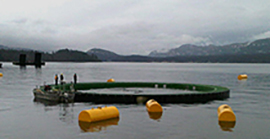
ABBOTSFORD – The BC Agriculture Council is adding aquaculture to its roster.

“We farm animals and this is the group that farms animals,” BC Salmon Farmers Association executive director Jerry Dunn told BCAC members at their annual meeting in Abbotsford on April 12, in explaining why BCSFA members want to join.

BCAC chair Stan Vander Waal called land-based salmon farmers a welcome addition.

“We need to talk to (the salmon farmers). You’d be surprised how similar they are to us,” he said, pointing out the BC Ministry of Agriculture includes aquaculture “so government initiatives include seafood.”

Terry Brooks of Agassiz, a 30-year salmon farmer, will represent them on the BCAC board.

“I want to hang out with other farmers,” he said. “People raising the fish are farmers like everyone else. We have a good understanding of the issues.”

BCAC gave salmon farmers their own council seat but is not expanding the board as the BC Pork Producers Association have merged their position with the BC Cattlemen’s Association.

Although the BCSFA has only 50 members, their farmgate receipts make aquaculture the third largest group in BCAC, behind only dairy and poultry.

BCAC also approved adding the BC Mushroom Growers Association. Mushroom growers will not receive their own seat, instead joining one of the four horticulture groups already represented at the board.

“I think it’s great that people want to join BCAC,” said BC Fruit Growers Association president Fred Steele, who was completing his term as a BCAC director. “We need to broaden our base. It will raise our profile.”

Although BCAC added aquaculture and mushrooms to their mix, they lost community agriculture with the dissolution of FARM – the Food and Agriculture Responsibility Members Community Council – in February.

Megan D’Arcy of the Smithers Farmers Institute, FARM’s representative who shared a director’s position with Certified Organic Associations of BC executive director Jen Gamble, hopes the absence is temporary.

She called it “a loss of a voice for small-scale farmers. We still want representation and are exploring options such as linking with such groups as the BC Food Systems Network and the BC Association of Farmers’ Markets.”

Vander Waal promised to work with them, saying “it’s important for us to include that group. We need them at the table.”

Brooks’ addition is not the only change to the 2017 BCAC board. With pork producers giving up their seat, Rolf Soth has departed as a director. As well, Sukhpaul Bal of Kelowna is replacing Steele as the interior horticulture director while Barry Follensbee of Dawson Creek is replacing Garnet Berge as the grain, oilseeds and forage director. The BC Poultry Association has yet to name a replacement for Raymond Bredenhof who has also stepped down.

Public trust

Effective representation for and from all sectors of agriculture is just one of BCAC’s priorities for 2017. Vander Waal identified collaboration, delivery of programs and services, increasing operational capacity and building public trust as other priorities for the year ahead.

Although BCAC did not host an ag day, it is a priority for this fall so the industry can connect with the new provincial government. Executive director Reg Ens also announced the council has posted a notice for a new director of communication and engagement.

One of the hire’s new responsibilities will be to lead the council’s public trust initiative. Council members approved a special levy totaling $100,000 to fund the proposed program.

Building public trust is critical, says Farm Credit Canada director of industry and stakeholder relations Mark Seymour. FCC hired the cattleman and former chief executive officer of the Canadian Western Agribition “to fill a gap” and he has spent the past year traversing the country encouraging producer groups to get on board with the public trust bandwagon.

“Public trust is the only thing that’s bringing Canadian agriculture together,” he says.

While producers consider water the most important ingredient in modern agriculture, Seymour says “trust” is the most important ingredient for consumers.

He said consumers are “way ahead of us” in accessing information, noting half of the planet can now access the Internet everyday.

“People are gathering all their news through social media.”

He says “trust” has more currency that science, pointing out Tim Horton’s ranks among the top 10 most influential companies (Google is number one) and tops the list of “trusted” companies.

“They don’t care about (the cattle industry’s) science.”

“We have to shift the conversation to what we have in common,” Seymour said. That means changing the discussion from production to food while making sure food safety “doesn’t become a point of differentiation.”

Science may not support the perceived benefits of raised without antibiotics (RWA) or cage-free production but consumers and shareholders do. A&W’s share price has gone up 50% since introducing its RWA program. McDonald’s share price has also shot up since committing to all-day breakfasts using cage-free eggs.

Millennial shift

Seymour admits Millennials, who will outnumber Baby Boomers by 2030, can be quite contradictory.

“They buy food online sight unseen but don’t trust food production.”

Their buying habits are also distinctly different. While Baby Boomers spend an average of $93 per month on meat, Millennials spend about $162 per month on meat “because they don’t or can’t cook.”

Seymour challenged his audience to be part of the solution.

His instructions: “Learn more about agriculture.

Talk about food instead of yield. Follow and share online and start with your neighbour.”
Related Posts

You may be interested in these posts from the same category.

Previous Post: «Sheep OP ED: When producers and special interest groups collide
Next Post: OP ED: When producers and special interest groups collide Sheep»

Copyright © 2026 Country Life in BC · All Rights Reserved