• Menu
  • Skip to primary navigation
  • Skip to main content
  • Skip to primary sidebar

Country Life In BC Logo

The agricultural news source in British Columbia since 1915

  • Headlines
  • Calendar
  • Subscribe
  • Advertise
  • About
  • Archives
  • Contact
  • Search
  • Headlines
  • Calendar
  • Subscribe
  • Advertise
  • About
  • Archives
  • Contact
  • Search

Primary Sidebar

Originally published:

DECEMBER 2024
Vol. 110 Issue 12

Subscribe Now!

Sign up for free weekly FARM NEWS UPDATES

Loading form…

Your information will not be
shared or sold ever

Stories In This Edition

Heading home

Avian flu response keeping pace

Popham back as ag minister

Farm equipment sales down, but not out

Winter harvest

Editorial: Goodwill wanted

Back 40: The election’s over. Now what?

Viewpoint: BC orchard sector needs more than sales

Court decision a bowl of cherries for Canada

Ag Briefs: Sturko leads apple marketing commission consultations

Ag Briefs: New BC field vegetable specialist

Ag Briefs: Slash smoke challenge planned

Ag Briefs: Mushroom farm fined

Island farmers fish for water solutions

Economic summit makes case to buy local

Cow-op urges community to buy local

Demand for milk, lower input costs good for dairy

Replant program begins accepting applications

Researchers explore ways to detect Cherry X

Trade imblance baffles honey producers

Pilot addresses gap in distribution infrastructure

Rotational grzing field day tracks progress

Cool spring challenges high-heat corn

Sidebar: It’s not all about the yield

Panel celebrates waste reduction strategies

Global sales blossom from native berry

Farm Story: Why hibernate in such a friendly valley?

Timely rains support Christmas tree supply

Sidebar: BCCTA AGM opportunity for knowledge transfer

On-farm research doesn’t have to be complicated

Woodshed: Some manners would go a long way with Delta

Young rancher honoured for leadership

Jude’s Kitchen: Much to celebrate in December

All content on this website is copyrighted, and cannot be republished or reproduced without permission.

More Headlines

Follow us on Facebook

Comments Box SVG iconsUsed for the like, share, comment, and reaction icons

20 hours ago

According to the BC River Forecast Centre, the Okanagan snowpack stood at just 58% of normal on April 1 — the lowest reading since measurements began in 1980 — raising concerns about drought conditions in the region this summer. The rest of the province sits at 92% of normal.

#BCAg
... See MoreSee Less

According to the BC River Forecast Centre, the Okanagan snowpack stood at just 58% of normal on April 1 — the lowest reading since measurements began in 1980 — raising concerns about drought conditions in the region this summer. The rest of the province sits at 92% of normal.

#BCAg
View Comments
  • Likes: 3
  • Shares: 0
  • Comments: 0

Comment on Facebook

2 days ago

At her first AGM as executive director of BC Meats, held Saturday in Abbotsford, Jennifer Busmann spoke about her strong ties to agriculture and her optimism for the organization's future. Busmann has cattle of her own and came to the role with existing relationships with members and the board of directors that helped her feel integrated from the start. She stepped into the position in Februa#BCAg#BCAg ... See MoreSee Less

At her first AGM as executive director of BC Meats, held Saturday in Abbotsford, Jennifer Busmann spoke about her strong ties to agriculture and her optimism for the organizations future. Busmann has cattle of her own and came to the role with existing relationships with members and the board of directors that helped her feel integrated from the start. She stepped into the position in February.

#BCAg
View Comments
  • Likes: 6
  • Shares: 0
  • Comments: 0

Comment on Facebook

4 days ago

Shannon Wiggins of Headwind Farm in North Saanich is this year's Mary Forstbauer Grant recipient from the BC Association of Farmers Markets. The $500 grant will help Wiggins expand her plot at Sandown Centre for Regenerative Agriculture, growing more storage crops to extend her harvest season. Wiggins credits farmers markets with inspiring her own farming journey and commitment to building community through food. Congratulations!

tinyurl.com/45bdd#BCAg#BCAg
... See MoreSee Less

Shannon Wiggins of Headwind Farm in North Saanich is this years Mary Forstbauer Grant recipient from the BC Association of Farmers Markets. The $500 grant will help Wiggins expand her plot at Sandown Centre for Regenerative Agriculture, growing more storage crops to extend her harvest season. Wiggins credits farmers markets with inspiring her own farming journey and commitment to building community through food. Congratulations!

https://tinyurl.com/45bddtw8

#BCAg
View Comments
  • Likes: 46
  • Shares: 2
  • Comments: 3

Comment on Facebook

Wahoo! Congrats Shannon! I love your produce. Can’t wait for the radishes 🫜

Congratulations!

Well done!! 🩷🩷🩷

5 days ago

New farmers can avoid costly mistakes by learning from those who've been there. At a Young Agrarians mixer in Penticton, five BC farmers shared hard-won lessons on pricing, pivoting, relationships and burnout. From coyote losses to business burnout, their message was clear: set prices that reflect true costs, make decisions quickly and don't let farming define your worth. Myrna Stark Leader's story appears in our April e-edition, now available to view online at: tinyurl#BCAg2uw53vvm

#BCAg
... See MoreSee Less

New farmers can avoid costly mistakes by learning from those whove been there. At a Young Agrarians mixer in Penticton, five BC farmers shared hard-won lessons on pricing, pivoting, relationships and burnout. From coyote losses to business burnout, their message was clear: set prices that reflect true costs, make decisions quickly and dont let farming define your worth. Myrna Stark Leaders story appears in our April e-edition, now available to view online at: https://tinyurl.com/2uw53vvm

#BCAg
View Comments
  • Likes: 15
  • Shares: 0
  • Comments: 0

Comment on Facebook

7 days ago

War in the Middle East is delivering a generational shock to BC farm input costs, with nitrogen fertilizer prices already 60% above pre-pandemic levels and rising fast. Okanagan Fertilizer president Ken Clancy says supply shortfalls are expected as Strait of Hormuz shipping disruptions tighten global supplies and demand surges. BCAC says it's monitoring the situation and ready to advocate for government relief measur#BCAg#BCAg ... See MoreSee Less

Link thumbnail

Fertilizer, fuel costs soar amid Iran conflict

www.countrylifeinbc.com

ENDERBY – War in the Middle East has delivered a generational shock to energy prices, meaning BC farmers can expect a prolonged period of higher costs, not just for fuel but also for fertilizer.
View Comments
  • Likes: 1
  • Shares: 1
  • Comments: 0

Comment on Facebook

Subscribe | Advertise

The agricultural news source in British Columbia since 1915
  • Email
  • Facebook

BC orchard sector needs more than sales

Commercial success is good, but is consumer engagement the price?

December 2, 2024 byPeter Mitham

VIEWPOINT:

Participants in the Canadian Farm Writers Federation conference in Nova Scotia this fall were given a genuine taste of the province when they toured Scotian Gold Co-op in the storied Annapolis Valley. SweeTango, a club variety apple that’s been a boon for local growers, was among the standouts as the busload of writers heard how the co-op has adapted for a new generation of growers and consumers.

But if SweeTango was the star of the show, it’s just one of many varieties grown in the province. The annual crop estimates Fruit and Vegetable Growers Canada run indicate that Nova Scotia grows all but two of the 19 commercial varieties tracked.

Moreover, fully 10% of the 2.4 million bushels of apples Nova Scotia will harvest this year aren’t among the top commercial varieties. This points to a commercial production more diverse than anywhere else in Canada.

Ontario, the largest apple-growing region in Canada with a 2024 harvest pegged at 8.8 million bushels, concentrates on just 13 of the top commercial varieties.

Meanwhile, BC is dependent on Ambrosia and Gala, which account for more than two-thirds of the 3.8 million bushels we produce. Nine varieties make up a third, while others account for less than half a percent of the crop.

The focus on just two varieties was bred of innovation, with the province allocating tens of millions of dollars to support orchard renewal with high-value varieties since 1991. A new round of funding last year required industry to conduct market assessments to identify the varieties most likely to deliver returns.

While such studies chart a forward path, Nova Scotia shows that the future is often accessed through our roots. The historic diversity of the province’s orchards has given local growers a starting point, not a sunset clause. While many varieties may not be suitable for supermarkets, they create a sense of place – one that grocers celebrate on a seasonal basis, securing hometown street cred with consumers. A revolving selection of apples from Jersey Macs and Paula Red to Gravenstein and Cortland offer flavours rarely found outside the region.

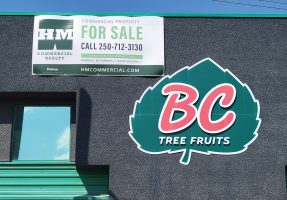
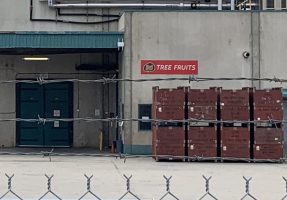
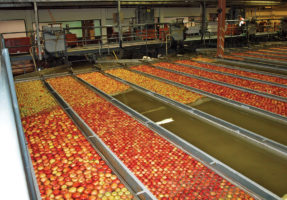
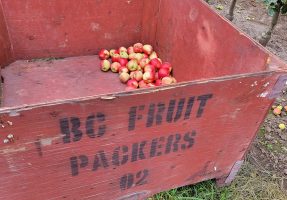
This year has seen the demise of the BC Tree Fruits Co-op, a company intertwined with the history of BC. Originally the brand under which the various co-operative packinghouses marketed their fruit, it became the natural banner under which BC’s four major co-operative packinghouses merged in 2008.

Yet as the co-ops came together, the industry was fragmenting. Growers set up their own independent packinghouses, and consumers were opting for cheaper imports at the big grocers as local became less well-defined.

And even if consumers bought local, the embrace of the major commercial varieties thanks to the replant push meant they were seldom buying something that couldn’t be grown elsewhere.

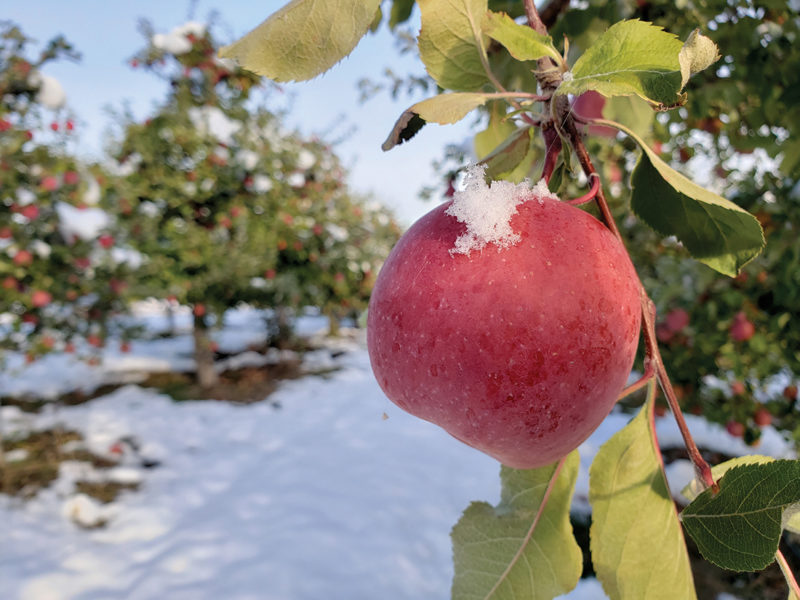
Ambrosia was the exception, and its promise was a path to financial stability for growers. Restricted production made it a reliable option, levies funded marketing and research that supported sales, and people genuinely liked it.

Yet the numbers show that BC may have put too many apples in one basket. Pinning your fortunes on commercial success isn’t wrong, but sales hinge on more than market penetration. Consumers will support local, but often as not it requires giving them a sense of ownership, allowing them to jealously savour something special and advocate for it with others.

So what’s BC’s path forward?

The marketing commission under discussion for the past several years could provide a structure, but it’s the intangible ingredients that guarantee success.

These include a recognizable, flagship brand. The goodwill BC Tree enjoyed made it very much an extension of the grower community, and of BC as a whole. But with growing competition from independent packers at home and abroad, it became one of many brands serving a market with no historical ties to the iconic leaf logo. Which domestic tree fruit brand today has anything like the resonance or recognition the BC leaf enjoyed?

There’s also a need to identify key varieties that can be successful here, something the province’s industry stabilization plan recommends. But it also means finding what may not do well elsewhere, allowing the industry to claim something no one else can.

Ambrosia used to be like this. I remember proudly taking it home to family, before it was widely grown, and excitedly telling a vendor selling the variety at a market in northern Italy that I, too, was from BC.

Salish and Nicola, with their distinctly BC names, have the potential to generate the same enthusiasm, but they’ve never been promoted to the same degree.

Aurora Golden Gala is another missed opportunity. Handling issues saw it quietly ushered off the retail stage almost as quickly as it arrived.

But what if we cultivated – both literally, and in the marketplace – such unique and hidden BC gems? Consistent with the forward-looking and innovative nature of BC’s orchard sector, they speak to the spirit of discovery in the field and on the table as well as any of the rarer, now-heritage varieties largely limited to sales at farmers markets and roadside stands.

The diversity of our crop has been lost in the push for financial viability. But the persistence of lesser-known varieties in Nova Scotia reminds us that we may have lost the potential to attract consumers seeking unique items in an increasingly homogenous world.

That’s a loss not just for consumers, but our farmers and agricultural heritage, too.

Peter Mitham is associate editor of Country Life in BC and a former contributor to Good Fruit Grower.

All content on this website is copyrighted, and cannot be republished or reproduced without permission.
Related Posts

You may be interested in these posts from the same category.

BC Tree Fruits relaunch

Showdown looms over co-op’s surplus

Algoma comes to BC

Growers Supply property sold

BC Tree Fruits facility sells

Co-op assets on the block

BC Tree Fruits shuts down

Stabilization initiative yet to bear fruit

Cherry growers face smaller crop

BC Tree Fruits sells packinghouse site

Orchardists seek frost assistance

Lake Country packing house sold

Previous Post: « BC Tree Fruits facility sells
Next Post: Demand for milk, lower input costs good for dairy »

© 2026 COUNTRY LIFE IN BC - ALL RIGHTS RESERVED