• Menu
  • Skip to primary navigation
  • Skip to main content
  • Skip to primary sidebar

Country Life In BC Logo

The agricultural news source in British Columbia since 1915

  • Headlines
  • Calendar
  • Subscribe
  • Advertise
  • About
  • Archives
  • Contact
  • Search
  • Headlines
  • Calendar
  • Subscribe
  • Advertise
  • About
  • Archives
  • Contact
  • Search

Primary Sidebar

Current Issue:

DECEMBER 2025
Vol. 111 Issue 11

Subscribe Now!

Sign up for free weekly FARM NEWS UPDATES

Select list(s) to subscribe to


By submitting this form, you are consenting to receive marketing emails from: Country Life in BC. You can revoke your consent to receive emails at any time by using the SafeUnsubscribe® link, found at the bottom of every email. Emails are serviced by Constant Contact
Your information will not be
shared or sold ever

Follow us on Facebook

Comments Box SVG iconsUsed for the like, share, comment, and reaction icons

3 days ago

Water volumes from the Nooksack River are at levels similar to 1990 and 2021, but the province says flows should peak at 10pm tonight. The shorter duration, as well as conditions in other watercourses within the watershed and performance of flood protection infrastructure should avoid a catastrophe on the scale of 2021. However, several landslides mean road closures have once again effectively isolated the Lower Mainland from the rest of the province.

#BCAg
... See MoreSee Less

Water volumes from the Nooksack River are at levels similar to 1990 and 2021, but the province says flows should peak at 10pm tonight. The shorter duration, as well as conditions in other watercourses within the watershed and performance of flood protection infrastructure should avoid a catastrophe on the scale of 2021. However, several landslides mean road closures have once again effectively isolated the Lower Mainland from the rest of the province.

#BCAg
View Comments
  • Likes: 9
  • Shares: 3
  • Comments: 1

Comment on Facebook

Family living in Sumas WA say it's very much like '21. They have the same amount of water in their house as last time.

2 weeks ago

... See MoreSee Less

View Comments
  • Likes: 4
  • Shares: 0
  • Comments: 0

Comment on Facebook

2 weeks ago

On the last day of the BC Organic Conference, Thursday, Molly Thurston of Pearl Agricultural Consulting helped growers learn how to manage bugs such as codling moth, wireworm, and rootworm in organic growing systems. Her talk alongside Renee Prasad included hands-on activities in which participants checked out various traps and examined pests under microscopes. Be sure to look for more upcoming ag events on our online calendar at www.countrylifeinbc.com/calendar/

#BCAg
... See MoreSee Less

On the last day of the BC Organic Conference, Thursday, Molly Thurston of Pearl Agricultural Consulting helped growers learn how to manage bugs such as codling moth, wireworm, and rootworm in organic growing systems. Her talk alongside Renee Prasad included hands-on activities in which participants checked out various traps and examined pests under microscopes. Be sure to look for more upcoming ag events on our online calendar at www.countrylifeinbc.com/calendar/

#BCAg
View Comments
  • Likes: 15
  • Shares: 0
  • Comments: 0

Comment on Facebook

2 weeks ago

Well-known organic farmer and podcaster Jordan Marr gets interviewed by Country Life in BC’s own columnist and potato mavin Anna Helmer during the opening session of the BC Organic Conference at Harrison Hot Springs yesterday. Sessions run today (Wednesday) and Thursday and include organic and regenerative growing practices and expanding and advocating for the organic sector, all under the background of the newly launched Organic BC banner.

#BCAg
... See MoreSee Less

Well-known organic farmer and podcaster Jordan Marr gets interviewed by Country Life in BC’s own columnist and potato mavin Anna Helmer during the opening session of the BC Organic Conference at Harrison Hot Springs yesterday. Sessions run today (Wednesday) and Thursday and include organic and regenerative growing practices and expanding and advocating for the organic sector, all under the background of the newly launched Organic BC banner.

#BCAg
View Comments
  • Likes: 37
  • Shares: 2
  • Comments: 1

Comment on Facebook

Interested in finding out more about this

1 month ago

Today, we remember those who sacrificed their lives or their well-being for our freedom. Lest we forget. ... See MoreSee Less

Today, we remember those who sacrificed their lives or their well-being for our freedom. Lest we forget.
View Comments
  • Likes: 8
  • Shares: 0
  • Comments: 0

Comment on Facebook

Subscribe | Advertise

The agricultural news source in British Columbia since 1915
  • Email
  • Facebook

Bee losses significant but not extreme

June 15, 2022 bySandra Tretick

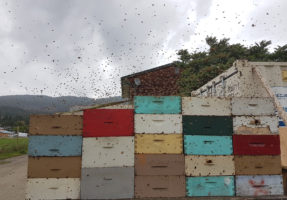
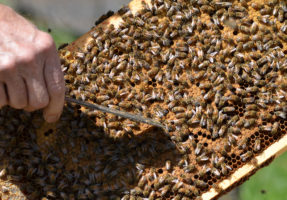
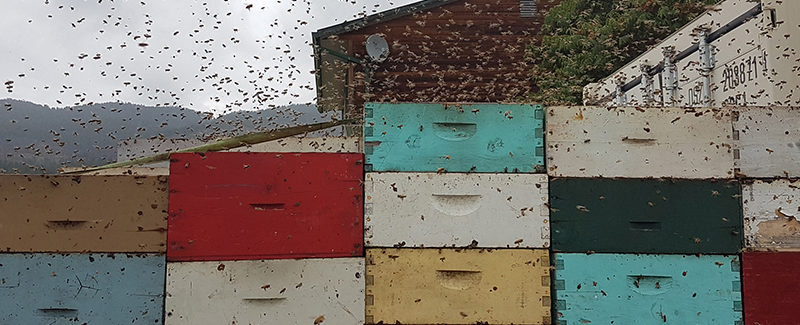
For the second year in a row, nearly a third of honey bee colonies in BC did not make it through the winter.

Each spring, provincial apiculture specialist Paul van Westendorp surveys beekeepers to assess winter mortality and identify the causes. He was putting the finishing touches on the 2022 overwintering survey on June 10 when he spoke to Country Life in BC.

“Essentially, it turns out our winter mortality has not been as outlandish or extreme or worrisome as it has been reported in other provinces,” says van Westendorp. “Last year we [lost] 32%, and this year we [lost] 32% again. We perhaps have squeezed through this whole debacle here in British Columbia better than most other provinces.”

The picture looks far bleaker further east and there have been reports of terrible losses far beyond the norm.

Rod Scarlett, executive director of the Canadian Honey Council, says losses in Manitoba and Quebec will likely top 60%. This will push the national average higher than it was last year (23.2%), but how far it exceeds the five-year average (32.6%) won’t be known until the Canadian Association of Professional Apiculturists releases its report in mid-July. The BC numbers feed into this report.

BC losses averaged 30% over the previous five winters, ranging from a low of 20.3% two years ago to a high of 34.3% four years ago. This contrasts sharply with average winter losses of 10-12% in the decades before 1990, when the varroa mite arrived in the province. Since then, losses have steadily increased.

Even though losses this past winter are within the five-year range, van Westendorp says it will be painful for the industry to absorb and rebuild their colony numbers.

He notes that there is a “whole hodgepodge of different causes” for the losses, but beekeepers cited weather, poor queens, weak colonies going into winter and ineffective mite control as the top four reasons.

There are about 4,500 beekeepers around BC, but the overwintering survey is limited to those that operate at least 25 colonies. This gives van Westendorp a dataset of approximately 300 beekeepers.
Related Posts

You may be interested in these posts from the same category.

Creston beekeeper wins award

Contracts cancelled for beekeepers

Apiarists fear heavy winter losses

Asian Giant Hornet

Langley logs Asian hornet

Asian Giant Hornet

BC watches Stateside hornets

Canada holds off Asian giant hornet restrictions

Beekeepers suffer colony losses

Asian Giant Hornet

Hornet surveillance plans outlined

Beekeepers Zoom for 100th AGM

Bee replacements grounded

Bee initiatives in focus

Bee

Colony losses have beekeepers on edge

Previous Post: « Borrowing costs begin to bite
Next Post: Abbotsford approves flood mitigation option »

Copyright © 2025 Country Life in BC · All Rights Reserved