• Menu
  • Skip to primary navigation
  • Skip to main content
  • Skip to primary sidebar

Country Life In BC Logo

The agricultural news source in British Columbia since 1915

  • Headlines
  • Calendar
  • Subscribe
  • Advertise
  • About
  • Archives
  • Contact
  • Search
  • Headlines
  • Calendar
  • Subscribe
  • Advertise
  • About
  • Archives
  • Contact
  • Search

Primary Sidebar

Originally published:

JUNE 2023
Vol. 109 Issue 6

Subscribe Now!

Sign up for free weekly FARM NEWS UPDATES

Loading form…

Your information will not be
shared or sold ever

Stories In This Edition

Dry heat hits

Blossoms of hope

Pest pressures shift

Field-scale trials essential for adaptive farming

Editorial: Peak producton

Back 40: Technology running laps around producers

Viewpoint: Remembering Craig Evans, practical visionary

Sod industry sees slow recovery from disasters

BC Veg looks beyond legal challenges

Teaching moment

Ag Briefs: EcoFarm rebrands, expands mandate

Ag Briefs: Vegetable roundup

Ag Briefs: Replant program revamped

New agriculture minister settling into her role

Fruit specialists take extension in new direction

Record beef prices trigger mixed feelings

CFIA proposes traceability updates

Sidebar: Not fair for Fairs

Bison export hit by century-old regulations

Island 4-H beef show kicks off season

New farmers institutes form to address gaps

BC research farm steals show at cranberry congress

Award-winning products from BC ingredients

Sidebar: Seed-and crowdfunding sprout distillery

Seed producer takes a page from the craft beer movement

Seed sales plateau following pandemic boost

Diversification, patience help honey sector grow

Long road leads to RNG

Sidebar: Biogas production a sieable investment of time and money

Farmer-first tech drives efficiency, sustainability

Farm Story: Strong opinions spark spontaneous achievement

UFV brings fresh perspective to agriculture

Urban farming venture sticks close to home

Barriere expo supports youth in agriculture

Woodshed: Delta & Deborah have a heart-to-heart

Gala sparks the passion for Ag in the Classroom

Judes Kitchen: Harvest some herbs for Dad’s day

More Headlines

Follow us on Facebook

Comments Box SVG iconsUsed for the like, share, comment, and reaction icons

6 hours ago

Cultivating good employees requires the same attention as other farm tasks, business coach Trevor Throness told Mainland Milk Producers at their annual general meeting last month. He outlined four worker categories based on attitude and productivity, with "brilliant jerks" – highly productive but disruptive employees – posing unique challenges. Good workers are attracted to the best workplace cultures, he told producers, not recruited. It’s a cool take on the labour challenges facing BC’s agricultural sector and it appears in the print edition of Country Life in BC this month.

#BCAgriculture
... See MoreSee Less

Cultivating good employees requires the same attention as other farm tasks, business coach Trevor Throness told Mainland Milk Producers at their annual general meeting last month. He outlined four worker categories based on attitude and productivity, with brilliant jerks – highly productive but disruptive employees – posing unique challenges. Good workers are attracted to the best workplace cultures, he told producers, not recruited. It’s a cool take on the labour challenges facing BC’s agricultural sector and it appears in the print edition of Country Life in BC this month.

#BCAgriculture
View Comments
  • Likes: 7
  • Shares: 0
  • Comments: 0

Comment on Facebook

1 day ago

Double Barrel Vineyards has received Agricultural Land Commission approval for an agrivoltaic project in Oliver that will see solar panels installed among its grapevines. The two-phase system allows power generation and agriculture to co-exist while providing weather protection for the crop through shading and fans. “We are leading the sector and commercial scale for agrivoltaics in North America,” says CEO Jesse Gill. The first phase covers 6.6 acres and, if successful, a 24.3-acre expansion will follow. For more, see Myrna Stark Leader's story in the December edition of Country Life in BC.

#BCAg
... See MoreSee Less

Link thumbnail

Townhall looks to the future of agrivoltaics

www.countrylifeinbc.com

OLIVER – Convincing farmers and others of the potential of harvesting solar power alongside agricultural crops was front and centre at an in-person/online learning townhall in Oliver, November 14.
View Comments
  • Likes: 7
  • Shares: 0
  • Comments: 1

Comment on Facebook

Heather Feenstra

2 days ago

Canadian mushroom growers are contesting a US International Trade Commission preliminary finding claiming they're dumping product. Mushrooms Canada CEO Ryan Koeslag says the industry will demonstrate allegations are unfounded. Canada shipped nearly 77,000 tons of button mushrooms to the US in 2024, with BC producing 41% of Canada's total mushroom #BCAgst.

#BCAg
... See MoreSee Less

Canadian mushroom growers are contesting a US International Trade Commission preliminary finding claiming theyre dumping product. Mushrooms Canada CEO Ryan Koeslag says the industry will demonstrate allegations are unfounded. Canada shipped nearly 77,000 tons of button mushrooms to the US in 2024, with BC producing 41% of Canadas total mushroom harvest.

#BCAg
View Comments
  • Likes: 5
  • Shares: 1
  • Comments: 0

Comment on Facebook

3 days ago

BC finance minister Brenda Bailey was silent on farming in today's budget, leaving agriculture minister Lana Popham's operating budget virtually unchanged at $108 million while the total appropriation will fall to $134.7 million from $151.2 million, thanks largely to a cut in the allocation to Production Insurance. Funding for the Agricultural Land Commission is unchanged at $5.5 million, while capital expenditures are pegged at $922,000 -- suggesting that the new Animal and Plant Health Centre announced last fall and costed at $496 million will not be funded through the ministry. The ministry's service plan is also silent on what share of the 15,000 job cuts planned over the next three years will occur at #BCAginistry.

#BCAg
... See MoreSee Less

BC finance minister Brenda Bailey was silent on farming in todays budget, leaving agriculture minister Lana Pophams operating budget virtually unchanged at $108 million while the total appropriation will fall to $134.7 million from $151.2 million, thanks largely to a cut in the allocation to Production Insurance. Funding for the Agricultural Land Commission is unchanged at $5.5 million, while capital expenditures are pegged at $922,000 -- suggesting that the new Animal and Plant Health Centre announced last fall and costed at $496 million will not be funded through the ministry. The ministrys service plan is also silent on what share of the 15,000 job cuts planned over the next three years will occur at the ministry.

#BCAg
View Comments
  • Likes: 14
  • Shares: 6
  • Comments: 4

Comment on Facebook

Lana lets work together for a better future and hope to strengthen our agriculture independence. Thankyou

I love the sign probably should say standing weak for BC we are ndp…

NDP is a joke..

Secwepemculecw is not British Columbia Secwepemculecw is being extorted by resources extracting from Non Treaty Nations British Columbia has No rights in Secwepemculecw SNTC is Not the Secwepemc authority to land title and rights Extortion of revenue generated from Secwepemc land is ILLEGAL Nexulecw Cel7wet te Secwepemculecw law and legal rights consultant

3 days ago

BC Supreme Court has blocked an attempt by remaining BC Tree Fruits Cooperative members to amend a rule that would have excluded former members from receiving their share of the co-op’s remaining assets. In her ruling, Justice Miriam Gropper called the bid to amend Rule 125, which would allow 32% of the surplus to be distributed among former members based on tonnage shipped to the co-op during its last six years of operation, “oppressive and unfairly prejudicial.” The co-op closed in July 2024, and remaining assets are estimated at between $12 and $15 million.

#BCAg
... See MoreSee Less

BC Supreme Court has blocked an attempt by remaining BC Tree Fruits Cooperative members to amend a rule that would have excluded former members from receiving their share of the co-op’s remaining assets. In her ruling, Justice Miriam Gropper called the bid to amend Rule 125, which would allow 32% of the surplus to be distributed among former members based on tonnage shipped to the co-op during its last six years of operation, “oppressive and unfairly prejudicial.” The co-op closed in July 2024, and remaining assets are estimated at between $12 and $15 million.

#BCAg
View Comments
  • Likes: 11
  • Shares: 10
  • Comments: 2

Comment on Facebook

Can’t believe BC let it go

What about the growers who worked with the co-op for decades before it was taken over by lunatics? Why should the lunatics who worked to make the co-op fail get that money? Giving that money to the BCFGA and the BCCA would be a much fairer result and better for the future of the industry. IMO that money should go to almost anyone else but the growers who were there in the final years.

Subscribe | Advertise

The agricultural news source in British Columbia since 1915
  • Email
  • Facebook

CFIA proposes traceability updates

Safety, added costs top list of producer concerns

Proposed amendments to the Canadian Food Inspection Agency's traceability rules could place workers at risk by requiring the prompt replacement of tags lost when animals move between farms, fairgrounds or processing plants. FILE

June 1, 2023 byTom Walker

VANDERHOOF – Proposed amendments to the identification and traceability sections of the federal Health of Animals Regulations are receiving mixed responses from industry, who support the changes but say they come with added tagging and reporting requirements, and could compromise safety.

“[The Canadian Food Inspection Agency] is moving to make traceability requirements more robust with practical measures for disease tracking and we support that,” says Alex Kulchar, a rancher and backgrounding operator near Vanderhoof who chairs the BC Cattlemen’s Association’s beef production and innovation committee. “But some of the specific requirements are fairly substantial.

Overall, it appears CFIA is looking to develop a database that tracks animal movements without the involvement of producers, Kulchar says.

“It seems like CFIA is looking to put pins on a map to know the whereabouts of animals,” he says. “I believe that if they want to know where animals are, they are still going to have to talk to the producer.”

CFIA is proposing the amendments as part of its efforts to provide “accurate and up-to-date livestock identity, movement and location information” to address the risk and limit the impact of animal disease outbreaks, food safety incidents and natural disasters.

The proposed amendments seek to address gaps in the current livestock identification and traceability system. They call for including goats and cervids (deer) as species subject to traceability requirements; shortening the time period allowed to report an event to seven days from the current 30-60 days; adding a requirement to identify the location of sites where animals are located and requiring the reporting rather than simply the recording of domestic movements of livestock. (Animals moved within the same farm property or to and from a leased pasture where all animals are from the same farm are exempt.)

Premises Identification (PID) information and identification tags linked to that PID, are at the core of traceability protocols.

“Premises ID is pretty universal in commercial livestock operations,” says Kulchar.

Premises information, including the number of animals on farm, must be kept up to date.

“If I buy 50 calves for my backgrounding operation, I will be required to update my PID within seven days,” Kulchar explains.

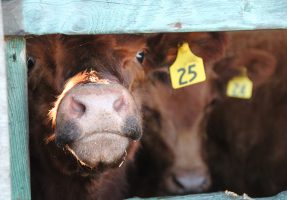
Tracking livestock movements is a key to the new regulations. Animals that remain on a single farm their entire life don’t have to be tagged.

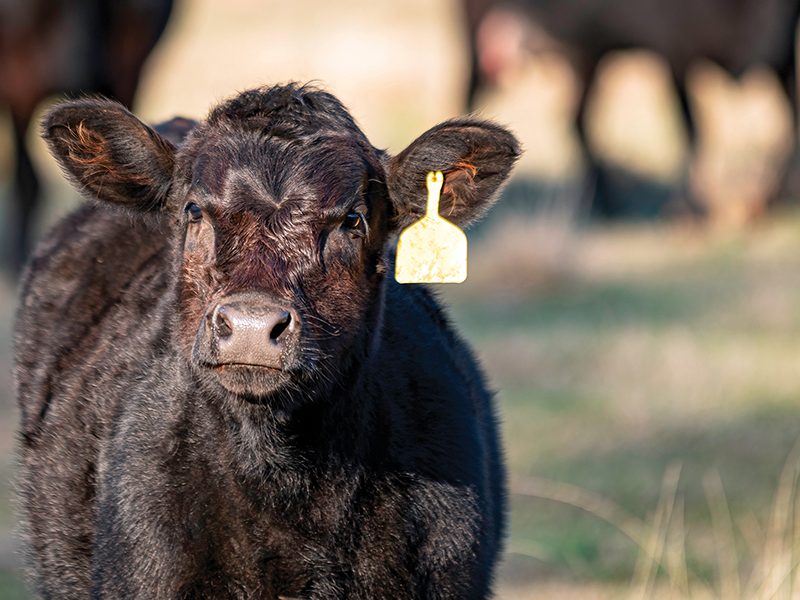
Tags are to be re-named “approved indicators.” They will be linked to the premises where the animals are located. When animals move off farm, tag numbers will be used to report the movement.

There is no requirement to report when animals leave a site. But before they leave the farm of origin, they must be tagged, and departure and arrival information including both PIDs, the number of animals, and the licence plate of the transport, must be delivered in a manifest to the arrival site within 24 hours of arrival and the arrival site must report that information within seven days.

The regulations also apply to animal carcasses.

Carcasses that move off-farm for disposal must be tagged and their movements reported. Tagged carcasses that are disposed of on-site must also be reported. (The disposal of animals that have remained on their farm of origin throughout their lives and lack tags is not reportable.)

There is a retagging requirement that cause some producers concern.

Any animal that loses its tag during transport must receive a new one at the destination site linked to the destination site’s PID.

Kulchar says that wouldn’t be a problem for him, as all of the animals he takes in for backgrounding are put through a squeeze, health-checked and vaccinated and can have a new tag attached at the time if needed.

However, if an animal loses a tag while on site, producers must apply a new tag and report the information within seven days.

“That seems like busy work,” says Kulchar, who feels it’s enough for animals to be tagged at departure from a site. “I will still be checking tags when the animals leave my ranch.”

On-farm tagging could be a problem for some small producers, says Merritt pork producer Julia Smith, who also serves as executive director of the Small-Scale Meat Producers Association. “I’m pretty good at pig wrestling and don’t mind doing it, but we have some 7,500 members who are mostly small operations. They don’t move their animals very often and may not have a lot of experience. I worry that someone will get hurt.”

BC ranch safety specialist Reg Steward, superintendent of field operations with AgSafe BC, also stresses the safety issues.

He describes his own experience taking three animals to an abattoir on a November morning, noticing a tag is missing and having to rope the animal in the dark, on an icy landing, in order to put on a missing tag.

“It’s always the ornery cow,” Steward recalls. “It’s not safe and it takes extra time and now you are worried that you’ll miss your booking time. You’ve got a 300 to 400 km drive to the abattoir, so you might speed.”

Stewart fully supports the traceability requirements, but says there is no sense in trading traceability for safety.

“A signed affidavit that this is an animal from your farm would accomplish the same thing, without putting extra stress on the farmer or the abattoir, who must report the animal’s arrival,” he says. “To put people at risk to accomplish what is doable by other safe and humane means borders on irresponsibility. As the goals of the regulations and requirements are easily met by a safer means, it seems ridiculous to insist on a method that can and does put the handlers at risk unnecessarily.”

CFIA notes that there are exceptions for animals that might cause serious injury and proposes that they be transported to an identification site for tagging.

“Having animals putting handlers and equipment in jeopardy isn’t worth the risk,” says BC Bison Association president Conrad Schiebel. “But we haven’t heard that a special site has been identified for BC.”

If animals need to be moved in an emergency, the requirements for tagging as they leave a site are waived.

“That’s pretty important if we have to evacuate animals in a wildfire emergency,” Kulchar says.

Kulchar adds that it is very important for individual livestock owners to make their voices heard before the June 16 deadline.

“Look up the regs to know what is coming and comment as to what their thoughts are,” he says. “And let your individual associations know as well. The more voices they can say that they represent, the more clout we will have.”

Related Posts

You may be interested in these posts from the same category.

Poultry biosecurity notches down

Traceability reprieve for livestock

Lawsuits drive ranchers’ call for DRIPA’s repeal

CFIA reports low honey adulteration

Breathing new life into historic ranches

Province lacks reconciliation roadmap: ranchers

BC distanced from TB concerns

Ag leaders honoured at gala

Beef herd drops

Feed available but stocks low

CFIA nabs Enderby abattoir

BC Cherry holds AGM

Previous Post: « Task force presents blueprint for growth
Next Post: Lawsuits drive ranchers’ call for DRIPA’s repeal »

Copyright © 2026 Country Life in BC · All Rights Reserved