• Menu
  • Skip to primary navigation
  • Skip to main content
  • Skip to primary sidebar

Country Life In BC Logo

The agricultural news source in British Columbia since 1915

  • Headlines
  • Calendar
  • Subscribe
  • Advertise
  • About
  • Archives
  • Contact
  • Search
  • Headlines
  • Calendar
  • Subscribe
  • Advertise
  • About
  • Archives
  • Contact
  • Search

Primary Sidebar

Originally published:

JANUARY 2024
Vol. 110 Issue 1

Subscribe Now!

Sign up for free weekly FARM NEWS UPDATES

Loading form…

Your information will not be
shared or sold ever

Stories In This Edition

Water plans kick off

For a good cause

AI case count slowing

BC agriculture loses a champion

Editorial: Yes, yes, Yes!

Back 40: Glaring observations about (barn) cats

Viewpoint: Site C’s long-term costs are becoming clear

Erosion claims dozens of acres of farmland

Finances trigger relocation plans for nursery group

Ag Briefs: Rangeland forage allocation studied

Ag Briefs: Wise water management funded

Ag Briefs: Mushroom harvester commercialized

Hopcotts win OYF Canada with sustainable practices

Remuneration to increase for dairy directors

Dairy achievement is built on resilience

Dairy producers discuss concerns at conference

Road rage in Peace

Sidebar: Rural road coalition out of commission

Diverse weather, shared hopes unite Peace

Five swans a-grazing

Ag Show Preview: Winter shows support knowledge, tech transfer

Making connections helps hort forum off to strong start

Gathering momentum

Blueberries and more

Beyond the Lower Mainland

Collaboration at record levels in fruit sector

BC growers weigh trade complaint against US cherries

Meat, veg prices rise sharply as inflation slows

Spallumcheen cuts, wraps deal for butcher hub

Cattle theft non-existent despite high prices

Water continues to be top issue for OK ranchers

Challenges, opportunities ahead for farmers institutes

Producers struggle to talk about mental health

Sidebar: How to help

Sweet rewards for Chilcotin rancher

Farm Story: Give me a break; let it snow

Vegans won’t save world from climate change

Woodshed: Kenneth faces the truth or suffers the consequences

PNE fundraiser supports youth in agriculture

Jude’s Kitchen: Comfort food makes families happy

More Headlines

Follow us on Facebook

Comments Box SVG iconsUsed for the like, share, comment, and reaction icons

6 days ago

A BC Forest Practices Board investigation has found overgrazing has damaged grasslands in the Coutlee Range Unit near Merritt — and the range-use plan meant to prevent it was unenforceable. With complaints about overgrazing on the rise and grasslands covering just 1% of BC's land mass, the findings raise fresh questions about how the province manages one of its most vulnerable — and valuable — food-producing ecosyste#BCAg#BCAg ... See MoreSee Less

Link thumbnail

Board finds overgrazing rules unenforceable unmeasurable

www.countrylifeinbc.com

MERRITT – A BC Forest Practices Board investigation has found instances of non-compliance related to overgrazing have damaged open grasslands in the Mine pasture, part of the Coutlee Range Unit near...
View Comments
  • Likes: 6
  • Shares: 6
  • Comments: 6

Comment on Facebook

Several ranchers in recent years have gone into temporary non use on that range , so that means the grass should grow. But drought conditions/lack of rain and snow don’t allow that to happen . Dried up springs , creeks waterholes in various pastures add to over grazing where there is water , as livestock and everything else stay close to the water source . So even though less cattle are on it , over grazing appears. There is a large volume of horses on it 365 days/year which is wrong ! They pull grass right out of the ground when it’s just trying to grow ,, opens the door for weeds to grow in. That don’t help it. Aging infrastructure ( fences) laying on the ground, pipe line building , ( lack of commitment to fence maintenance) amongst all users contributes also to over grazing. Recreational atv users leaving gates open between pastures allows livestock to go back or ahead in pastures also expidites over grazing. Logging ( bcts) has no problem laying out cut locks on both sides of a fence , then it gets smashed down during logging and they don’t take responsibility to stand it back up or clean the cattle gaurds out when they are done , that happened 4 years ago on pasture 5 up there . I bet it is still not fixed . There are lots of contributing factors to the problem.

Tragedy of the commons.

I looked through the report. I saw nothing about the effects of noxious weeds on productive grasslands. This particular area is vulnerable because of the Ministry’a efforts to diversify the use of the Grasslands.

This pasture is under tremendous pressure not only from cattle but from irresponsible local residents who treat it as a landfill dumping all manner of household debris here. And don't even get me started on the mud bogging and camping in sensitive riparian areas. The feral horses are in this pasture 365 days a year just hammering it. Would sure be nice to see some enforcement action on people who are intentionally ripping up the grasslands and riparian areas. Cattle could be a valuable resource for rebuilding soils and native grasses in this area with the help of electric fencing and/or e-collars. The humans will be harder to manage.

The Forest and Range Practices Act was written by lawyers for global forest licencee shareholders. Results-based = unenforceable.

Also, can we talk about the impact of a pipeline being built through the middle of this field for multiple years?

View more comments

1 week ago

East Kootenay rancher Randy Reay is digging a new well after two natural water sources dried up on his Crown tenures. A new Living Lakes Canada assessment found 15% of mapped aquifers in the region are high-priority for monitoring, yet 80% of those go unmonitored. With over 48% of BC's provincial observation wells reporting below-normal groundwater levels, ranchers and researchers are sounding the alarm on water security. The story is in our March edition, and we've posted it to our website thi#BCAgk.

#BCAg
... See MoreSee Less

Link thumbnail

Water woes: groundwater under pressure across BC

www.countrylifeinbc.com

JAFFRAY – As a young boy growing up in the Kootenay-Boundary region, Randy Reay never expected to run out of water. But this year, in mid-February, his fields are bare. There is no snow halfway up t...
View Comments
  • Likes: 8
  • Shares: 7
  • Comments: 1

Comment on Facebook

Jaffrey is in the east Kootenays not kooteney boundary

2 weeks ago

BC farmers are bracing for prolonged higher input costs as war in the Middle East drives up fuel and fertilizer prices. Nitrogen fertilizer costs were already climbing before the Iran conflict began, with prices still roughly 60% above pre-pandemic levels. Farm Credit Canada warns that unlike 2022, strong commodity prices may not offset rising costs this time. Local suppliers expect supply challenges and further price increases ahead.

#BCAg
... See MoreSee Less

Link thumbnail

Fertilizer prices on the rise

www.countrylifeinbc.com

War in the Middle East has delivered a generational shock to energy prices, meaning BC farmers can expect a prolonged period of higher costs not just for fuel but also for fertilizer.
View Comments
  • Likes: 2
  • Shares: 1
  • Comments: 0

Comment on Facebook

2 weeks ago

... See MoreSee Less

View Comments
  • Likes: 1
  • Shares: 0
  • Comments: 0

Comment on Facebook

2 weeks ago

Cameron Stockdale is the new executive director of provincial farm safety organization AgSafeBC. Find out more in this week's Farm News Update from Country Life in B#BCAg#BCAg ... See MoreSee Less

Link thumbnail

New leadership at AgSafe BC

www.countrylifeinbc.com

Cameron Stockdale is the new executive director of provincial farm safety organization AgSafeBC, succeeding Wendy Bennett. Bennett left AgSafeBC in September 2025, following 12 years with the…
View Comments
  • Likes: 5
  • Shares: 1
  • Comments: 0

Comment on Facebook

Subscribe | Advertise

The agricultural news source in British Columbia since 1915
  • Email
  • Facebook

Challenges, opportunities ahead for farmers institutes

Demographic, legislative changes prompt organizational review

Ronda Payne / File Photo

January 1, 2024 byKate Ayers

PORT ALBERNI – BC farmers’ institutes are calling on the government to review the legislation governing them to ensure it stays responsive to the evolving needs of local farm organizations and rural communities.

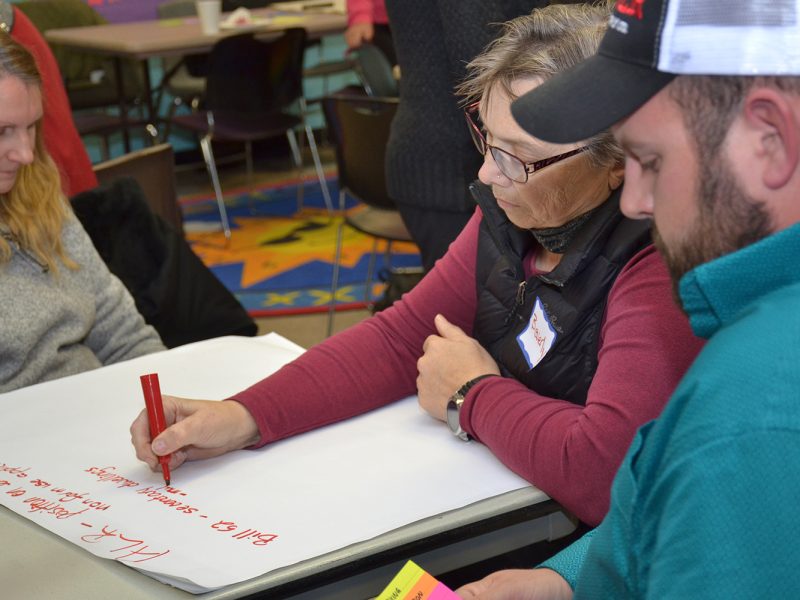
Twenty-eight attendees representing 14 farmers’ institutes gathered online for Farmers Institute Day on November 30. The event was organized as part of the Alberni-Clayoquot Regional District System Change Project. Meeting participants discussed the opportunities and challenges institutes face and how the BC Ministry of Agriculture and Food and other funding organizations can better support them.

“Under the Farmers’ and Women’s Institute Act, farmers institutes have a unique and important ability to advise the Minister of Agriculture directly on matters of interest to them,” says project coordinator Heather Shobe. “Local Institutes are cross-sectoral and regionally focused. When they come together from across BC, they can explore and understand more about the issues and opportunities common to all. These are highly important themes that need support from the province.”

About 40 local and three district institutes are incorporated or continued under the farmers and Women’s Institutes Act and subject to the act’s regulations. Some date back to the 1890s while others were formed just this year.

As the province enacts the United Nations Declaration on the Rights of Indigenous Peoples, all provincial legislation is undergoing modernization, which could benefit farmers institutes if a collective voice is at the table to bring issues and solutions forward from across BC.

Priorities

Throughout the meeting, participants also discussed priority areas and what changes they would like to see moving forward.

For example, Clause 26 of the act allows farmers institutes to advise the Ministry of Agriculture and Food directly through an advisory board, but currently no advisory board exists, and the act includes non-descript language around meetings with the minister and allowances for members to attend these meetings.

“The farmers and Women’s Institutes Act already includes a means and mandate to meet directly with the Minister of Agriculture and Food,” Shobe says. “Caution is urged in making changes that would negate that and there needs to be secure structures in place to ensure those meetings happen annually.”

Some farmers institutes would like to see the provincial superintendent of institutes attend their annual meetings.

Former agriculture minister Lana Popham convened two in-person summits of farmers institutes prior to the pandemic, and they have not resumed since.

The current superintendent, Angela Boss, is also steering the province’s consultations with water users, but plans to hold a virtual meeting with all farmers institute members in late February, according to the agriculture ministry.

In addition, farmers institutes want funding and capacity to address their unique regional priorities, not just projects outlined in provincial mandates.

“Current funding streams do not support the regionality of agriculture, and it is critical that a funding stream be open to farmers institutes to have the flexibility to meet the needs of their farmers within their regional context,” says South Island farmers Institute president and agricultural consultant Shellie MacDonald. “For the South Island, that would be land access, farm succession, raising the basic knowledge and skills of emerging farm businesses and expanding market streams.”

Many institutes would like to be more involved in emergency planning and preparedness.

Another common thread raised during the meeting was the lack of communication and collaboration across farmers institutes.

The province hosts [bcfarmersinstitutes.ca], but it is largely out of date, Shobe says.

However, as institutes historically rooted in the agricultural industry, some aspects may not need to change, but could simply use a refresh.

“More information is needed about the rights and structure of farmers institutes,” Shobe says.

She explains that members need to know how they should behave while the public should know how to support and engage with the institutes. Granting organizations need to recognize them as eligible applicants, something that has not always happened.

A how-to document for new institutes could save members a lot of time, MacDonald says, as she recently discovered establishing a new group is not straightforward.

“We really think new and established farmers institutes could benefit from an onboarding document from the ministry, a history of farmers institutes and a copy of the legislation, to give a deeper understanding of the district structure and how they interact with the ministry,” MacDonald says. “We have met some challenges and invested quite a bit of time in discovering the ‘work arounds’ to get to successful outcomes.”



Related Posts

You may be interested in these posts from the same category.

Farmers institutes to meet

ACRD hires agri-food staff

Alberni Valley cut off

Provincial extension service coming

Previous Post: « Spallumcheen cuts, wraps deal for butcher hub
Next Post: New low for ice wine »

Copyright © 2026 Country Life in BC · All Rights Reserved