
• Menu
  • Skip to primary navigation
  • Skip to main content
  • Skip to primary sidebar

Country Life In BC Logo

The agricultural news source in British Columbia since 1915

  • Headlines
  • Calendar
  • Subscribe
  • Advertise
  • About
  • Archives
  • Contact
  • Search
  • Headlines
  • Calendar
  • Subscribe
  • Advertise
  • About
  • Archives
  • Contact
  • Search

Primary Sidebar

Originally published:

JULY 2020
Vol. 106 Issue 7

Subscribe Now!

Sign up for free weekly FARM NEWS UPDATES

Loading form…

Your information will not be
shared or sold ever

Stories In This Edition

Province expands slaughter licences
Mexico launches SAWP review
Blue streak
Ranchers troubled by inconsistencies in well licencing
Editorial: All together
Back 40: Canada Day is a time to celebrate diversity
Viewpoint: BC producers keep our local food system strong
Farmland advocates pan agritech plans
Follow the arrow
Letters: Biosolids project misguided
Small on-farm dairy processors raise concerns
Zoning bylaw limits urban farmers
Kelowna readies exclusion bid
Global market puts emphasis on top-quality fruit
Sidebar: Time to renew
Leaming confident fruit industry can rejuvenate
Book Club
Review of vegetable commission forges ahead
Ag Briefs: Record funding pledged for coupon program
Ag Brief: Province boosts online grants
Ag Brief: Organic matter regulation delayed
Kelowna couple sprouts successful business
Greens growers see need for support
Cattlemen host virtual annual meeting
Sidebar: Cattlemen change gears
Pandemic less challenging for small farms
Rainy day thoughts for pesticide applications
Drones hone in on crop water requirements
BC farms adapt chicken tractors to local conditions
Breeders pin a value on traits
Prototype is a Roomba for weed control
Research: Exploring the complexities of soil structure
Viewpoint: Isolation brings the world closer
Buds
Farm Story: Weeds make perfection an impossible dream
Cidermakers give fresh purpose to island orchards
Woodshed: Frank makes Susan’s deliberation easy
Veggie Days adapts to event restrictions
Jude’s Kitchen: Summer food in colour

More Headlines

Follow us on Facebook

Comments Box SVG iconsUsed for the like, share, comment, and reaction icons

18 hours ago

Congratulations to UBC's Dr. Marina von Keyserlingk on her appointment as an Officer of the Order of Canada, one of Canada’s highest civilian honours. Her decades of farm animal welfare research — spanning 350+ peer-reviewed papers and real policy change — have helped agriculture balance productivity with ethics. A rancher's daughter who never forgot her roots, she's made science work for farmers and animals alike.

#BCAg
... See MoreSee Less

Congratulations to UBCs Dr. Marina von Keyserlingk on her appointment as an Officer of the Order of Canada, one of Canada’s highest civilian honours. Her decades of farm animal welfare research — spanning 350+ peer-reviewed papers and real policy change — have helped agriculture balance productivity with ethics. A ranchers daughter who never forgot her roots, shes made science work for farmers and animals alike.

#BCAg
View Comments
  • Likes: 45
  • Shares: 1
  • Comments: 2

Comment on Facebook

Congratulations Dr. Nina - over many years and many emails, I think we know each other a bit! Glad for your work to be recognized!

that cow has such a mischievous gleam in its eye.

1 day ago

... See MoreSee Less

View Comments
  • Likes: 6
  • Shares: 0
  • Comments: 0

Comment on Facebook

2 days ago

The March edition of Country Life in BC is enroute to subscribers' mailboxes this week, CanadaPost willing, packed with stories about what and who are making news in BC agriculture. www.countrylifeinbc.com/subscribe-2/ ... See MoreSee Less

The March edition of Country Life in BC is enroute to subscribers mailboxes this week, CanadaPost willing, packed with stories about what and who are making news in BC agriculture. https://www.countrylifeinbc.com/subscribe-2/
View Comments
  • Likes: 11
  • Shares: 1
  • Comments: 0

Comment on Facebook

3 days ago

Negotiations are now underway between the province and Cowichan Nation following last August's BC Supreme Court ruling recognizing the Cowichan's Aboriginal title to 700 acres in Richmond. In a joint press release this afternoon, both parties have confirmed neither is seeking to invalidate privately held fee simple titles. In our March edition, writer Riley Donovan speaks with BC lawyer Thomas Isaac about what the landmark ruling could mean for landowners provin#BCAgde.

#BCAg
... See MoreSee Less

Link thumbnail

Title concerns add uncertainty to land deals

www.countrylifeinbc.com

WILLIAMS LAKE – An initial offering of 12 ranches totalling more than 45,000 acres by Monette Farms, one of Canada’s largest farm operators, ended without bids – a sign, according to industry so...
View Comments
  • Likes: 3
  • Shares: 0
  • Comments: 1

Comment on Facebook

Can we have it in writing that privately held fee simple titles will not be invalidated, now or ever?

4 days ago

The Young Agrarians' mixer continues today in Penticton. The theme of this year's gathering is Resilience in Relationships. The session shown brought together speakers from several financial and accounting firms to provide the nuts and bolts of financing, particularly lending options and how to prepare to approach a#BCAger.

#BCAg
... See MoreSee Less

The Young Agrarians mixer continues today in Penticton. The theme of this years gathering is Resilience in Relationships. The session shown brought together speakers from several financial and accounting firms to provide the nuts and bolts of financing, particularly lending options and how to prepare to approach a lender.

#BCAg
View Comments
  • Likes: 10
  • Shares: 1
  • Comments: 0

Comment on Facebook

Subscribe | Advertise

The agricultural news source in British Columbia since 1915
  • Email
  • Facebook

Cidermakers give fresh purpose to island orchards

Close to 100 varieties of apples gathered for farmstead cider

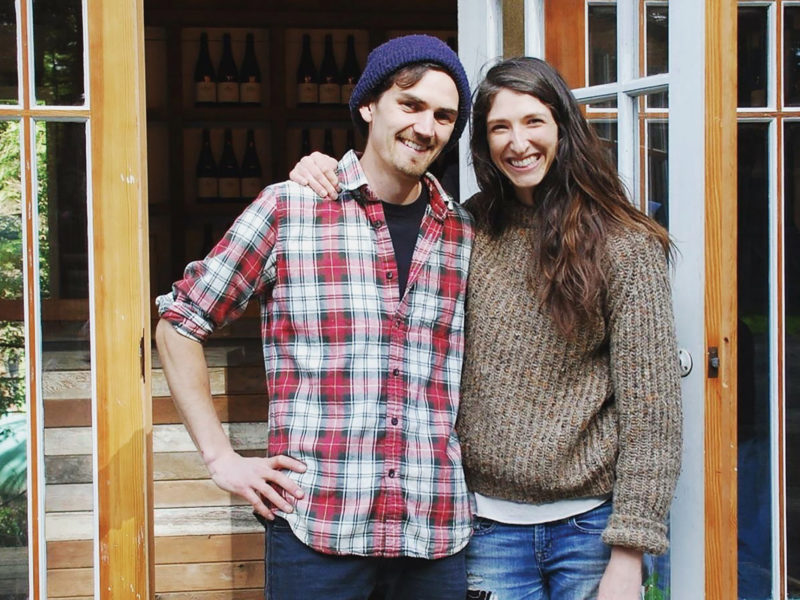
Matthew Vasilev and Katie Selbee are ready to open a tasting room at Twin Island Cider on Pender Island as COVID-19 sanctions start to lift. PHOTO / SUBMITTED

July 7, 2020 byBarbara Johnstone Grimmer

PENDER ISLAND – Katie Selbee and Matthew Vasilev of Twin Island Cider on Pender Island have a business as unique and authentic as the cider they produce, taking apples from century-old orchards on the Gulf Islands and fermenting them traditionally with naturally occurring yeasts in their farm-based cidery. They started just four years ago after three years of planning and preparation.

“It is a shared dream, and a more viable option than starting a veggie farm,” says Vasilev.

Selbee is a graduate of the UBC Farm Practicum in Sustainable Agriculture. She followed it with a year growing mixed vegetables on an urban farm with other program graduates, running the farm’s CSA (community- supported agriculture) program. She also completed an orchard internship at UBC Farm.

It was at UBC Farm where the two met. Vasilev had experience making cider and had also worked in organic farming and food distribution in both Montreal and Vancouver.

“We were both drawn to the close-knit community and the social and environmental justice aspects of small organic farming,” says Selbee.

They toured cideries in BC, Washington and the UK. They talked to cider makers. They also started making cider from the Vasilev family’s orchard on Pender Island. They preferred the traditional style of natural fermentation.

“The traditional, or hobby style, is the best cider in the world,” says Vasilev.

They realized that the way they wanted to make cider, however, was labour intensive and risky.

“It is hard to scale up, but it is authentic,” explains Vasilev, “You have to do it yourself. Use simple tools and simple methods.”

The pair soon partnered with cider-lovers Sandra MacPherson and Noel Hall who had recently purchased farmland with a neglected old homestead and orchard on Pender Island.

“Within three months, we were rolling,” says Vasilev. “We were starting from the ground up, every skill, every aspect.”

They learned from the orchard and cider community, making valuable contacts, and learning the necessary skills. They collected scion wood of cider apple varieties from various sources.

Year zero was all about grafting and planting 1,300 cider-variety trees, including Yarlington Mill, Dabinett and Chisel Jersey for a two-acre orchard, and rehabilitating heritage orchards. The first cider batches were blends of Gulf Island and Okanagan apples with a goal of 7,000 litres.

They soon honed their skills to harvest and process 32,000 pounds of fruit from 30 orchards. Last year, 60,000 pounds of fruit from 48 properties on North and South Pender, Mayne and Saturna islands were harvested. Vasilev estimates the fruit included 70 to 100 varieties of apples.

Seventeen orchards were pruned last year. This valuable service alone has given Selbee and Vasilev access to a range of orchards for each harvest. The under-utilized old orchards have also received a fresh purpose.

“The older trees that have been neglected produce more phenolics, which is important in cider quality,” says Vasilev. “They are dry farmed, which is a great legacy.”

Total control

Every aspect of production, marketing and sales is kept in-house. They work to keep it enjoyable, small and creative.

“We do all the milling/pressing ourselves at the cidery with the help of family and a couple of part-time helpers,” says Selbee. “We use a traditional rack and cloth press. It’s very labour and time-intensive but worth the amount of control it gives us over the final product.”

“There is no slow time; we work year-round and do it all,” says Vasilev.

This attention to detail and hands-on approach to the work has made it a challenge to stay on top of the two-acre orchard they originally planted. The leases of the old orchards have distracted them, and the new trees struggled with a canker and a less-than-perfect site. This year, the plan is to expand with more two-year old trees in a sunnier spot.

But it is perhaps their non-farming skills that give them the edge: Vasilev has a degree in history from McGill, and Selbee graduated in honours English from UBC, and she is a talented artist as well. These skills have brought the historical importance of the land, traditional fermentation methods, and heritage orchards to the forefront.

“It’s neat to do everything in-house from harvesting to bottling to design,” says Selbee.

They have a large garden, and last year used their garage to host a farm store for the Pender Growers Collective, a group of small-scale and backyard growers.

“Our values are embedded in what we do,” says Vasilev.

Vasilev credits Selbee with pushing new ideas, such as presenting cider like wine which can command a higher price.

They are looking for ways to diversify into related products such as apple cider vinegar, but they also want to maintain their authenticity.

Plans have been tempered by COVID-19, but some changes made last fall made the shift easier. A cider club sends subscribers a shipment of selected batches of cider to their door, and the online ordering system has been useful with the tasting room closed.

“We used to have 50% to 60% of our sales from the tasting room, and it has been closed three months now,” says Vasilev. “COVID has strengthened our customer base. It boosted online sales.”

The other 50% of sales is from restaurant and liquor stores. Both have decreased as well during the pandemic, but Vasilev remains optimistic. They are lucky, he says, because alcohol remains in high demand even in times of crisis.

Like many small businesses, Twin Island Cider applied for and received a $40,000 loan from the Canada Emergency Business Account but it was not eligible for funding under the Canada Emergency Wage Subsidy.

Related Posts

You may be interested in these posts from the same category.

Previous Post: « Pandemic highlights SAWP improvements
Next Post: Small on-farm dairy processors raise concerns about systemic inequities »

Copyright © 2026 Country Life in BC · All Rights Reserved