• Menu
  • Skip to primary navigation
  • Skip to main content
  • Skip to primary sidebar

Country Life In BC Logo

The agricultural news source in British Columbia since 1915

  • Headlines
  • Calendar
  • Subscribe
  • Advertise
  • About
  • Archives
  • Contact
  • Search
  • Headlines
  • Calendar
  • Subscribe
  • Advertise
  • About
  • Archives
  • Contact
  • Search

Primary Sidebar

Current Issue:

JANUARY 2026
Vol. 112 Issue 1

Subscribe Now!

Sign up for free weekly FARM NEWS UPDATES

Select list(s) to subscribe to


By submitting this form, you are consenting to receive marketing emails from: Country Life in BC. You can revoke your consent to receive emails at any time by using the SafeUnsubscribe® link, found at the bottom of every email. Emails are serviced by Constant Contact
Your information will not be
shared or sold ever

Follow us on Facebook

Comments Box SVG iconsUsed for the like, share, comment, and reaction icons

10 hours ago

BC's minimum piece rates for 15 hand-harvested crops increased 2.6% on December 31. Crops include peaches, apricots, brussels sprouts, daffodils, mushrooms, apples, beans, blueberries, cherries, grapes, pears, peas, prune plums, raspberries and strawberries. Farm-worker piece rates in BC were increased by 11.5% in January 2019 and 6.9% in December 2024. BC’s current minimum wage sits at $17.85 per hour.

#BCAg
... See MoreSee Less

BCs minimum piece rates for 15 hand-harvested crops increased 2.6% on December 31. Crops include peaches, apricots, brussels sprouts, daffodils, mushrooms, apples, beans, blueberries, cherries, grapes, pears, peas, prune plums, raspberries and strawberries. Farm-worker piece rates in BC were increased by 11.5% in January 2019 and 6.9% in December 2024. BC’s current minimum wage sits at $17.85 per hour. 

#BCAg
View Comments
  • Likes: 6
  • Shares: 0
  • Comments: 2

Comment on Facebook

I'm not sure what they're telling us. Did peace rates have to increase so that Farm workers could make minimum wage?

They deserve it, but the general public will be whining about increased prices in the stores. Will need to make more information average to the g.p.

2 days ago

... See MoreSee Less

View Comments
  • Likes: 9
  • Shares: 0
  • Comments: 0

Comment on Facebook

1 week ago

... See MoreSee Less

View Comments
  • Likes: 7
  • Shares: 0
  • Comments: 0

Comment on Facebook

3 weeks ago

Water volumes from the Nooksack River are at levels similar to 1990 and 2021, but the province says flows should peak at 10pm tonight. The shorter duration, as well as conditions in other watercourses within the watershed and performance of flood protection infrastructure should avoid a catastrophe on the scale of 2021. However, several landslides mean road closures have once again effectively isolated the Lower Mainland from the rest of the province.

#BCag
... See MoreSee Less

Water volumes from the Nooksack River are at levels similar to 1990 and 2021, but the province says flows should peak at 10pm tonight. The shorter duration, as well as conditions in other watercourses within the watershed and performance of flood protection infrastructure should avoid a catastrophe on the scale of 2021. However, several landslides mean road closures have once again effectively isolated the Lower Mainland from the rest of the province.

#BCAg
View Comments
  • Likes: 9
  • Shares: 3
  • Comments: 1

Comment on Facebook

Family living in Sumas WA say it's very much like '21. They have the same amount of water in their house as last time.

1 month ago

... See MoreSee Less

View Comments
  • Likes: 4
  • Shares: 0
  • Comments: 0

Comment on Facebook

Subscribe | Advertise

The agricultural news source in British Columbia since 1915
  • Email
  • Facebook

Disaster preparedness lacking

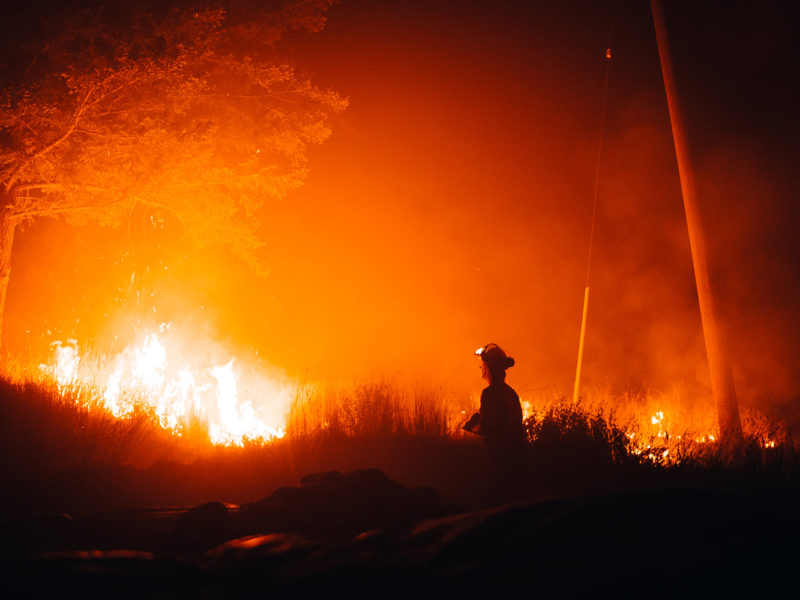
[BC Wildfire Service photo]

September 28, 2022 byPeter Mitham

Canada is among the top 10 most food-secure countries in the world, but it is among the least prepared for a major disaster.

While the country gets top marks for its political commitment to managing risks to the agriculture sector, an analysis released last week by Economist Impact with the assistance of Corteva Agriscience gave it zero points for disaster risk management.

According to the Global Food Security Index, the country’s lack of disaster risk management makes its food security vulnerable to pest infestations and disease outbreaks. The lack of preparation also weakens the country’s ability to recover when disasters happen.

Disaster risk management is scored under the heading sustainability and adaptation, which focuses on environmental risks to agriculture and the risk agriculture poses the environment.

“On measures of sustainability and adaptation there’s a lot of room for improvement,” says Sardar Karim, one of the researchers who developed the report.

While countries like Canada have strong rules protecting food quality and programs that limit malnutrition, they fall down in areas such as research, extension services and sustainability.

“These countries also have areas where they can further improve on, things like agricultural R&D, irrigation infrastructure, access to agricultural inputs for women farmers,” he says.

The report did not address government preparation for specific disasters, such as last year’s heat dome, wildfires and flooding, or responses to avian influenza and African Swine Fever.

BC Agriculture Council, which praised the province’s response to last fall’s flooding and landslides, declined comment on the report’s findings.

Despite the lack of disaster risk management, Canada ranked 29th in the world for sustainability and adaptation and seventh overall out of 113 countries surveyed for the Global Food Security Index.

Canada’s overall score of 79.1 saw it place just after Japan (79.5) and on par with Sweden.

Finland tops the list at 83.5, while war-ravaged Syria is last at 36.3.

Ukraine, where Russia’s invasion February 24 is credited with supercharging a three-pronged food, energy and fiscal crisis, ranks 71st.

“Armed conflict is strongly linked to lower food security scores. Conflict negatively affects almost every aspect of the food system, from production, harvesting, processing and transport to input supply, financing, marketing and consumption,” the report states.

But even peaceful, top-ranked countries face challenges.

Canada’s score, for example, has slipped over the past three years even as it has increased in the rankings.

In 2019, it ranked eighth with a score of 82.4. Last year, it ranked seventh with a score of 79.8, just ahead of Japan.
 

Related Posts

You may be interested in these posts from the same category.

Province pledges emergency funding

Farmers struggle to get insurance coverage Insurance

Insolvency concerns grow

Hurry up and wait

Don’t stress, plan

“Big number” tough to get

Cattle industry seeks cash

Federal assistance falls short

Going solo

Flood mitigation funding available

Apple growers fight low prices

Trespass awareness needed

Previous Post: « Average crop for BC cranberries
Next Post: Plant health centre breaks ground »

Copyright © 2026 Country Life in BC · All Rights Reserved