• Menu
  • Skip to primary navigation
  • Skip to main content
  • Skip to primary sidebar

Country Life In BC Logo

The agricultural news source in British Columbia since 1915

  • Headlines
  • Calendar
  • Subscribe
  • Advertise
  • About
  • Archives
  • Contact
  • Search
  • Headlines
  • Calendar
  • Subscribe
  • Advertise
  • About
  • Archives
  • Contact
  • Search

Primary Sidebar

Originally published:

MARCH 2021
Vol. 107 Issue 3

Subscribe Now!

Sign up for free weekly FARM NEWS UPDATES

Select list(s) to subscribe to


By submitting this form, you are consenting to receive marketing emails from: Country Life in BC. You can revoke your consent to receive emails at any time by using the SafeUnsubscribe® link, found at the bottom of every email. Emails are serviced by Constant Contact
Your information will not be
shared or sold ever

Stories In This Edition

Province to make Premises ID law

A wee bit of green

No extension for groundwater

Pandemic trends a moving target as spring comes

Editorial: Safe and secure

Back 40: Making the most of a simple pleasure

Viewpoint: Regenerative agriculture is the way of the future

SlaughterRight training launched by ministry

Ottawa to bankroll foreign worker quarantine

Ag advocates honoured at virtual gala

Coping with adversity requires an open mind

Blueberry growers dodge US trade complaint

Open for business

Codling moth control strategy shows promise for SWD

Cherry growers continue to focus on export markets

Ministry prepares to lend support to tree fruit co-op

Delta farm entrepreneur built strong relationships

Dairy picks new entrant short list

Early advocate for farmworkers’ rights remembered

Markets consider allowing Alberta vendors

Ranchers plead with province to address elk issue

Sidebar: Fencing program protects hay

Falkland beef plant finetuning operations

District A sets ambitious agenda

Don’t underestimate scope of farmers institutes

Everlasting

Strict pandemic plan keeps workers safe

Growers face up to labour challenges

Time to tap

Sidebar: Housing key for SAWP workers

Tulip festival to bloom again in Spallumcheen

Hazelnut growers face increased disease, pest threats

Resources go online

Hope prevails as hazelnuts target expansion

Research: Wildfires influence pollinator offspring

Raspberry growers see improved IQF pricing

Raspberry researchers select for hardiness

Direct farm marketers prepared for new season

Sudden dieback now showing up in cherries

Viewpoint: Consumers need more than a Buy Local campaign

New framework to measure AITC outcomes

Farm News: Wishful thinkign for the winter that wasn’t

Ewe know it’s spring

Juiced up over local produce options

Peer groups help foster innovation, support

Sidebar: How to start

Sisters create website to help small producers

Woodshed: Divorce proceedings take off with a dog fight

Gardener pens book about mason bees

Jude’s Kitchen: Spring is coming

More Headlines

Follow us on Facebook

Comments Box SVG iconsUsed for the like, share, comment, and reaction icons

2 weeks ago

The Canadian Food Inspection Agency is preparing to implement changes to its livestock traceability rules that will include mandatory computer reporting within seven days on movement of animals for veterinary appointments, community pastures, exhibitions, carcass and on-farm disposal and the births and deaths of every animal on your farm. Writer Tom Walker first brought these changes to the attention of our readers back in June 2023. We've posted his story to our website:

www.countrylifeinbc.com/cfia-proposes-traceability-updat#BCAg#BCag
... See MoreSee Less

The Canadian Food Inspection Agency is preparing to implement changes to its livestock traceability rules that will include mandatory computer reporting within seven days on movement of animals for veterinary appointments, community pastures, exhibitions, carcass and on-farm disposal and the births and deaths of every animal on your farm. Writer Tom Walker first brought these changes to the attention of our readers back in June 2023. Weve posted his story to our website: 

https://www.countrylifeinbc.com/cfia-proposes-traceability-updates/

#BCag
View Comments
  • Likes: 11
  • Shares: 21
  • Comments: 15

Comment on Facebook

I love hpw the cow in the picture hasn't even got a RFID tag in it but I digress. We can not read the link, it says "we are not permitted to read drafts". Please post again with the correct link.

Dairy farmers having been doing this several years. The app we use has become quite simple to use

Including equine?

Premise ID was slowly rolled through the country, voluntary then mandatory. Transparency and 'Consultation' has been light. Those who tried to bring this for discussion a couple years ago, because of forseen overreach, were quite often labeled conspiracy theorists and that it wasnt meant to be so heavily regulated and controlled. Gardens and seeds will be next. "Invasive species" reporting, check out the plants medicinal properties. Read the BC intentions papers. The premise ID that already heavy regulated commodities have claims to be treated different in the intentions papers on page 8. www2.gov.bc.ca/assets/gov/farming-natural-resources-and-industry/agriculture-and-seafood/food-saf...

Says i am "not allowed to preview draft".

Also concerning is the part on compliance...they can 'stumble onto' any farm and if you're not complying there are consequences.

When the CFIA stumbles into the wrong place compliance will be met with civil engagement

Says I can't preview draft

This is government overreach - Do Not Comply!

Do not comply

Fu

As if the price of beef isn't bad enough for consumers,,,,,be prepared to be gouged some more now

Ridiculous!!

Let's hold up on the beef exports tell we can get our own house in order... we need to deregulated, cheapen up the supply chain back into a 5 buck a pound rage so the good people canada can eat healthy food.. fuck your bean diets, that's retarded

This, along with the majority of new legislation pertaining to any type of farm, is a blatant squeeze on any sort of small, alternative agricultural venture. I am a massive believer in working together and sharing resources and costs and solutions - do not get me wrong - but this and the water registration among others, is an overreach (at most generous) and an absolute killer to smaller, local initiatives that LITERALLY save lives during extreme events. There is ONE ROAD into and out of my community. We don’t need or want some sort of backlogged government response when shit goes sideways. We want the ability AND SUPPORT to provide for our communities without penalty when things go badly. We want to produce sustainability for our communities. We live here, we work here, we want to STAY HERE. Stop making it harder.

View more comments

3 weeks ago

BC's minimum piece rates for 15 hand-harvested crops increased 2.6% on December 31. Crops include peaches, apricots, brussels sprouts, daffodils, mushrooms, apples, beans, blueberries, cherries, grapes, pears, peas, prune plums, raspberries and strawberries. Farm-worker piece rates in BC were increased by 11.5% in January 2019 and 6.9% in December 2024. BC’s current minimum wage sits at $17.85 per hour.

#BCAg
... See MoreSee Less

BCs minimum piece rates for 15 hand-harvested crops increased 2.6% on December 31. Crops include peaches, apricots, brussels sprouts, daffodils, mushrooms, apples, beans, blueberries, cherries, grapes, pears, peas, prune plums, raspberries and strawberries. Farm-worker piece rates in BC were increased by 11.5% in January 2019 and 6.9% in December 2024. BC’s current minimum wage sits at $17.85 per hour. 

#BCAg
View Comments
  • Likes: 10
  • Shares: 0
  • Comments: 2

Comment on Facebook

I'm not sure what they're telling us. Did peace rates have to increase so that Farm workers could make minimum wage?

They deserve it, but the general public will be whining about increased prices in the stores. Will need to make more information average to the g.p.

3 weeks ago

... See MoreSee Less

View Comments
  • Likes: 14
  • Shares: 0
  • Comments: 1

Comment on Facebook

105 Mile Ranch

4 weeks ago

... See MoreSee Less

View Comments
  • Likes: 7
  • Shares: 0
  • Comments: 0

Comment on Facebook

1 month ago

Water volumes from the Nooksack River are at levels similar to 1990 and 2021, but the province says flows should peak at 10pm tonight. The shorter duration, as well as conditions in other watercourses within the watershed and performance of flood protection infrastructure should avoid a catastrophe on the scale of 2021. However, several landslides mean road closures have once again effectively isolated the Lower Mainland from the rest of the province.

#BCAg
... See MoreSee Less

Water volumes from the Nooksack River are at levels similar to 1990 and 2021, but the province says flows should peak at 10pm tonight. The shorter duration, as well as conditions in other watercourses within the watershed and performance of flood protection infrastructure should avoid a catastrophe on the scale of 2021. However, several landslides mean road closures have once again effectively isolated the Lower Mainland from the rest of the province.

#BCAg
View Comments
  • Likes: 9
  • Shares: 3
  • Comments: 1

Comment on Facebook

Family living in Sumas WA say it's very much like '21. They have the same amount of water in their house as last time.

Subscribe | Advertise

The agricultural news source in British Columbia since 1915
  • Email
  • Facebook

Don’t underestimate scope of farmers institutes

Former District A leader urges institutes to exercise their rights under the act

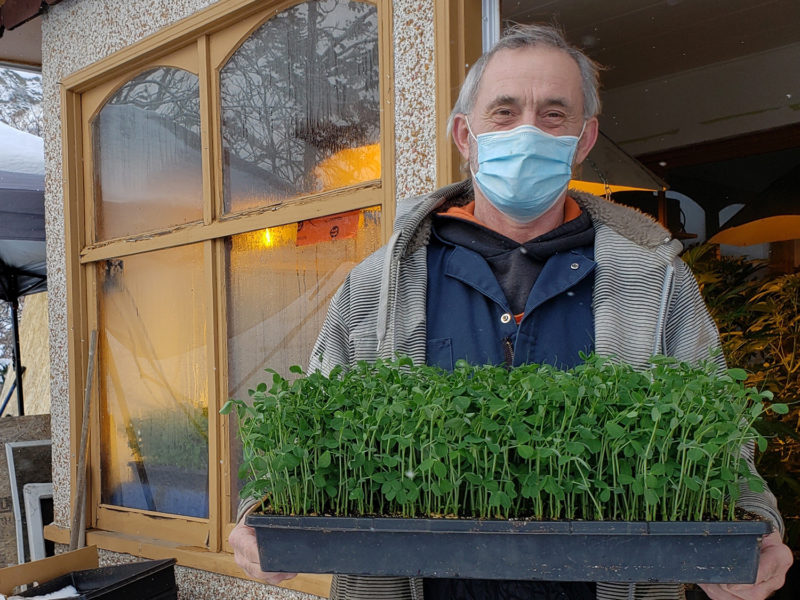
Even though sales are slower during the winter months, Doug Haggerty keeps growing sprouts at his Oliver farm. He sells them and fresh multi-coloured carrots to high-end restaurants and delivers to Kelowna once a week. His business is called Fester's Peppers. MYRNA STARK LEADER

March 1, 2021 byRonda Payne

LANGLEY – BC farmers institutes have a direct line to government under the province’s Farmers and Women’s Institute Act, originally enacted in 1938.

Knowing what’s in the act is important if today’s institutes want to have a greater impact, says Janet Thony, who addressed the second annual general meeting of the Langley Farmers Institute on January 25.

Thony, president of the Coombs Farmers Institute and past president of the District A Farmers Institute, highlighted the three most important clauses in the act.

“Clause number three tells us what we do as an FI. It’s not just about agriculture,” she says, noting there are five objectives listed. “The first four support agriculture; the fifth option is the wildcard.”

Under the fifth clause, an institute may be formed “to promote home economics, public health, child welfare, education and better schools.”

“It allows us then legally to work on items that maybe otherwise we would not think we can,” she says. “We’ve taken that to heart and recognized that it allows us to get involved on all kinds of levels.”

For example, the Cobble Hill Farmers Institute runs a seniors lunch program, hosts social events and holds youth-focused seasonal events in addition to owning a community hall, fair grounds and running a successful fall fair.

“If folks perceive you to be relevant, inclusive, you have a practical application, you’re keen problem-solvers and you maintain a fun, kind atmosphere, then they will be drawn to participate,” says Thony.

Ensuring involvement and interest for the Coombs group has come through social media, attending events and traditional items like business cards, brochures and banners.

“We took a booth at the fall fair eight years ago. So many people didn’t know what an FI was,” she says. “We signed up 10 members that weekend and we educated a huge number of people.”

A lack of rigid rules defining membership in the Coombs Farmers Institute is something she feels has also helped it succeed.

“Every member that we’ve got has a connection of their own individuality to agriculture,” she explains. “That’s why we vet them personally prior, but just in a general polite conversation. They probably don’t even know they are being vetted. Everyone is growing food on some level.”

This differs from the Langley Farmers Institute, which has a mix of voting members who have farm status and non-voting members who don’t. Thony says this is a model used by other institutes. She cautions against narrow definitions for membership.

“There’s farming elitism and it exists,” she says. “It’s incredibly dangerous and it does hurt us all. There’s nothing in the act that says who can belong and who can’t.”

She says institutes that narrowed their eligibility criteria too far died from attrition. There is room for members who may not have a farm,” she explains, “but need help, that need mentorship, need advice, need support and education.”

Farmers institutes use clause 26 to speak directly to the ministry. Individual institutes have a representative on a district institute, then each district has representation on the provincial advisory board.

“There is no other agricultural advocacy group that has that,” she says, noting that representatives are also exempt from registering with the province as lobbyists.

“That, in my opinion, is where the power in FIs comes from. They can’t tell us to just go away… that we’re just a special interest group.”

The third clause Thony mentioned was 21, which enables government to give institutes allowances.

“It’s unfortunately been ignored by government for decades. I’ve asked the question, when did the grants to institutes stop, and I haven’t received the answer,” she says.

While government funding would be helpful, Thony gave recommendations that will improve the chance of success for institutes like Langley, which are looking for ideas to excel.

Reducing volunteer burnout is important to Thony and she says eliminating monthly meetings makes a difference. Coombs has only two meetings a year: a March AGM and a November recap meeting.

“We have standing committees, we have an executive board,” she says. “We do a ton of communicating, of course, by email and phone.”

While burnout isn’t currently an issue for the Langley institute, COVID-19 and other events in 2020 led to transitions.

Megan Dykeman successfully ran as MLA for Langley East, resulting in her departure as president. She was succeeded by Barb Pearson of Early Bird Family Farm.

“We got ourselves back together and feel that we are working at a great pace here to try to bring representation to the Langley area,” says Pearson.

She and John Caldarella of Caldarella Family Tree Farm will be part of the Langley Township farm task force and the institute will also be included in the township’s agricultural advisory and economic enhancement committee.

“We are going to have a voice directly to the township,” Pearson says.

Thony notes that involvement in local politics is important.

“If we don’t take the time to engage in stakeholder engagement opportunities that the government offers us, we’re the ones that have dropped the ball,” she says.

Above all, she suggests institutes focus on being visible and, if events are hosted, they should be fun, offer a key benefit and attract a variety of people.

“Develop signature events that are of interest to a broad spectrum of people,” she

says.
Related Posts

You may be interested in these posts from the same category.

Farmers institutes to meet

Langley seeks deregulation

Seedy Sunday goes seedless

New executive director for Small-Scale Meat Producers

Changes to land commission kick in this fall

Previous Post: « Strict pandemic plan keeps workers safe
Next Post: Ranchers plead with province to address elk issue »

Copyright © 2026 Country Life in BC · All Rights Reserved