• Menu
  • Skip to primary navigation
  • Skip to main content
  • Skip to primary sidebar

Country Life In BC Logo

The agricultural news source in British Columbia since 1915

  • Headlines
  • Calendar
  • Subscribe
  • Advertise
  • About
  • Archives
  • Contact
  • Search
  • Headlines
  • Calendar
  • Subscribe
  • Advertise
  • About
  • Archives
  • Contact
  • Search

Primary Sidebar

Originally published:

FEBRUARY 2020
Vol. 106 Issue 2

Subscribe Now!

Sign up for free weekly FARM NEWS UPDATES

Select list(s) to subscribe to


By submitting this form, you are consenting to receive marketing emails from: Country Life in BC. You can revoke your consent to receive emails at any time by using the SafeUnsubscribe® link, found at the bottom of every email. Emails are serviced by Constant Contact
Your information will not be
shared or sold ever

Stories In This Edition

Perfect pruning

Open ears

Tough talk on animal activists

Peace, Cariboo top 2019 farm and ranch sales

Duckin’ a snow storm

Editorial: Change of heart

Back 40: Retirement is inevitable but less so for farmers

Viewpoint: Leading a decade of growth in organics

Banding together to attract domestic workers

Ag council helps avert seasonal worker delays

Dairy producers urged to polish public image

Snow day

New certification program launched for plant exporters

New executive director for COABC appointed

Ag Briefs: BC dairies push back on Class 7 proposal

Ag Briefs: Agri Innovation projects announced

Ag Briefs: Province selects Ruckle managers

Partnerships facilitate Langley learning farm

Feed BC program good in theory but has limitations

Opportunities and challenges

Halal demand rising in Western Canada

Trespass incident boosts public awareness

Sheep killings raise concerns in Lower Mainland

Pruning priorities different for FV grapegrowers

Farm plans offer new opportunities for rnachers

Number crunchers

Ranchers, foresters learn to share the road

Raise your claves so buyers play with a full deck

Boosting calf health starts before birth

Reseeding part of range restoration

Capacity crowd at Interior soils conference

Global blueberry growers look at substrate potential

Saving the peatlands

Blueberry breeding focuses on quality, exports

Research promises to help control SWD

Novel cherry trellising system saves money

Research: The effects of separating cows and calves

Farm News: Buckling down for winter conference season

Black walnuts are an option for water-logged land

Researcher provides deworming tips for sheep

Wasabi a hot option for wellness products

Technology key to tree fruit industry’s future

New broiler barn boosts comfort for birds

Woodshed Chronicles: Junkyard Frank’s plan is played to perfection

Give your marriage a relationship check-up

Bursary fund welcomes applications

Apple of your eye

More Headlines

Follow us on Facebook

Comments Box SVG iconsUsed for the like, share, comment, and reaction icons

2 weeks ago

The Canadian Food Inspection Agency is preparing to implement changes to its livestock traceability rules that will include mandatory computer reporting within seven days on movement of animals for veterinary appointments, community pastures, exhibitions, carcass and on-farm disposal and the births and deaths of every animal on your farm. Writer Tom Walker first brought these changes to the attention of our readers back in June 2023. We've posted his story to our website:

www.countrylifeinbc.com/cfia-proposes-traceability-updat#BCAg#BCag
... See MoreSee Less

The Canadian Food Inspection Agency is preparing to implement changes to its livestock traceability rules that will include mandatory computer reporting within seven days on movement of animals for veterinary appointments, community pastures, exhibitions, carcass and on-farm disposal and the births and deaths of every animal on your farm. Writer Tom Walker first brought these changes to the attention of our readers back in June 2023. Weve posted his story to our website: 

https://www.countrylifeinbc.com/cfia-proposes-traceability-updates/

#BCag
View Comments
  • Likes: 11
  • Shares: 21
  • Comments: 15

Comment on Facebook

I love hpw the cow in the picture hasn't even got a RFID tag in it but I digress. We can not read the link, it says "we are not permitted to read drafts". Please post again with the correct link.

Dairy farmers having been doing this several years. The app we use has become quite simple to use

Including equine?

Premise ID was slowly rolled through the country, voluntary then mandatory. Transparency and 'Consultation' has been light. Those who tried to bring this for discussion a couple years ago, because of forseen overreach, were quite often labeled conspiracy theorists and that it wasnt meant to be so heavily regulated and controlled. Gardens and seeds will be next. "Invasive species" reporting, check out the plants medicinal properties. Read the BC intentions papers. The premise ID that already heavy regulated commodities have claims to be treated different in the intentions papers on page 8. www2.gov.bc.ca/assets/gov/farming-natural-resources-and-industry/agriculture-and-seafood/food-saf...

Says i am "not allowed to preview draft".

Also concerning is the part on compliance...they can 'stumble onto' any farm and if you're not complying there are consequences.

When the CFIA stumbles into the wrong place compliance will be met with civil engagement

Says I can't preview draft

This is government overreach - Do Not Comply!

Do not comply

Fu

As if the price of beef isn't bad enough for consumers,,,,,be prepared to be gouged some more now

Ridiculous!!

Let's hold up on the beef exports tell we can get our own house in order... we need to deregulated, cheapen up the supply chain back into a 5 buck a pound rage so the good people canada can eat healthy food.. fuck your bean diets, that's retarded

This, along with the majority of new legislation pertaining to any type of farm, is a blatant squeeze on any sort of small, alternative agricultural venture. I am a massive believer in working together and sharing resources and costs and solutions - do not get me wrong - but this and the water registration among others, is an overreach (at most generous) and an absolute killer to smaller, local initiatives that LITERALLY save lives during extreme events. There is ONE ROAD into and out of my community. We don’t need or want some sort of backlogged government response when shit goes sideways. We want the ability AND SUPPORT to provide for our communities without penalty when things go badly. We want to produce sustainability for our communities. We live here, we work here, we want to STAY HERE. Stop making it harder.

View more comments

3 weeks ago

BC's minimum piece rates for 15 hand-harvested crops increased 2.6% on December 31. Crops include peaches, apricots, brussels sprouts, daffodils, mushrooms, apples, beans, blueberries, cherries, grapes, pears, peas, prune plums, raspberries and strawberries. Farm-worker piece rates in BC were increased by 11.5% in January 2019 and 6.9% in December 2024. BC’s current minimum wage sits at $17.85 per hour.

#BCAg
... See MoreSee Less

BCs minimum piece rates for 15 hand-harvested crops increased 2.6% on December 31. Crops include peaches, apricots, brussels sprouts, daffodils, mushrooms, apples, beans, blueberries, cherries, grapes, pears, peas, prune plums, raspberries and strawberries. Farm-worker piece rates in BC were increased by 11.5% in January 2019 and 6.9% in December 2024. BC’s current minimum wage sits at $17.85 per hour. 

#BCAg
View Comments
  • Likes: 10
  • Shares: 0
  • Comments: 2

Comment on Facebook

I'm not sure what they're telling us. Did peace rates have to increase so that Farm workers could make minimum wage?

They deserve it, but the general public will be whining about increased prices in the stores. Will need to make more information average to the g.p.

3 weeks ago

... See MoreSee Less

View Comments
  • Likes: 14
  • Shares: 0
  • Comments: 1

Comment on Facebook

105 Mile Ranch

4 weeks ago

... See MoreSee Less

View Comments
  • Likes: 7
  • Shares: 0
  • Comments: 0

Comment on Facebook

1 month ago

Water volumes from the Nooksack River are at levels similar to 1990 and 2021, but the province says flows should peak at 10pm tonight. The shorter duration, as well as conditions in other watercourses within the watershed and performance of flood protection infrastructure should avoid a catastrophe on the scale of 2021. However, several landslides mean road closures have once again effectively isolated the Lower Mainland from the rest of the province.

#BCAg
... See MoreSee Less

Water volumes from the Nooksack River are at levels similar to 1990 and 2021, but the province says flows should peak at 10pm tonight. The shorter duration, as well as conditions in other watercourses within the watershed and performance of flood protection infrastructure should avoid a catastrophe on the scale of 2021. However, several landslides mean road closures have once again effectively isolated the Lower Mainland from the rest of the province.

#BCAg
View Comments
  • Likes: 9
  • Shares: 3
  • Comments: 1

Comment on Facebook

Family living in Sumas WA say it's very much like '21. They have the same amount of water in their house as last time.

Subscribe | Advertise

The agricultural news source in British Columbia since 1915
  • Email
  • Facebook

Farm plans offer new opportunities for ranchers

NOLA education day sheds light on EFPs, calf health, ecosystems

Producers say they were blindsided by this week's announcement to turn off irrigation in the Salmon River and Bessette Creek watersheds. File photo

February 1, 2020 byTom Walker

VERNON – Winter weather chilled the turnout for the annual North Okanagan Livestock Association educational seminar in Vernon on January 15.

Just half the 80 people registered made it to the event.

“Some of our sponsors were not even able to make it,” says NOLA president Lani French. “The -20 temperatures and the poor road conditions kept people at home.”

Nevertheless, the show went on.

A networking lunch was followed by a screening of the film “Guardians of the Grasslands,” a short documentary on the vital role of cattle in conserving the ecosystem of the Prairies. The region’s grasslands are one of the most endangered ecosystems on earth, even more so than the Amazon rainforest. The film explains the importance of grazing, originally by bison and now by cattle, in sustaining the landscape’s health. It also explained the massive carbon sequestration role the grasslands provide.

While the film was shot in Alberta as a joint project between Ducks Unlimited, the Nature Conservancy of Canada and the Canadian Cattlemen’s Association, French says the message also applies to BC grasslands.

“It’s a powerful film,” she says, tearing up.

Calf survival

Jeanette Perry from White Valley Veterinary Services in Lumby spoke about improving calf survival at birth, drawing on her experience teaching cattle medicine in Australia.

“Birth is a make or break time for cattle,” says Perry. “More than half of calf deaths occur in the first 24 hours.”

Environmental Farm Plan (EFP) regional advisor Pete Spencer gave an update on the program.

“Winter is the best time to get your environmental farm plan done,” he says. “Come April 1, when the program funding opens up, things get pretty crazy.”

Spencer is looking for new and interesting projects to fund this year. He notes there are 60 different areas the program supports.

“You can qualify for up to $70,000 cost-shared funding to improve your ranch sustainability,” he says.

Changes to the criteria for irrigation funding kept Spencer busy this past year.

“They have really opened up the requirements under irrigation,” says Spencer, noting that more commodities will be able to apply this year. “They have changed the awarding of project funding to a merit-based system.”

Applications are assessed on how using less water helps the environment.

“If you are saving water from the Kettle River, for example, you will be considered before someone who gets their water from a purveyor,” he explains.

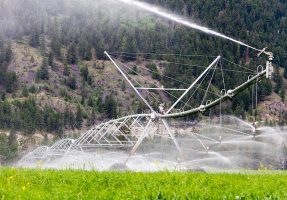
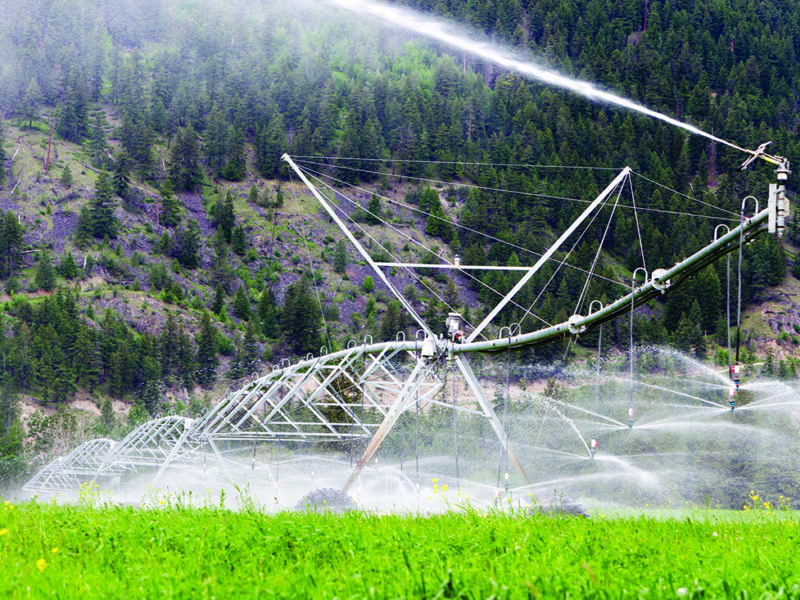
Pivot irrigation systems have been a popular projects with program participants.

“Even though they are expensive, they save water,” says Spencer. “Pivots are a benefit, particularly when water is becoming more expensive and even running out in some areas.”

He adds that he is looking to work with BC Agriculture and Food Climate Action Initiative staff to develop a cost-benefit analysis for installing pivot systems.

Spencer points out that EFP pays producers for management plan development, including irrigation and nutrient management plans.

AEM Code support

EFP has a new work plan to support the Code of Practice for Agricultural Environmental Management (AEM Code) introduced last year, Spencer says. There is a basic amount of monitoring that is required for all operations that apply nutrients. Three high-risk locations require additional measures – areas with high rainfall, areas over vulnerable aquifers and phosphorus-affected areas.

“I don’t think the new regs are actually all that bad,” says Spencer. “I promote soil sampling anyway and the AEM Code says it must be done every three years.”

A summary document prepared by the BC Cattlemen’s Association is an excellent resource, Spencer notes. (It is available for viewing and download at [http://bit.do/BCCA-AEMCoP].)

The new dam safety plans the province requires can be costly if the dam is of significant size and potential consequence. Spencer recalls a rancher group that applied for EFP funding to assist with the development of a dam safety plan for their jointly owned dam.

“They shared the cost and, with funding, it was nearly free for them,” he says.

Shawn Wilson, a third-generation producer from Alberta, discussed some of the challenges in cattle industry markets as well as tips for a producer to increase the value of their animals at sale time.

“The best way to illustrate the cattle market is to look at a picture of a roller coaster,” says Wilson. “You need to know what works for your ranch program and have a plan.”

French notes there will not be an education seminar in 2021. NOLA will be focusing its energies on hosting the BC Cattlemen’s convention in Vernon.
Related Posts

You may be interested in these posts from the same category.

RCMP recruits 4-H youth

Ranchers’ markets, practices praised

Watershed strategy could hang ag out to dry

No licence, no problem

Fossens recognized for innovative practices

Female ranchers excited for mentorship opportunities

Beef export markets grow

Ranchers watching bluetongue outbreak

Drought puts focus on livestock nutrition

Beef impact bumps up

Canada at “negligible risk” for BSE

Water licence angst

Previous Post: « New executive director for COABC appointed
Next Post: Secondary housing consultation »

Copyright © 2026 Country Life in BC · All Rights Reserved