• Menu
  • Skip to primary navigation
  • Skip to main content
  • Skip to primary sidebar

Country Life In BC Logo

The agricultural news source in British Columbia since 1915

  • Headlines
  • Calendar
  • Subscribe
  • Advertise
  • About
  • Archives
  • Contact
  • Search
  • Headlines
  • Calendar
  • Subscribe
  • Advertise
  • About
  • Archives
  • Contact
  • Search

Primary Sidebar

Originally published:

September 2017
Vol. 103 Issue 9

Subscribe Now!

Sign up for free weekly FARM NEWS UPDATES

Loading form…

Your information will not be
shared or sold ever

Stories In This Edition

Bleak

Rising from the ashes

Foreign ownership on radar

Local knowledge & premise ID earn creditibility

Political overhaul targets major issues

Back to the future

Back Forty: Support can’t come soon enough

Viewpoint: Smartphones dial up new green revolution

Govt orders review of contaminated acquifer

Ag waste regs coming

Perfect attendance

BC-Washington collaborate on water mgmt

BC leads in organic consumption

Bracing for second flight of armyworm

Budget funding starts flowoing for genomics work

The “S” Team

Ag ministers sign new funding framework

Supply management takes hit

Delta land swap yields benefits

Consolidation strengthens ALR exclusion bid

Salt Spring facility gets big boost from local donor

Corn rootworm infesting FV crops

Kelowna farmers’ market gives new location a try

Compensetion sought for Clinton backburn

Fall promises volatility in cattle markets

Cattle feeders face certain uncertainties

Shave Shower Shampoo

Strong showing for Hereford Bonanza

Grain research helps address shifting conditions

FV, N OK dairies win at Chilliwack

Research: Breeding cows to beat the heat

Kootenay program aims to revive extension expertise

Beet trials target “seed sovereignty”

New hop debuts

Washington lab holds opportunities for grain growers

Sheep dog trials make comeback

Bear kills cause grief for Island sheep producers

Get it in writing

Celebrating 100 years: Eaglet FI

Managing risks, seizing opportunities

Naturally rich soil, low inputs support Kelowna garden

In celebration of thse who buy local

Woodshed: Ashley exercises power of persuasion

Jude’s Kitchen: Back-to-it Bites

All content on this website is copyrighted, and cannot be republished or reproduced without permission.
More Headlines

Follow us on Facebook

Comments Box SVG iconsUsed for the like, share, comment, and reaction icons

2 days ago

KPU researcher Naomi Robert is partnering with Oregon State University's Dry Farming Collaborative to test drought-resilient growing practices across Vancouver Island and the Gulf Islands. Working with three market gardeners, the study found tomatoes and zucchini thrived without irrigation. With droughts intensifying across the Pacific Northwest, dry farming offers BC growers practical tools to adapt to a changing climate. The full story appears in our April edition. tinyurl.com/d2fzs#BCAg#BCAg ... See MoreSee Less

KPU researcher Naomi Robert is partnering with Oregon State Universitys Dry Farming Collaborative to test drought-resilient growing practices across Vancouver Island and the Gulf Islands. Working with three market gardeners, the study found tomatoes and zucchini thrived without irrigation. With droughts intensifying across the Pacific Northwest, dry farming offers BC growers practical tools to adapt to a changing climate. The full story appears in our April edition. https://tinyurl.com/d2fzs9x6

#BCAg
View Comments
  • Likes: 15
  • Shares: 3
  • Comments: 0

Comment on Facebook

3 days ago

A Maple Ridge dairy producer has been fined $7,512, had his licence suspended for three months, and faces quota restrictions for two years after an undercover investigation confirmed raw milk was sold directly from the farm on three separate occasions.

#BCAg
... See MoreSee Less

Link thumbnail

Maple Ridge farm fined for raw milk sales

www.countrylifeinbc.com

Raw milk remains off the table for dairy producers, with the BC Milk Marketing Board (BCMMB) taking action against a Maple Ridge producer for illicit sales. An undercover investigation of Maple Ridge...
View Comments
  • Likes: 55
  • Shares: 84
  • Comments: 206

Comment on Facebook

Unpasteurized milk is sold in Europe. It's the only milk certain cheeses can be made from.

Europeans used raw milk to make cheese for millenia, the farmer should sue them back on cultural grounds and a charter violation.

A person can shoot up government drugs in a playground but milk is the issue. 🙄

Is there a go fund me?

Raised on raw milk and I wouldn’t have had it any other way. My immune system is top notch compared to all others raised on corn syrup baby formula. Make it make sense!

When i was on the farm we would drink milk right from the cow in a bottle then drink and never got sick.

Ohh the milk moffia at it again I see

So whose the rat? lol one of the ppl who bought the raw milk? 🤦🏻‍♀️

I grew up in the 60’s with raw milk, cream and butter the farm shipped cream. One day the cream was rejected do too much bacteria. It wasn’t kept cool enough. That was the first of government control I experienced. Ok so the cream went back to the farm and made the best sourdough bread, ice cream and the cats came from heavens green acres for a treat of stale bread soaked in that very cream.

Yet the government can supply cigarettes, alcohol, weed and hard drugs. Makes sense. 🙄

leave him the hell alone! if someone wants to buy raw milk at their own risk, let them. At least they can see where the milk came from

If the farmer sold shares in his farm so all these people owned part of the farm. Then it’s their milk . And don’t have to buy anything

I would love my own cow so I could get raw milk

As the government sells alcohol and cigarettes 🤡

Free drugs good raw milk bad 🤣

Guy up the road sells milk raw here too

Raised on our own milk, so were my kids. Got told my kids would not be as Intelegent because of it 😂 they are adults and doing very well. The problem lays in the consumer handling of product after pick up. when milking at home its in a stainless steel pail, sifted, into glass containers, then in fridge to cool down. People picking up, put jn car drive off for an hour or more, then in fridge. This is the problem, bactia grows in the heat. Then they drink that evening when still warm, get sick, blame farm milk. Go to grocery store buy a jug, it last 2weeks after due date ...yummy. ( tested this therory) Id rather have fresh milk and properly handle it. Everything is so regulated,

I have mixed opinions here. I think that people should be able to get unpasteurized milk( I was raised on it and raised my own family with our own milk cow..) However in this day and age people are so inclined to sue for most anything it seems like the dairy farmers need some kind of protection against that? They could lose their businesses over legal procedures. Maybe that is a positive thing about the milk boards…

Some comments seem to be missing the point of the article. NO ONE was sick from the milk. It’s all about money. “By selling milk outside the regulated system, where revenues are pooled, the board claimed Stuyt had cost producers as a whole $195,185 and ordered him to repay this amount. It also ordered Stuyt to pay $33,266 to cover the cost of BCMMB’s investigation and hearings into the matter. The BC Dairy Association, which stood as an intervenor in the appeal before FIRB, said illicit raw milk sales are a direct threat to supply management.”

Just identify as first nations and say it's a cultural thing . Then it becomes legal

That's just sad, but drugs are fine

Communist Canada. If people want raw milk they should be able to buy raw milk. It’s all about control ….

You mean sold real milk, unadulterated, whole milk

To each their own. If people want to buy resh milk im sure they know the consequences involved. Maybe the people take it home, seperate the cream and pasturize it them selves. We drank milk at my aunts house off the cow but it was heated to 72’ (Pasturized )

Best way to drink the milk! Born and raised on it.....

View more comments

5 days ago

A draft update to the Code of Practice for the Care and Handling of Beef Cattle is now open for public comment until June 12. The code, one of 14 animal care codes developed and maintained by the National Farm Animal Care Council, is undergoing a routine 10-year review. "Your feedback will help shape the industry's guide to cattle welfare for the next decade," says Canadian Cattle Association policy manager Jessica Radau, urging producers to weigh in. For more information, visit tinyurl.com/58a3u9fz.

#BCAg
... See MoreSee Less

A draft update to the Code of Practice for the Care and Handling of Beef Cattle is now open for public comment until June 12. The code, one of 14 animal care codes developed and maintained by the National Farm Animal Care Council, is undergoing a routine 10-year review.  Your feedback will help shape the industrys guide to cattle welfare for the next decade, says Canadian Cattle Association policy manager Jessica Radau, urging producers to weigh in. For more information, visit https://tinyurl.com/58a3u9fz.

#BCAg
View Comments
  • Likes: 4
  • Shares: 4
  • Comments: 1

Comment on Facebook

I sat in the webinar yesterday by the Canadian Cattle Association. My initial concern was that this would be another "play" into the government's hands. It has been worked on by people that are actually in the Beef industry from Cow calf to feedlot. The thrust is an update of the 2013 Code of Practice which was reviewed in 2018. The changes are more a move from "left to the producers discretion" to clearer directions regarding pain management, proper transport of animals which are impaired and keeping cattle in in good condition. Much of what is recommended is what producers who care about animal husbandry already do. The important part is to GIVE THEM FEEDBACK good, bad or otherwise. The document is about 60 pages long, and I ran it through CHAT to see what had been changed. It is important to understand that the PUBLIC is invited to comment on the draft not just producers. Think about it... do you really want the public influencing how you manage your cattle. If you think that this is just one of those things, I have been following Bill 22 in Alberta which will grant the SPCA a proactive roll in entering farms and checking on animals. When I asked CHAT how the new bill relates to the Cattle Code, it came back that the Code although not a regulation will be able to be used as a guide by producers for backup in dealing with the SPCA regarding cattle conditions, sick animal handling etc. Take the time.... Go onto the Canadian Cattle Association website and speak to those parts that you wish to input.

6 days ago

According to the BC River Forecast Centre, the Okanagan snowpack stood at just 58% of normal on April 1 — the lowest reading since measurements began in 1980 — raising concerns about drought conditions in the region this summer. The rest of the province sits at 92% of normal.

#BCAg
... See MoreSee Less

According to the BC River Forecast Centre, the Okanagan snowpack stood at just 58% of normal on April 1 — the lowest reading since measurements began in 1980 — raising concerns about drought conditions in the region this summer. The rest of the province sits at 92% of normal.

#BCAg
View Comments
  • Likes: 3
  • Shares: 0
  • Comments: 0

Comment on Facebook

7 days ago

At her first AGM as executive director of BC Meats, held Saturday in Abbotsford, Jennifer Busmann spoke about her strong ties to agriculture and her optimism for the organization's future. Busmann has cattle of her own and came to the role with existing relationships with members and the board of directors that helped her feel integrated from the start. She stepped into the position in Februa#BCAg#BCAg ... See MoreSee Less

At her first AGM as executive director of BC Meats, held Saturday in Abbotsford, Jennifer Busmann spoke about her strong ties to agriculture and her optimism for the organizations future. Busmann has cattle of her own and came to the role with existing relationships with members and the board of directors that helped her feel integrated from the start. She stepped into the position in February.

#BCAg
View Comments
  • Likes: 6
  • Shares: 0
  • Comments: 0

Comment on Facebook

Subscribe | Advertise

The agricultural news source in British Columbia since 1915
  • Email
  • Facebook

Food testing within reach

September 1, 2017 byBarbara Johnstone-grimmer

PORT ALBERNI – How is it that a tiny island in Washington state has the first farmer-run community food safety lab in the US, satisfying the rigid requirements of the US Department of Agriculture and the US Food Safety Modernization Act?

Part of the San Juan Islands, an archipelago just south of BC’s own Gulf Islands, Lopez Island is tiny at 120 square miles. Home to just 35 farms, it has limited land and resources, and is separated from the mainland by the cost and inconvenience of a ferry. It is home to 700 people in winter and 5,000 to 6,000 in summer.

But what really sets Lopez Island apart, explained Dr. Claver Bundac at the Islands Agriculture Show in Port Alberni, February 4, is that it is a “community where continuous improvement is a necessity for survival.”

“They have an adventurous sense of imagination and a strong community spirit so they wanted a community lab,” he says. “They embrace collective problem solving to get co-operative solutions. They consider food safety a culture and not just a requirement. They take pride in what they do.”

The sustainable agriculture and rural development program of the Lopez Community Land Trust (LCLT) actively supports small-scale sustainable agriculture in the San Juan Islands, with some notable successes.

In 2001, LCLT unveiled the first USDA-approved Mobile Meat Processing unit in the US. This allowed Lopez farmers to legally slaughter livestock on-farm with USDA inspection but without the ferry rides.

More recently, Bundac, a Lopez Island resident and founder of California biotech firm Biomedix which develops food safety testing systems, collaborated with LCLT to open FoodMetrics Laboratories.

The labs Biomedix sets up are usually designed to run within large food production companies. Biomedix had never set up a community food testing lab before but Lopez Island farmers were interested in the model. Changes under the US Food Safety Modernization Act meant that community food testing could be “a local answer to a national question,” says Bundac.

Safe food

The national issue is the regulation and protection of food: food sold to the public must be safe, wholesome and authentic and consequently, the new act requires regular testing of food and processes. On an island, everything is small-scale. It’s expensive and time-consuming to go off-island and cost-prohibitive for everyone to set up in-house labs.

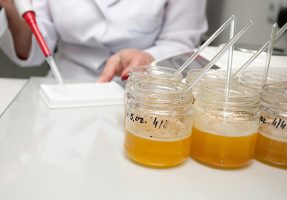
LCLT provided space and Biomedix, through its Food Metrics division, set up the lab – a gift worth US$6,000 to US$8,000 (about $7,500 to $10,000 Canadian) – to provide food and environmental testing to people for their farms and food processing operations. The lab opened in January.

Producers are able to book time in the lab to analyze their products, an arrangement that gives them control over the information they need to meet their statutory requirements.

While the original idea was for farmers to receive training and certification to use the lab, the majority want someone else to do the work. Web-based lab information is collected and benchmarks are developed from cumulative anonymous data.

“It all boils down to a risk assessment system. You need your own data to benchmark or you have to use extrapolations from big data, big companies and apply it to smaller operations,” says

Bundac.

Other advantages of the community lab include:

  • eliminating or reduce shipping costs;
  • lower testing costs;
  • producer-specific data;
  • faster results;
  • lower risk of sample contamination;
  • flexible testing schedules.
  • Based on the Lopez Island experience, the BC Small Scale Food Processor Association and the Comox Valley Economic Development Society are working to develop a community food analysis lab in the Comox Valley. Bundac has already set up a demonstration lab at the Vancouver Island Technology Park.

All content on this website is copyrighted, and cannot be republished or reproduced without permission.
Related Posts

You may be interested in these posts from the same category.

Poultry biosecurity notches down

Traceability reprieve for livestock

CFIA reports low honey adulteration

BC distanced from TB concerns

CFIA nabs Enderby abattoir

BC control zones revoked

Avian influenza grows

Federal funding for AI response

Livestock health in spotlight

CFIA proposes traceability updates

Avian influenza returns

AI outbreak rivals 2004

Previous Post: « Rising from the ashes
Next Post: Corn rootworm infesting Fraser Valley crops »
© 2026 COUNTRY LIFE IN BC - ALL RIGHTS RESERVED