
• Menu
  • Skip to primary navigation
  • Skip to main content
  • Skip to primary sidebar

Country Life In BC Logo

The agricultural news source in British Columbia since 1915

  • Headlines
  • Calendar
  • Subscribe
  • Advertise
  • About
  • Archives
  • Contact
  • Search
  • Headlines
  • Calendar
  • Subscribe
  • Advertise
  • About
  • Archives
  • Contact
  • Search

Primary Sidebar

Originally published:

JANUARY 2023
Vol. 109 Issue 1

Subscribe Now!

Sign up for free weekly FARM NEWS UPDATES

Select list(s) to subscribe to


By submitting this form, you are consenting to receive marketing emails from: Country Life in BC. You can revoke your consent to receive emails at any time by using the SafeUnsubscribe® link, found at the bottom of every email. Emails are serviced by Constant Contact
Your information will not be
shared or sold ever

Stories In This Edition

BC leads AI case count

Winter harvest

Eby appoints new ag minister

Generational change in BC potato busienss

Editorial: Good news, bad news

Back 40: Give us this day our daily bread

Viewpoint: Changing the playing field for farmers

Popham ends terms with strong ambitions

Higher food prices make little difference to farmers

Growers fail to block co-op consolidation

Sidebar: Co-op nomination process sidelines critics

Ag Briefs: Former BCFGA president, co-op chair dies

Ag Briefs: New chairs announced

Ag Briefs: COVID-19 response reviewed

BC loses a champion of agriculture

Canadian diary sector positioned well for growth

Honoured

Dairy producers raise alarm on costs

Flower growers shutter auction gallery

Sidebar: Talking turkey about flower sales

Risk management plans make safety sense

Biodynamic workshops receive funding

Producers reflect on past, plan for future

Pacific Agriculture Show on track for 2023

Sidebar: Stand up for the BCAC gala

Provincial priorities in focus at ag show

Berried treasure …

Islands farm show gears up for next month in Duncan

New opportunities but little progress for meat capacity

Roll call

Sidebar: Hub money

Meat producers need to focus on cost management

Greenhouse extends growing season, sales

Plant physiologist heads up BC grape research

Work-life balance is a fallacy for farmers

Pilot helps UBCO’s Feed BC initiative grow

Sidebar: Other factors at play

Drones provide a high-level view of scorch

Farm Story: Mum’s the word on fellow farmers

Bees better kept at a distance

Sidebar: Survey says

Woodshed: Kenneth’s MacGyver moment fails him

Climate, food secuirty motivate change

Jude’s Kitchen: Adventure with your new kitchen gadgets

More Headlines

Follow us on Facebook

Comments Box SVG iconsUsed for the like, share, comment, and reaction icons

6 days ago

... See MoreSee Less

View Comments
  • Likes: 4
  • Shares: 0
  • Comments: 0

Comment on Facebook

6 days ago

On the last day of the BC Organic Conference, Thursday, Molly Thurston of Pearl Agricultural Consulting helped growers learn how to manage bugs such as codling moth, wireworm, and rootworm in organic growing systems. Her talk alongside Renee Prasad included hands-on activities in which participants checked out various traps and examined pests under microscopes. Be sure to look for more upcoming ag events on our online calendar at www.countrylifeinbc.com/calendar/

#BCAg
... See MoreSee Less

On the last day of the BC Organic Conference, Thursday, Molly Thurston of Pearl Agricultural Consulting helped growers learn how to manage bugs such as codling moth, wireworm, and rootworm in organic growing systems. Her talk alongside Renee Prasad included hands-on activities in which participants checked out various traps and examined pests under microscopes. Be sure to look for more upcoming ag events on our online calendar at www.countrylifeinbc.com/calendar/

#BCAg
View Comments
  • Likes: 15
  • Shares: 0
  • Comments: 0

Comment on Facebook

1 week ago

Well-known organic farmer and podcaster Jordan Marr gets interviewed by Country Life in BC’s own columnist and potato mavin Anna Helmer during the opening session of the BC Organic Conference at Harrison Hot Springs yesterday. Sessions run today (Wednesday) and Thursday and include organic and regenerative growing practices and expanding and advocating for the organic sector, all under the background of the newly launched Organic BC banner.

#BCAg
... See MoreSee Less

Well-known organic farmer and podcaster Jordan Marr gets interviewed by Country Life in BC’s own columnist and potato mavin Anna Helmer during the opening session of the BC Organic Conference at Harrison Hot Springs yesterday. Sessions run today (Wednesday) and Thursday and include organic and regenerative growing practices and expanding and advocating for the organic sector, all under the background of the newly launched Organic BC banner.

#BCAg
View Comments
  • Likes: 37
  • Shares: 2
  • Comments: 1

Comment on Facebook

Interested in finding out more about this

3 weeks ago

Today, we remember those who sacrificed their lives or their well-being for our freedom. Lest we forget. ... See MoreSee Less

Today, we remember those who sacrificed their lives or their well-being for our freedom. Lest we forget.
View Comments
  • Likes: 8
  • Shares: 0
  • Comments: 0

Comment on Facebook

1 month ago

FarmFolk CItyFolk is hosting its biennial BC Seed Gathering in Harrison Hot Springs November 27 and 28. Farmers, gardeners and seed advocates are invited to learn more about seed through topics like growing perennial vegetables for seed, advances in seed breeding for crop resilience, seed production as a whole and much more. David Catzel, BC Seed Security program manager with FF/CF will talk about how the Citizen Seed Trail program is helping advance seed development in BC. Expect newcomers, experts and seed-curious individuals to talk about how seed saving is a necessity for food security. ... See MoreSee Less

Link thumbnail

BC Seed Gathering - FarmFolk CityFolk

farmfolkcityfolk.ca

Save the date for our upcoming 2023 BC Seed Gathering happening this November 3rd and 4th at the Richmond Kwantlen Polytechnic University campus.
View Comments
  • Likes: 1
  • Shares: 0
  • Comments: 0

Comment on Facebook

Subscribe | Advertise

The agricultural news source in British Columbia since 1915
  • Email
  • Facebook

Greenhouse extends growing season, sales

New farmers find fertile ground north of Cranbrook

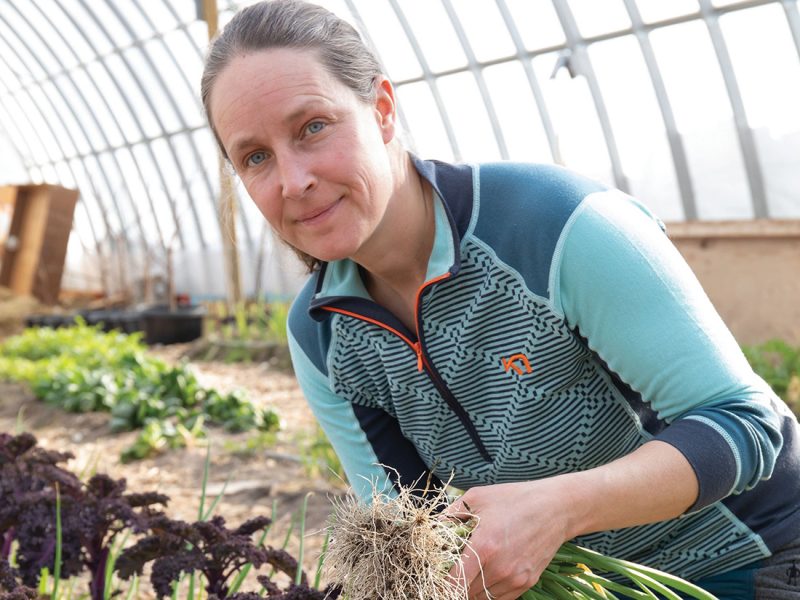
In just a few short growing seasons, Marie-Eve Fradette and her partner Michael Albert of Apple Quill Farm have found a niche in growing and selling fresh, locally produced vegetables well into the winter season. MICHAEL ALBERT

January 1, 2023 byTracey Fredrickson

WYCLIFFE – When imported produce is in short supply at the grocery store and fresh produce becomes a winter luxury, it’s heartening to know dedicated farmers are producing good food locally through the season.

Apple Quill Farm in Wycliffe, a small community between Cranbrook and Kimberley, is one of the most prolific small-scale winter producers in the East Kootenays.

Veterinarian Marie-Eve Fradette and photographer Michael Albert decided to move to the Kootenays from Vancouver Island in 2011 with their two young daughters.

“We had no intention of farming when we bought this property,” says Fradette. “We started growing for the love of food and the health of our family and it snowballed from there.”

Fradette grew up in St. Antoine de Tilly, a small community just up the St. Lawrence River from Quebec City known for its dairies, fruit and home gardening. Albert was raised in Wisconsin and inspired by his grandfather, a dairy farmer with a passion for experimenting with sustainable growing methods.

“The property was in the Agricultural Land Reserve and had never been farmed when we purchased it,” Albert says. “The soil needed amendment in some areas but overall, we were amazed how fertile it was. We felt we had come across a buried treasure and that the land should be farmed. I found myself  obsessing more about growing food than taking pictures. I realized I had to commit to farming full time and put my photography career aside to do this.”

After only four growing seasons, Apple Quill Farm has developed a reputation for producing a wide range of produce throughout the year, including kale, spinach and lesser-known items such as mizuna, also known as Japanese mustard greens. They also produce herbs, berries, and heirloom tomatoes while raising ducks and chickens. Just four acres of the 15-acre property are farmed.

“We’ve really adapted to the regional climate,” says Fradette. “We get a lot of sun here but the growing season is short and there are some deep frosts from September through June. So, for us, winter growing is all about the greenhouse.”

Greenhouse growing requires a significant capital investment but can deliver considerable benefits. The growing season can be extended by growing plants from starts in late winter or early spring, then transplanting them to an outdoor garden once the weather and temperatures are ideal. The heat of the sun is trapped in the walls, frame and soil which heats up the plants. They are well protected from cold and frost so that even at the height of winter, the plants can get an excellent start.

In preparation for the 2021 season, the couple invested $60,000 in a 90-foot greenhouse as well as propane heating. A few LED grow lights are used to start the plants in winter.

“We really worked the numbers and used spreadsheets to determine our cost of production – what it costs to heat the greenhouse, maintain efficient space for storing plants and moving around while we work, and what we needed to produce to make the investment worthwhile,” says Albert. “I am blown away by what a valuable farm management tool a greenhouse can be.”

After just one season using the greenhouse, Apple Quill has increased the amount of food it grows by 150% and it hopes to double that number within two years.

“We are extending the growing season by reducing the time the plants are dormant. They get a head start in the greenhouse and begin producing sooner than usual. Our raspberries, for example, are ready for harvesting in June, which is much earlier than the typical August harvest,” adds Albert, noting that the couple enjoyed a last bowl of fruit from the greenhouse in November the day they turned off the heat.

As the weather cools, the greenhouse temperature is allowed to drop; by November, it can be almost as cool in the greenhouse as it is outside. Heating and labour costs go down and the farm takes a break. The couple uses this quieter time of year to review what went well during the season and plan what they want to do differently in the year ahead.

One of the keys to winter growing is planting early enough that crops have a chance to get close to maturity before the short days of winter arrive. The period when daylight falls below 10 hours per day – known as the Persephone period (a nod to Persephone, daughter of Demeter, the harvest goddess in Greek mythology) – provides a guide for when to sow for fall/winter harvest and when crops need protection for overwintering. Related to latitude, it begins in late October and runs to mid-February in the East Kootenays.

It is also important to plant enough to carry the farm through the cold season. Regrowth is very slow during the winter and there may be only one harvest of greens during the coldest months. Many crops do well in a tunnel, protected by a row cover on hoops, or in a greenhouse. The plastic coverings add protection from cold, frost and predators.

Apple Quill uses tunnels both outside and inside the greenhouse. When used inside, hoop houses can help provide extra insulation and enhanced protection for the plant starts.

“We have learned so much through our experimentations that educating people about how food is grown is another reason the farm exists,” says Fradette.

Apple Quill hosts workshops through the summer in cooperation with Kootenay and Boundary Farm Advisors and Wildsight Society. Winter growing, extending the season and tomato production are recurring topics.

With the addition of winter farmers markets in 2022, Apple Quill and other local farmers have more opportunity to bring products they grow through the winter to consumers. The Cranbrook market held three indoor market days in November and December attracting up to 150 people in one day.

“It was great to see Apple Quill’s fresh greens and herbs when there was two feet of snow outside,” says Cranbrook Farmers Market manager Jessica Kazimi.

Consumers won’t give up their desire for year-round greens any time soon, creating ongoing opportunities for small-scale producers to connect with customers, add to the food supply and involve consumers in the growing process.

“This farm has allowed us to spend more time with our kids and put some serious roots down as stewards of our own land,” says Albert. “We work really hard because we believe the best food comes from small producers like ourselves committed to growing quality over quantity.”

Related Posts

You may be interested in these posts from the same category.

Previous Post: « Surrey ALR inclusion cheered
Next Post: Dairy farmers on the brink »

Copyright © 2025 Country Life in BC · All Rights Reserved