• Menu
  • Skip to primary navigation
  • Skip to main content
  • Skip to primary sidebar

Country Life In BC Logo

The agricultural news source in British Columbia since 1915

  • Headlines
  • Calendar
  • Subscribe
  • Advertise
  • About
  • Archives
  • Contact
  • Search
  • Headlines
  • Calendar
  • Subscribe
  • Advertise
  • About
  • Archives
  • Contact
  • Search

Primary Sidebar

Originally published:

April 2018
Vol. 104 Issue 4

Subscribe Now!

Sign up for free weekly FARM NEWS UPDATES

Select list(s) to subscribe to


By submitting this form, you are consenting to receive marketing emails from: Country Life in BC. You can revoke your consent to receive emails at any time by using the SafeUnsubscribe® link, found at the bottom of every email. Emails are serviced by Constant Contact
Your information will not be
shared or sold ever

Stories In This Edition

Labour trouble

OYF winners from Kootenays

Loan program will focus on female farm entrepreneurs

Editorial: Telling the story

Back Forty: Political succession has its perks and pitfalls

Op Ed: Research is a focus of BC’s grape and wine sector

Lack of processor capacity limits quota increases

Raw milk advocates take case to Victoria

Pig Trace identifies over 900 BC hog producers

Organic growers provide feedback on ALR

COABC changes governance structure

Organic growers prep for new labelling regs

Above-normal snowpacks cause for concern

Senate hearing highlights climate change concerns

BC egg producers ramp up production

Sidebar: Call for collaboration

Ag spending up, but don’t say “fire”

Trump wrong on NAFTA

Chicken growers demand pricing parity

Allocations clawed back as demand dwindles

Sidebar: Supply management debate

Ag Brief: Fruit industry mourns leader Greg Norton

Ag Brief: ALR draws feedback

Ag Brief: BC rancher to head Canadian Cattlemen’s

Ag Brief: Provincial lab vindicated

Farmers’ markets aiming for greater share

Cannabis smoke screen

Cherry growers eye Korea

Market champions

Making the right call in a horrible situation

Optimistic outlook for beef sector

Bull buyers on a mission

Soil, cover crop management highlights workshop

Fibresheds give local movement new meaning

Compensation available for sheep losses

Research: Study considers optimism & pessimism in calves

Weeds a big challenge for forage producers

Cranberry growers wrestle with low yields

Sidebar: Election postponed

Sanding and cranberry plant health

US consumers buy up non-browning apples

Foodgrains tour to Nepal makes a difference

Sidebar: Career options

Sale benefits those in need

4-H BC: The grand prize

Wannabe Farmer: Patience is a virtue embraced by farmers

Woodshed Chronicles: The Massey takes Henderson for a spin

Jude’s Kitchen: Spring greens

More Headlines

Follow us on Facebook

Comments Box SVG iconsUsed for the like, share, comment, and reaction icons

9 hours ago

... See MoreSee Less

View Comments
  • Likes: 6
  • Shares: 0
  • Comments: 0

Comment on Facebook

1 day ago

Four 4-H members were walking the Islands Ag Show Friday sharing leftover flower lollipops to exhibitors. The colourful pops were prizes for those who guessed answers based on the 4-H project boards on display at the show. Left to right, Talia Prenger, Kate Barter, Ella Prenger and Emma Barter of Parksville and Qualicum thought making lollipops into flowers "was really cute," says Kate. The Islands Ag Show wraps up today at 2 pm at the Cowichan Exhibition Centre. Stop by our booth and say hi to Ronda, Bob and Ann!

#BCAg
... See MoreSee Less

Four 4-H members were walking the Islands Ag Show Friday sharing leftover flower lollipops to exhibitors. The colourful pops were prizes for those who guessed answers based on the 4-H project boards on display at the show. Left to right, Talia Prenger, Kate Barter, Ella Prenger and Emma Barter of Parksville and Qualicum thought making lollipops into flowers was really cute, says Kate. The Islands Ag Show wraps up today at 2 pm at the Cowichan Exhibition Centre. Stop by our booth and say hi to Ronda, Bob and Ann! 

#BCAg
View Comments
  • Likes: 23
  • Shares: 4
  • Comments: 0

Comment on Facebook

3 weeks ago

The Canadian Food Inspection Agency is preparing to implement changes to its livestock traceability rules that will include mandatory computer reporting within seven days on movement of animals for veterinary appointments, community pastures, exhibitions, carcass and on-farm disposal and the births and deaths of every animal on your farm. Writer Tom Walker first brought these changes to the attention of our readers back in June 2023. We've posted his story to our website:

www.countrylifeinbc.com/cfia-proposes-traceability-updat#BCAg#BCag
... See MoreSee Less

The Canadian Food Inspection Agency is preparing to implement changes to its livestock traceability rules that will include mandatory computer reporting within seven days on movement of animals for veterinary appointments, community pastures, exhibitions, carcass and on-farm disposal and the births and deaths of every animal on your farm. Writer Tom Walker first brought these changes to the attention of our readers back in June 2023. Weve posted his story to our website: 

https://www.countrylifeinbc.com/cfia-proposes-traceability-updates/

#BCag
View Comments
  • Likes: 11
  • Shares: 21
  • Comments: 15

Comment on Facebook

I love hpw the cow in the picture hasn't even got a RFID tag in it but I digress. We can not read the link, it says "we are not permitted to read drafts". Please post again with the correct link.

Dairy farmers having been doing this several years. The app we use has become quite simple to use

Including equine?

Premise ID was slowly rolled through the country, voluntary then mandatory. Transparency and 'Consultation' has been light. Those who tried to bring this for discussion a couple years ago, because of forseen overreach, were quite often labeled conspiracy theorists and that it wasnt meant to be so heavily regulated and controlled. Gardens and seeds will be next. "Invasive species" reporting, check out the plants medicinal properties. Read the BC intentions papers. The premise ID that already heavy regulated commodities have claims to be treated different in the intentions papers on page 8. www2.gov.bc.ca/assets/gov/farming-natural-resources-and-industry/agriculture-and-seafood/food-saf...

Says i am "not allowed to preview draft".

Also concerning is the part on compliance...they can 'stumble onto' any farm and if you're not complying there are consequences.

When the CFIA stumbles into the wrong place compliance will be met with civil engagement

Says I can't preview draft

This is government overreach - Do Not Comply!

Do not comply

Fu

As if the price of beef isn't bad enough for consumers,,,,,be prepared to be gouged some more now

Ridiculous!!

Let's hold up on the beef exports tell we can get our own house in order... we need to deregulated, cheapen up the supply chain back into a 5 buck a pound rage so the good people canada can eat healthy food.. fuck your bean diets, that's retarded

This, along with the majority of new legislation pertaining to any type of farm, is a blatant squeeze on any sort of small, alternative agricultural venture. I am a massive believer in working together and sharing resources and costs and solutions - do not get me wrong - but this and the water registration among others, is an overreach (at most generous) and an absolute killer to smaller, local initiatives that LITERALLY save lives during extreme events. There is ONE ROAD into and out of my community. We don’t need or want some sort of backlogged government response when shit goes sideways. We want the ability AND SUPPORT to provide for our communities without penalty when things go badly. We want to produce sustainability for our communities. We live here, we work here, we want to STAY HERE. Stop making it harder.

View more comments

1 month ago

BC's minimum piece rates for 15 hand-harvested crops increased 2.6% on December 31. Crops include peaches, apricots, brussels sprouts, daffodils, mushrooms, apples, beans, blueberries, cherries, grapes, pears, peas, prune plums, raspberries and strawberries. Farm-worker piece rates in BC were increased by 11.5% in January 2019 and 6.9% in December 2024. BC’s current minimum wage sits at $17.85 per hour.

#BCAg
... See MoreSee Less

BCs minimum piece rates for 15 hand-harvested crops increased 2.6% on December 31. Crops include peaches, apricots, brussels sprouts, daffodils, mushrooms, apples, beans, blueberries, cherries, grapes, pears, peas, prune plums, raspberries and strawberries. Farm-worker piece rates in BC were increased by 11.5% in January 2019 and 6.9% in December 2024. BC’s current minimum wage sits at $17.85 per hour. 

#BCAg
View Comments
  • Likes: 9
  • Shares: 0
  • Comments: 2

Comment on Facebook

I'm not sure what they're telling us. Did peace rates have to increase so that Farm workers could make minimum wage?

They deserve it, but the general public will be whining about increased prices in the stores. Will need to make more information average to the g.p.

1 month ago

... See MoreSee Less

View Comments
  • Likes: 14
  • Shares: 0
  • Comments: 1

Comment on Facebook

105 Mile Ranch

Subscribe | Advertise

The agricultural news source in British Columbia since 1915
  • Email
  • Facebook

Labour trouble

Nursery industry’s issues resonating with all sectors

March 27, 2018 byPeter Mitham

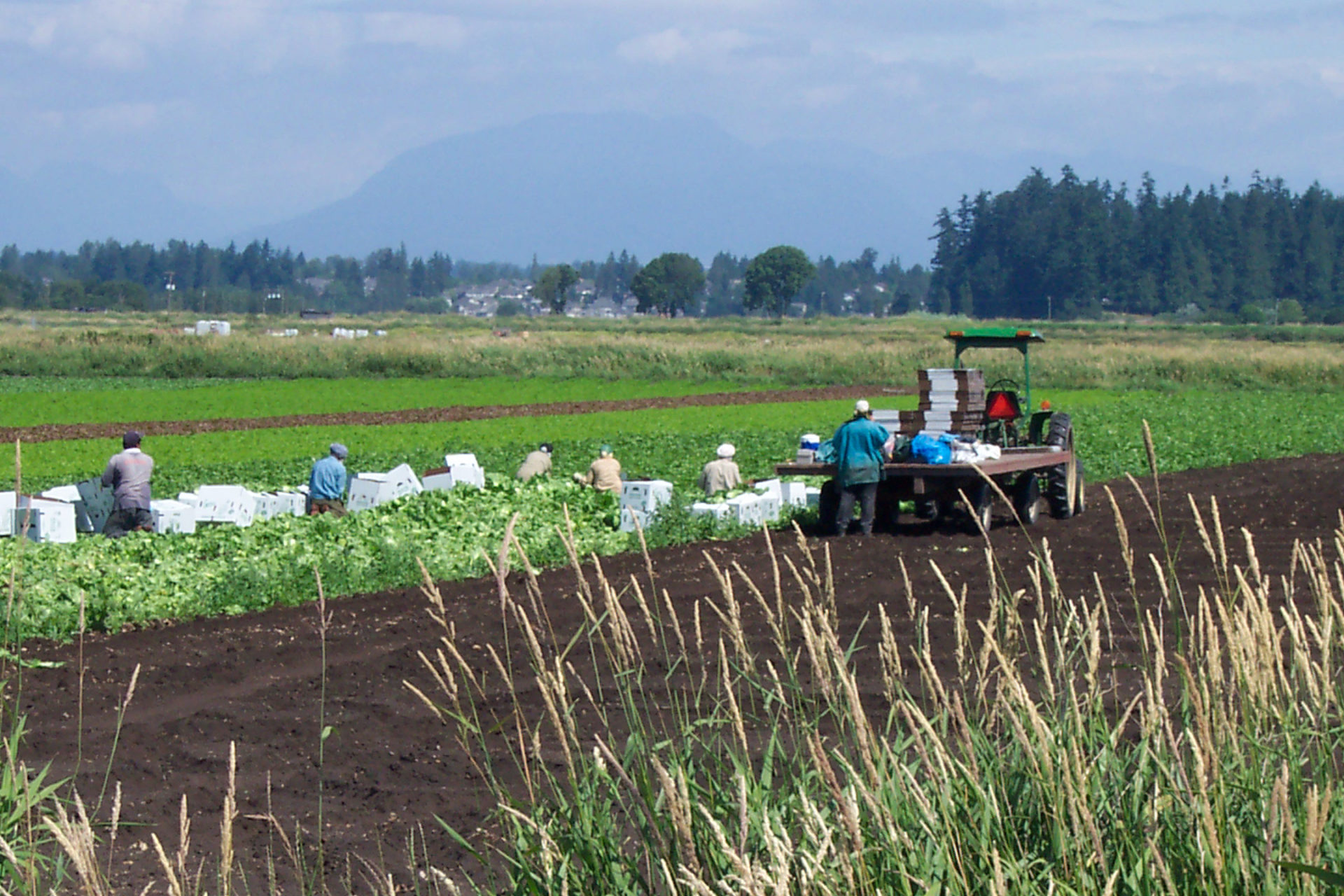
LANGLEY – A packed house gathered for the spring meeting of the BC Landscape and Nursery Association at Kwantlen Polytechnic University in Langley on March 12, keen to get answers to questions about the state of the labour force.

The association is engaged in an extensive study of labour requirements for the sector, but the most immediate concern of most growers was the ongoing delays in securing workers under the Seasonal Agricultural Worker Program (SAWP).

The nursery and landscape sector is typically the first in BC to receive workers each year, with many operations hiring dozens of workers over the course of the season. But many are still waiting for applications to be approved, and forced to make do with fewer workers than usual or none at all. Still others have the workers they expected, but only after several weeks’ delay.

“I just got an email again today saying they’re working hard at getting things solved, but I don’t see any changes,” association chair Len Smit told growers at the meeting. “I phone there every day and they say there’s no paperwork there for you and my paperwork has been sitting there since the middle of January.”

BCLNA first alerted members to the issue January 10, noting that “totally completed” applications submitted to Service Canada as early as December 22 had yet to be processed.

Reasons given at the time included Service Canada’s delays in approving labour market assessments (LMAs), and Mexico’s refusal to work on employer files without approved LMAs.

“The net result is that with the Canadian government’s delays this year, and the Mexican government not being prepared to deal with a file until they get the finalized go-ahead on a file by the Canadian government, applications are backing up and processing is being delayed,” BCLNA told members.

Canada has since laid the majority of the blame for the delays on Mexico, noting that the September earthquake near Mexico City – the country’s strongest in a century – had affected the country’s labour ministry.

Smit said the lack of communication was unhelpful, and trading blame wasn’t making matters any better.

“There’s a little bit of a disconnect – a lot of disconnect – between the Canadian consulate in Mexico and the Mexican government, between the workers’ office and the Canadian consulate. There’s not enough communication back and forth,” he said.

Smit told growers to keep on consular staff to ensure applications are moving, and to escalate matters to Arturo Hernandez at Mi Tierra, the company handling travel arrangements for the workers, if Canada says things are in order.

“He is the direct link between Mexico and us, and he can get the ball rolling,” Smit said.

But one grower said Mi Tierra isn’t a silver bullet.

“[Workers] call me saying, ‘I’m waiting for you guys to do something,’ and I say, ‘I told Mi Tierra two weeks ago that I want you here.’ So Mi Tierra is not the be-all and end-all,” the operator said.

Concerns in the nursery sector have since spread to other producer groups, notably the BC Fruit Growers Association, whose general manager Glen Lucas is also assistant general manager of the Western Agricultural Labour Initiative (WALI), which oversees SAWP in BC.

BCFGA bulletins originally told its members “do not panic, yet” but rather file their applications early and make sure they were complete.

By early March, growers were being told, “Allow plenty of time – apply 12 weeks prior to worker arrival – delays this year are the worst ever.” While improvements are occurring, growers have uniformly taken Canada to task for the delays.

Workers in Mexico, many of whom see Canada as a more attractive destination than the US, may also change their minds.

“I’m thinking [SAWP is]  going to start losing some Mexicans because of this hiccup that’s going on,” Smit said.

The trouble accessing foreign workers underscores the need for a local solution, something Ann Walsh of Solstice Consulting is researching on behalf of the BCLNA as part of the labour market information research phase of the BCLNA Labour Market Partnership Project.

“Almost every country is experiencing labour shortages in the agriculture sector,” Walsh told growers.

Her current work builds on an engagement report announced at BCLNA’s annual general meeting in December 2016 and completed in February 2017.

The current work includes surveys of industry associations, employers, domestic employees and foreign workers to identify trends, and will be followed by focus groups. A survey of industry associations and preliminary findings have been assembled, but the BC Ministry of Advanced Education, Skills and Training – which provided funds for the project through the federal-provincial labour market development agreement – has directed Walsh not to share any results until the draft report.

A draft report should be ready in April and finalized in May. Work will complete by June.

“We will then have the evidence to look at the strategies,” she said.

This will set the stage for a pilot project and a strategy for developing the workforce through 2025.

However, Walsh’s initial research has allowed BCLNA to begin preliminary conversations with the BC Agriculture Council and WALI regarding collaborations that can help address labour requirements.

Walsh would particularly like to see new entrants see long-term opportunities in the sector.

“You have various paths you can take,” she said.
Related Posts

You may be interested in these posts from the same category.

Province defrays COVID-19 costs

Rules for young workers

Fruit growers seek workers

BCAC shifts to advocacy

BC minimum wage increases

Flight ban strands workers

Don Dahr

Farm injury rate falls

Foreign worker vaccination prioritized

Growers anxious about labour

New year, new openness

SAWP requirements waived

Ottawa announces new rules for foreign workers

Previous Post: « Research is a focus of BC’s grape and wine sector
Next Post: Salal berries have market potential »

Copyright © 2026 Country Life in BC · All Rights Reserved