
• Menu
  • Skip to primary navigation
  • Skip to main content
  • Skip to primary sidebar

Country Life In BC Logo

The agricultural news source in British Columbia since 1915

  • Headlines
  • Calendar
  • Subscribe
  • Advertise
  • About
  • Archives
  • Contact
  • Search
  • Headlines
  • Calendar
  • Subscribe
  • Advertise
  • About
  • Archives
  • Contact
  • Search

Primary Sidebar

Originally published:

FEBRUARY 2023
Vol. 108 Issue 2

Subscribe Now!

Sign up for free weekly FARM NEWS UPDATES

Loading form…

Your information will not be
shared or sold ever

Stories In This Edition

Ghosted

Dairy farmers on the brink

Groundwater showdown

Finding success in succession planning

Editorial: The great repricing

Back 40: Government priorities are asking a lot

Viewpoint: Does farming need to be a full-time job?

Frozen out

Sidebar: Pruning it right

Letters: Program delivery, advocacy have separate roles

Wild weather continues to hammer dairies

Ag Briefs: Province hires two new assistant deputy ministers

Ag Briefs: BC Milk opens organic stream

Ag Briefs: ALC eyes Heppell property for inclusion

Building not land value bumps farm assessments

Province scrambles to register farm employees

Growers contest compensation formula for AI

Funding available for Langley landowners

Potato crop takes a hit but set to rebound in 2023

Low snowpack worrisome for producers

Prescribed burns part of the three-year study in the Peace

Farmgate abattoirs shut out of insurance

Sidebar: Survey explores insurance coverage

Ranch used as part of treaty settlement

Climate-resilient cattle take shape at TRU

Japanese beetle continues to spread

Field trial shows alternative to traditional crops

On-farm storage helps boost profitability

Market garden powered by solar energy

Farmers need to prioritize mental wellness

Scholarship takes chefs on tours of BC farms

Farm Story: Of things we would be lost without

Sheep producer expands wool market

Sidebar: How M.ovi impacts wild sheep

Fernie grocer stocks only local products

Woodshed: Kenneth’s rescue is touch and go

New map app educates public about BC farms

Snacks for your sweeties

More Headlines

Follow us on Facebook

Comments Box SVG iconsUsed for the like, share, comment, and reaction icons

6 hours ago

The Township of Langley Farm and Ranch Exhibition Society is hosting a public open house this evening to gather input on plans to transform the historic Belmont Farm into an agricultural exhibition, education and heritage hub. Farmers, ranchers, and community members are invited to share their feedback. The open house is at the George Preston Rec Centre, 6-8 pm.

Township of Langley Farm and Ranch Exhibition Society
#BCAg
... See MoreSee Less

The Township of Langley Farm and Ranch Exhibition Society is hosting a public open house this evening to gather input on plans to transform the historic Belmont Farm into an agricultural exhibition, education and heritage hub. Farmers, ranchers, and community members are invited to share their feedback. The open house is at the George Preston Rec Centre, 6-8 pm. 

Township of Langley Farm and Ranch Exhibition Society 
#BCAg
View Comments
  • Likes: 6
  • Shares: 0
  • Comments: 0

Comment on Facebook

9 hours ago

The sold-out Southern Interior Horticulture show continues today. Education sessions range from rodent control to new tree fruit varieties, with the afternoon devoted to improving spraying techniques for orchardists and vineyard managers. When not listening to speakers, producers are checking the trade show.

#BCAg
... See MoreSee Less

The sold-out Southern Interior Horticulture show continues today. Education sessions range from rodent control to new tree fruit varieties, with the afternoon devoted to improving spraying techniques for orchardists and vineyard managers. When not listening to speakers, producers are checking the trade show.

#BCAg
View Comments
  • Likes: 6
  • Shares: 0
  • Comments: 0

Comment on Facebook

11 hours ago

The BC Poultry Association has lowered its avian flu biosecurity threat level from red to yellow, citing declining HPAI risk factors and fewer wild bird infections. Strong biosecurity practices helped BC limit cases this winter to 38 premises, down from 81 last year. For more, see today's Farm News Update from Country Life in #BCAg#BCAg ... See MoreSee Less

Link thumbnail

Poultry biosecurity notches down

www.countrylifeinbc.com

Declining risk factors for highly pathogenic avian influenza (HPAI) have prompted the BC Poultry Association to lower the industry’s biosecurity threat level from red to yellow. The decision…
View Comments
  • Likes: 11
  • Shares: 2
  • Comments: 1

Comment on Facebook

🐥💛

1 day ago

The application deadline for cost-shared funding through the Buy BC program is coming up on February 20. Up to $2 million through the Buy BC Partnership Program is available annually to BC producers and processors to support local marketing activities that increase consumer awareness of BC agriculture and BC food and beverages. For more information, visit buybcpartnershipprogram.ca/.

Buy BC

#BCAg
... See MoreSee Less

Link thumbnail

Home - Buy BC Partnership Program

buybcpartnershipprogram.ca

Buy BC Partnership Program Increase your visibility with Buy BC The Buy BC Partnership Program is a fundamental component of Buy BC that provides up to $2 million in cost-shared funding annually to lo...
View Comments
  • Likes: 3
  • Shares: 0
  • Comments: 0

Comment on Facebook

1 day ago

The Sik-E-Dakh (Glen Vowell) First Nation's Skeena Fresh hydroponic operation has doubled production capacity thanks to a $130,632 Northern Development Infrastructure Trust grant. Growing lettuce, kale, herbs and more in shipping containers, the operation uses 90% less water than traditional farming while providing 1,200 people with year-round access to fresh, locally grown greens. Their story is in the February edition of Country Life in BC, the agricultural news source for BC’s farmers and ranchers.

Northern Development Initiative Trust
#BCAg
... See MoreSee Less

The Sik-E-Dakh (Glen Vowell) First Nations Skeena Fresh hydroponic operation has doubled production capacity thanks to a $130,632 Northern Development Infrastructure Trust grant. Growing lettuce, kale, herbs and more in shipping containers, the operation uses 90% less water than traditional farming while providing 1,200 people with year-round access to fresh, locally grown greens. Their story is in the February edition of Country Life in BC, the agricultural news source for BC’s farmers and ranchers. 

Northern Development Initiative Trust 
#BCAg
View Comments
  • Likes: 15
  • Shares: 1
  • Comments: 0

Comment on Facebook

Subscribe | Advertise

The agricultural news source in British Columbia since 1915
  • Email
  • Facebook

Market garden powered by solar energy

Off-grid farming shows what’s possible in the East Kootenays

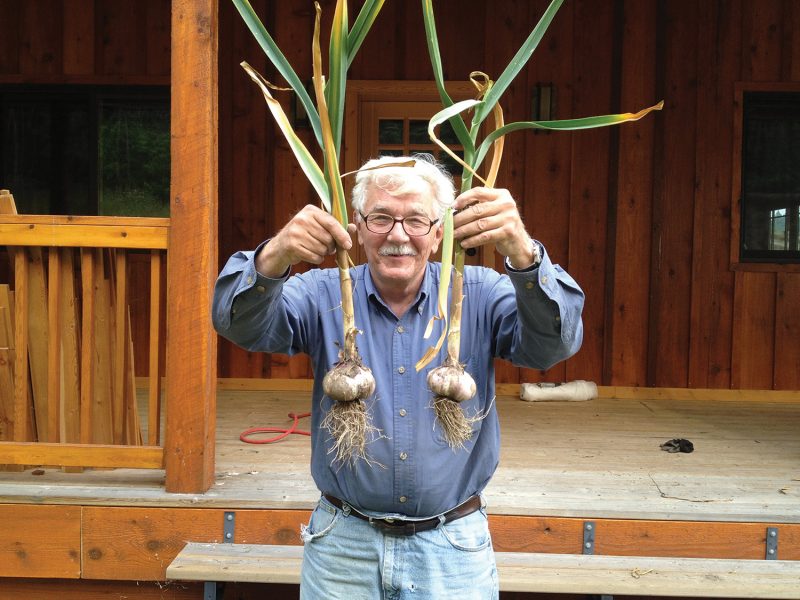
No electricity? No problem for Harold Tichenor of Sunpower Farm in Skookumchuk, north of Cranbrook. With his wife, Jessica, he has embraced living and farming off the grid. SUBMITTED

February 1, 2023 byTracey Fredrickson

SKOOKUMCHUK – Jessica and Harold Tichenor have renovated several properties over the years, developing their building and gardening skills to where they could tackle extremely challenging projects. At a point in their lives when most farmers are thinking about retirement, they bought an off-grid property in the East Kootenays that turned out to be one of their most ambitious – and rewarding – adventures.

For several years, the couple divided their time between their permanent residence on Bowen Island and a property they developed in Rexford, Montana, one of the oldest Amish settlements in the state. They were strongly influenced by their Amish neighbours’ approach to farming, which avoids using motorized mechanical equipment and incorporates traditional methods to plan, raise and harvest products.

“We had a good-size garden and I was encouraged to consider growing for farmers markets, but I couldn’t do that in Montana because I was not a US citizen,” Jessica says.

In 2005, the Tichenors, then in their late 50s, set their sights on the Kootenays as the location for their next project. They purchased a 230-acre parcel in the town of Skookumchuk, a small rural community north of Cranbrook in the Rocky Mountain Trench, abundant with rivers and lakes. The land had been cleared in 1910 and sat undeveloped for years.

“Our philosophy is If you want to be a successful grower, grow where no one else is growing,” says Jessica. Skookumchuk met that criteria with less than 100 residents and not much more than a convenience store, RV park and campground.

Jessica describes the land when they purchased it as “total wilderness,” forest and bottom land with approximately 4,200 feet of frontage on Tamarack Lake. “It was so beautiful and private, accessible from a driveway almost a mile long. We thought living here would be a once in a lifetime opportunity.”

Like the prospectors that came to the area to pan for gold in the 1800s, they jumped in to see what they could accomplish with the gem they had found.

They lived in a log cabin with a small solar energy system for several summers, eventually building a house and shop and expanding the array of solar panels. When the house was complete, they turned their focus to creating a sizeable market garden and named the property Sunpower Farm.

An eighth of an acre was initially devoted to the garden, which required significant soil amendments. Seventy acres of the property consisted of receded lakebed with seven feet of sandy loam topsoil.

“At first, we couldn’t even grow lettuce there,” Jessica recalls. “When we started spreading certified organic alfalfa hay in the fall, the soil quality improved every year. Today we have deep black soil that drains well and protects the seeds through the winter. We’ve expanded the garden so many times it’s unbelievable.”

Sunpower is best known for its garlic. It produced 5,000 bulbs last year. It also grows potatoes, onions, corn, peas, beans, lettuces, beets, carrots, radishes, broccoli, cauliflower, cabbage, raspberries and strawberries. When the garden was expanded to its current size of 0.75 acres, they planted apple, pear and sour cherry trees. In addition to the Cranbrook Farmers Market, the farm sells to Grace Café & Preserving in Kimberley, and Mortella’s restaurant in Cranbrook. A grocery store and private customers on Bowen Island take much of what is left over at the end of the season.

Experimental farm

In addition to Sunpower’s success as a market garden, what really distinguishes it from other farms in the Kootenays is its use of solar power and non-mechanized equipment to minimize greenhouse gas emissions.

“I considered the property an experimental farm,” says Harold. “We felt it could be developed into a substantial operation, but it was going to cost over $80,000 to put in electricity. We built the original small-scale solar system at about half that cost.”

The system was installed on the farm shop, which is oriented to maximize the sunlight the system receives. The shop also contains the equipment needed to convert light into power.

“On the upper floor are the control systems and a battery bank which provides about three days of energy to carry us through in cloudy weather. We use a propane generator during long stretches of cloudy days in the fall.”

With his interest in alternative energy, Harold began researching tilling and mowing equipment that did not use gas. He found a series of Elec-Trak all-electric garden tractor equipment made by General Electric in the early 1970s in response to the energy crisis of the time. The equipment is still available and in use today by a following of tractor and electric vehicle enthusiasts. Harold and Jessica bought two Elec-Traks so that when one was charging, the other could be used to keep the work going.

They have a small electric truck for bringing in crops from the garden and use a propane-powered gas range to prepare the bread and cookies Jessica makes and sells along with produce at the Cranbrook market.

“Other than the cost of the Elec-Traks themselves, we use little electricity,” says Harold. “That keeps our hydro-carbon output low and reduces infrastructure expenses.”

“The electric mowers only have a few moving parts so keeping them operating is easy,” he adds. “I might replace brushes and some bearings every two to three years and replace the batteries every five years. The battery technology ensures they will run for three hours. That’s about as much time as I want to spend on certain tasks anyway.”

Sunpower’s irrigation system is also adapted to the site.

“Summers in the Skookumchuk area are blazing hot and 42-degree days are common,” Jessica points out. “We placed the garden next to Tamarack Creek which flows into Tamarack Lake. We have a water diversion tank above the house and garden so that all our water comes from the creek with more than adequate pressure. To minimize water use, we use mostly drip lines, eliminating the need for pumps.”

The Tichenors, now in their 70s, have long followed the principles of author Jean-Martin Fortier, renowned for his low-tech, high-yield production methods, and English horticulturalist Charles Dowding’s

no-dig and organic soil management techniques.

They are adamant that market gardening benefits the health of older people.

“Even now in our 70s, we are very fit, largely because the garden work stretches and strengthens all the muscles in the body,” says Jessica, who has a nursing degree. “The social aspect of participating at the farmers market and providing good food for others also contributes to our healthy lifestyle.”

Despite the challenges of developing the farm from scratch, they have no regrets.

“We feel we’ve defied the odds as to what can be accomplished on this property and it has given back to us in so many ways,” Jessica says.


Related Posts

You may be interested in these posts from the same category.

Previous Post: « Province looks beyond timber
Next Post: Farmers question regenerative ag agenda »

Copyright © 2026 Country Life in BC · All Rights Reserved