• Menu
  • Skip to primary navigation
  • Skip to main content
  • Skip to primary sidebar

Country Life In BC Logo

The agricultural news source in British Columbia since 1915

  • Headlines
  • Calendar
  • Subscribe
  • Advertise
  • About
  • Archives
  • Contact
  • Search
  • Headlines
  • Calendar
  • Subscribe
  • Advertise
  • About
  • Archives
  • Contact
  • Search

Primary Sidebar

Originally published:

June 2018
Vol. 104 Issue 6

Subscribe Now!

Sign up for free weekly FARM NEWS UPDATES

Loading form…

Your information will not be
shared or sold ever

Stories In This Edition

A Taste of Spring

Flooding wallops southern interior

Ottawa wires CAP cash

Minimum wage hike squeezes farm margins

Editorial: The new democracy

Back Forty: Horgan on receiving end of pipeline challenge

Viewpoint: BC has led country in national check-off support

New chair appointed to land commission

Richmond expands farmhouse provisions

Demand for land drives farmland values higher

Biosolids raise a stink with neighbours

Rising wine sales boost demand for red grapes

Game-changer on dividend splitting

Mushroom merger

Wildfire, flood review has First Nations focus

Sidebar: Snapshot of recommendations

Labour tops issues as hothouse growers meet

Growers on look-out for activists

Antimicrobial lockdown

Ag briefs: Island farmers on lookout for armyworm

Ag briefs: AgSafe elects new chair

Ag briefs: No flood of licences

Ag briefs: Direct delivery

Hops revival gains traction with feds

Wildfire top concern of grape growers

Sidebar: Preparing for fires in the Okanagan

Nuffield scholars

Two studies promise to ensure slaughter capacity

Sidebar: Consultation schedule

Oversight sought

Bumper crop of invasive weeds after wildfires

Elk sights have producers concerned

Guichon heads back to life on the ranch

Research: Grazing cattle the sustainable way

Farmers markets focus on cultivating trust

Veggie days open house

Co-ops offer values-based alternatives

Region focuses on boosting local food usage

Bonus coupon

Growing opportunity

Garden City project breaks sustainable ground

Weevils pose challenges

Protecting pollinators key for crop yields

Wannabe: Keeping up with the times

Young farmers turn on, tune in and download

Woodshed: Kenneth has another go at the Massey

4-H BC thanks partners for their support

Jude’s Kitchen: Co-op food


More Headlines

Follow us on Facebook

Comments Box SVG iconsUsed for the like, share, comment, and reaction icons

6 days ago

A BC Forest Practices Board investigation has found overgrazing has damaged grasslands in the Coutlee Range Unit near Merritt — and the range-use plan meant to prevent it was unenforceable. With complaints about overgrazing on the rise and grasslands covering just 1% of BC's land mass, the findings raise fresh questions about how the province manages one of its most vulnerable — and valuable — food-producing ecosyste#BCAg#BCAg ... See MoreSee Less

Link thumbnail

Board finds overgrazing rules unenforceable unmeasurable

www.countrylifeinbc.com

MERRITT – A BC Forest Practices Board investigation has found instances of non-compliance related to overgrazing have damaged open grasslands in the Mine pasture, part of the Coutlee Range Unit near...
View Comments
  • Likes: 6
  • Shares: 6
  • Comments: 6

Comment on Facebook

Several ranchers in recent years have gone into temporary non use on that range , so that means the grass should grow. But drought conditions/lack of rain and snow don’t allow that to happen . Dried up springs , creeks waterholes in various pastures add to over grazing where there is water , as livestock and everything else stay close to the water source . So even though less cattle are on it , over grazing appears. There is a large volume of horses on it 365 days/year which is wrong ! They pull grass right out of the ground when it’s just trying to grow ,, opens the door for weeds to grow in. That don’t help it. Aging infrastructure ( fences) laying on the ground, pipe line building , ( lack of commitment to fence maintenance) amongst all users contributes also to over grazing. Recreational atv users leaving gates open between pastures allows livestock to go back or ahead in pastures also expidites over grazing. Logging ( bcts) has no problem laying out cut locks on both sides of a fence , then it gets smashed down during logging and they don’t take responsibility to stand it back up or clean the cattle gaurds out when they are done , that happened 4 years ago on pasture 5 up there . I bet it is still not fixed . There are lots of contributing factors to the problem.

Tragedy of the commons.

I looked through the report. I saw nothing about the effects of noxious weeds on productive grasslands. This particular area is vulnerable because of the Ministry’a efforts to diversify the use of the Grasslands.

This pasture is under tremendous pressure not only from cattle but from irresponsible local residents who treat it as a landfill dumping all manner of household debris here. And don't even get me started on the mud bogging and camping in sensitive riparian areas. The feral horses are in this pasture 365 days a year just hammering it. Would sure be nice to see some enforcement action on people who are intentionally ripping up the grasslands and riparian areas. Cattle could be a valuable resource for rebuilding soils and native grasses in this area with the help of electric fencing and/or e-collars. The humans will be harder to manage.

The Forest and Range Practices Act was written by lawyers for global forest licencee shareholders. Results-based = unenforceable.

Also, can we talk about the impact of a pipeline being built through the middle of this field for multiple years?

View more comments

1 week ago

East Kootenay rancher Randy Reay is digging a new well after two natural water sources dried up on his Crown tenures. A new Living Lakes Canada assessment found 15% of mapped aquifers in the region are high-priority for monitoring, yet 80% of those go unmonitored. With over 48% of BC's provincial observation wells reporting below-normal groundwater levels, ranchers and researchers are sounding the alarm on water security. The story is in our March edition, and we've posted it to our website thi#BCAgk.

#BCAg
... See MoreSee Less

Link thumbnail

Water woes: groundwater under pressure across BC

www.countrylifeinbc.com

JAFFRAY – As a young boy growing up in the Kootenay-Boundary region, Randy Reay never expected to run out of water. But this year, in mid-February, his fields are bare. There is no snow halfway up t...
View Comments
  • Likes: 8
  • Shares: 7
  • Comments: 1

Comment on Facebook

Jaffrey is in the east Kootenays not kooteney boundary

2 weeks ago

BC farmers are bracing for prolonged higher input costs as war in the Middle East drives up fuel and fertilizer prices. Nitrogen fertilizer costs were already climbing before the Iran conflict began, with prices still roughly 60% above pre-pandemic levels. Farm Credit Canada warns that unlike 2022, strong commodity prices may not offset rising costs this time. Local suppliers expect supply challenges and further price increases ahead.

#BCAg
... See MoreSee Less

Link thumbnail

Fertilizer prices on the rise

www.countrylifeinbc.com

War in the Middle East has delivered a generational shock to energy prices, meaning BC farmers can expect a prolonged period of higher costs not just for fuel but also for fertilizer.
View Comments
  • Likes: 2
  • Shares: 1
  • Comments: 0

Comment on Facebook

2 weeks ago

... See MoreSee Less

View Comments
  • Likes: 1
  • Shares: 0
  • Comments: 0

Comment on Facebook

2 weeks ago

Cameron Stockdale is the new executive director of provincial farm safety organization AgSafeBC. Find out more in this week's Farm News Update from Country Life in B#BCAg#BCAg ... See MoreSee Less

Link thumbnail

New leadership at AgSafe BC

www.countrylifeinbc.com

Cameron Stockdale is the new executive director of provincial farm safety organization AgSafeBC, succeeding Wendy Bennett. Bennett left AgSafeBC in September 2025, following 12 years with the…
View Comments
  • Likes: 5
  • Shares: 1
  • Comments: 0

Comment on Facebook

Subscribe | Advertise

The agricultural news source in British Columbia since 1915
  • Email
  • Facebook

Minimum wage hike squeezes farm margins

Workers will have to work harder to pay for increase

June 1, 2018 bySean Hitrec

DELTA – Growers are taking a closer look at pay structures as minimum wage hikes take effect this month.

As promised during last spring’s election campaign, the BC NDP plan to raise the minimum wage to $15.20 an hour over the next four years. The first of four minimum wage increases took effect June 1, lifting the minimum wage to $12.65 an hour from $11.35. On January 1, 2019, all piece-rate minimums will jump 11.5%. Additional increases to the minimum piece rate are also on the table.

Different labour laws and lower costs in Mexico and the US keep fruit and vegetable prices in check at Canada’s supermarkets, but they also set the price for local farms. Combined with a new payroll tax replacing MSP premiums starting next year, rising labour costs are set to put fresh pressure on producers’ margins.

BC greenhouse growers are one group that has taken a hit from cost increases in the last few years.

“It’s impossible for our industry to pass these higher operating costs onto consumers except through market mechanisms that are beyond our control,” Peter Cummings told the BC Greenhouse Growers Association at its annual meeting in April.

Cummings, who stepped down as chair at the meeting, said carbon taxes along with minimum wage increases will be very difficult for the greenhouse industry to deal with.

“The farmers are the ones that get the shaft,” says Westcoast Vegetables Ltd. COO Ron Van Marrewyk.

His greenhouses in Delta pay workers incentive bonuses on top of wages to pick efficiently. Because of the minimum wage increase, he says his workers will receive smaller bonuses.

“Our incentive bonus is changing, too,” he says. “If you want that same type of bonus, we’re going to have to ask you to work faster.”

BC Federation of Labour president Irene Lanzinger, who for years has been pushing for a $15 minimum wage in BC, recognises the strain it puts on farm owners. However, she says just because other countries can charge less in Canada’s markets due to looser labour regulation, does not make it right for workers in Canada to live on poverty wages. She emphasizes that the minimum wage will remain below the poverty level until just below $15 per hour.

“We cannot participate in the race to the bottom,” she says. “It is still incumbent upon us to set minimum standards here for workers – employment standards that mean that workers are not exploited in British Columbia.”

Other greenhouses are going to absorb the cost directly into their profits.

“It comes from our bottom line. If the cost of labour goes up, there’s less profit, simple,” says Sunnyside Greenhouses Ltd. owner Jos Moerman. “For us, it’s so important to have the same people coming back every day and every year because they know what to do.”

Farms that pay workers a piece rate based on how much they pick have about a year longer to prepare.

In a letter to Country Life in BC, BC Minister of Labour Harry Bains clarified why the BC piece rate increase is lagging behind the minimum wage hike. Bains notes the Fair Wage Commission’s recommendation in April was a 15% increase to all piece rates as well as a requirement for all workers to make at least minimum wage starting this June.

“However, we recognized that this level of increase, particularly during the current growing season, would put undue strain on farmers. So we instead took a more measured and moderate approach – with an 11.5% increase to piece rates as of January 1, 2019 to give farmers more time to adjust,” he says. “And because the commission also noted in their report that there were significant information gaps on the piece rate system, we went back to the commission asking that further study be done with the help of a subject-matter expert so that we can fully understand the complexities of this unique and 40-year-old system before making fundamental changes to how it functions.”

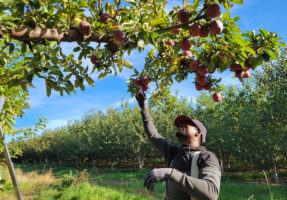
Piece-rate pay systems are common in the production of fruit and berries. BC Fruit Growers’ Association general manager Glen Lucas says his members are in a similar situation to greenhouses, with most prices set by imported product. However, they are relieved the minimum wage jump is not happening all at once and the piece-rate hike isn’t until January.

“We’re very pleased that the government said they would take a second look at the Fair Wage Commission, and recognised that the impacts might be a lot broader than the narrow scope that the Fair Wage Commission was looking at,” he says.
Related Posts

You may be interested in these posts from the same category.

Province defrays COVID-19 costs

Rules for young workers

Fruit growers seek workers

BCAC shifts to advocacy

BC minimum wage increases

Flight ban strands workers

Don Dahr

Farm injury rate falls

Foreign worker vaccination prioritized

Growers anxious about labour

New year, new openness

SAWP requirements waived

Ottawa announces new rules for foreign workers

Previous Post: « Wildfire, flood review has First Nations focus
Next Post: New chair appointed to land commission »

Copyright © 2026 Country Life in BC · All Rights Reserved