• Menu
  • Skip to primary navigation
  • Skip to main content
  • Skip to primary sidebar

Country Life In BC Logo

The agricultural news source in British Columbia since 1915

  • Headlines
  • Calendar
  • Subscribe
  • Advertise
  • About
  • Archives
  • Contact
  • Search
  • Headlines
  • Calendar
  • Subscribe
  • Advertise
  • About
  • Archives
  • Contact
  • Search

Primary Sidebar

Originally published:

JANUARY 2024
Vol. 110 Issue 1

Subscribe Now!

Sign up for free weekly FARM NEWS UPDATES

Select list(s) to subscribe to


By submitting this form, you are consenting to receive marketing emails from: Country Life in BC. You can revoke your consent to receive emails at any time by using the SafeUnsubscribe® link, found at the bottom of every email. Emails are serviced by Constant Contact
Your information will not be
shared or sold ever

Stories In This Edition

Water plans kick off

For a good cause

AI case count slowing

BC agriculture loses a champion

Editorial: Yes, yes, Yes!

Back 40: Glaring observations about (barn) cats

Viewpoint: Site C’s long-term costs are becoming clear

Erosion claims dozens of acres of farmland

Finances trigger relocation plans for nursery group

Ag Briefs: Rangeland forage allocation studied

Ag Briefs: Wise water management funded

Ag Briefs: Mushroom harvester commercialized

Hopcotts win OYF Canada with sustainable practices

Remuneration to increase for dairy directors

Dairy achievement is built on resilience

Dairy producers discuss concerns at conference

Road rage in Peace

Sidebar: Rural road coalition out of commission

Diverse weather, shared hopes unite Peace

Five swans a-grazing

Ag Show Preview: Winter shows support knowledge, tech transfer

Making connections helps hort forum off to strong start

Gathering momentum

Blueberries and more

Beyond the Lower Mainland

Collaboration at record levels in fruit sector

BC growers weigh trade complaint against US cherries

Meat, veg prices rise sharply as inflation slows

Spallumcheen cuts, wraps deal for butcher hub

Cattle theft non-existent despite high prices

Water continues to be top issue for OK ranchers

Challenges, opportunities ahead for farmers institutes

Producers struggle to talk about mental health

Sidebar: How to help

Sweet rewards for Chilcotin rancher

Farm Story: Give me a break; let it snow

Vegans won’t save world from climate change

Woodshed: Kenneth faces the truth or suffers the consequences

PNE fundraiser supports youth in agriculture

Jude’s Kitchen: Comfort food makes families happy

More Headlines

Follow us on Facebook

Comments Box SVG iconsUsed for the like, share, comment, and reaction icons

2 weeks ago

The Canadian Food Inspection Agency is preparing to implement changes to its livestock traceability rules that will include mandatory computer reporting within seven days on movement of animals for veterinary appointments, community pastures, exhibitions, carcass and on-farm disposal and the births and deaths of every animal on your farm. Writer Tom Walker first brought these changes to the attention of our readers back in June 2023. We've posted his story to our website:

www.countrylifeinbc.com/cfia-proposes-traceability-updat#BCAg#BCag
... See MoreSee Less

The Canadian Food Inspection Agency is preparing to implement changes to its livestock traceability rules that will include mandatory computer reporting within seven days on movement of animals for veterinary appointments, community pastures, exhibitions, carcass and on-farm disposal and the births and deaths of every animal on your farm. Writer Tom Walker first brought these changes to the attention of our readers back in June 2023. Weve posted his story to our website: 

https://www.countrylifeinbc.com/cfia-proposes-traceability-updates/

#BCag
View Comments
  • Likes: 11
  • Shares: 21
  • Comments: 15

Comment on Facebook

I love hpw the cow in the picture hasn't even got a RFID tag in it but I digress. We can not read the link, it says "we are not permitted to read drafts". Please post again with the correct link.

Dairy farmers having been doing this several years. The app we use has become quite simple to use

Including equine?

Premise ID was slowly rolled through the country, voluntary then mandatory. Transparency and 'Consultation' has been light. Those who tried to bring this for discussion a couple years ago, because of forseen overreach, were quite often labeled conspiracy theorists and that it wasnt meant to be so heavily regulated and controlled. Gardens and seeds will be next. "Invasive species" reporting, check out the plants medicinal properties. Read the BC intentions papers. The premise ID that already heavy regulated commodities have claims to be treated different in the intentions papers on page 8. www2.gov.bc.ca/assets/gov/farming-natural-resources-and-industry/agriculture-and-seafood/food-saf...

Says i am "not allowed to preview draft".

Also concerning is the part on compliance...they can 'stumble onto' any farm and if you're not complying there are consequences.

When the CFIA stumbles into the wrong place compliance will be met with civil engagement

Says I can't preview draft

This is government overreach - Do Not Comply!

Do not comply

Fu

As if the price of beef isn't bad enough for consumers,,,,,be prepared to be gouged some more now

Ridiculous!!

Let's hold up on the beef exports tell we can get our own house in order... we need to deregulated, cheapen up the supply chain back into a 5 buck a pound rage so the good people canada can eat healthy food.. fuck your bean diets, that's retarded

This, along with the majority of new legislation pertaining to any type of farm, is a blatant squeeze on any sort of small, alternative agricultural venture. I am a massive believer in working together and sharing resources and costs and solutions - do not get me wrong - but this and the water registration among others, is an overreach (at most generous) and an absolute killer to smaller, local initiatives that LITERALLY save lives during extreme events. There is ONE ROAD into and out of my community. We don’t need or want some sort of backlogged government response when shit goes sideways. We want the ability AND SUPPORT to provide for our communities without penalty when things go badly. We want to produce sustainability for our communities. We live here, we work here, we want to STAY HERE. Stop making it harder.

View more comments

3 weeks ago

BC's minimum piece rates for 15 hand-harvested crops increased 2.6% on December 31. Crops include peaches, apricots, brussels sprouts, daffodils, mushrooms, apples, beans, blueberries, cherries, grapes, pears, peas, prune plums, raspberries and strawberries. Farm-worker piece rates in BC were increased by 11.5% in January 2019 and 6.9% in December 2024. BC’s current minimum wage sits at $17.85 per hour.

#BCAg
... See MoreSee Less

BCs minimum piece rates for 15 hand-harvested crops increased 2.6% on December 31. Crops include peaches, apricots, brussels sprouts, daffodils, mushrooms, apples, beans, blueberries, cherries, grapes, pears, peas, prune plums, raspberries and strawberries. Farm-worker piece rates in BC were increased by 11.5% in January 2019 and 6.9% in December 2024. BC’s current minimum wage sits at $17.85 per hour. 

#BCAg
View Comments
  • Likes: 10
  • Shares: 0
  • Comments: 2

Comment on Facebook

I'm not sure what they're telling us. Did peace rates have to increase so that Farm workers could make minimum wage?

They deserve it, but the general public will be whining about increased prices in the stores. Will need to make more information average to the g.p.

3 weeks ago

... See MoreSee Less

View Comments
  • Likes: 14
  • Shares: 0
  • Comments: 1

Comment on Facebook

105 Mile Ranch

4 weeks ago

... See MoreSee Less

View Comments
  • Likes: 7
  • Shares: 0
  • Comments: 0

Comment on Facebook

1 month ago

Water volumes from the Nooksack River are at levels similar to 1990 and 2021, but the province says flows should peak at 10pm tonight. The shorter duration, as well as conditions in other watercourses within the watershed and performance of flood protection infrastructure should avoid a catastrophe on the scale of 2021. However, several landslides mean road closures have once again effectively isolated the Lower Mainland from the rest of the province.

#BCAg
... See MoreSee Less

Water volumes from the Nooksack River are at levels similar to 1990 and 2021, but the province says flows should peak at 10pm tonight. The shorter duration, as well as conditions in other watercourses within the watershed and performance of flood protection infrastructure should avoid a catastrophe on the scale of 2021. However, several landslides mean road closures have once again effectively isolated the Lower Mainland from the rest of the province.

#BCAg
View Comments
  • Likes: 9
  • Shares: 3
  • Comments: 1

Comment on Facebook

Family living in Sumas WA say it's very much like '21. They have the same amount of water in their house as last time.

Subscribe | Advertise

The agricultural news source in British Columbia since 1915
  • Email
  • Facebook

Producers struggle to talk about mental health

Growing awareness not matched by openness

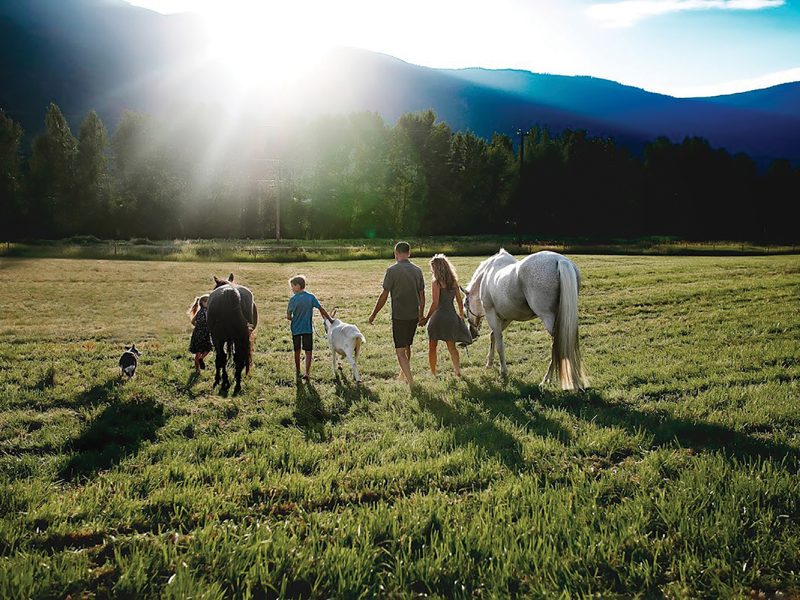
The Voth family of Salmon Arm knows that taking time to heal after making tough, life-changing decisions is critical to their mental wellness. SUBMITTED

January 1, 2024 byMyrna Stark Leader

SALMON ARM – Although causes and organizations have tried to encourage producers to speak up about their mental health over the past decade, reservations remain.

While 65 farmers accessed no-cost counselling in English, Spanish and Punjabi during the last growing season that AgSafe BC makes stats available, producers still need to be convinced to reach out.

During a free online presentation Farm Credit Canada hosted November 21, executive leadership coach Dale Curd pointed out that agriculture has yet to fully normalize mental wellness the way law enforcement and other sectors have.

“We have tried isolation, and ‘suck it up buttercup’, and ‘just get off the farm’ without much success, so let’s try doing something different,” he said.

Merel Voth agrees. She and husband Barrie sold everything, including their home in Enderby, to start Hillside Dreams Goat Dairy in May 2014 on leased land near Salmon Arm. The outlook for goat milk was positive and Barrie had passion plus significant cattle and goat dairy experience. In five years, their business expanded to a milking herd of 160, selling breeding stock across Canada, plus goat compost sales.

In 2019, with help from a private investor and FCC, they bought the farm.

But in 2022, after much deliberation and counselling, they made the difficult decision to close the dairy due to rising costs and the failure of sales – both the volume sold and price received – to keep up.

But the toll on their mental wellbeing was also key.

“The healing will take time,” says Voth.

Although she works as a professional counsellor, she says talking openly about their situation is very difficult.

“The pressures we have faced at times have driven us to our greatest opportunities for learning but at times it felt so lonely and discouraging. I found it difficult to be in a constant state where we are required to create, regenerate, innovate, market … It’s hard to be creative when you’re really stressed out,” says Voth adding, “I am so grateful to be married to a partner who was willing to hear me say ‘let’s stop before this breaks us.’”

Many farmers don’t allow themselves the same vulnerability.

“Taking problems outside of the family is often not okay,” she says. “In other groups, everyone has a therapist and is proud about it. In the farming community, there’s still so much stereotyping and shame.”

While farmers are hailed as feeding the world, she wonders how farmers can find support.

“If I see a farmer that’s in huge stress around finances, I can provide resources, which maybe changes the way they conceptualize it, but I can’t change the interest rate,” she says. “I can’t change the reality that you may need to sell the farm or consider working off the farm.”

She wonders if helping people cope ignores the mounting expectations of farmers to provide cheap, safe food as the cost of land and equipment that makes it all possible continues to rise. Meanwhile, they’re held to a high standard of land stewardship, expected to be sustainable while at the same time vilified – especially livestock farmers – for contributing to climate change.

“Someone commented last week how wonderful it must be for second, third and fourth-generation farmers, the wealth they’ve acquired and the opportunity to join their family farming enterprises,” says Voth. “I see it differently. There are high expectations of maintaining standards and traditions of farming practices. There are definite power differentials between generations, and too often the younger people lack autonomy to decide how they want to live and how they want to earn money.”

Feeling trapped

She says farmers often feel trapped, unable to easily talk about their situation or their feelings because they don’t want to throw family members under the bus.

Voth says one of things she’s had to let go is her belief that if you want something badly enough, it’ll happen if you just work hard, work smart, and look for opportunities.

“There’s shame, judgement and blame around thinking about letting go of the farm, trying to make the right choice, especially multi-generational farms. It can impact a person’s sense of identity, their self-confidence, and their mental and physical state,” says Voth, adding that there is very little wiggle room for mistakes in today’s farm economy.

Curd said farmers are very resilient but that often means a fixed mindset or stubbornness to see their own challenges, or to change. He added that seeking help with mental, physical or emotional challenges is scary because people often sense their own vulnerability.

One thing healthy people in agriculture can do is model positive behaviour when it comes to dealing with emotions.

“The more aware we can become about what’s going on, what’s inside our heads – our mood – the more choice we have about what we do about that,” said Curd.

AgSafe BC executive director Wendy Bennett says the number of people accessing through her organization’s program is growing, and she hopes the free service removes a barrier to accessing care.

The one barrier AgSafe can’t eliminate is the time commitment mental wellness requires.

“Everyone needs to recognize that taking time to care for your mental health is an investment in your future and not a cost that removes other opportunities,” she says. “Seeking support before challenges arise can mean the difference between managing a challenge or having that challenge become a crisis.”
 

Related Posts

You may be interested in these posts from the same category.

BC farmland values flat

CUSMA consultations begin

Bringing mental wellness forward

Okanagan drives increase in land values

BC farmland values see strong growth

Grower wellness a priority

Farmland lease rates

BC farmland values fall

Confined spaces in spotlight

BC farmland values flat

Federal funding for AI response

Land values “on solid ground”: FCC

Previous Post: « Abbotsford awaits flood funding
Next Post: Dam violations face fines »

Copyright © 2026 Country Life in BC · All Rights Reserved