• Menu
  • Skip to primary navigation
  • Skip to main content
  • Skip to primary sidebar

Country Life In BC Logo

The agricultural news source in British Columbia since 1915

  • Headlines
  • Calendar
  • Subscribe
  • Advertise
  • About
  • Archives
  • Contact
  • Search
  • Cart
  • Checkout
  • Headlines
  • Calendar
  • Subscribe
  • Advertise
  • About
  • Archives
  • Contact
  • Search
  • Cart
  • Checkout

Primary Sidebar

Current Issue:

AUGUST 2026
Vol. 112 Issue 8

Subscribe Now!

Sign up for free weekly FARM NEWS UPDATES

Loading form…

Your information will not be
shared or sold ever

Follow us on Facebook

Comments Box SVG iconsUsed for the like, share, comment, and reaction icons

2 days ago

The committee of MLAs charged with setting priorities for the next provincial budget is recommending regular, annual funding for water storage infrastructure associated with food production, including for engineering inspections, maintenance and upgrades. The recommendation builds on the BC Cattlemen's Association's recommendation of an annual allocation of $5 million for water storage infrastructure related to food production, noting that it could also support resilience in the face of climate-related events. While the province has allocated $120 million for agricultural water infrastructure, agriculture minister Lana Popham told Country Life in BC this week that other ministries and the federal government will need to be involved in funding future p#BCAgts#BCAgCAg

#BCAg
... See MoreSee Less

The committee of MLAs charged with setting priorities for the next provincial budget is recommending regular, annual funding for water storage infrastructure associated with food production, including for engineering inspections, maintenance and upgrades. The recommendation builds on the BC Cattlemens Associations recommendation of an annual allocation of $5 million for water storage infrastructure related to food production, noting that it could also support resilience in the face of climate-related events. While the province has allocated $120 million for agricultural water infrastructure, agriculture minister Lana Popham told Country Life in BC this week that other ministries and the federal government will need to be involved in funding future projects.

#BCAg

#BCAg
View Comments
  • Likes: 23
  • Shares: 6
  • Comments: 3

Comment on Facebook

A typical small-to-medium farming operation featuring a house, main barn, and machine shed generally has around 8,000 to 12,000 square feet of total roof surface. The Okanagan Valley is one of the driest regions in Canada, averaging roughly 300 millimetres (11.8 inches) of annual precipitation. Storing a full year's collected rainwater from those roofs yields roughly 262,500 litres. In the three regional districts that make up the Okanagan valley proper (North Okanagan, Central Okanagan, and Okanagan-Similkameen), the 2021 Statistics Canada Census of Agriculture records roughly 3,100 total farms. Multiply that number by 262,500 litres of harvested rainwater equals 813.75 million litres of water saved per year. Capturing that volume of water across every farm roof in the region would significantly ease peak summer pumping pressure on local groundwater aquifers and Okanagan Lake.

Fantastic!! We will work hard to be involved and do what we can as well as a collective group on the Salmon River!

Absolutely! Long over due and very welcomed. Let's make this happen.

2 days ago

... See MoreSee Less

View Comments
  • Likes: 2
  • Shares: 0
  • Comments: 0

Comment on Facebook

2 days ago

About 40 community members gathered at Silver Creek Community Hall near Salmon Arm last Thursday to discuss ways to improve water availability for both farms and spawning salmon. While the province has since rescinded a fish protection order for the watershed that shut down irrigation, future risks to water access remain top of mind. "We are here because water matters to each of us," says rancher and organizer Trudy Schweb. Farmland Riparian Interface Stewardship Program manager Lee Hesketh outlined the potential for upland water storage while Rob Dinwoodie highlighted cost-shared funding opportunities through the Environmental Farm Plan program for riparian assessments, irrigation efficiency upgrades and other water-related projects available to producers. Photo credit | Facebook/Trudy Schweb

#BCAg
... See MoreSee Less

About 40 community members gathered at Silver Creek Community Hall near Salmon Arm last Thursday to discuss ways to improve water availability for both farms and spawning salmon. While the province has since rescinded a fish protection order for the watershed that shut down irrigation, future risks to water access remain top of mind. We are here because water matters to each of us, says rancher and organizer Trudy Schweb. Farmland Riparian Interface Stewardship Program manager Lee Hesketh outlined the potential for upland water storage while Rob Dinwoodie highlighted cost-shared funding opportunities through the Environmental Farm Plan program for riparian assessments, irrigation efficiency upgrades and other water-related projects available to producers. Photo credit | Facebook/Trudy Schweb

#BCAg
View Comments
  • Likes: 37
  • Shares: 4
  • Comments: 4

Comment on Facebook

Salmon River Watershed Roundtable should be looked into again.

Well done my girl,the voice of Silver Creek ranchers and more

Thanks for covering this🌟

3 days ago

The BC Fruit Growers Association is urging Greater Vernon Water and the Regional District of North Okanagan to halt water shut-offs hitting 2,100+ acres of Okanagan orchards mid-season. With losses potentially topping $250 million, fruit growers say decisions of this scale demand a coordinated plan with farmers and the province — not one-sided cuts. They’re not the only producers affected by this year’s dry conditions.

#BCAg
... See MoreSee Less

Cash Flows

www.countrylifeinbc.com

VERNON – Water restrictions intensified across the southern Interior in late July, with record low stream flows clouding the cash outlook for ranches and orchards. Fourteen agricultural water users...
View Comments
  • Likes: 5
  • Shares: 3
  • Comments: 1

Comment on Facebook

Food should ALWAYS come first. Allow the farmers their water. My grandad watered the apples by flume from the mountain. Let’s get on with AG and get out of the way!

3 days ago

The BC Fruit Growers Association has joined Apples Canada, a new national voice for provincial apple organizations in BC, Ontario, Quebec, New Brunswick and Nova Scotia. Charles Stevens of Ontario chairs the new group, an evolution of the apple working group within Fruit & Vegetable Growers Canada (FVGC), the new group will tackle production, sustainability, research and policy issues as well as advocate for market access in partnership with FVGC. It follows the creation of the Greenhouse Produce Alliance of Canada earlier this year, which replaced the former greenhouse vegetable working group. The berry and field vegetable sectors will continue to maintain working groups with FVGC, while the long-estblished Canadian Potato Council serves the interests of potato growers under the FVGC umbrella.

#BCAg
... See MoreSee Less

The BC Fruit Growers Association has joined Apples Canada, a new national voice for provincial apple organizations in BC, Ontario, Quebec, New Brunswick and Nova Scotia. Charles Stevens of Ontario chairs the new group, an evolution of the apple working group within Fruit & Vegetable Growers Canada (FVGC), the new group will tackle production, sustainability, research and policy issues as well as advocate for market access in partnership with FVGC. It follows the creation of the Greenhouse Produce Alliance of Canada earlier this year, which replaced the former greenhouse vegetable working group. The berry and field vegetable sectors will continue to maintain working groups with FVGC, while the long-estblished Canadian Potato Council serves the interests of potato growers under the FVGC umbrella.

#BCAg
View Comments
  • Likes: 4
  • Shares: 0
  • Comments: 0

Comment on Facebook

Subscribe | Advertise

The agricultural news source in British Columbia since 1915
  • Email
  • Facebook

BC farmland values fall

March 13, 2024 byPeter Mitham

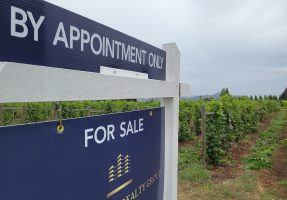
BC farmland values fell 3.1% last year, Farm Credit Canada reported this week, the first annual decline since 2010 and the most significant drop since 1998.

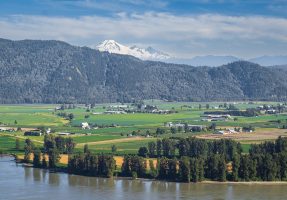
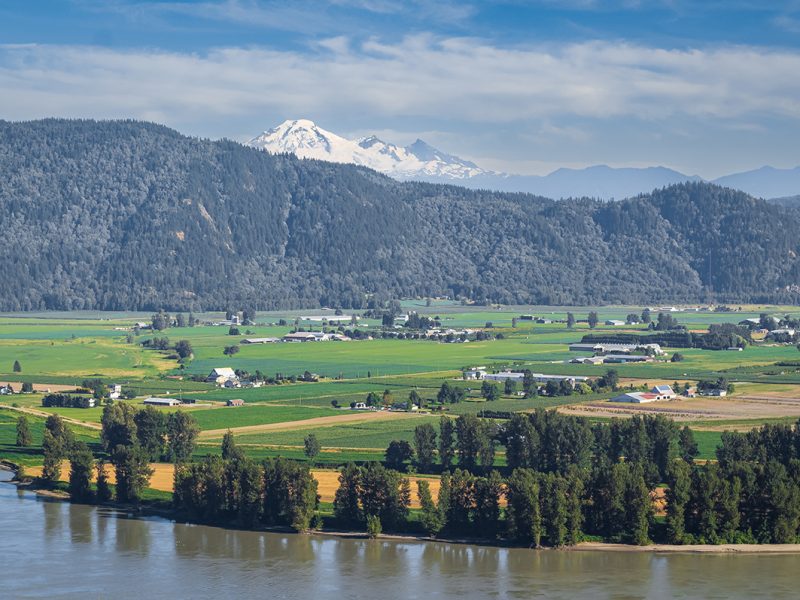
The drop was led by the South Coast, where values fell 19.3% to average $112,200 an acre.

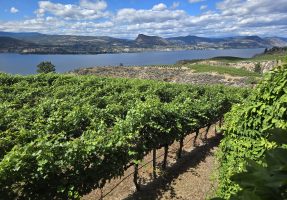
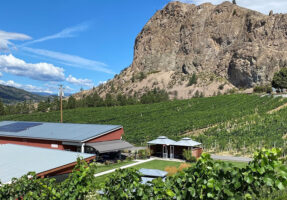
This was more than four times the decline reported for the Okanagan, where values fell 4.5% to $32,500 an acre and the Peace, where values realigned to regional norms with a 3.2% decline to $2,100 an acre.

“Once interest rates began to rise in 2022, the market experienced a slowdown with the number of sales dropping significantly,” explained Cody Hall, an appraiser with FCC in Abbotsford. “We did not see prices drop at this time other than a few exceptions. Rather, properties sat on the market longer or were delisted. This continued into 2023, however sellers began dropping prices once they realized peak 2021/22 prices were not longer obtainable.”

The deals done resulted in FCC determining a new baseline value 19% below 2022, making farmland one of the worst-performing land types in the Lower Mainland last year.

An analysis of real estate investment deals by Altus Group indicates that per-acre prices for commercial land in Metro Vancouver fell 6% last year while residential land values increased 25%.

This being said, the spread on pricing increased versus a year earlier.

In 2022, South Coast farm properties transacted at between $93,800 and $250,000 an acre, according to FCC (its analysis excludes the cheapest 5% of properties as well as the most expensive 5%). In 2023, the spread increased with deals ranging from $69,600 to $264,300 an acre.

A case in point is the pricing achieved for 43013 Adams Road, Chilliwack. Online auctioneer CLHbid.com took the 10-acre property with 26,000 square feet of barn space and seven acres in crops to market on February 8.

Bidding began at $2.1 million and sold for $2.75 million to a local dairy farmer looking to expand.

However, the price also represented a 29% discount from the last sale reported to BC Assessment. That deal saw the former owner pay $3.85 million in February 2022.

The decline points to the erosion in equity many dairy farmers are facing, even as interest rates show signs of stabilizing. The lack of sales has also made it tough to determine accurate values, hence the larger spread in pricing.

“You’re seeing the equity erode on a lot of these farms, which makes it doubly hard on the folks that are in a financial pinch,” says Gord Houweling of BC Farm and Ranch Realty Corp., noting that many of the sales taking place are smaller parcels sold as part of deleveraging strategies. “It’s not fun for these guys right now. It’s a lot of stress.”

All content on this website is copyrighted, and cannot be republished or reproduced without permission.
Related Posts

You may be interested in these posts from the same category.

Fertilizer, fuel costs soar amid Iran conflict

Vancouver Island attracts small-lot buyers

Fertilizer prices on the rise

Avian influenza returns

Breathing new life into historic ranches

BC farmland values flat

CUSMA consultations begin

BC growers look beyond tariff turbulence

Okanagan drives increase in land values

Beef herd drops

BC farmland values see strong growth

Farmland lease rates

Previous Post: « Spring freshet risk low
Next Post: Spray Creek wins BC OYF »

© 2026 COUNTRY LIFE IN BC - ALL RIGHTS RESERVED