• Menu
  • Skip to primary navigation
  • Skip to main content
  • Skip to primary sidebar

Country Life In BC Logo

The agricultural news source in British Columbia since 1915

  • Headlines
  • Calendar
  • Subscribe
  • Advertise
  • About
  • Archives
  • Contact
  • Search
  • Headlines
  • Calendar
  • Subscribe
  • Advertise
  • About
  • Archives
  • Contact
  • Search

Primary Sidebar

Originally published:

JULY 2019
Vol. 105 Issue 7

Subscribe Now!

Sign up for free weekly FARM NEWS UPDATES

Loading form…

Your information will not be
shared or sold ever

Stories In This Edition

Breakfast on the Farm

Province blinks on ALR

Berry grower hit with fines

BC hop industry matures despite challenges

Smaller than small

Back 40: The ups (and downs) of sustainable agriculture

Viewpoint: Debate over cannabis underscores challenges

Dry weather ushers in provincewide drought

Giant bee-killing hornet identified in Vancouver

Weather ideal for early start to strawberries

Fresh BC strawberries …

FIRB sides with K&M on annualized production

Pricing remains on ongoing issue for poultry sector

Tree fruit competitiveness funds start to flow

Farmers institute members discuss ALR changes

Dairy association seeks general manager

Sitting down on the job

Online platform gives food a second chance

Armyworm comes back for a second helping

Cannabis genes key to long-term success

Twenty years of ambassadors reunite

Policy shifts top ranchers’ list of concerns

Winner! Winner!

Clifton Ranch aims for better beef, habitat

Sidebar: Ranch operations

Treaties create uncertainty for range users

Market Musings: Summertime slowdown

Do you know a horse …

Grazing targets fire prevention, suppression

Kestrel nestbox project will help control starlings

Sterile moth program heads south of the border

Young farmers served a heaving helping of surf ‘n turf

Research: Welfare, reproduction a complex relationship

Variety trials showcase fresh options

Sweet potato has promise for BC growers

Headway made on organic SWD controls

My turn!

The fine art of raising commercial poultry

Winfield couple banks on organic growth

Woodshed: Plans hatch while Kenneth plays golf

Breakfast on the Farm has lessons for everyone

Jude’s Kitchen: Healthy choices

More Headlines

Follow us on Facebook

Comments Box SVG iconsUsed for the like, share, comment, and reaction icons

43 minutes ago

The Agricultural Land Commission is laying off staff after years of flat funding under the BC NDP. ALC chair Jennifer Dyson warns that application volumes, enforcement activity and legal obligations have all risen while its operating budget has stayed effectively flat — meaning longer wait times ahead for some services.

#BCAg
... See MoreSee Less

Link thumbnail

Land Commission lays off staff

www.countrylifeinbc.com

With no budget increase this year, the Agricultural Land Commission (ALC) is laying off six staff to make ends meet. “Ongoing financial constraints and the requirement to operate within the approved...
View Comments
  • Likes: 0
  • Shares: 1
  • Comments: 0

Comment on Facebook

6 days ago

A BC Forest Practices Board investigation has found overgrazing has damaged grasslands in the Coutlee Range Unit near Merritt — and the range-use plan meant to prevent it was unenforceable. With complaints about overgrazing on the rise and grasslands covering just 1% of BC's land mass, the findings raise fresh questions about how the province manages one of its most vulnerable — and valuable — food-producing ecosyste#BCAg#BCAg ... See MoreSee Less

Link thumbnail

Board finds overgrazing rules unenforceable unmeasurable

www.countrylifeinbc.com

MERRITT – A BC Forest Practices Board investigation has found instances of non-compliance related to overgrazing have damaged open grasslands in the Mine pasture, part of the Coutlee Range Unit near...
View Comments
  • Likes: 6
  • Shares: 6
  • Comments: 6

Comment on Facebook

Several ranchers in recent years have gone into temporary non use on that range , so that means the grass should grow. But drought conditions/lack of rain and snow don’t allow that to happen . Dried up springs , creeks waterholes in various pastures add to over grazing where there is water , as livestock and everything else stay close to the water source . So even though less cattle are on it , over grazing appears. There is a large volume of horses on it 365 days/year which is wrong ! They pull grass right out of the ground when it’s just trying to grow ,, opens the door for weeds to grow in. That don’t help it. Aging infrastructure ( fences) laying on the ground, pipe line building , ( lack of commitment to fence maintenance) amongst all users contributes also to over grazing. Recreational atv users leaving gates open between pastures allows livestock to go back or ahead in pastures also expidites over grazing. Logging ( bcts) has no problem laying out cut locks on both sides of a fence , then it gets smashed down during logging and they don’t take responsibility to stand it back up or clean the cattle gaurds out when they are done , that happened 4 years ago on pasture 5 up there . I bet it is still not fixed . There are lots of contributing factors to the problem.

Tragedy of the commons.

I looked through the report. I saw nothing about the effects of noxious weeds on productive grasslands. This particular area is vulnerable because of the Ministry’a efforts to diversify the use of the Grasslands.

This pasture is under tremendous pressure not only from cattle but from irresponsible local residents who treat it as a landfill dumping all manner of household debris here. And don't even get me started on the mud bogging and camping in sensitive riparian areas. The feral horses are in this pasture 365 days a year just hammering it. Would sure be nice to see some enforcement action on people who are intentionally ripping up the grasslands and riparian areas. Cattle could be a valuable resource for rebuilding soils and native grasses in this area with the help of electric fencing and/or e-collars. The humans will be harder to manage.

The Forest and Range Practices Act was written by lawyers for global forest licencee shareholders. Results-based = unenforceable.

Also, can we talk about the impact of a pipeline being built through the middle of this field for multiple years?

View more comments

1 week ago

East Kootenay rancher Randy Reay is digging a new well after two natural water sources dried up on his Crown tenures. A new Living Lakes Canada assessment found 15% of mapped aquifers in the region are high-priority for monitoring, yet 80% of those go unmonitored. With over 48% of BC's provincial observation wells reporting below-normal groundwater levels, ranchers and researchers are sounding the alarm on water security. The story is in our March edition, and we've posted it to our website thi#BCAgk.

#BCAg
... See MoreSee Less

Link thumbnail

Water woes: groundwater under pressure across BC

www.countrylifeinbc.com

JAFFRAY – As a young boy growing up in the Kootenay-Boundary region, Randy Reay never expected to run out of water. But this year, in mid-February, his fields are bare. There is no snow halfway up t...
View Comments
  • Likes: 8
  • Shares: 7
  • Comments: 1

Comment on Facebook

Jaffrey is in the east Kootenays not kooteney boundary

2 weeks ago

BC farmers are bracing for prolonged higher input costs as war in the Middle East drives up fuel and fertilizer prices. Nitrogen fertilizer costs were already climbing before the Iran conflict began, with prices still roughly 60% above pre-pandemic levels. Farm Credit Canada warns that unlike 2022, strong commodity prices may not offset rising costs this time. Local suppliers expect supply challenges and further price increases ahead.

#BCAg
... See MoreSee Less

Link thumbnail

Fertilizer prices on the rise

www.countrylifeinbc.com

War in the Middle East has delivered a generational shock to energy prices, meaning BC farmers can expect a prolonged period of higher costs not just for fuel but also for fertilizer.
View Comments
  • Likes: 2
  • Shares: 1
  • Comments: 0

Comment on Facebook

2 weeks ago

... See MoreSee Less

View Comments
  • Likes: 1
  • Shares: 0
  • Comments: 0

Comment on Facebook

Subscribe | Advertise

The agricultural news source in British Columbia since 1915
  • Email
  • Facebook

Province blinks on ALR

Small-lot farmers fight back

June 30, 2019 byPeter Mitham

VICTORIA—Growing criticism of the province’s efforts to tighten protection of the province’s Agricultural Land Reserve is prompting the province to backtrack on some of the new regulations.

A late-night bulletin the BC Ministry of Agriculture posted on June 18 indicates that rules governing second homes in the ALR would allow a grandfathering period.

“As the Province has continued to work on regulations to support Bill 52, the BC government has been listening to local governments and people living in the Agricultural Land Reserve,” the bulletin stated. “There will be more details to come in the next few weeks.”

The new rules stipulate that additional dwellings can only house workers, not immediate family members, drawing criticism from commercial and hobby farmers alike, as well as rural landowners caught unawares by the sudden change. The new rule took effect with implementation of the new Agricultural Land Use Regulation on February 22.

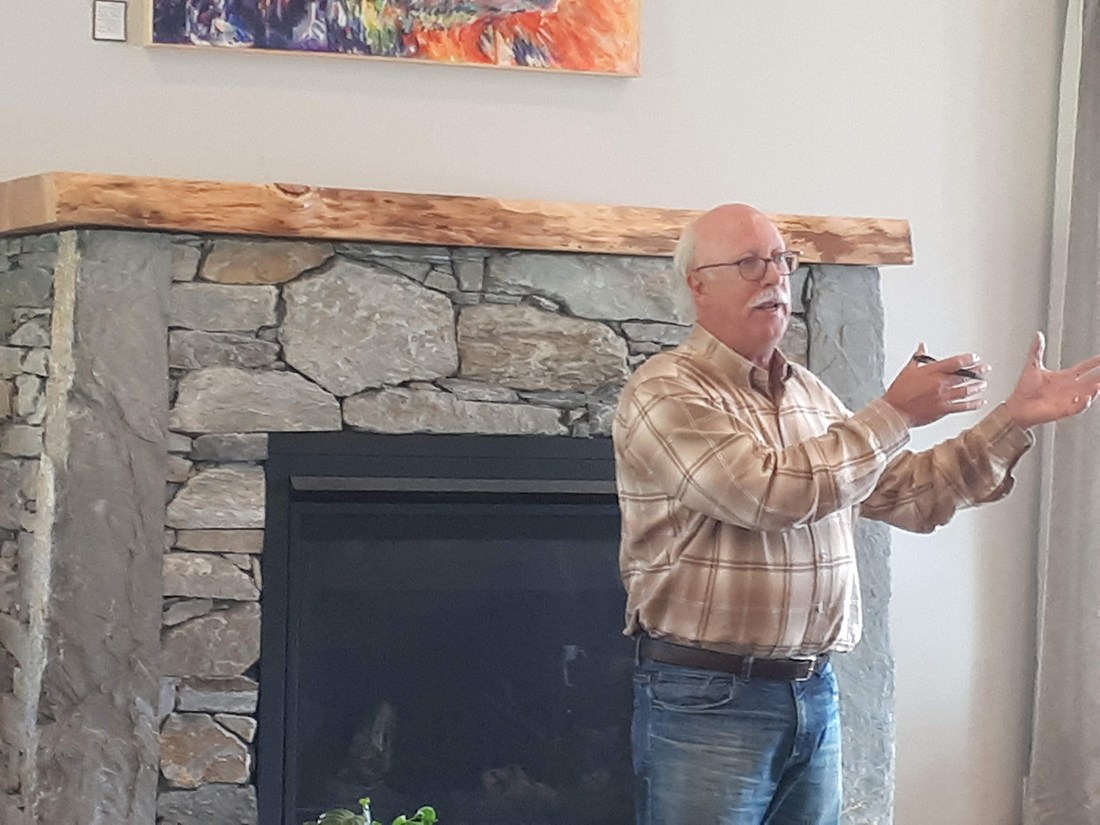
“In the old legislation it actually said that it didn’t need to just be for farm help, that it could be for immediate family,” explains Janet Thony, chair of District A Farmers Institute, an umbrella group representing farmers institutes on Vancouver Island, the Gulf Islands and Sunshine Coast. “They’ve removed that and, to double-down on that, they’ve also decided that they get to adjudicate whether or not you’re enough of a farmer to require farm help. You don’t get to decide that, they do, the ALC [Agricultural Land Commission].”

The issue was the last straw for District A members, which watched cautiously as Bill 52 was passed last fall, eliminating two zones for the ALR as well as addressing fill and residential development. The raft of changes proposed in Bill 15 this spring came as a greater surprise, and complemented growing concern with the approach the province was taking.

Thony, as chair of Coombs Farmers Institute, a member of District A, wrote a letter to BC agriculture minister Lana Popham outlining six concerns with the legislation and requesting a meeting. (The legislation governing farmers institutes grants them direct access to the minister.) A meeting didn’t happen.

“There was a series of unfortunate responses from them that actually kept ramping up our concern and anger level,” she explains. “Because we were getting this extreme pushback, stonewalling and – really – misrepresentation, that’s when we went, ‘okay, where do we go from here?’”

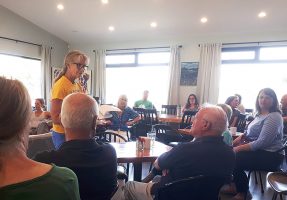
The result was a public meeting in Nanoose Bay on June 17, and the following night, the ministry bulletin.

“I’m putting this out to clear the air and to make sure people know we are continuing to do the hard work necessary to help farmers farm and protect the ALR,” Popham posted to her Facebook account the next morning.

Country Life in BC requested an interview with the minister to discuss the changes, but was told she had nothing further to add to the pledge in the bulletin.

Thony wants to see the specifics.

“She keeps using the term ‘grandfathered,’ so the part we don’t like about that is, is she going to make some backroom deals with these immediately impacted people but still go ahead with the complete restriction on second dwellings? We don’t want anything to do with that,” she says.

Cannabis updated

The same regulation also changed the rules for cannabis.

An order in council last July allowed licensed producers to produce cannabis within the ALR under specific conditions: either in soil-based systems, or structures designated for crop production when government signed the order in council.

But the wording of the new regulation gave municipalities the power to regulate cannabis production, save the forms that were explicitly allowed by the order in council.

“There has been no change made to the Province’s cannabis policy since the original policy framework announced in July 2018,” agriculture ministry staff told Country Life in BC at the end of May.

But the new wording effectively backtracked on the order in council, allowing all forms of cannabis production within the ALR except where prohibited by local governments. This ran counter to initial recommendations of the advisory committee the agriculture minister appointed last year to guide the revitalization of the ALC and ALR.

Those recommendations included “an immediate moratorium on all non-soil bound cannabis production and facilities in the ALR pending provincial-level analysis of impacts” and giving the ALC authority “to establish rules/criteria for cannabis production throughout the ALR” and to “permit cannabis production in the ALR only through application to the ALC.”

Delta South MLA and BC Liberal agricultural critic Ian Paton, who lives in a second residence on his family’s farm and attended the District A meeting on June 17, said the new regulations created “a real mess” for farmers and property owners across the province that’s starting to be felt.

Paton says everyone from large agri-tourism operators such as wineries down to small-scale farmers and charitable ventures such as the Fraser Valley Gleaners have been caught in the province’s zealous protection of the ALR.

“It’s a mess, complete mess right now,” he says. “They’re taking so much heat, … they’re saying well, oops, give us [some] time where we’re going to work on coming up with an idea to allow for some grandfathering. Obviously, they’re backtracking. The heat is on.”
Related Posts

You may be interested in these posts from the same category.

Province allows secondary homes

Province to lift restrictions on second homes

Second residences still allowed

Changes to land commission kick in this fall

Secondary housing consultation

ALR changes face review

No changes to Bill 15

Bill 15 could be delayed

ALR

One province, one panel

Previous Post: « BC hop industry matures despite challenges
Next Post: Japanese beetle fight continues »

Copyright © 2026 Country Life in BC · All Rights Reserved