• Menu
  • Skip to primary navigation
  • Skip to main content
  • Skip to primary sidebar

Country Life In BC Logo

The agricultural news source in British Columbia since 1915

  • Headlines
  • Calendar
  • Subscribe
  • Advertise
  • About
  • Archives
  • Contact
  • Search
  • Headlines
  • Calendar
  • Subscribe
  • Advertise
  • About
  • Archives
  • Contact
  • Search

Primary Sidebar

Originally published:

OCTOBER 2021
Vol. 107 Issue 10

Subscribe Now!

Sign up for free weekly FARM NEWS UPDATES

Select list(s) to subscribe to


By submitting this form, you are consenting to receive marketing emails from: Country Life in BC. You can revoke your consent to receive emails at any time by using the SafeUnsubscribe® link, found at the bottom of every email. Emails are serviced by Constant Contact
Your information will not be
shared or sold ever

Stories In This Edition

Feeling the heat on water

Good grapes

Province funds hazelnuts

Farmers left in lurch by risk-averse insurers

Fresh marketing

Editorial: A familiar problem

Back 40: Climate change action depends on political will

Viewpoint: UN Food Systems Summit sets an ambiguous agenda

Province falls short on dam safety oversight

All the elements

Orchard industry awaits government report

Sidebar: Competitiveness fund on hold

Ag Briefs: Collins wins gold for food security column

Ag Briefs: Agrologist and sector champion dies

Ag Briefs: Kelowna approves land exclusion

Ag Briefs: BC on watch for hornets

Province begins wildfire recovery payments

Beef sector sees strong demand

Thanks for the support

BC-bred females sell well in fall production sale

Sheep producers monitoring for bluetongue

Columbia River Treaty impacts reviewed

Summer weather takes toll on OK fruit

Cheesemakers felt the heat this summer

Housing rules continue to challenge farmers

National plant health lab gets new director

All’s gourd – pumpkins not squashed by heat

Female ranchers excited for mentorship opportunities

Island project establishes baseline for bugs

Show me the money!

Corn trial provides options for changing climate

High heat, low pest pressure test corn plantings

Research: Breeding a better, more nutritious apple

4-H BC: 4-H event helps develop future community leaders

Farm Story: Carrots offer a peaceful break

Plow match perseveres despite pandemic

Woodshed: There’s more than truck trouble with Delta Faye

Mesh covers control vegetable pests

Jude’s Kitchen: Fall weather calls for cool comfort food

More Headlines

Follow us on Facebook

Comments Box SVG iconsUsed for the like, share, comment, and reaction icons

6 days ago

... See MoreSee Less

View Comments
  • Likes: 4
  • Shares: 0
  • Comments: 0

Comment on Facebook

7 days ago

On the last day of the BC Organic Conference, Thursday, Molly Thurston of Pearl Agricultural Consulting helped growers learn how to manage bugs such as codling moth, wireworm, and rootworm in organic growing systems. Her talk alongside Renee Prasad included hands-on activities in which participants checked out various traps and examined pests under microscopes. Be sure to look for more upcoming ag events on our online calendar at www.countrylifeinbc.com/calendar/

#BCAg
... See MoreSee Less

On the last day of the BC Organic Conference, Thursday, Molly Thurston of Pearl Agricultural Consulting helped growers learn how to manage bugs such as codling moth, wireworm, and rootworm in organic growing systems. Her talk alongside Renee Prasad included hands-on activities in which participants checked out various traps and examined pests under microscopes. Be sure to look for more upcoming ag events on our online calendar at www.countrylifeinbc.com/calendar/

#BCAg
View Comments
  • Likes: 15
  • Shares: 0
  • Comments: 0

Comment on Facebook

1 week ago

Well-known organic farmer and podcaster Jordan Marr gets interviewed by Country Life in BC’s own columnist and potato mavin Anna Helmer during the opening session of the BC Organic Conference at Harrison Hot Springs yesterday. Sessions run today (Wednesday) and Thursday and include organic and regenerative growing practices and expanding and advocating for the organic sector, all under the background of the newly launched Organic BC banner.

#BCAg
... See MoreSee Less

Well-known organic farmer and podcaster Jordan Marr gets interviewed by Country Life in BC’s own columnist and potato mavin Anna Helmer during the opening session of the BC Organic Conference at Harrison Hot Springs yesterday. Sessions run today (Wednesday) and Thursday and include organic and regenerative growing practices and expanding and advocating for the organic sector, all under the background of the newly launched Organic BC banner.

#BCAg
View Comments
  • Likes: 37
  • Shares: 2
  • Comments: 1

Comment on Facebook

Interested in finding out more about this

3 weeks ago

Today, we remember those who sacrificed their lives or their well-being for our freedom. Lest we forget. ... See MoreSee Less

Today, we remember those who sacrificed their lives or their well-being for our freedom. Lest we forget.
View Comments
  • Likes: 8
  • Shares: 0
  • Comments: 0

Comment on Facebook

1 month ago

FarmFolk CItyFolk is hosting its biennial BC Seed Gathering in Harrison Hot Springs November 27 and 28. Farmers, gardeners and seed advocates are invited to learn more about seed through topics like growing perennial vegetables for seed, advances in seed breeding for crop resilience, seed production as a whole and much more. David Catzel, BC Seed Security program manager with FF/CF will talk about how the Citizen Seed Trail program is helping advance seed development in BC. Expect newcomers, experts and seed-curious individuals to talk about how seed saving is a necessity for food security. ... See MoreSee Less

Link thumbnail

BC Seed Gathering - FarmFolk CityFolk

farmfolkcityfolk.ca

Save the date for our upcoming 2023 BC Seed Gathering happening this November 3rd and 4th at the Richmond Kwantlen Polytechnic University campus.
View Comments
  • Likes: 1
  • Shares: 0
  • Comments: 0

Comment on Facebook

Subscribe | Advertise

The agricultural news source in British Columbia since 1915
  • Email
  • Facebook

Province falls short on dam safety oversight

Ranchers say cash would boost compliance, capacity

October 1, 2021 byTom Walker

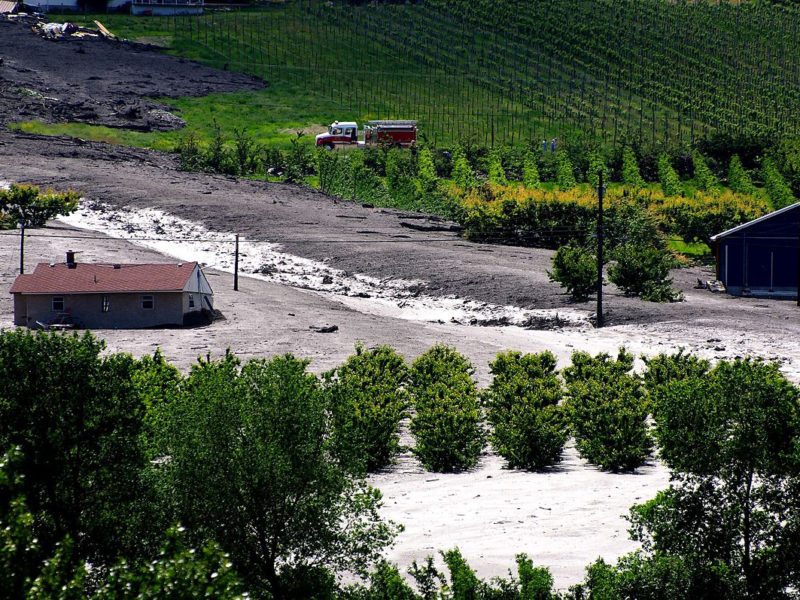
VICTORIA – BC’s auditor general says the province has failed to ensure dam owners comply with dam safety regulations, raising the risk of failures such as the 2010 collapse of the Testalinden dam on rangeland south of Oliver that swept away houses, vineyards and farm equipment.

But the report, released September 14, stopped short of recommending the province commit more money to helping dam owners meet their obligations. It instead called on the province to boost enforcement activities. Provincial regulations give owners responsibility for dam safety while the province oversees compliance to mitigate the risk to people, property and the environment.

“Our audit concluded that the ministry has not effectively overseen the safety of dams in BC,” auditor general Michael Pickup said in releasing the report. “Dams are dangerous, and it is crucial that they be properly maintained to minimize their risk of failing. Failures can be disastrous for people, the environment and property.”

The report was based on a year-long investigation of the BC Ministry of Forests, Lands, Natural Resource Operations and Rural Development (FLNRORD) with respect to dam oversight. It found the province promoted compliance with the province’s dam safety requirements but “did not adequately verify or enforce compliance” as required under the Water Sustainability Act.

“They are not doing what they set out to do in terms of compliance,” says Pickup.

Of the 1,900 dams across the province, 1,000 are designated “high risk,” meaning a failure could kill people and damage the environment and property. The impact of failures at the other 900 dams is lower, only damaging the owner’s property.

The investigation uncovered a number of troubling facts. For example, at least 196 dams are missing from ministry records.

“The ministry should have been regulating some of those,” says Pickup.

In addition, 63% of dam records sampled lacked key information, such as emergency contacts and dam height.

Moreover, a sample of records found that 33% of operating manuals and 27% of dam emergency plans submitted to the ministry were not reviewed three or more years after submission. Reviews of high-consequence dams are backlogged. The average time to accept safety reports was 20 months; some took eight years.

Competing priorities in regional offices and a shortage of staff contribute to the backlogs.

Just three of the province’s 10 dam safety officers are full time. But those officers are responsible for a caseload that ranges from 47 to 427 dams.

Using estimates from program staff, the audit “determined that the ministry would need another five central and five regional staff to meet all aspects of the program’s mandate.”

The report makes nine recommendations for improving the province’s oversight of dam safety, including informing all dam owners of their regulatory obligations, improving processes to verify dam owner compliance, improving monitoring of compliance and enforcement activities and strengthening performance measures and targets.

The province accepted all nine of the auditor’s recommendations, however it remains to be seen what action will be taken.

“Our recommendations are not prescriptive,” says Pickup. “It is the government’s job to create detailed policy. They need to figure out, given what we have found, how they want to monitor compliance and enforcement.”

Financial burden

Ranchers own about 900 dams, or 60% the all the dams in BC. Of these, 125 are considered high-consequence. But the BC Cattlemen’s Association say the audit did not address the top barrier to compliance – money to complete the work.

“We are disappointed that there was no mention of the regulatory and financial burden that comes with dam ownership,” says BCCA assistant general manager Elaine Stovin.

Dam owners are required to comply with the regulatory requirements and cover the cost of dam maintenance and upkeep. Stovin doesn’t think that’s fair given the multiple public benefits dams provide.

“Water stored in dams provides such a range of benefits and values to a community from flood control, habitat protection, food production, fire suppression and a variety of recreation opportunities,” she notes. “But the entire cost of the dam is the responsibility of the owner.”

The costs are significant.

A study of dam costs and benefits by national accounting firm MNP for ranchers in 2016 estimated that the average cost to operate a high-risk dam was $14,425 a year while a low-risk dam cost $1,950 a year.

But the dam rating is frequently out of the owner’s control.

“A rancher, of course, has no say as to whether a housing development goes in downstream of their dam, but a development below a dam would certainly increase the consequences if the dam were to fail,” Stovin points out. “A higher risk leads to a higher consequence classification and more costs for maintaining the dam.”

The dam owner ends up paying more money to reduce a risk they can’t control. Moreover, higher risk dams must complete a safety review every 7-10 years at a cost of up to $50,000. And, as the audit pointed out, it can take years for provincial staff to review these.

Stovin says dam safety has been a very important issue for cattlemen for over 10 years.

“We have resolutions brought forward at our AGMs and this has been a key ask when we present to the province’s finance committee every year,” she says.

BC Cattlemen and Ducks Unlimited prepared a discussion document on water storage in BC that they presented to FLNORD as well as the environment and agriculture ministries in July 2020. The document made several suggestions for addressing funding challenges associated with dam maintenance.

Stovin says this summer’s unprecedented heat wave, drought and wildfires point to the need for the province to prioritize the province’s water storage capacity. Producers are telling her that the increased costs put them in a position where they are looking to decommission their dams.

“Given the summer we have just had, I don’t think we can afford to lose any water storage capacity in our province,” she says.
Related Posts

You may be interested in these posts from the same category.

Don’t blame the wildfires

Dam oversight lacking

Wildfire state of emergency ends

Province announces wildfire recovery funds

Farmers take issue with water restrictions

Province pledges emergency funding

Fruit growers face hard choices

Livestock producers count losses

WorkSafeBC increases inspections

Insolvency concerns grow

Cherries face the pits

BC farms embrace safety

Previous Post: « Cheesemakers felt the heat this summer
Next Post: Feeling the heat on water »

Copyright © 2025 Country Life in BC · All Rights Reserved