
• Menu
  • Skip to primary navigation
  • Skip to main content
  • Skip to primary sidebar

Country Life In BC Logo

The agricultural news source in British Columbia since 1915

  • Headlines
  • Calendar
  • Subscribe
  • Advertise
  • About
  • Archives
  • Contact
  • Search
  • Headlines
  • Calendar
  • Subscribe
  • Advertise
  • About
  • Archives
  • Contact
  • Search

Primary Sidebar

Originally published:

MAY 2025
Vol. 111 Issue 4

Subscribe Now!

Sign up for free weekly FARM NEWS UPDATES

Select list(s) to subscribe to


By submitting this form, you are consenting to receive marketing emails from: Country Life in BC. You can revoke your consent to receive emails at any time by using the SafeUnsubscribe® link, found at the bottom of every email. Emails are serviced by Constant Contact
Your information will not be
shared or sold ever

Stories In This Edition

Farmers Institute Act to be revamped

The big picture

Tariff turbulence buffets investment

Reminiscences of a honeyed career

Editorial: A helpful hint

Back 40: Farm size matters less than hard truths

Viewpoint: Beekeepers find themselves in sticky situation

BCAC boosts advocacy role, increases fees

Lettuce eat local

Operational review will guide AgSafe’s strategic plan

Farmers welcome elimination of BC’s carbon tax

Ag Briefs: fresh for Kids delivers nutritious foods to schools

Ag Briefs: Denman Island farmers supported

Ag Briefs: Potato acreage declines in 2025

BC dairies face price drop as production surges

Sweet reward

Interior growers on the lookout for armyworm

Landowners push back against rail trail plans

US trade tensions could impact raspberry trials

New berries continue to look promising

BC holds course on Columbia River Treaty

Speaking up for agriculture in treaty negotiations

Kelowna abattoir fills critical processing gap

Regional meat cluster boosts supply chain

Tech tackles tough terrain for BC ranchers

Farm Story: Breaking seasonal stereotypes one chore at a time

Bee shosrtage stings BC honey producers

High hopes for new pear variety

Putting technology to the test

Hazelnuts benefit from strategic pruning

Woodshed: There’s the stickers, and there’s the boomers

O’Keefe Ranch focus of a new book

Jude’s Kitchen: We’re eating BC and loving it

More Headlines

Follow us on Facebook

Comments Box SVG iconsUsed for the like, share, comment, and reaction icons

6 days ago

... See MoreSee Less

View Comments
  • Likes: 4
  • Shares: 0
  • Comments: 0

Comment on Facebook

6 days ago

On the last day of the BC Organic Conference, Thursday, Molly Thurston of Pearl Agricultural Consulting helped growers learn how to manage bugs such as codling moth, wireworm, and rootworm in organic growing systems. Her talk alongside Renee Prasad included hands-on activities in which participants checked out various traps and examined pests under microscopes. Be sure to look for more upcoming ag events on our online calendar at www.countrylifeinbc.com/calendar/

#BCAg
... See MoreSee Less

On the last day of the BC Organic Conference, Thursday, Molly Thurston of Pearl Agricultural Consulting helped growers learn how to manage bugs such as codling moth, wireworm, and rootworm in organic growing systems. Her talk alongside Renee Prasad included hands-on activities in which participants checked out various traps and examined pests under microscopes. Be sure to look for more upcoming ag events on our online calendar at www.countrylifeinbc.com/calendar/

#BCAg
View Comments
  • Likes: 15
  • Shares: 0
  • Comments: 0

Comment on Facebook

1 week ago

Well-known organic farmer and podcaster Jordan Marr gets interviewed by Country Life in BC’s own columnist and potato mavin Anna Helmer during the opening session of the BC Organic Conference at Harrison Hot Springs yesterday. Sessions run today (Wednesday) and Thursday and include organic and regenerative growing practices and expanding and advocating for the organic sector, all under the background of the newly launched Organic BC banner.

#BCAg
... See MoreSee Less

Well-known organic farmer and podcaster Jordan Marr gets interviewed by Country Life in BC’s own columnist and potato mavin Anna Helmer during the opening session of the BC Organic Conference at Harrison Hot Springs yesterday. Sessions run today (Wednesday) and Thursday and include organic and regenerative growing practices and expanding and advocating for the organic sector, all under the background of the newly launched Organic BC banner.

#BCAg
View Comments
  • Likes: 37
  • Shares: 2
  • Comments: 1

Comment on Facebook

Interested in finding out more about this

3 weeks ago

Today, we remember those who sacrificed their lives or their well-being for our freedom. Lest we forget. ... See MoreSee Less

Today, we remember those who sacrificed their lives or their well-being for our freedom. Lest we forget.
View Comments
  • Likes: 8
  • Shares: 0
  • Comments: 0

Comment on Facebook

1 month ago

FarmFolk CItyFolk is hosting its biennial BC Seed Gathering in Harrison Hot Springs November 27 and 28. Farmers, gardeners and seed advocates are invited to learn more about seed through topics like growing perennial vegetables for seed, advances in seed breeding for crop resilience, seed production as a whole and much more. David Catzel, BC Seed Security program manager with FF/CF will talk about how the Citizen Seed Trail program is helping advance seed development in BC. Expect newcomers, experts and seed-curious individuals to talk about how seed saving is a necessity for food security. ... See MoreSee Less

Link thumbnail

BC Seed Gathering - FarmFolk CityFolk

farmfolkcityfolk.ca

Save the date for our upcoming 2023 BC Seed Gathering happening this November 3rd and 4th at the Richmond Kwantlen Polytechnic University campus.
View Comments
  • Likes: 1
  • Shares: 0
  • Comments: 0

Comment on Facebook

Subscribe | Advertise

The agricultural news source in British Columbia since 1915
  • Email
  • Facebook

Reminiscences of a honeyed career

Provincial apiculturist Paul van Westendorp retires later this year

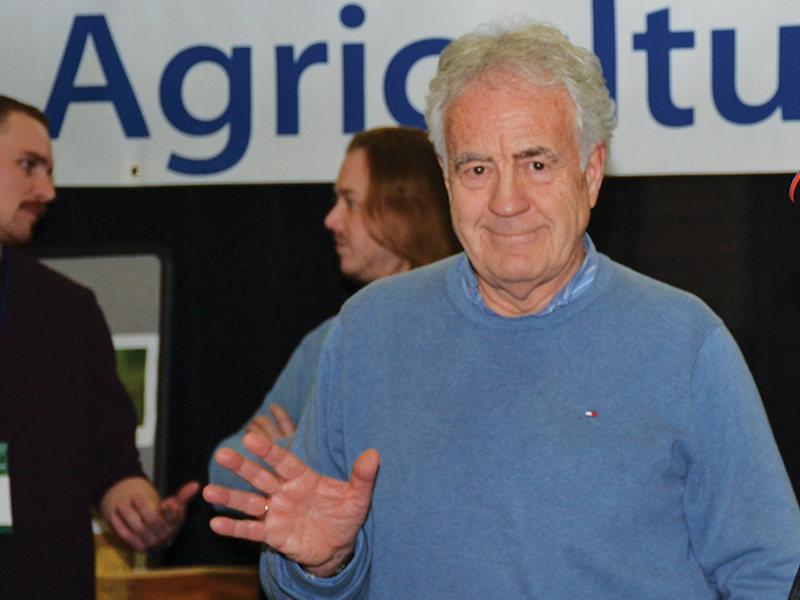
Paul van Westendorp, whose “mellifluous choice of words" and international perspective have educated generations of BC beekeepers, is preparing to retire after 35 years of provincial service. RONDA PAYNE

May 1, 2025 byTom Walker

CRANBROOK – Those involved in the art of keeping bees often mention a lifelong attraction to the insects. For BC provincial apiculturist Paul van Westendorp, a Grade 3 school trip sparked his interest.

“Apparently, it made such an impression on me, I couldn’t stop talking about them for weeks,” van Westendorp told the BC Honey Producers Association during its semi-annual education day in Cranbrook, March 21. “I took a course and got my first colony a couple of years later.”

Van Westendorp’s reminiscences came as he prepares to retire later this year after 35 years as the province’s bee specialist.

While some might use such an occasion to highlight their careers, van Westendorp instead chose to regale his audience with stories of the people he met and the programs he was involved with throughout the journey.

“This presentation is about nostalgia. I have a large collection of photographs,” says van Westendorp. “Much of the photographs have to do with the people who were part of my entire experience with bees and beekeeping.”

Born and raised in the Netherlands, van Westendorp’s career in the industry began almost by chance.

“I had immigrated to Canada and was attending UBC, and at a summer job fair, I was interviewed by a Ministry of Agriculture plant pathologist,” van Westendorp recalls. “He said, ‘You’re not really interested in plant pathology,’ and I said no, but I need a job and I told him about my experience with bees. He passed that information along and I got a call that led to three summers as a student working with bees for the Ministry of Agriculture.”

After graduating in the late ’70s, van Westendorp was involved in apiculture research and then spent several years working in tropical apiculture in East Africa. He was appointed provincial apiculturist for Alberta in the late 1980s before being appointed to the same role in BC in 1990.

It was in Alberta that van Westendorp first got a taste of what he refers to as “the time when beekeeping lost its innocence.”

The mite Varroa destructor was identified as the cause of devastating colony losses across Alberta through the winter and spring of 1988.

“I had to accompany the minister of agriculture to town halls across the province, and it was a real heart-wrenching experience,” he recalls. “We would be in the room with all these producers and they were telling the minister they were bankrupt.”

Within a decade, varroa was found ravaging beehives south of Abbotsford.

“Before that, beekeeping was a romantic pursuit, something on the fringes of agriculture perhaps, due to the nature of the people attracted to do this,” he says. “It was nice, peaceful, fun.”

But varroa changed that forever.

“We went from a relatively simple livestock management system to one of the most complex management systems of animal husbandry,” van Westendorp says. “Beekeeping is now extraordinarily difficult and challenging, so it’s not surprising we have annual mortality rates of up to 30%, while in the past it was less than 10.”

BCHAP past president Heather Higo has known van Westendorp since he became provincial apiculturist in 1990.

“What I admire about Paul is his ability to handle challenges,” Higo says.

“He has been able to solve issues without a big kerfuffle, and he is able to make things work for both the beekeeper and the government regulations.”

Van Westendorp’s patience also underpins his qualities as an educator.

“He has such a vast array of experience from different places that he can bring an international perspective,” Higo notes. “And he can present that very well to an audience.”

While van Westendorp spent many years leading beekeeping courses across the province, he says the constant travel complicated things.

“It was eventually substituted into a webinar course that reaches everybody with Internet access,” he notes. “And that is only partially so good, because in-person is always better.”

While Ontario has been credited with the first Technology Transfer Program in the country, van Westendorp likes to point out that BC had two full-time extension specialists serving the industry from the 1970s through to the 1990s.

“They did fantastic work in direct collaboration with the beekeeping communities in their area,” he says.

Julia Common notes that van Westendorp has always been responsive to individual beekeepers’ requests.

“He’s been incredibly supportive over the years,” says Common, co-founder of Hives for Humanity, which helps residents of Vancouver’s Downtown East Side raise bees. “He is one of those people who is able to walk into your yard and calm you down, because it’s usually a crisis when you call.”

Common mentions van Westendorp’s diplomacy as well.

“He gives advice when I ask for advice, but doesn’t do it otherwise,” she says. “He waits to be asked. He takes time to process and think, and then comes back after deliberating over it with a very analytical, sound mind. I really, really depend on him for that wonderful support.”

And his mellifluous choice of words also commands attention.

“Listening to Paul is always a pleasure because of his delivery,” notes Creston apiarist Jeff Lee, BCHPA’s representative to the Canadian Honey Council. “He always has a particular turn of phrase.”

Related Posts

You may be interested in these posts from the same category.

Previous Post: « Market farm works smarter, not harder
Next Post: Vet urges dairies to be vigilant against HPAI »

Copyright © 2025 Country Life in BC · All Rights Reserved