• Menu
  • Skip to primary navigation
  • Skip to main content
  • Skip to primary sidebar

Country Life In BC Logo

The agricultural news source in British Columbia since 1915

  • Headlines
  • Calendar
  • Subscribe
  • Advertise
  • About
  • Archives
  • Contact
  • Search
  • Headlines
  • Calendar
  • Subscribe
  • Advertise
  • About
  • Archives
  • Contact
  • Search

Primary Sidebar

Originally published:

JUNE 2021
Vol. 107 Issue 6

Subscribe Now!

Sign up for free weekly FARM NEWS UPDATES

Loading form…

Your information will not be
shared or sold ever

Stories In This Edition

Growers hopeful as BC opens

Tender touch

Japanese bettle control pays off

Nursery sales rise as consumers stick close to home

Editorial: Prospering together

Back 40: A mammoth solution to climate change

Viewpoint: Teamwork essential to grow in the new normal

Wind machines in Surrey face blowback

Sidebar: Dispute resolution

BC Veg unveils strategic priorities as it looks ahead

Quick turnaround

Ag Brief: South Asia flight ban strands BC farm workers

Ag Brief: Oliver vintner dies

Ag Brief: Province delivers AITC funding

Letter: Well “registration” misleading

Province’s chicken growers see rebound

Pricing formula on horizon for poultry sector

Snooze and lose

Grain costs put pressure on livestock producers

PST applicable to horse hay sales

BC raspberry growers face global issues

Little cherry disease a big threat to fruit growers

Core knowledge lands Kelowna grower top award

Strategy needed for Crown forage resources

BC abattoir volume up 30% in 2020

Ranchers urged to plan ahead for a changing climate

Cidery ups game with orchard purchase

The milkman makes a comeback on Island

Short season doesn’t stall northern berries

Cariboo-Chilcotin sheep group formed

Viewpoint: Farm insurance crisis threatens landowners

Mushroom harvester enters final testing

Sidebar: BC mushrooms at a glance

Mushrooms add value to cut blocks

Farm Story: Diversity and inclusion extends to tractors

Equipment intentions fall

Hops and CBC-centric hemp come together

Research: Processed foods are convenient but at what cost?

Soil science key for Kootenay farm project

Research sheds light on late blight strains

Woodshed: Deborah keeps divorce news between friends

OK apples at core of social entrepreneurship

Jude’s Kitchen: To the sea in summer

More Headlines

Follow us on Facebook

Comments Box SVG iconsUsed for the like, share, comment, and reaction icons

4 hours ago

The Township of Langley Farm and Ranch Exhibition Society is hosting a public open house this evening to gather input on plans to transform the historic Belmont Farm into an agricultural exhibition, education and heritage hub. Farmers, ranchers, and community members are invited to share their feedback. The open house is at the George Preston Rec Centre, 6-8 pm.

Township of Langley Farm and Ranch Exhibition Society
#BCAg
... See MoreSee Less

The Township of Langley Farm and Ranch Exhibition Society is hosting a public open house this evening to gather input on plans to transform the historic Belmont Farm into an agricultural exhibition, education and heritage hub. Farmers, ranchers, and community members are invited to share their feedback. The open house is at the George Preston Rec Centre, 6-8 pm. 

Township of Langley Farm and Ranch Exhibition Society 
#BCAg
View Comments
  • Likes: 4
  • Shares: 0
  • Comments: 0

Comment on Facebook

7 hours ago

The sold-out Southern Interior Horticulture show continues today. Education sessions range from rodent control to new tree fruit varieties, with the afternoon devoted to improving spraying techniques for orchardists and vineyard managers. When not listening to speakers, producers are checking the trade show.

#BCAg
... See MoreSee Less

The sold-out Southern Interior Horticulture show continues today. Education sessions range from rodent control to new tree fruit varieties, with the afternoon devoted to improving spraying techniques for orchardists and vineyard managers. When not listening to speakers, producers are checking the trade show.

#BCAg
View Comments
  • Likes: 6
  • Shares: 0
  • Comments: 0

Comment on Facebook

9 hours ago

The BC Poultry Association has lowered its avian flu biosecurity threat level from red to yellow, citing declining HPAI risk factors and fewer wild bird infections. Strong biosecurity practices helped BC limit cases this winter to 38 premises, down from 81 last year. For more, see today's Farm News Update from Country Life in #BCAg#BCAg ... See MoreSee Less

Link thumbnail

Poultry biosecurity notches down

www.countrylifeinbc.com

Declining risk factors for highly pathogenic avian influenza (HPAI) have prompted the BC Poultry Association to lower the industry’s biosecurity threat level from red to yellow. The decision…
View Comments
  • Likes: 11
  • Shares: 2
  • Comments: 1

Comment on Facebook

🐥💛

1 day ago

The application deadline for cost-shared funding through the Buy BC program is coming up on February 20. Up to $2 million through the Buy BC Partnership Program is available annually to BC producers and processors to support local marketing activities that increase consumer awareness of BC agriculture and BC food and beverages. For more information, visit buybcpartnershipprogram.ca/.

Buy BC

#BCAg
... See MoreSee Less

Link thumbnail

Home - Buy BC Partnership Program

buybcpartnershipprogram.ca

Buy BC Partnership Program Increase your visibility with Buy BC The Buy BC Partnership Program is a fundamental component of Buy BC that provides up to $2 million in cost-shared funding annually to lo...
View Comments
  • Likes: 3
  • Shares: 0
  • Comments: 0

Comment on Facebook

1 day ago

The Sik-E-Dakh (Glen Vowell) First Nation's Skeena Fresh hydroponic operation has doubled production capacity thanks to a $130,632 Northern Development Infrastructure Trust grant. Growing lettuce, kale, herbs and more in shipping containers, the operation uses 90% less water than traditional farming while providing 1,200 people with year-round access to fresh, locally grown greens. Their story is in the February edition of Country Life in BC, the agricultural news source for BC’s farmers and ranchers.

Northern Development Initiative Trust
#BCAg
... See MoreSee Less

The Sik-E-Dakh (Glen Vowell) First Nations Skeena Fresh hydroponic operation has doubled production capacity thanks to a $130,632 Northern Development Infrastructure Trust grant. Growing lettuce, kale, herbs and more in shipping containers, the operation uses 90% less water than traditional farming while providing 1,200 people with year-round access to fresh, locally grown greens. Their story is in the February edition of Country Life in BC, the agricultural news source for BC’s farmers and ranchers. 

Northern Development Initiative Trust 
#BCAg
View Comments
  • Likes: 15
  • Shares: 1
  • Comments: 0

Comment on Facebook

Subscribe | Advertise

The agricultural news source in British Columbia since 1915
  • Email
  • Facebook

Wind machines in Surrey face blowback

Complaint lodged against blueberry farm about noise

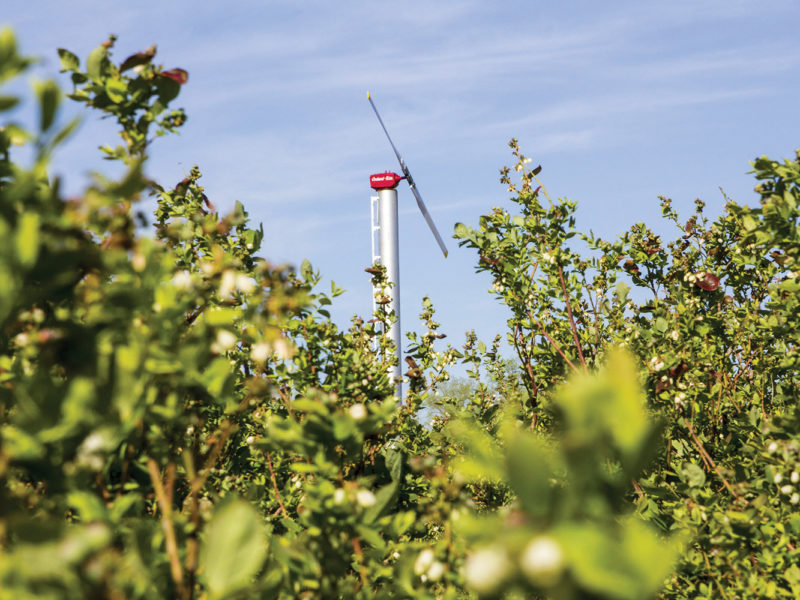
Blueberry and fruit farmers depend on wind machines like this to protect their crops, but some neighbours don’t like the noise. FILE PHOTO

June 1, 2021 bySandra Tretick

SURREY – The BC Farm Industry Review Board received a formal noise complaint on April 20 against a blueberry farm in south Surrey.

According to reports in the Peace Arch News, the couple who initiated the complaint had moved to Morgan Creek from Vancouver in March and were kept awake several nights in a row that same month by what sounded like a helicopter going all night long.

It turns out the noise was coming from two Orchard-Rite wind fans that were being used to protect blueberries from radiant frost damage during a late spring cold snap. When the air cools at night, frost accumulates on plant surfaces causing damage to the delicate buds. If severe enough, it can kill the plants outright.

The owners of the family-run farm were approached for an interview but declined to comment to Country Life in BC about the specifics of the noise complaint because all parties have been advised not to speak to media while the matter is under review.

This part of south Surrey is home to a large number of blueberry farms and it isn’t the first time residents have raised issues with local farming practices. The Morgan Creek Homeowners Association lodged a formal complaint against another blueberry farm in the area in 2000 over the use of propane cannons to protect crops from birds. At the time, FIRB felt that education was a critical component in resolving urban/rural land use issues and identified the importance of education for new homeowners as to what it means to live in an active farming area. The complaint was dismissed.

The area is historically rural and the farm at the centre of the current complaint has been in operation since the early 1980s, long before development of Morgan Creek started in 1994. Other residential subdivisions soon followed.

When temperatures drop below -3°C during budding, the plants are damaged. At best, the yield is reduced. At worst, the farmer can lose an entire field. The wind fans causing the uproar were installed in 2005 for protection against such spring frosts.

Not uncommon

Noise complaints against blueberry farms are not uncommon. Propane cannons received a lot of news coverage over the years and numerous complaints to FIRB, resulting in a 2009 report reviewing the use and regulations of propane cannons in the Lower Mainland.

The difference with wind fans is that they typically operate at night, when sounds are already more apparent in the relative quiet, whereas propane cannons operate between dawn and dusk. Added to that, sound carries further on cold nights when they are more likely to be turned on.

Berries are not the only sector to be targeted by noise complaints related to crop protection. A 2018 FIRB decision regarding a noise complaint against Coral Beach Farms Ltd. from Lavington found that helicopters, frost fans, sprayers and blowers are standard industry practices in the Okanagan valley for drying cherries when rains threaten to split ripe fruit. The board noted, “from time to time, significant noise disruption remains and that this is unavoidable” and advised the farm to implement a series of recommendations to reduce the impact of farm-related noise on neighbours.

Once a notice of complaint has been filed, the resolution process kicks in.

“BCFIRB staff work closely with the parties to try and resolve complaints through a dispute resolution process,” says FIRB executive director Kirsten Pedersen, adding that the complaint proceeds to a formal hearing if dispute resolution doesn’t work out. “Prior to that, parties may work with ministry specialists or others to help resolve the complaint.”

FIRB does not have statistics on how many complaints are dealt with informally and doesn’t track the number of official complaints filed by people who recently moved close to a farm.

BC Ministry of Agriculture, Food and Fisheries berry industry specialist Carolyn Teasdale did contact the berry farm following the initial complaint and suggested the equipment be calibrated to start at -2°C as the type of blueberries grown on site can withstand -3° to -4°C at the pink-tip stage. Previously, the farm had been turning on the machines at 0°C.

The BC Blueberry Council also works closely with municipal bylaw enforcement officers and growers to ensure compliance with normal farm practices.

“In the majority of cases, we find growers are neighbour-conscious and do take the necessary precautions to carry out on-farm activities,” says BCBC executive director Anju Gill.

When it comes to the broader issues that arise when development and farmland have to coexist side by side, she takes a more circumspect approach.

“Perhaps the topic of suburban expectations and farming necessities require an intersectional lens to fully understand the complexity of the issue,” she says.

In the aftermath of the story in the local paper, community support for the blueberry farm was so overwhelmingly positive that it spurred a follow-up article focusing on the clash between urban expectations and rural needs.

Most of the more than 300 comments on the newspaper’s Facebook page and website community backed the farm’s use of the wind machines to protect their crops.


Related Posts

You may be interested in these posts from the same category.

Sheep commission considered

Comeau reappointed to milk board

Milk board undertakes review

Cocksure court naysays rooster

BC Milk caught out

BC FIRB challenges WMP plans

Bylaws seek to silence Salt Spring roosters

BC FIRB gets a good egg

AI response in spotlight

Whistleblowers at FIRB, ALC protected

Chicken growers on watch for avian influenza

BC Veg consultation ends

Previous Post: « BC abattoir volume up 30% in 2020
Next Post: BC minimum wage increases »

Copyright © 2026 Country Life in BC · All Rights Reserved