
• Menu
  • Skip to primary navigation
  • Skip to main content
  • Skip to primary sidebar

Country Life In BC Logo

The agricultural news source in British Columbia since 1915

  • Headlines
  • Calendar
  • Subscribe
  • Advertise
  • About
  • Archives
  • Contact
  • Search
  • Headlines
  • Calendar
  • Subscribe
  • Advertise
  • About
  • Archives
  • Contact
  • Search

Primary Sidebar

Originally published:

July 2017
Vol. 103 Issue 7

Subscribe Now!

Sign up for free weekly FARM NEWS UPDATES

Loading form…

Your information will not be
shared or sold ever

Stories In This Edition

4-H Gator draw

Poultry Abuse underscores need to measure up

Political uncertainty creates angst

Water tops list of ranchers’ concerns at AGM

Editorial: Trust is an active verb

Back Forty: Time to celebrate our home and rural land

Greenhouse growers propose infrastructure project

Letter: Seat belts must be worn at all times

Ag Brief: Blueberry growers pack meeting

Ag Brief: Blueberry growers pack meeting

Barn fires spark focus on prevention

Emergency plan critical for livestock owners

BCAC hires new communications director

Abbotsford seeks exclusion to boost industrial land base

Otter Co-op posts another record-breaking year

Food report card gives BC passing grade

Agriculture’s success testifies to investment funding

Ag Brief: Hullcar abatement order shut down

Mission investigation inconclusive

Abbotsford tickets thousands

Price set as growers eye ambitious growth target

High prices, change coming for nurseries

BC tree fruit outlooks is a bowl of cherries

BC greenhouses are family-friendly operations

Sidebar: Why greenhouses aren’t organic

Greenhouse showcases production systems

BC agricultual history depicted in museum murals

BC agriculture vital part of Canada’s 150 years

Research: Grazing time for cows

Deep roots give Shannon Farm bright future

Fraser Lake ranchers honoured for excellence

Cattlemen invest in research to boost productivity

New livestock industry co-ordinator embraces dream job

Researchers study sheep diseases to understand potential risks

Blueberry processors focus on fruit quality

Sidebar: SWD can make timing harvest tricky

Urban growing, libations and greenhouses

Municipalities committing to urban farming

Young farmers hear production, packing trips

Pencil Patch offers hands-on experience

Summer camps foster farm focus for kids

New group of 4-H Ambassadors engage BC

Woodshed:

Just when you thought it couldn’t get worse

Jude’s Kitchen: Summertime

More Headlines

Follow us on Facebook

Comments Box SVG iconsUsed for the like, share, comment, and reaction icons

6 days ago

A BC Forest Practices Board investigation has found overgrazing has damaged grasslands in the Coutlee Range Unit near Merritt — and the range-use plan meant to prevent it was unenforceable. With complaints about overgrazing on the rise and grasslands covering just 1% of BC's land mass, the findings raise fresh questions about how the province manages one of its most vulnerable — and valuable — food-producing ecosyste#BCAg#BCAg ... See MoreSee Less

Link thumbnail

Board finds overgrazing rules unenforceable unmeasurable

www.countrylifeinbc.com

MERRITT – A BC Forest Practices Board investigation has found instances of non-compliance related to overgrazing have damaged open grasslands in the Mine pasture, part of the Coutlee Range Unit near...
View Comments
  • Likes: 6
  • Shares: 6
  • Comments: 6

Comment on Facebook

Several ranchers in recent years have gone into temporary non use on that range , so that means the grass should grow. But drought conditions/lack of rain and snow don’t allow that to happen . Dried up springs , creeks waterholes in various pastures add to over grazing where there is water , as livestock and everything else stay close to the water source . So even though less cattle are on it , over grazing appears. There is a large volume of horses on it 365 days/year which is wrong ! They pull grass right out of the ground when it’s just trying to grow ,, opens the door for weeds to grow in. That don’t help it. Aging infrastructure ( fences) laying on the ground, pipe line building , ( lack of commitment to fence maintenance) amongst all users contributes also to over grazing. Recreational atv users leaving gates open between pastures allows livestock to go back or ahead in pastures also expidites over grazing. Logging ( bcts) has no problem laying out cut locks on both sides of a fence , then it gets smashed down during logging and they don’t take responsibility to stand it back up or clean the cattle gaurds out when they are done , that happened 4 years ago on pasture 5 up there . I bet it is still not fixed . There are lots of contributing factors to the problem.

Tragedy of the commons.

I looked through the report. I saw nothing about the effects of noxious weeds on productive grasslands. This particular area is vulnerable because of the Ministry’a efforts to diversify the use of the Grasslands.

This pasture is under tremendous pressure not only from cattle but from irresponsible local residents who treat it as a landfill dumping all manner of household debris here. And don't even get me started on the mud bogging and camping in sensitive riparian areas. The feral horses are in this pasture 365 days a year just hammering it. Would sure be nice to see some enforcement action on people who are intentionally ripping up the grasslands and riparian areas. Cattle could be a valuable resource for rebuilding soils and native grasses in this area with the help of electric fencing and/or e-collars. The humans will be harder to manage.

The Forest and Range Practices Act was written by lawyers for global forest licencee shareholders. Results-based = unenforceable.

Also, can we talk about the impact of a pipeline being built through the middle of this field for multiple years?

View more comments

1 week ago

East Kootenay rancher Randy Reay is digging a new well after two natural water sources dried up on his Crown tenures. A new Living Lakes Canada assessment found 15% of mapped aquifers in the region are high-priority for monitoring, yet 80% of those go unmonitored. With over 48% of BC's provincial observation wells reporting below-normal groundwater levels, ranchers and researchers are sounding the alarm on water security. The story is in our March edition, and we've posted it to our website thi#BCAgk.

#BCAg
... See MoreSee Less

Link thumbnail

Water woes: groundwater under pressure across BC

www.countrylifeinbc.com

JAFFRAY – As a young boy growing up in the Kootenay-Boundary region, Randy Reay never expected to run out of water. But this year, in mid-February, his fields are bare. There is no snow halfway up t...
View Comments
  • Likes: 8
  • Shares: 7
  • Comments: 1

Comment on Facebook

Jaffrey is in the east Kootenays not kooteney boundary

2 weeks ago

BC farmers are bracing for prolonged higher input costs as war in the Middle East drives up fuel and fertilizer prices. Nitrogen fertilizer costs were already climbing before the Iran conflict began, with prices still roughly 60% above pre-pandemic levels. Farm Credit Canada warns that unlike 2022, strong commodity prices may not offset rising costs this time. Local suppliers expect supply challenges and further price increases ahead.

#BCAg
... See MoreSee Less

Link thumbnail

Fertilizer prices on the rise

www.countrylifeinbc.com

War in the Middle East has delivered a generational shock to energy prices, meaning BC farmers can expect a prolonged period of higher costs not just for fuel but also for fertilizer.
View Comments
  • Likes: 2
  • Shares: 1
  • Comments: 0

Comment on Facebook

2 weeks ago

... See MoreSee Less

View Comments
  • Likes: 1
  • Shares: 0
  • Comments: 0

Comment on Facebook

2 weeks ago

Cameron Stockdale is the new executive director of provincial farm safety organization AgSafeBC. Find out more in this week's Farm News Update from Country Life in B#BCAg#BCAg ... See MoreSee Less

Link thumbnail

New leadership at AgSafe BC

www.countrylifeinbc.com

Cameron Stockdale is the new executive director of provincial farm safety organization AgSafeBC, succeeding Wendy Bennett. Bennett left AgSafeBC in September 2025, following 12 years with the…
View Comments
  • Likes: 5
  • Shares: 1
  • Comments: 0

Comment on Facebook

Subscribe | Advertise

The agricultural news source in British Columbia since 1915
  • Email
  • Facebook

Abbotsford seeks exclusion to boost industrial land

July 1, 2017 byPeter Mitham

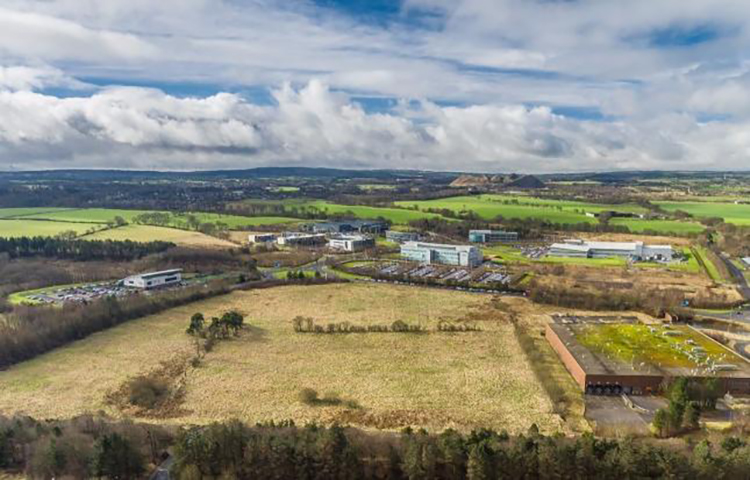
ABBOTSFORD – Abbotsford has taken a proposal to exclude a total of 696 acres from the Agricultural Land Reserve to the public. The land is meant to recharge an industrial land base of 2,069 acres that is nearly exhausted, thanks to an outflow of industrial users from Metro Vancouver – many of which are now leaping over the city towards Chilliwack in search of land.

“We’re going to be out of serviced industrial land in about four to five years,” explained Abbotsford mayor HenryAbbotsford Braun prior to an open house in mid-May.

Right now, the city has approximately 212 acres of vacant, readily developable industrial land. Many are in smaller parcels, unsuitable for large-scale industrial development.

“The stuff that we have left is small chunks that are not contiguous – they’re half an acre here, and an acre there and two acres there,” Braun said. “If you tried to find 10 acres of industrial land in Abbotsford, I don’t know where there is a piece.”

This has led some companies to look east to Chilliwack.

Abbotsford was a possibility for MolsonCoors, for example, but Chilliwack had the land and rail access that clinched the deal.

“When they first approached us, they were looking for 18 acres, preferably on rail,” Braun said. “We had two properties that we could direct them to but then they decided for future expansion that they needed 25 acres. That knocked us out of the ballpark. We don’t have 25 acres on rail.”

Chilliwack, while facing the depletion of its own stock of industrial land, had the good fortune of having won an exclusion from the ALR that accommodated agricultural and food processing uses. This was perfect for MolsonCoors, while Abbotsford-based Berryhill Foods Inc. opened a blueberry processing plant on an adjacent parcel last year. Chilliwack also saw Pacific Coast Heavy Truck Group acquire a six-acre parcel while Pacific Dairy Centre Ltd. is relocating its headquarters from Abbotsford to a 10-acre parcel on Chilliwack Mountain Road.

Abbotsford’s new official community plan (OCP) limits residential development to existing areas, but the lack of industrial land and loss of companies to other municipalities has the city taking a second look at its agricultural land base.

The first look came in 2004, when Abbotsford identified a need for 1,300 acres to accommodate industrial growth. It asked the Agricultural Land Commission (ALC) for 925 acres but received just 445 acres.

Now, the city is thinking strategically, targeting land adjacent to Gloucester Industrial Estates in Langley and the Southern Rail line as well as parcels north of Abbotsford International Airport. Together, the parcels represent approximately 1% of the city’s agricultural land base. The majority are less than 10 acres, a size that makes them less likely to be farmed. (Typically, efforts to make agricultural properties less vulnerable to exclusion have focused on limiting subdivision and reduced parcel size.)

Abbotsford residents like Nancy Teichgraf know there’s no easy answer for the city.

“It’s tough. I’m all for business but we are the city in the country,” she said as she considered the city’s open house. “I’m for our wonderful raspberry capital of Canada … [but] I do find the development of site B is perfect … [there’s] only a few raspberry fields.”

But the loss of farmland now diminishes opportunities for farmers in the future, said Jill Robbins, a director of the BC Young Farmers who operates K&M Farms with her parents. K&M farms is in the Bradner Road area Abbotsford is proposing for industrial use.

“We’re all dealing with a fixed land base on some level, so how come they can always claw back from ag land but they don’t ask industrial to tighten up their boots?” Robbins asked. “Where is the breaking point? There is zero hope or future for young farmers when this keeps happening.”

K&M is in one of the areas Abbotsford wants to exclude, but Robbins says its success shows the potential for small-lot agriculture.

“Some people will say that a five-acre parcel is worthless. I farm seven acres and I make over $100,000 a year. There is very intensified vegetable production. Chicken barns only need a couple of acres and they make a ton of money on a small acreage,” she said. “Who is planning for the growth of agriculture? Where is the growth and the vision for agriculture? Somehow we have to co-exist.”

With files from Ronda Payne
Related Posts

You may be interested in these posts from the same category.

Previous Post: « Poultry abuse underscores need to measure up
Next Post: Greenhouse growers propose infrastructure project »

Copyright © 2026 Country Life in BC · All Rights Reserved