• Menu
  • Skip to primary navigation
  • Skip to main content
  • Skip to primary sidebar

Country Life In BC Logo

The agricultural news source in British Columbia since 1915

  • Headlines
  • Calendar
  • Subscribe
  • Advertise
  • About
  • Archives
  • Contact
  • Search
  • Headlines
  • Calendar
  • Subscribe
  • Advertise
  • About
  • Archives
  • Contact
  • Search

Primary Sidebar

Originally published:

JUNE 2021
Vol. 107 Issue 6

Subscribe Now!

Sign up for free weekly FARM NEWS UPDATES

Select list(s) to subscribe to


By submitting this form, you are consenting to receive marketing emails from: Country Life in BC. You can revoke your consent to receive emails at any time by using the SafeUnsubscribe® link, found at the bottom of every email. Emails are serviced by Constant Contact
Your information will not be
shared or sold ever

Stories In This Edition

Growers hopeful as BC opens

Tender touch

Japanese bettle control pays off

Nursery sales rise as consumers stick close to home

Editorial: Prospering together

Back 40: A mammoth solution to climate change

Viewpoint: Teamwork essential to grow in the new normal

Wind machines in Surrey face blowback

Sidebar: Dispute resolution

BC Veg unveils strategic priorities as it looks ahead

Quick turnaround

Ag Brief: South Asia flight ban strands BC farm workers

Ag Brief: Oliver vintner dies

Ag Brief: Province delivers AITC funding

Letter: Well “registration” misleading

Province’s chicken growers see rebound

Pricing formula on horizon for poultry sector

Snooze and lose

Grain costs put pressure on livestock producers

PST applicable to horse hay sales

BC raspberry growers face global issues

Little cherry disease a big threat to fruit growers

Core knowledge lands Kelowna grower top award

Strategy needed for Crown forage resources

BC abattoir volume up 30% in 2020

Ranchers urged to plan ahead for a changing climate

Cidery ups game with orchard purchase

The milkman makes a comeback on Island

Short season doesn’t stall northern berries

Cariboo-Chilcotin sheep group formed

Viewpoint: Farm insurance crisis threatens landowners

Mushroom harvester enters final testing

Sidebar: BC mushrooms at a glance

Mushrooms add value to cut blocks

Farm Story: Diversity and inclusion extends to tractors

Equipment intentions fall

Hops and CBC-centric hemp come together

Research: Processed foods are convenient but at what cost?

Soil science key for Kootenay farm project

Research sheds light on late blight strains

Woodshed: Deborah keeps divorce news between friends

OK apples at core of social entrepreneurship

Jude’s Kitchen: To the sea in summer

More Headlines

Follow us on Facebook

Comments Box SVG iconsUsed for the like, share, comment, and reaction icons

6 days ago

... See MoreSee Less

View Comments
  • Likes: 4
  • Shares: 0
  • Comments: 0

Comment on Facebook

7 days ago

On the last day of the BC Organic Conference, Thursday, Molly Thurston of Pearl Agricultural Consulting helped growers learn how to manage bugs such as codling moth, wireworm, and rootworm in organic growing systems. Her talk alongside Renee Prasad included hands-on activities in which participants checked out various traps and examined pests under microscopes. Be sure to look for more upcoming ag events on our online calendar at www.countrylifeinbc.com/calendar/

#BCAg
... See MoreSee Less

On the last day of the BC Organic Conference, Thursday, Molly Thurston of Pearl Agricultural Consulting helped growers learn how to manage bugs such as codling moth, wireworm, and rootworm in organic growing systems. Her talk alongside Renee Prasad included hands-on activities in which participants checked out various traps and examined pests under microscopes. Be sure to look for more upcoming ag events on our online calendar at www.countrylifeinbc.com/calendar/

#BCAg
View Comments
  • Likes: 15
  • Shares: 0
  • Comments: 0

Comment on Facebook

1 week ago

Well-known organic farmer and podcaster Jordan Marr gets interviewed by Country Life in BC’s own columnist and potato mavin Anna Helmer during the opening session of the BC Organic Conference at Harrison Hot Springs yesterday. Sessions run today (Wednesday) and Thursday and include organic and regenerative growing practices and expanding and advocating for the organic sector, all under the background of the newly launched Organic BC banner.

#BCAg
... See MoreSee Less

Well-known organic farmer and podcaster Jordan Marr gets interviewed by Country Life in BC’s own columnist and potato mavin Anna Helmer during the opening session of the BC Organic Conference at Harrison Hot Springs yesterday. Sessions run today (Wednesday) and Thursday and include organic and regenerative growing practices and expanding and advocating for the organic sector, all under the background of the newly launched Organic BC banner.

#BCAg
View Comments
  • Likes: 37
  • Shares: 2
  • Comments: 1

Comment on Facebook

Interested in finding out more about this

3 weeks ago

Today, we remember those who sacrificed their lives or their well-being for our freedom. Lest we forget. ... See MoreSee Less

Today, we remember those who sacrificed their lives or their well-being for our freedom. Lest we forget.
View Comments
  • Likes: 8
  • Shares: 0
  • Comments: 0

Comment on Facebook

1 month ago

FarmFolk CItyFolk is hosting its biennial BC Seed Gathering in Harrison Hot Springs November 27 and 28. Farmers, gardeners and seed advocates are invited to learn more about seed through topics like growing perennial vegetables for seed, advances in seed breeding for crop resilience, seed production as a whole and much more. David Catzel, BC Seed Security program manager with FF/CF will talk about how the Citizen Seed Trail program is helping advance seed development in BC. Expect newcomers, experts and seed-curious individuals to talk about how seed saving is a necessity for food security. ... See MoreSee Less

Link thumbnail

BC Seed Gathering - FarmFolk CityFolk

farmfolkcityfolk.ca

Save the date for our upcoming 2023 BC Seed Gathering happening this November 3rd and 4th at the Richmond Kwantlen Polytechnic University campus.
View Comments
  • Likes: 1
  • Shares: 0
  • Comments: 0

Comment on Facebook

Subscribe | Advertise

The agricultural news source in British Columbia since 1915
  • Email
  • Facebook

BC abattoir volume up 30% in 2020

But growth depends on labour supply

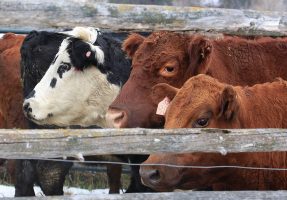
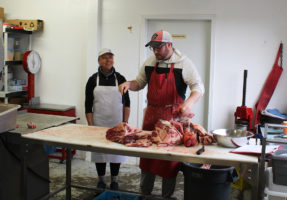
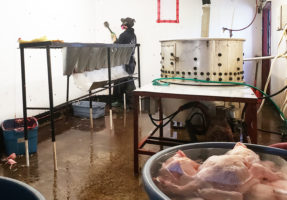
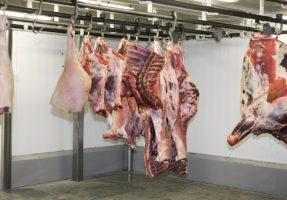
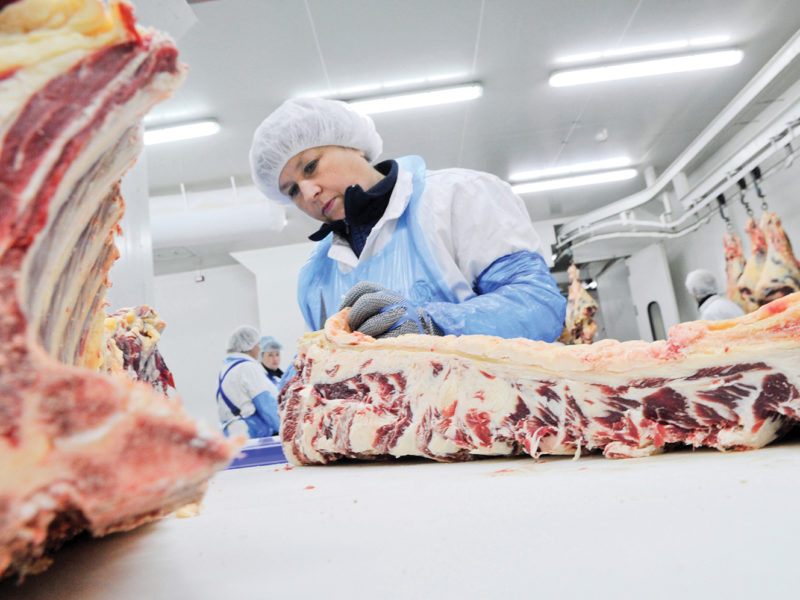
BC abattoirs were working at an unprecedented pace in 2020 and could have met the backlog of producers trying to book kill space if not for a shortage of labour. BC doesn’t need more abattoirs, says BC Association of Abattoirs executive director Nova Woodbury; it needs more skilled labour. FILE PHOTO

June 1, 2021 byTom Walker

FALKLAND – The impact of COVID-19 on the BC meat sector was a key theme during the annual meeting of the BC Association of Abattoirs on May 15.

“Unprecedented” was how president Bonnie Windsor described the impact in her address. “Facing the increased demand proved challenging, but for the most part I think it was welcome.”

Windsor said the increase in demand was consumer-driven.

“It has been said that people were hoarding toilet paper and I think people were hoarding meat,” she notes. “COVID seems to have reminded consumers how important it is to support local and to consider the source of their food.”

With some consumers beginning to return to their old buying habits, Windsor sees a chance to increase meat sales.

“I believe our industry and local products have been opened up to a whole new market of consumers,” she says. “There is much opportunity for growth providing we position ourselves accordingly.”

Windsor is optimistic about the future of the industry.

“We showed that we can face the changes and challenges of COVID and we produced more meat products than ever before,” she says.

Hard work

Association executive director Nova Woodbury shared numbers on just how much harder her members worked last year.

“In 2020, class A&B abattoirs processed 17% more cattle, 6% more pigs and nearly 8% more sheep and lambs than in 2019,” she explains. “Added up, this is a nearly 30% increase, or an additional 14,000 animals processed.”

The traditionally busy time of September through December remained so, Woodbury notes, but there were some unusual jumps in processing demand.

Cattle processing numbers were up 54% and 38% in May and June, respectively. Hog volumes were up nearly 15% and 18% in June and August, and the number of sheep and lambs processed rose 26% and 31% in September and December.

“Everyone deserves to feel good about what they accomplished in 2020,” says Woodbury.

But 2020 took its toll on BC Meats members thanks to a shortage of workers. In an on-line poll during the meeting, 94% of attendees said staffing was the biggest challenge facing them.

“It is beyond crisis,” says Richard Bell from Farmcrest poultry in Salmon Arm. “We need about 70 people to make our operation run and we are down to 41.”

He says he has been turning away business from new entrants in the North Okanagan because he doesn’t have the staff to process their birds.

Bell says though his base rate is $22 an hour, he has great difficulty attracting and retaining local help. The entire meat industry is in the same predicament, he says.

“I was talking to the head of meat at Save-on-Foods,” Bell says. “It’s in all aspects of our industry, all the way from the farm through slaughter and into retail and food service.”

Woodbury outlined the work the association is doing for the labour issue, a topic she says she covers frequently in her monthly meetings with government staff.

“We have been meeting with government and have put forward a proposal to take the training program we developed some years ago and putting it into an on-line format so that we can reach out to as many people across the province as possible,” she says, noting that the sticking point is on the government side. “We are hopeful that a new position in the BC Ministry of Agriculture, Food and Fisheries will be able to provide not only support, but tangible results,“ says Woodbury.

There is also difficulty accessing federal programs.

“We have been trying to find the right people to speak with on federal initiatives,” she says. “There was a federal government pilot under the Temporary Foreign Worker program for our industry. I have been dealing with the federal government, but I have not received an answer.”

While workers may come in under the federal TFW program, those looking to fast-track permanent residency often don’t stay long, says Bell.

“They simply use our industry as a stepping stone to get into the country and move on to another job as quickly as they can,” he explains.

Paul Devick of Rangeland Meats in Heffley Creek found himself in an opposite situation.

“I had a very good worker who wanted to keep working for us. He was trying to bring his family into Canada, but the government process was extremely slow,” recalls Devick. “He got so frustrated with the lack of progress, he left Canada and went back home.”

Both Windsor and Woodbury acknowledge that the industry lacks support in the community.

“We are not thought of as a viable career choice,” says Windsor. “We have failed to promote our industry. It’s not just work on the kill floor anymore.”

But 85% of people in BC report that they eat meat, Woodbury says.

“We need more support from the community for our industry.”

To that end Woodbury says the association is rebranding as BC Meats and preparing to relaunch its website, BCMeats.ca.

The new site will provide up-to-date information for consumers, producers, processors and abattoirs, chefs and retailers. The association will also launch a Facebook page and Instagram account.

“A key part of our social media will be to present profiles of our members,” says Woodbury. “Please encourage the producers, suppliers, butcher shops and customers that you work with to support us.”

Capacity is not the issue

Woodbury’s final message to members provided insights on industry capacity.

“We hear over and over again that slaughter capacity is an issue in BC. But is it?” she asks. “I think we’ve proved we could increase capacity in 2020 with over 14,000 more animals being processed than in 2019.”

Woodbury has looked at available red meat slaughter space and estimated output if plants ran five days a week, 48 weeks of the year.

“It turns out that if every current red meat abattoir did slaughter five days a week, 48 weeks of the year, slaughter capacity would increase by 2.3 times,” says Woodbury.

The message to government is clear, she says.

“There is enough slaughter capacity if there are enough workers,” she says. “The abattoir may not be as close as the producer would like or available at the last minute, but it is feasible.”
Related Posts

You may be interested in these posts from the same category.

Women offer ‘cutting-edge’ skills

New licences, new inspections

Challenges linger for meat plants

Provincial meat licensing overhaul effective October

No surprises in Throne speech

Province reveals abattoir changes

SlaughterRight training launched by ag ministry

Rural recovery funds agriculture

New executive director for Small-Scale Meat Producers

Meat producers frustrated by consultations

Abattoir association calls for action

Province launches meat consultation

Previous Post: « Core knowledge lands Kelowna grower top award
Next Post: Wind machines in Surrey face blowback »

Copyright © 2025 Country Life in BC · All Rights Reserved