
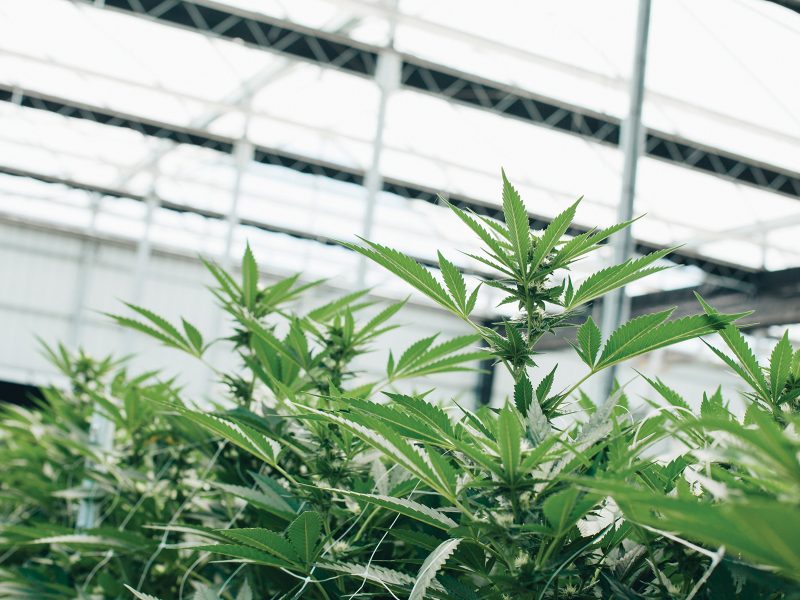
DELTA – BC’s legal cannabis crop is reaching new highs, ranking as the top cash crop by value – ahead of both fresh fruits and vegetables.
Canada legalized cannabis in 2018, and since then it has become a major agricultural crop. Last year, licensed cannabis producers contributed $10.6 billion to Canada’s GDP.
In BC, Statistics Canada reports farm cash receipts for “Cannabis seeds, vegetative plants and flowering tops (including leaves)” totalled $636 million last year, firmly positioning cannabis ahead of fresh fruits ($482 million) for the second consecutive year.
Cannabis first outstripped the value of fruit production in 2022, generating roughly
$475 million against approximately $465 million for fruit.
Statscan’s fruit category encompasses such iconic BC crops as apples, blueberries, grapes, strawberries and cranberries.
This major growth in cannabis revenues continues even as numerous farms have closed or changed hands in recent years.
Alberta-based Decibel Cannabis Co. Inc. announced the sale of its cannabis production site in Creston on February 25, explaining in a press release that the move will allow Decibel to consolidate operations at a site in Saskatchewan.
The deal is part of a string of transactions as the maturing sector experiences both market challenges and significant consolidation.
Founded in 2012, Vancouver-based Tantalus Labs aimed to profit off legalization with its flagship, purpose-built cannabis greenhouse in Maple Ridge, which pioneered sustainable techniques like automated, recycled rainwater irrigation.
These plans were frustrated when the company declared bankruptcy in June 2023 after racking up unpaid debts to lender Sungrown Mortgage Corp. and the Canada Revenue Agency. Tantalus was acquired by Newfoundland-based cannabis company Atlantic Cultivation.
Aurora Cannabis, headquartered in Edmonton, closed a 200-acre outdoor cannabis operation in Westwold in May 2022 after the company acquired Ontario-based Thrive Cannabis and took over its grow facilities. Aurora has since switched from recreational cannabis to the medical side of the industry, focusing on exports to the European market.
Tilray Inc. shut a major Nanaimo cannabis operation in September 2021, shortly after merging with Aphria Inc. earlier in the year. The merger resulted in Tilray Brands Inc., headquartered in New York City and specializing in cannabis and craft beer.
In March 2020, Canopy Growth announced the closure of its Delta and Aldergrove greenhouses, citing “slower than anticipated” growth in the recreational cannabis market and new federal regulations allowing for outdoor cultivation. These two massive facilities covered 3 million square feet and employed 500 people.
The 1.7-million-square-foot facility in Delta was reportedly the largest cannabis greenhouse in the world, but was bought by Fresh4Sunset Farms Ltd. to grow strawberries and tomatoes.
Remaining cannabis production in Delta is concentrated among a handful of big players that are growing larger.
The dominant one is Pure Sunfarms, a subsidiary of Village Farms International Inc., which announced a massive expansion of production at one of its Delta greenhouses last August.
The expansion will create an additional 550,000 square feet of cannabis production, expected to yield an extra 40,000 kg of weed, which the company says will cement its position as “one of the single largest cannabis producers in the world”.
Rubicon Organics, another major player, specializes in organic cannabis products. It boasts a 125,000-square-foot greenhouse in Delta, and last June announced the acquisition of a 47,500-square-foot facility in Hope, which it says is “a key milestone in Rubicon’s growth strategy.”
Rubicon says the new facility will boost production capacity by 40% compared with current production at its Delta facility, to a yearly total of 15,500 kilograms of cannabis.
Complaints
Delta South MLA Ian Paton says that when he became the agriculture critic for the Conservative Party of BC in 2017, he was unhappy with policy changes that had already been made, classifying cannabis as a farm product to be grown anywhere on agricultural land.
“All of a sudden, they started closing down greenhouses to food production and converted to cannabis production, which never sat very well with me. Why would that happen? We granted them permission to build these greenhouses to produce food, and now suddenly they can flip the switch and start growing cannabis?” he says.
Paton is hearing complaints about the heavy odour emitted by cannabis greenhouses, as well as strong lights that “completely light up the sky” with vivid colours on clear nights.
“People are really starting to complain about the light pollution coming from our greenhouses, including Village Farms, which is growing cannabis by the Boundary Bay Airport … they don’t have any screens on the inside of their windows to keep this light from going up into the sky,” Paton explains.
According to Statistics Canada, as of 2021 there were 130 licensed cannabis cultivators in the province. The large majority of the crop, nearly 2.4 million square feet, is grown under cover, while around 800 acres is grown in open fields.
Even as big players expand and total farm cash receipts for cannabis rise, the number of new licences is slowing.
According to a March 10 analysis by StratCann, an outlet that covers the cannabis industry in Canada, uptake for cannabis production licences is dropping. As of March 9, Health Canada had listed just six new licences for 2026, whereas by this time last year, more than twice as many had been issued.
In a statement to Country Life in BC, StratCann founder and cannabis industry analyst David Brown says the fall in new licences is a sign of the sector’s “continuing maturation.”
“While the early years of legalization attracted hundreds of eager new applicants, not all have survived,” says Brown. “Any new entrants into this industry will likely be more cautious and intentional before entering the Canadian cannabis industry, which is highly regulated, highly competitive and has incredibly tight margins.”
Sarah Campbell, director of the Craft Cannabis Association of BC, says small cannabis producers face serious regulatory and tax challenges, but many of those that remain “are in it for the long haul.”
“Although many producers in the past few years have exited the industry due to frustration regarding high taxation, over-regulation and the inability to promote like a normal business, there are many small-scale independent producers who are hanging in there, finding ways to make it work,” says Campbell.





 Restaurant connections fuel farm’s growth