• Menu
  • Skip to primary navigation
  • Skip to main content
  • Skip to primary sidebar

Country Life In BC Logo

The agricultural news source in British Columbia since 1915

  • Headlines
  • Calendar
  • Subscribe
  • Advertise
  • About
  • Archives
  • Contact
  • Search
  • Headlines
  • Calendar
  • Subscribe
  • Advertise
  • About
  • Archives
  • Contact
  • Search

Primary Sidebar

Originally published:

MARCH 2026
Vol. 112 Issue 3

Subscribe Now!

Sign up for free weekly FARM NEWS UPDATES

Loading form…

Your information will not be
shared or sold ever

Stories In This Edition

Bare hills

Farms face scrutiny

Budget heralds funding freeze

Flower grower named top young farmer

Editorial: Plowing forward

Back 40: Running for office in House of Commonsense

Viewpoint: Tough times call for good troublemakers

Title concerns add uncertainty to land deals

Joining hands

Dairy producers brace for blend price changes

Ag Briefs: Province closes deal for new laboratry site

Ag Briefs: Organic BC seeks funding

Ag Briefs: BCPVGA gets new GM

Ag Briefs: Cherry growers focus on labour

UFV expands livestock research capacity

BC Tree Fruits members told to play by the rules

FCC economist flags labour, trade risk

Market outlook depends on better blueberries

Province cuts compensation rates for wildlife damage

Bumper snowpack brings hopt to parched Peace

Water woes: groundwater under pressure

Forestry roads, clearcuts amplify flood risk

Cattle prices raise the roof at Kamloops auction

Board finds overgrazing rules unenforceable

Tour spotlights top Fraser Valley dairy herds

Restaurant connections fuel farm’s growth

Organic pioneer honoured for contributions

Islands ag show

Hot pollen spells trouble for blueberries

Cull cherries get second life as powder

Farm Story: Outside jobs are calling

Woodshed: Time travel comes to Gladdie’s birthday picnic

Growers turn surplus into solutions

Jude’s Kitchen: Perk up leftovers with spring greens

All content on this website is copyrighted, and cannot be republished or reproduced without permission.

More Headlines

Follow us on Facebook

Comments Box SVG iconsUsed for the like, share, comment, and reaction icons

5 days ago

KPU researcher Naomi Robert is partnering with Oregon State University's Dry Farming Collaborative to test drought-resilient growing practices across Vancouver Island and the Gulf Islands. Working with three market gardeners, the study found tomatoes and zucchini thrived without irrigation. With droughts intensifying across the Pacific Northwest, dry farming offers BC growers practical tools to adapt to a changing climate. The full story appears in our April edition. tinyurl.com/d2fzs#BCAg#BCAg ... See MoreSee Less

KPU researcher Naomi Robert is partnering with Oregon State Universitys Dry Farming Collaborative to test drought-resilient growing practices across Vancouver Island and the Gulf Islands. Working with three market gardeners, the study found tomatoes and zucchini thrived without irrigation. With droughts intensifying across the Pacific Northwest, dry farming offers BC growers practical tools to adapt to a changing climate. The full story appears in our April edition. https://tinyurl.com/d2fzs9x6

#BCAg
View Comments
  • Likes: 21
  • Shares: 5
  • Comments: 0

Comment on Facebook

6 days ago

A Maple Ridge dairy producer has been fined $7,512, had his licence suspended for three months, and faces quota restrictions for two years after an undercover investigation confirmed raw milk was sold directly from the farm on three separate occasions.

#BCAg
... See MoreSee Less

Link thumbnail

Maple Ridge farm fined for raw milk sales

www.countrylifeinbc.com

Raw milk remains off the table for dairy producers, with the BC Milk Marketing Board (BCMMB) taking action against a Maple Ridge producer for illicit sales. An undercover investigation of Maple Ridge...
View Comments
  • Likes: 56
  • Shares: 93
  • Comments: 229

Comment on Facebook

Unpasteurized milk is sold in Europe. It's the only milk certain cheeses can be made from.

Europeans used raw milk to make cheese for millenia, the farmer should sue them back on cultural grounds and a charter violation.

A person can shoot up government drugs in a playground but milk is the issue. 🙄

Is there a go fund me?

Raised on raw milk and I wouldn’t have had it any other way. My immune system is top notch compared to all others raised on corn syrup baby formula. Make it make sense!

When i was on the farm we would drink milk right from the cow in a bottle then drink and never got sick.

Ohh the milk moffia at it again I see

So whose the rat? lol one of the ppl who bought the raw milk? 🤦🏻‍♀️

I grew up in the 60’s with raw milk, cream and butter the farm shipped cream. One day the cream was rejected do too much bacteria. It wasn’t kept cool enough. That was the first of government control I experienced. Ok so the cream went back to the farm and made the best sourdough bread, ice cream and the cats came from heavens green acres for a treat of stale bread soaked in that very cream.

If the farmer sold shares in his farm so all these people owned part of the farm. Then it’s their milk . And don’t have to buy anything

Yet the government can supply cigarettes, alcohol, weed and hard drugs. Makes sense. 🙄

leave him the hell alone! if someone wants to buy raw milk at their own risk, let them. At least they can see where the milk came from

I would love my own cow so I could get raw milk

I love the back in the day story’s . Please remember those stories were of grandpa drinking his own cow’s milk. You still have the right to buy cows and drink their milk raw. Go ahead and do it….

As the government sells alcohol and cigarettes 🤡

Free drugs good raw milk bad 🤣

Guy up the road sells milk raw here too

Just identify as first nations and say it's a cultural thing . Then it becomes legal

Raised on our own milk, so were my kids. Got told my kids would not be as Intelegent because of it 😂 they are adults and doing very well. The problem lays in the consumer handling of product after pick up. when milking at home its in a stainless steel pail, sifted, into glass containers, then in fridge to cool down. People picking up, put jn car drive off for an hour or more, then in fridge. This is the problem, bactia grows in the heat. Then they drink that evening when still warm, get sick, blame farm milk. Go to grocery store buy a jug, it last 2weeks after due date ...yummy. ( tested this therory) Id rather have fresh milk and properly handle it. Everything is so regulated,

I have mixed opinions here. I think that people should be able to get unpasteurized milk( I was raised on it and raised my own family with our own milk cow..) However in this day and age people are so inclined to sue for most anything it seems like the dairy farmers need some kind of protection against that? They could lose their businesses over legal procedures. Maybe that is a positive thing about the milk boards…

Some comments seem to be missing the point of the article. NO ONE was sick from the milk. It’s all about money. “By selling milk outside the regulated system, where revenues are pooled, the board claimed Stuyt had cost producers as a whole $195,185 and ordered him to repay this amount. It also ordered Stuyt to pay $33,266 to cover the cost of BCMMB’s investigation and hearings into the matter. The BC Dairy Association, which stood as an intervenor in the appeal before FIRB, said illicit raw milk sales are a direct threat to supply management.”

Communist Canada. If people want raw milk they should be able to buy raw milk. It’s all about control ….

You mean sold real milk, unadulterated, whole milk

That's just sad, but drugs are fine

To each their own. If people want to buy resh milk im sure they know the consequences involved. Maybe the people take it home, seperate the cream and pasturize it them selves. We drank milk at my aunts house off the cow but it was heated to 72’ (Pasturized )

View more comments

1 week ago

A draft update to the Code of Practice for the Care and Handling of Beef Cattle is now open for public comment until June 12. The code, one of 14 animal care codes developed and maintained by the National Farm Animal Care Council, is undergoing a routine 10-year review. "Your feedback will help shape the industry's guide to cattle welfare for the next decade," says Canadian Cattle Association policy manager Jessica Radau, urging producers to weigh in. For more information, visit tinyurl.com/58a3u9fz.

#BCAg
... See MoreSee Less

A draft update to the Code of Practice for the Care and Handling of Beef Cattle is now open for public comment until June 12. The code, one of 14 animal care codes developed and maintained by the National Farm Animal Care Council, is undergoing a routine 10-year review.  Your feedback will help shape the industrys guide to cattle welfare for the next decade, says Canadian Cattle Association policy manager Jessica Radau, urging producers to weigh in. For more information, visit https://tinyurl.com/58a3u9fz.

#BCAg
View Comments
  • Likes: 4
  • Shares: 4
  • Comments: 1

Comment on Facebook

I sat in the webinar yesterday by the Canadian Cattle Association. My initial concern was that this would be another "play" into the government's hands. It has been worked on by people that are actually in the Beef industry from Cow calf to feedlot. The thrust is an update of the 2013 Code of Practice which was reviewed in 2018. The changes are more a move from "left to the producers discretion" to clearer directions regarding pain management, proper transport of animals which are impaired and keeping cattle in in good condition. Much of what is recommended is what producers who care about animal husbandry already do. The important part is to GIVE THEM FEEDBACK good, bad or otherwise. The document is about 60 pages long, and I ran it through CHAT to see what had been changed. It is important to understand that the PUBLIC is invited to comment on the draft not just producers. Think about it... do you really want the public influencing how you manage your cattle. If you think that this is just one of those things, I have been following Bill 22 in Alberta which will grant the SPCA a proactive roll in entering farms and checking on animals. When I asked CHAT how the new bill relates to the Cattle Code, it came back that the Code although not a regulation will be able to be used as a guide by producers for backup in dealing with the SPCA regarding cattle conditions, sick animal handling etc. Take the time.... Go onto the Canadian Cattle Association website and speak to those parts that you wish to input.

1 week ago

According to the BC River Forecast Centre, the Okanagan snowpack stood at just 58% of normal on April 1 — the lowest reading since measurements began in 1980 — raising concerns about drought conditions in the region this summer. The rest of the province sits at 92% of normal.

#BCAg
... See MoreSee Less

According to the BC River Forecast Centre, the Okanagan snowpack stood at just 58% of normal on April 1 — the lowest reading since measurements began in 1980 — raising concerns about drought conditions in the region this summer. The rest of the province sits at 92% of normal.

#BCAg
View Comments
  • Likes: 3
  • Shares: 0
  • Comments: 0

Comment on Facebook

1 week ago

At her first AGM as executive director of BC Meats, held Saturday in Abbotsford, Jennifer Busmann spoke about her strong ties to agriculture and her optimism for the organization's future. Busmann has cattle of her own and came to the role with existing relationships with members and the board of directors that helped her feel integrated from the start. She stepped into the position in Februa#BCAg#BCAg ... See MoreSee Less

At her first AGM as executive director of BC Meats, held Saturday in Abbotsford, Jennifer Busmann spoke about her strong ties to agriculture and her optimism for the organizations future. Busmann has cattle of her own and came to the role with existing relationships with members and the board of directors that helped her feel integrated from the start. She stepped into the position in February.

#BCAg
View Comments
  • Likes: 6
  • Shares: 0
  • Comments: 0

Comment on Facebook

Subscribe | Advertise

The agricultural news source in British Columbia since 1915
  • Email
  • Facebook

Restaurant connections fuel farm’s growth

Land match helps Ladner couple grow flourishing market garden

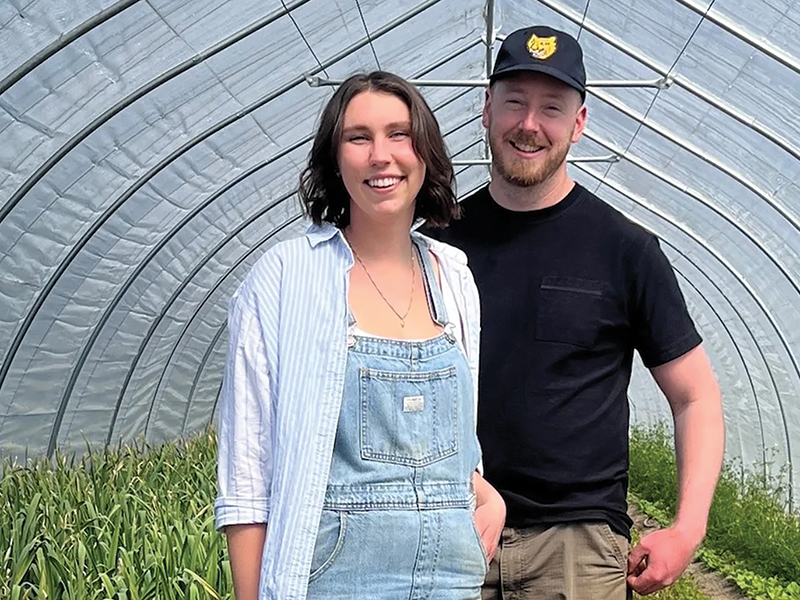
Vive le Veg Farm owners TJ and Olivia McWilliam say mentorship, careful record keeping and restaurant connections have been key to their Ladner market garden's success. Photo / Michelle Sproule

March 1, 2026 byMyrna Stark Leader

LADNER – Growth is on the agenda for Ladner’s Vive le Veg Farm, where owners TJ and Olivia McWilliam have a new baby and have nearly doubled the size of their market garden to two acres.

Since starting the farm in 2021 on a quarter acre leased from the Malenstyn family, the McWilliams have grown to two acres thanks to a loyal clientele among Vancouver restaurants. The venture is now becoming financially viable.

The couple don’t come from a farming background. TJ worked in the restaurant industry before leaving to become a farmer in 2021, while Olivia continues to work full-time as a project manager.

While enrolled in the UBC Farm practicum program, TJ reached out to the BC Land Matching Program operated by Young Agrarians and signed a five-year lease that allowed the fledgling operation to expand as needed.

“We experimented with salad, greens, tomatoes, turnips, radishes and more without a real plan. It was more about meeting the people whose land we were farming on and figuring out how we work together,” says TJ of their first growing season.

By carefully tracking input costs and sales the past three years, they’ve refined their sales sheet. Their top value crop in 2025 was salad mix, but the farm also produces a host of field and root vegetables, herbs and edible flowers.

They source potatoes from their neighbours, Fraserland Organics, and fruit from Parsons Market Farm in Cawston to round out their offerings.

“[Fraserland] doesn’t sell directly to restaurants, so we are another small sales channel for them, and we got connected with the fruit through making our own cider one year,” says TJ.

Restaurant sales were a natural follow-up to TJ’s previous career. He also made valuable connections working part-time at Zaklan Heritage Farm in Surrey during its final year of production.

“I did some deliveries in their last season so, with their permission, I dropped our business cards to those customers,” TJ explains.

When he began growing his own produce, he delivered samples.

“[The chefs] jumped on board and started ordering,” he says.

“The chef community is small and connected,” adds Olivia. “Once we had a few customers like The Acorn Restaurant, Published on Main, they really helped spread the word about us, connecting us with other chefs.”

An online sales platform called Tend helps manage orders and weekly deliveries, which become more frequent during peak season. The couple delivers clean, high-quality produce that makes chefs’ work easier.

All seed is started on the farm with a makeshift germination chamber fashioned from a crockpot in an old freezer. The farm’s rich clay soils are irrigated with city water, a simple setup for drip and low-pressure overhead irrigation.

This year, they will continue to grow their staff by hiring a second full-time person, in addition to retaining two part-time positions from 2025.

“A team has allowed Olivia and I to step back a bit, and it’s been nice having the energy and the different perspectives of the team. But it also requires figuring out and balancing personalities. Olivia’s led teams before, so she’s good at it,” says TJ.

The most consistent channels for finding employees have been the online platform GoodWork.ca, Young Agrarians and the UBC Farm alumni network. They’ve also employed people from the restaurant world who desire a better understanding of farming.

Grants through the BC student employment and federal youth employment programs have helped offset farm wages. Salaries start at $20-plus an hour, depending on experience and role.

TJ paid himself a $60,000 salary in 2024 and 2025.

“We’ve been steadily increasing our yearly sales, and better record-keeping has enabled us to see where we can grow and make adjustments,” says TJ.

They also credit the Malenstyns with helping them set up initial infrastructure, splitting the upfront costs to buy the farm’s first hoop house in their second year and allowing the couple to pay them back later. The support helped them avoid carrying significant debt in those first years.

“Working with the landowners has been more collaborative. … They already had a big walk-in cooler, and they allow us to use their tractor since we don’t have one,” says TJ.

Incorporating the farm this year will help better manage future growth.

“Our accountant suggested it made sense if we wanted to leave money in the business for the next year’s start-up costs,” says TJ.

It’s also advantageous for asset purchases, like their new delivery van, an upgrade from using Modo and their personal car, which the farm has outgrown.

The process of renewing the initial lease on the property with an option for another five years is ongoing. The Malenstyns support the farm’s long-term presence, and both families desire sustainability.

Originally a dairy, the 29-acre property also grows hops for the family’s Barnside Brewing venture and is home to a small flock of sheep.

The Malenstyns initially explored the idea of vegetable production, but lacking time or expertise, co-owner Ken Malenstyn reached out to Young Agrarians.

“I wanted to be more than just a leaseholder,” he explains, adding that TJ and Olivia were the only people referred.

“It’s a reciprocal relationship,” he says. “They’ve used our buildings and tractor, and they’ve helped with our sheep. Growing up in agriculture, it’s cool to see how TJ’s former relationships helped him fast-track. We’re happy to be part of that. It’s more of an emotional investment for our family farm.”

The McWilliams say financial planning is crucial, while also considering things like water and space constraints, tips they’ve picked up from Kerry McCann at Laughing Crow Farm in Pemberton during a business mentorship provided by Young Agrarians.

Despite the success of their farm business, Olivia’s off-farm job was critical to making the farm a reality, especially at first.

“We’re still not at a place on the farm where we have health benefits, a nice thing with a new little one, and I enjoy my work,” says Olivia.

The McWilliams’ experience has given them advice for other would-be farmers.

Thankful for the mentorship they’ve received, they encourage others to work on a farm before launching their own business. It’s better to make mistakes on someone else’s operation and learn from them than have their own operation hinging on the results.

They also say it’s important to understand the unique constraints of a farm space in building a sustainable financial plan.

While there’s a goal of TJ drawing about $100,000 profit annually in the future, they’re cautious.

“If we grew another acre of vegetables, I could probably make that, but our expenses would go up. We’d have to hire more employees, get more equipment, put in new irrigation, so there are trade-offs. Since we just expanded to two acres from one in 2025, we’re probably happy with that for the next few years,” says TJ.

All content on this website is copyrighted, and cannot be republished or reproduced without permission.
Related Posts

You may be interested in these posts from the same category.

On-farm innovation fuels turnaround

Co-ops’ importance highlighted

Nelson farm builds soil and local community

Leasing farmland a vital strategy for farmers

Province rethinks land matching pitch

Land matching pays off

Reeve leads BC Young Farmers

City Beet harvests profits from urban gardens

Soda Creek social highlights land-matching

Young Agrarians land funding

Previous Post: « Land Commission lays off staff
Next Post: Cannabis tops BC crop cash receipts »

© 2026 COUNTRY LIFE IN BC - ALL RIGHTS RESERVED